Saturday Evening Post: The Holy Grail

We all in our own ways have that “Holy Grael” that Sir Perceval was seeking. However there are other lesser dreams we have that don’t involve messy stuff, like cleaning up after the “Fisher King” in his land of desolation. In fact, trying to read Joseph Campbell’s book: “Romance of the Grail” might in itself be one of those Great Quests.

Climbing Mount Everest is such a pursuit. Landing man on the moon. Playing a hole-in-one on the golf course and ever so many other Great Quests are challenges that people stand up to meet. So many great acts of, “Decent People, doing Decent Things” as I alluded recently regarding Arnold Dix

But there are also little wins we each make. Some birders are on the look out for the next big bird thing. A nomad, or wanderer that turns up unexpectedly. Enough to have them drive across the state or on some cases the continent and further.
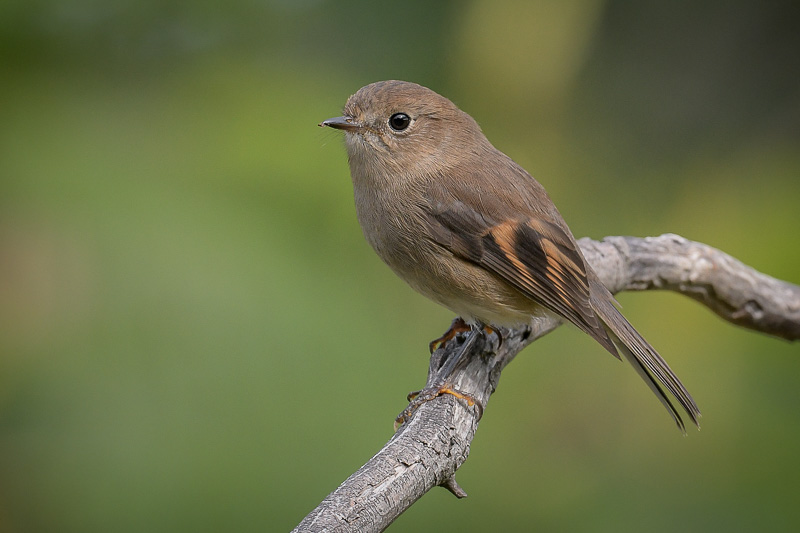
We have been watching and waiting of late for the return of the Flame Robins from the high country. Just occasionally we might see a Rose or Scarlet, but rarely a Pink Robin. Not unheard of, but they tend to be birds of the forest I think, and our wide open plains are more to be flown over on their migration south on their quest for some suitable forest to winter over.

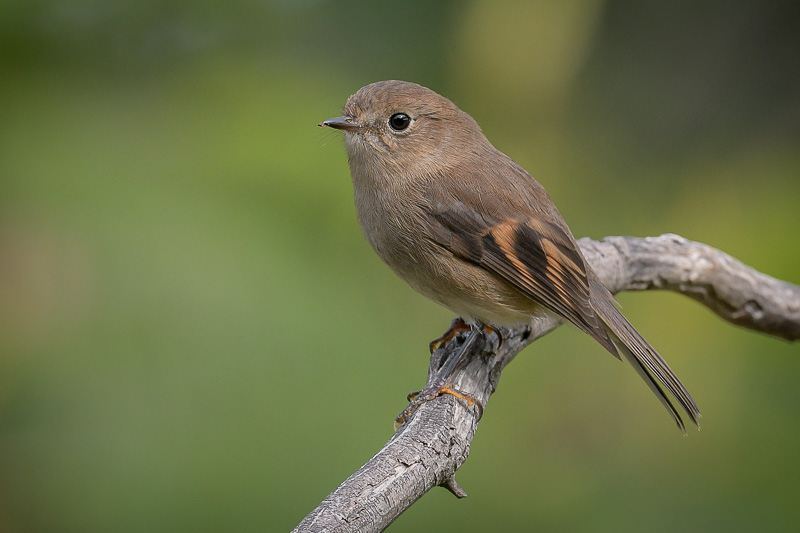
So, it was, as they say, a “Sir Perceval” or Mt Everest moment the other day, when as we searched through the underbrush, a small brown shape flashed from one wattle bush to another, and then intrigued by our presence, (well, I like to think that), she popped out on a branch, cocked her head to one side, paused long enough for a few frames, and then in the twinkle of her eye.
Disappeared back into the wattle branches.
Gone.
“Pink Robin, Female”.

Might not be Mt Everest, or a hole-in-one on the golf course, but a highlight of the day.

Enjoy (We did)
Saturday Evening Post: There and Back

Many will know I’ve mentioned my theory about Brown Falcon’s ability to ‘map’ out an area and fly, following that internal map.

I came across an article in The Smithsonian Magazine recently titled, Why Do Some People Always Get Lost.

The interesting part to me is toward the end and titled Mental Mappers. I can’t provide a direct link, and it’s a long scroll down. It refers to “….the specific skills that are hallmarks of good navigators These include the ability to estimate how far you’ve traveled, to read and remember maps (both printed and mental), to learn routes based on a sequence of landmarks and to understand where points are relative to one another.” ” Two of those skill are ‘Route Following’ and …and what’s often termed ‘survey knowledge,’ the ability to build and consult a mental map of a place.”

When my Mother-in-Law was getting on in years the family pointed out she was unable to move around on her own as, “She didn’t know where she was.” Now, I had to take exception to that as I’d travelled about with her quite extensively and was more than confident in her ability to go from home, to the shops, pick up a bottle of milk and return safely. And to venture in and out of several stores along the route. I discovered that they were judging her lack of ability because they had taken her to a shopping centre she’d never been to before and she had asked, “So, how do you get out of here?” I’m certain I’d have done the same. New place, new location, no mind-map.

As a young tacker, I grew up with a highly respected bushman. He could wander about for hours and still know where he was, where the start point might be, or the next spot to go visit. His simple secret was he named locations as he went along. Easy to remember names, like places, “The Eiffel Tower”, “The Burnt Log”, “Wombat’s Home”, and others. The landmarks would be no more than 200-500meters apart. So if he was somewhere, all he had to do was find one of his landscape features and follow back from there. When I walk the Eynesbury Forest, or the Woodlands Historic Park, I still use that system.

I’ve sat for an hour so so with so many Brown Falcon’s and watched them watching. Then when they fly, it’s a deliberate run at almost ground level, to swoop on something, or onto the next chosen perch. As they slip past a bush here, around a plant there, through an opening in the grass, it’s hard not to be impressed at their mapping ability.

And just in case you never leave home without GPS, here is a conclusion from the study.

…A follow-up with 13 of the volunteers three years later revealed that those who had used GPS the most during the intervening period experienced greater declines in their ability to navigate without GPS, strongly suggesting that GPS reliance causes diminished skills, rather than poor skills leading to greater GPS use.


We’ve also been following a pair of Black-shouldered Kites. They fledged two young about two months ago, and the young, as normal have now moved away. As soon as her young fledge, the female usually hands responsibility of their care and feeding to the male. She then takes a few weeks extended leave, and goes off to replenish her system from the 8 weeks or so of sitting on the nest.
For some reason this female had not returned for about two months. Her male kept station and I was beginning to think he was on his own.
However the other day, we found them both hunting in the paddock.
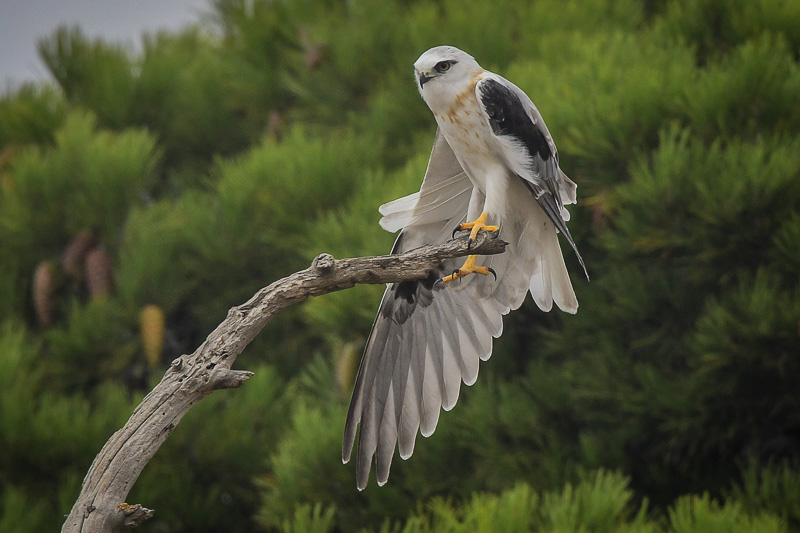
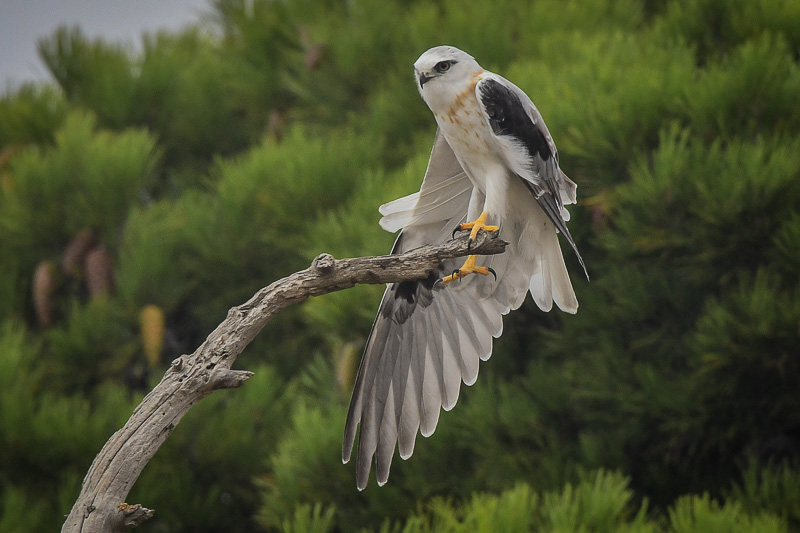
The picture on this page is of her sweeping in with a catch. Not sure if she took the mouse, or if he’d passed it on to her. Will have to wait to see what, if anything develops.

Saturday Evening Post: The Variations of Colour

If you assemble a group of half a dozen birders together and ask a question about bird id, you’ll likely get about 10 or more different answers.

Birds don’t make it easy. Some have unusual juvenile plumage and are easy to spot. Some don’t. Some differ between breeding and non-breeding plumage (Consider the Red-necked Stint, it’s most unusual in Australia to see them fully coloured up rich red).

Discussions begin about the intricacies of variation in moult patterns, in feeding styles, of nesting and a whole range of features and characteristics.
Discussion also turns to cover all sorts of anecdotal material, and some wise birders seem to be able to determine not only the sex of every bird, but on which side of the tree the nest was on.
It’s enough for the beginner to shake their head and wander away thinking, “I only wanted to know if it was a Sparrow or an Emu!”

Most birds don’t have a wide variation of plumage so its pretty easy to settle on what a Little Pied Cormorant looks like, and why it’s not to be id’d as a Australian Pied Cormorant. Or, some are distinctive enough, think Laughing Kookaburra, as to not be easily confused.

But when it comes to Brown Falcons

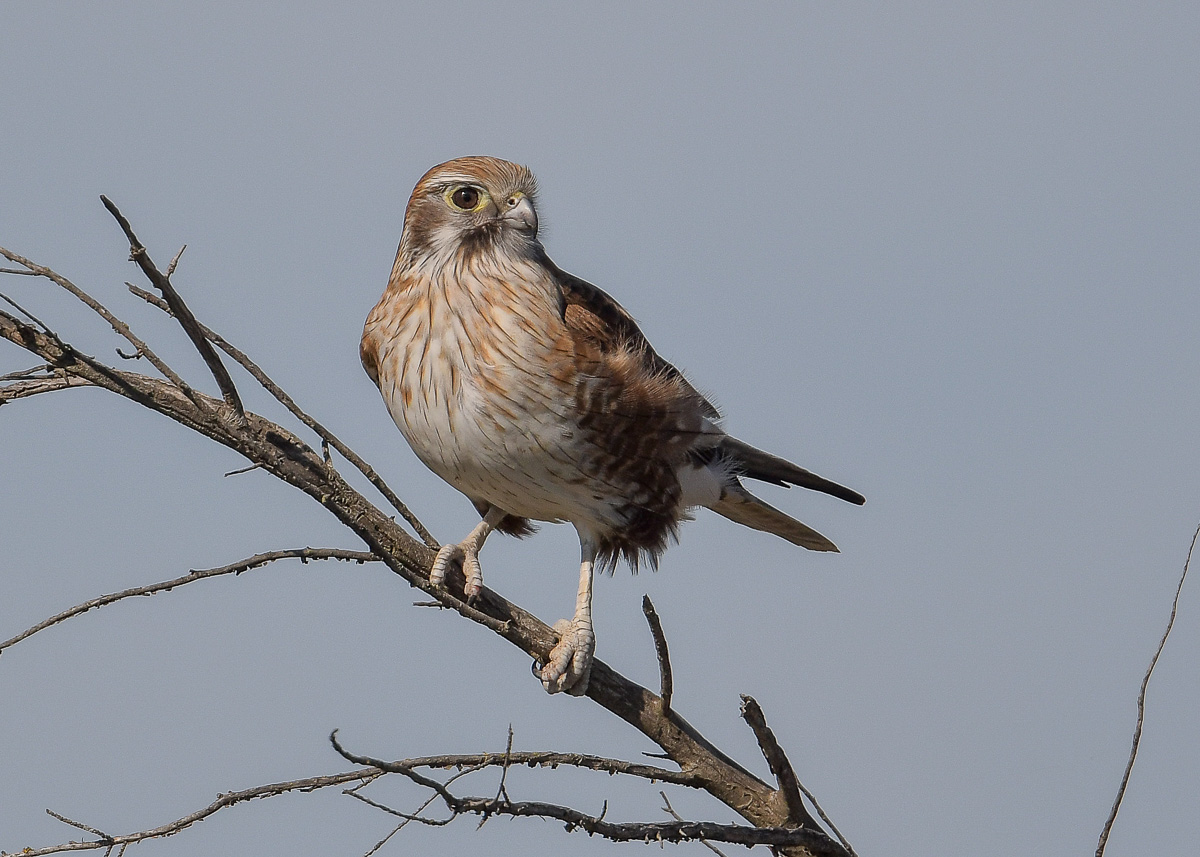
This past week my Flickr and WP friend Eleanor, had made a trip to the Western Treatment Plant, and photographed a bird which, at first blush looked like a Nankeen Kestrel. It certainly started some conversation around my group of birders.

Browns are birds of the open plains and open forests.
As the text books say, “Brown bird with a variable plumage.” Which is where the problems of id begin to surface.
And variable is what seems to make id complicated sometimes.

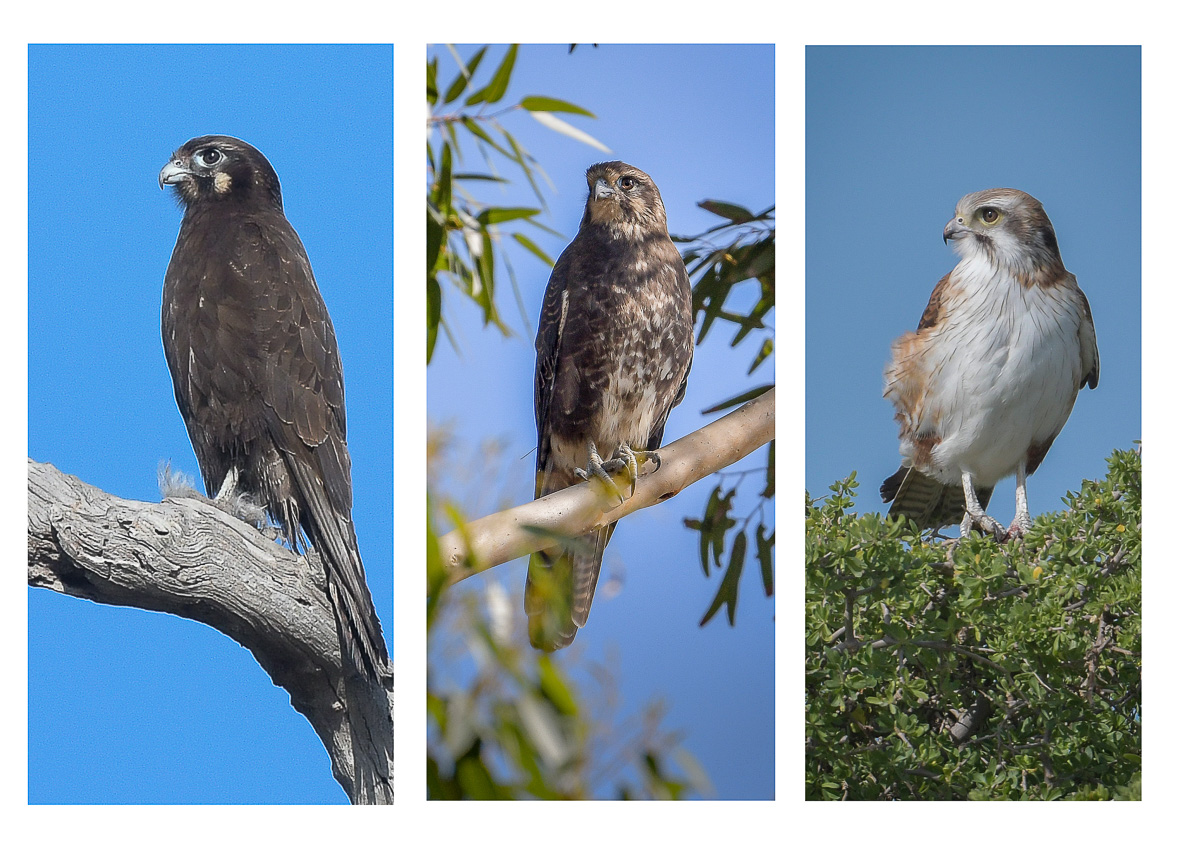
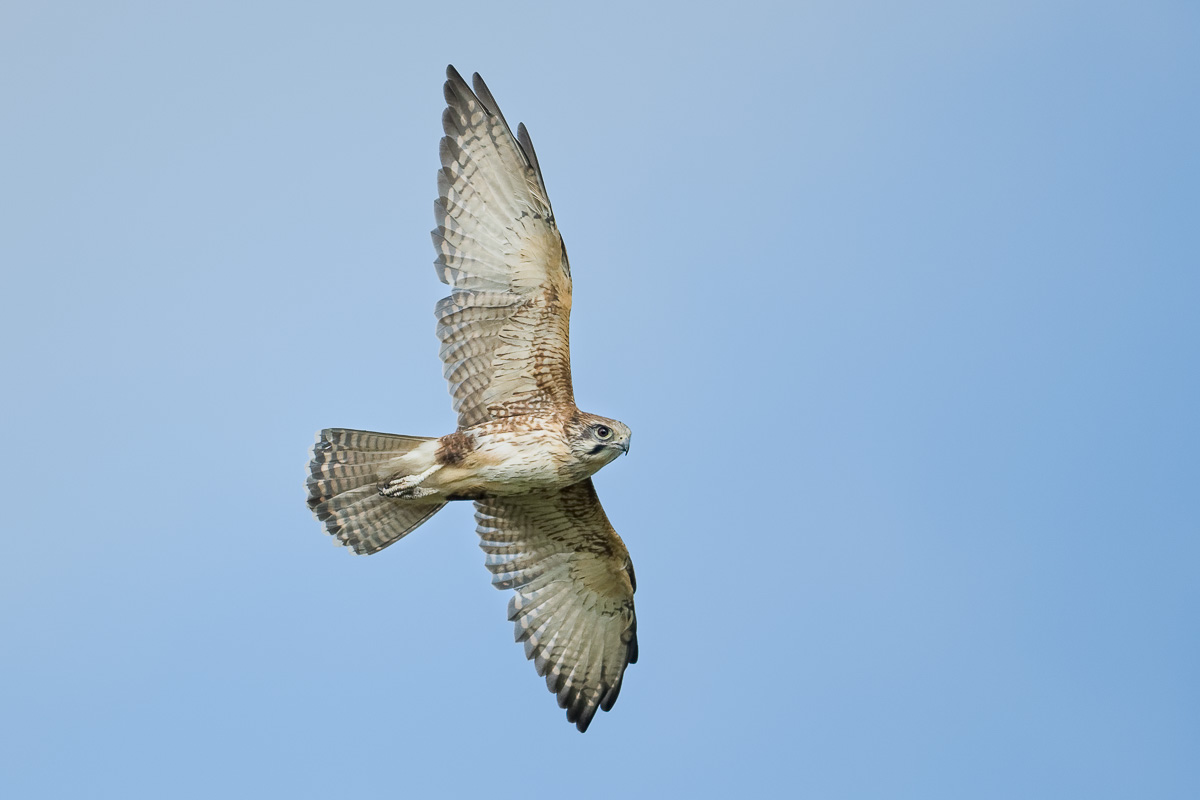
Browns can vary from dark chocolate brown, through a marbling light brown on white, to white chests and underwings.
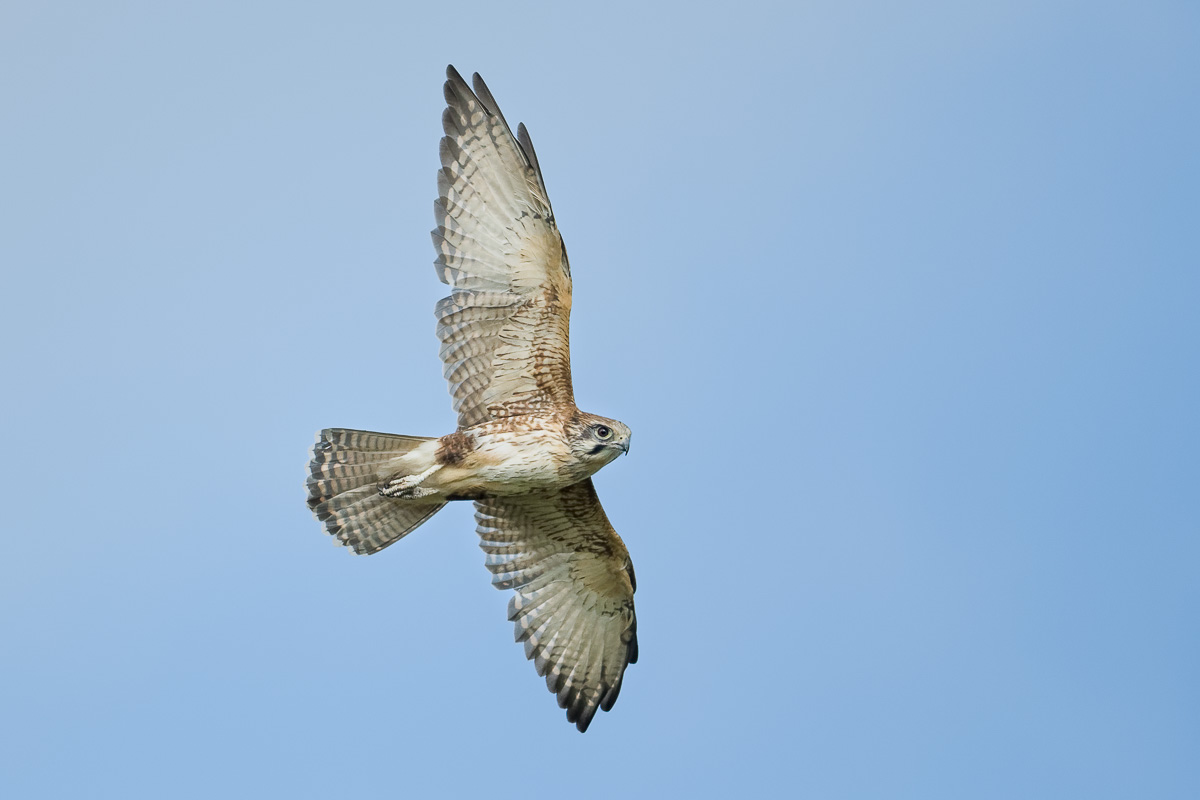
At a distance, a light morph Brown is easily mistaken for a Nankeen Kestrel

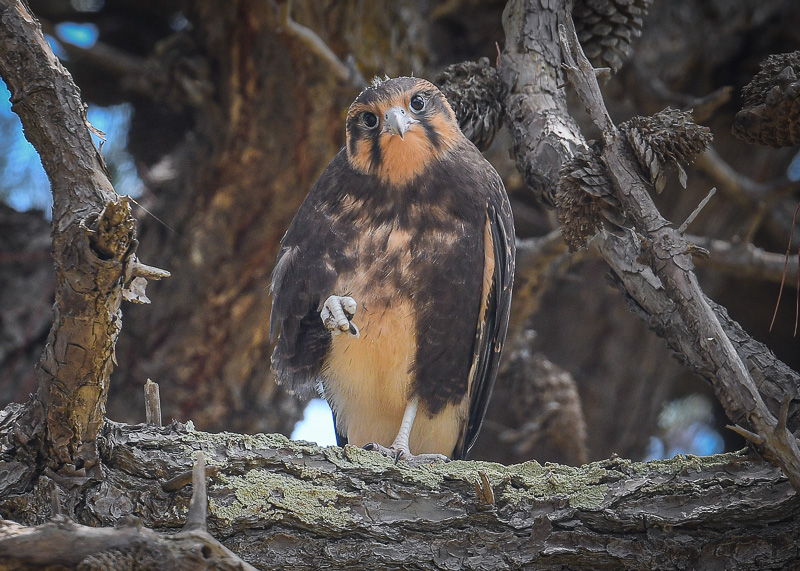
Here are three that show some of the variations. All of these are local birds that I’ve come across in the past couple of years.

See. “With variations”
Here is one that is similar, (if not the same bird, but I’m only guessing) that Eleanor found

For a greater discussion there is an interesting PDF file from the publication, The Emu 2003.
Much of the research was made at the Western Treatment Plant.

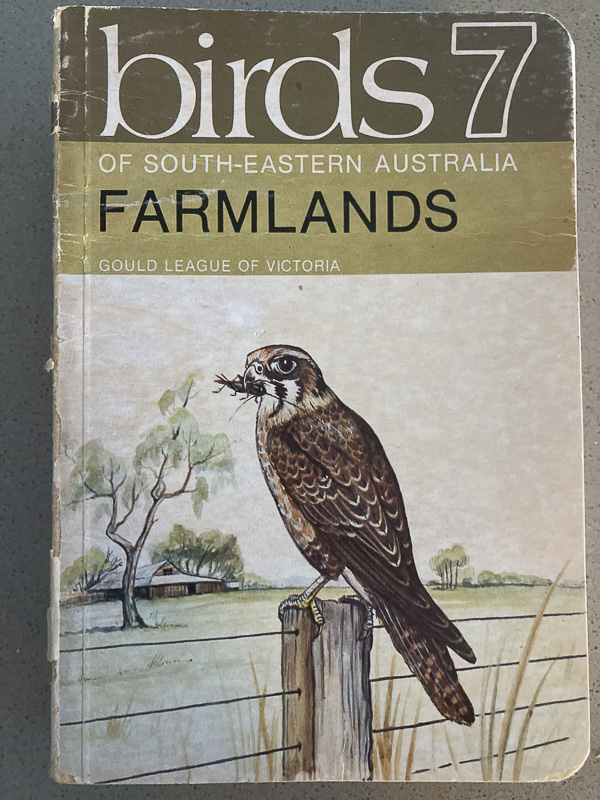
And here is a lovely cover of an old Gould League of Victoria publication with paintings by Susan McInnes. As can be seen, this particular book has had a long journey in our family.

It used to be said, that light coloured birds were from the wide open plains and darker birds from forested areas. But, like all anecdotal stories, they may only be true under certain circumstances. As a young tacker growing up in the wide ranging open fields of the Mallee in Victoria, it was not unusual to see light through dark birds.

Long term readers know we regularly have contact with a pair of Browns. She is of the mid-tone marbled chest, but her handsome male, that I call “Alistair” is a very light morph bird. Here he is on a turn.

To add to the complexities, some like Alistair have yellow cere and eye marks, while others are a grey-blue.

And for completeness, here is a young bird that had only been fledged a couple of days, the baby down is still showing on its head, as is the rich apricot colours.

Good Luck with id.

Enjoy.


Along the Track: Down to the Sea…

The entrance to Port Philip Bay is know as either “The Heads” or “The Rip”.

It is a narrow waterway that connects the Bay with the Bass Strait. The large tidal flow of water, into and then out of the bay create substantial water pressure through the narrow channel, and the shallow water over the rocky seabed are is quite dangerous for maritime vessels. The area has claimed numerous ships down through the years.

EE and I had planned to visit the Point Lonsdale Lighthouse on the western side of “The Rip”, at sunset to catch the last glimpses of the sun setting over the water.

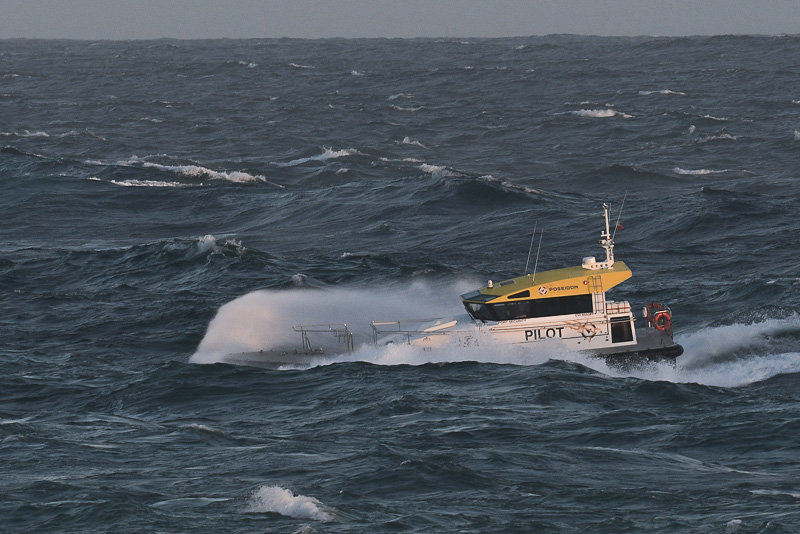
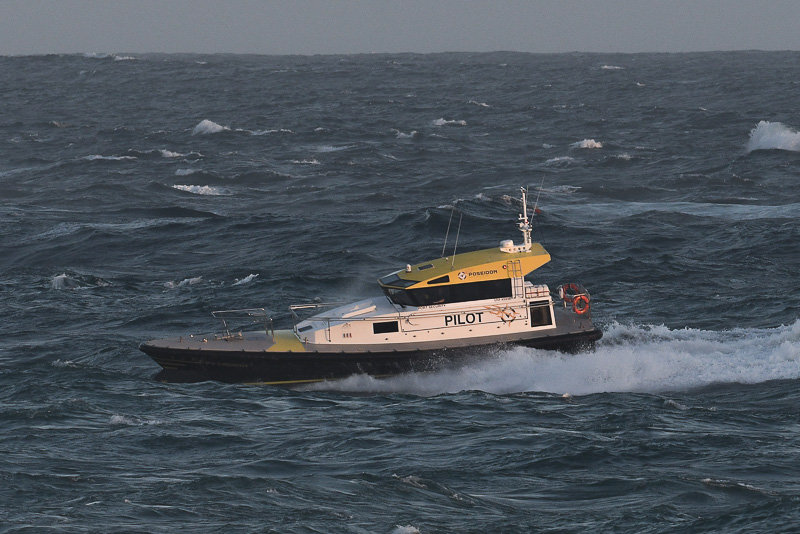
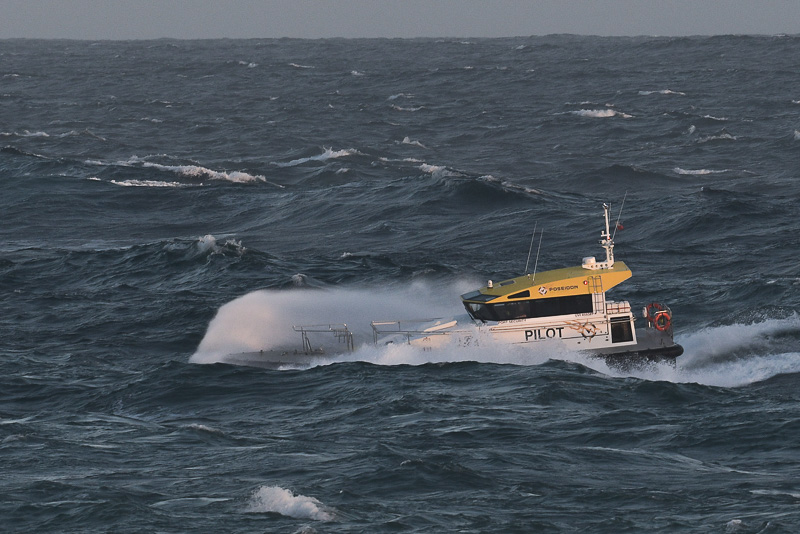
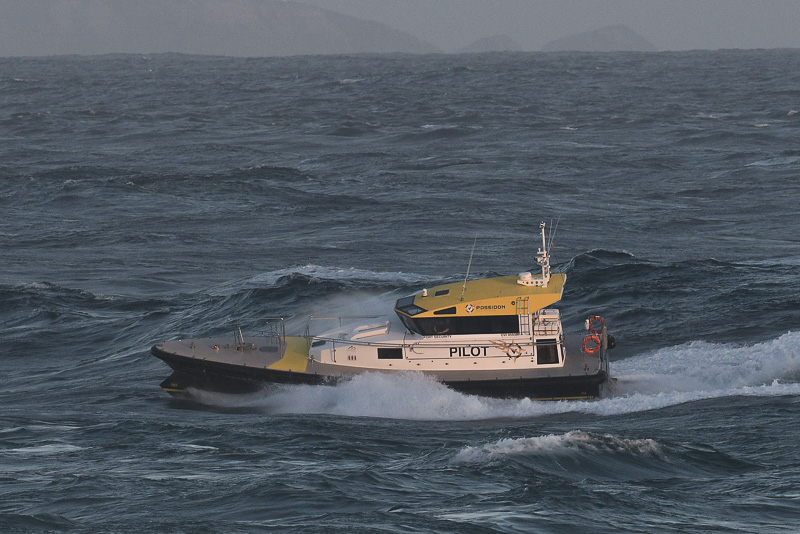
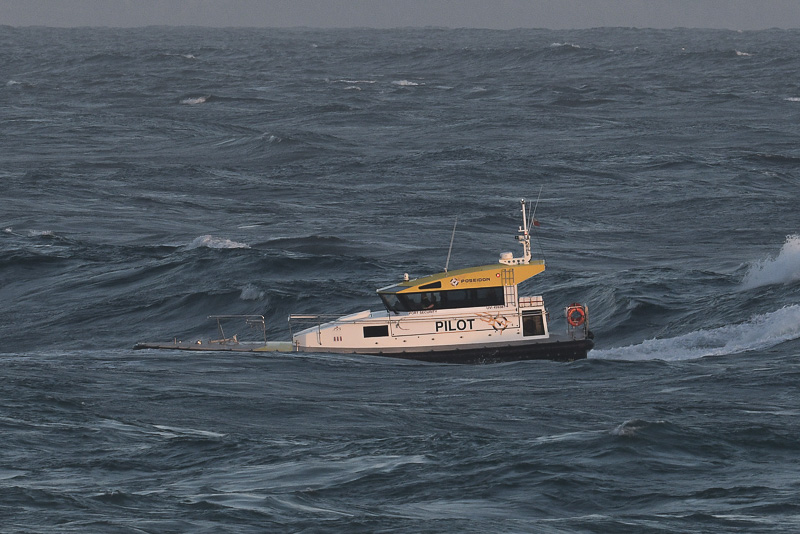
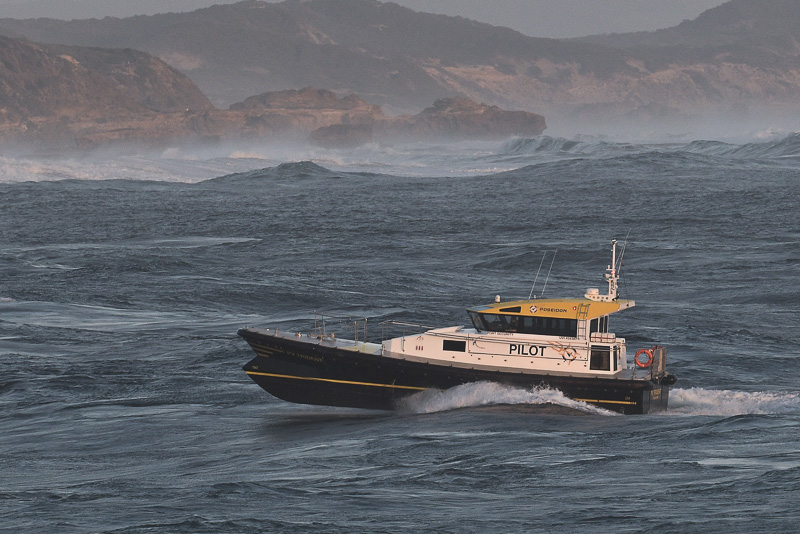
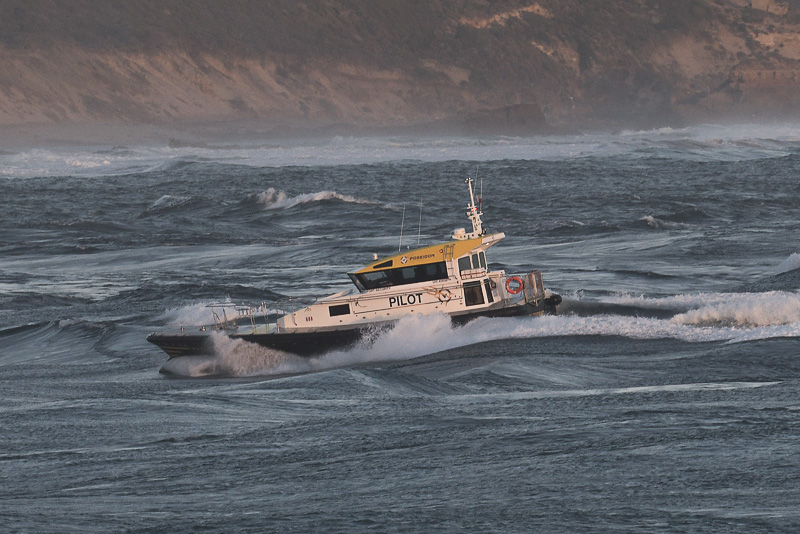
Just as we arrived, a Pilot Boat, that takes out a Pilot to guide in large ships, was returning into the bay.
To say the windy weather was blustery would be an understatement, to say the run of the waves was treacherous would be fool hardy.

As I watched the Pilot Boat rise and fall through the waves, I was rather glad that the sea-faring gene had bypassed me. There are some jobs that need to be done, and traversing that boiling water was not one that I was cut out to do.

As I watched I gained a great respect for the danger these folk put themselves through every day.

A little later as the sun had set the large vessel they were shepherding came into view.

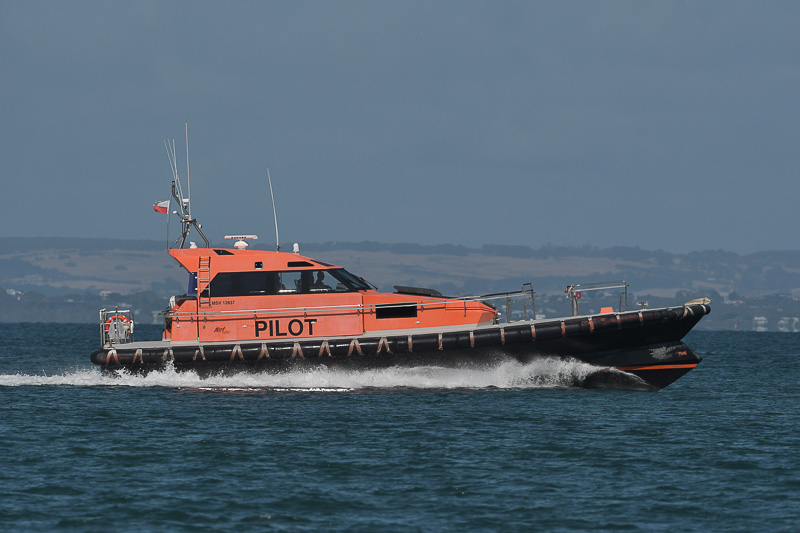
The following day we saw a Pilot Boat going out for another run. In the calm of the harbour and the lovely afternoon light, things seemed much more sedate.

Some quotes from a poem ‘Those Who Go Down to the Sea in Ships’ by James A. Tweedie, a poetic paraphrase of Psalm 107:23-30

Saturday Night Post: Connections

In his book, “What the Robin Knows”, author Jon Young writes about how birds reveal the secrets of the natural world.

He tells a story of the time he was in a meeting in a full glassed office, and looked out to see a bird looking and acting very agitated. He exclaimed, “Oh, there is a cat coming along the footpath.” The others looked out and of course there was no cat. They were in a completely different frame of mind at that moment.
A minute or so later, a cat strolled down the path past the window. And everybody’s jaws dropped. Perhaps they were in the presence of a man with physic powers? Jon then explained the actions of the bird had led him to follow the story outside and that’s how he knew the conclusion.

EE and I usually work with only a small number of birds, we don’t chase birds for accounting purposes, nor do we rush to see the latest ‘new thing’. I don’t have a problem with those that do, just. We don’t.

Just for the record, we don’t camo, sit in hides or ‘sneak’ up on birds either. We let birds establish boundaries, and try very hard not to cross those lines. If I put a bird to flight, the loss is mine and I try not do do it again.
Some birds seem to have more tolerance of the human condition than others and some that have chosen to work in high human density areas are tolerant almost to the point of disdain. Ibis, Ravens, Gulls, Sparrows, Wattlebirds, and Magpie-larks and more, consider our wasteful practices to their advantage and readily move around us without fear.
Many a sausage on a BBQ has been lost to a marauding Kookaburra as it swoops down unannounced from the tree above. 🙂

Other birds just simply grace us with their presence.
My friend Martyn, has a Sparrowhawk that is using his fence as a perching spot, and has become quite predictable. I featured a wonderful video sequence of his a few posts back. However, see Martyn’s Flickr page here for the latest in the ongoing saga. Here is a bird that has become a regular.

Being able to take the time to observe such a bird, one can begin to learn about its character, and begin to see things from the bird’s perspective or at least to appreciate their perspective. It may only be a Sparrow, or Blackbird, or New Holland Honeyeater that regularly turns up in the garden, but there are things to know about the bird that are special only to each of us.

As Jon says, in a story of the San Bushman, “We develop connections with all aspects of the creation.”
As awareness grows, appreciation grows, as appreciation grows, so does empathy— Jon Young

This is one of two young Black-shouldered Kites that are just coming out of juvenile colours. This one is now quite grey of head and only a few chest colours have yet to fade. For us it’s an interesting story, as we are either looking at two siblings, and there were two fledged in the area a couple of months back. Or, two young birds that have formed a pair-bond. At present the jury is out, but if they stay around together, it’s certainly going to be a pair-bond.

Enjoy

Along the Track: With a Yo Ho Ho…

Truth be told, boats, ships, water vessels and the like, are not my thing.
Strange, as the family archivists inform me, that the family tree runs its course through what appears to be a stream of Cornish Pirates. Oh ahh, oh ahh meheaties.

But. I don’t think the call of the ocean managed to sneak down the gene pool to me. Take me to the edge of the beach, let me enjoy the water lapping over the rocks, or on a stormy day explode in force in anger against the land, and I’m satisfied.

However EE on our wandering down the Bellarine coast had booked to take the Queenscliff to Sorrento ferry. Now you’d probably conclude that there were several reasons for that. And the one I’ll share today is The Pope’s Eye.

Sounds pretty much like some ecclesiastical mystery that involves, black coats and stuff, but as it turns out, The Pope’s Eye is a small man-made island that was to form the foundations for fort to protect Port Phillip Bay from intruders, such as old Cornish Pirates 🙂 etc.

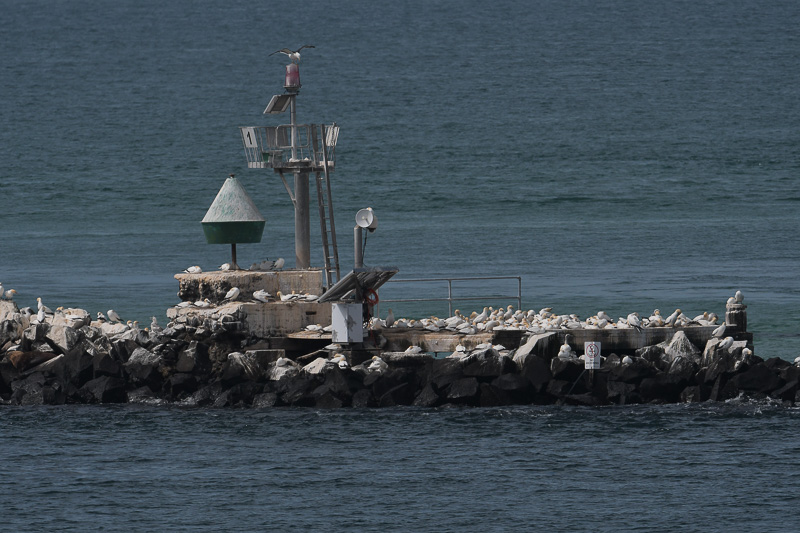
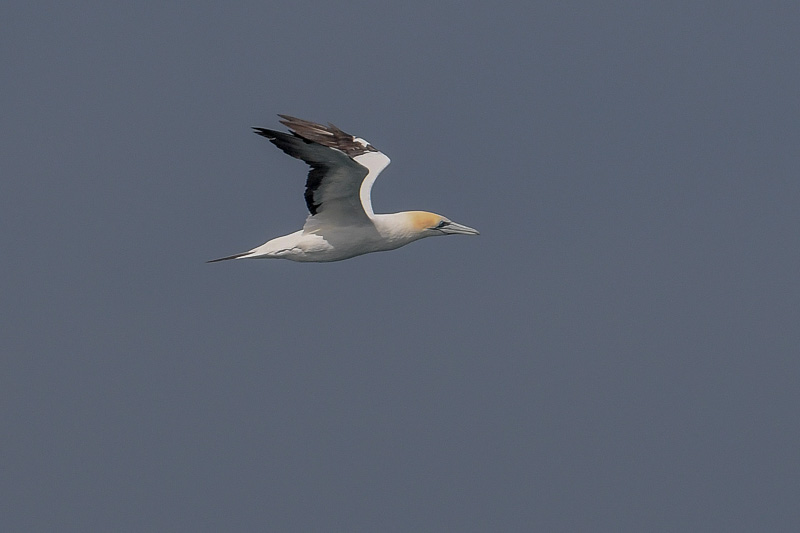
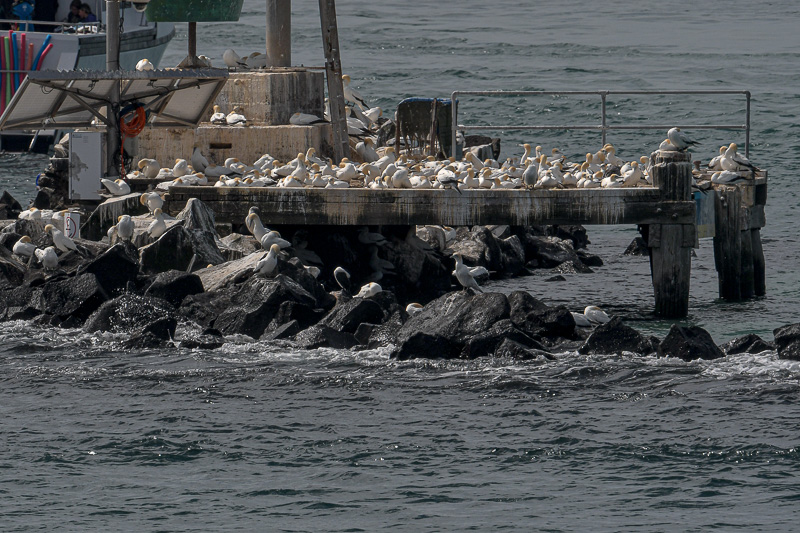
It’s located about 3km from Queenscliff and can be easily seen. No longer the military might, its the home to a large flock of Australasian Gannets that breed there. It’s also a great place for divers and has a wide range of underwater forests of kelp and the like.

The name comes not from any religious significance, but from the name of one of the men who was working at establishing the large basalt rock foundation.

Why chose the ferry. Well tis possible to hire a boat and travel out to the site, but remember my first para. Not for me!

We took the ferry across to Sorrento, on the outward trip it runs quite wide of Pope’s Eye, but on the return to Queenscliff it does approach much closer and a long lens can provide excellent views.
We, of course, were hoping that the Gannets might at least be in the air, coming or going and some great inflight shots might be the order of the day. However it was Gannets sleep-in day and only a few were in flight.
Still, it made an interesting trip across the bay, and a fine meal in the Tara restaurant on our return.

Enjoy