Saturday Evening Post: Turn of the Season

I was going to title this “Return of the Mountain Kings”.
As April approaches, we start to get ready to look for the return of the Flame Robins and other winter flock birds.
From experience, we normally expect to see the first of the females turn up around the second week or so of April, and the males to arrive about a week to 10 days later.
They summer over and breed in the high mountain country and as the weather changes and the snows cover the ground, they move to lower country over the winter for food.

We were out following up on some sightings of Black-shouldered Kites and had been talking about how soon before the Flames would be around. As we crossed a fence-line and came toward the next gate, EE exclaimed, “A Flame Robin on the gate.”
And, lo and behold, there was a brilliant red flash in the sunshine out in the open on the top of the gate.
We followed him down the fence line as he hunted and eventually he disappeared. I guess when he’d flown about 200km or more to get here, 500m down the fence-line is nothing.

And as we headed back to iAmGrey there on the fence was a lone female.
The strange weather and the changes that seem to have affected both birds and trees and other wildlife has also made some adjustments to the Robins and their travel plans.

But we were quite pleased to enjoy their company and look forward to seeing the larger flocks arrive.

Came across an interesting article this morning on the bird that is the emblem of the official flag of South Australia.
The official name of the bird is “Piping Shrike”. It has been oft discussed as two birds seem to fit that discussion. The Australian Magpie, or The Magpie-lark
Here is a link to the discussion

And finally I came across this interesting partial quote by an scholar, Alcuin, he was, among many things, an instructor to royalty, including Charlemagne.

A Prayer from Alcuin (around 800AD)
Give us…..
Firm faith
Unwavering hope
A passion for justice.

In this present world, it is still has a lot of meaning.

Enjoy

Along the Track: Wednesday Wanderings

“What about a couple of days down at Queenscliff?”, hung in the air for a few minutes.
Seemed possible. It is well outside my usual rule. Some may recall that we try not to travel more than 30 minutes or so to a birding spot. These days with extra traffic, we’ll fudge out to 45mins 🙂

So after loading up IamGrey with the appropriated changes of clothes, the right camera gear and bookings for accommodation all set. We too. Set off.

Any run down the Geelong bound freeway will call for a diversion off the highway and a run along the western edge of the WTP, along Pousties Rd for those who follow such things on maps.

I was looking right, EE looking left.—partly because that is the seating arrangement in IamGrey.

Not long before the call, “There is a Wedge-tailed Eagle on the fence!” came from the left side of the car. I should have known.
Said bird was about 100m down the fence-line from the road, but a handy short track to a fence managed to cover about 25m or so. The bird soon took note of our approach. Not wishing to put it up we stopped. But. Perhaps that was even more unnerving and it unfolded the wonderful big sails and before you could say, “There it goes”. It went.

Big grins all round, we continued on to Drysdale and the best pie shop around. There are rumours that I’d travel down there just for the pies, but you shouldn’t believe everything you read. 🙂

Armed with a fine pie, and a coffee we returned to the side of the Drysdale Railway Station, and enjoyed the repast in the lee of the wind.
Lake Lonsdale, right next to the Station, is usually a good place for wetlands birds and we set off. But water levels had changed somewhat, and most of the birds would have nested and departed. Still we managed a few worthwhile finds. But no Grey Butcherbirds that we had hoped to find.
Onwards down the coast we motored.

As it was going to be cloudless evening, we picked up some ‘fish’n’chips’ from the wonderful, “The Original Queenscliff Fish and Chips” in the main street and headed up to the Point Lonsdale Lighthouse hoping we might find some seabirds in the air in the strengthening wind.
We sat on a small table in the carpark area and opened up and enjoyed our humble meal. And both of us simultaneously saw a grey shape in the bushes opposite.

A Pied Butcherbird. Cameras of course were in the vehicle, way over the other side of the carpark, and one of us volunteered to go fetch. Knowing that by the time we were ready for photos, the bird will have flown on.
But no.
This bird probably used this area regularly and sat down tummy on the branch and watched the goings on around. Then a bit of preening, and we went back to the table. By the time we’d wrapped up the remains and were ready to head up to the Lighthouse, the bird was still happily perched.

At the top we were treated to a great view of the sun setting down the coast, and a pair of Pacific Gulls that seemed to relish the wind and the occasional wave spraying over their rocky perch.
And the sight of the Pilot Boat returning over the rough waters of “The Heads”—the flow of water between the East and West sides of Port Phillip Bay. But that will be another blog.(Please)

And top it off, as we drove back to accommodation, the full Moon began peeking over the horizon.

Here are a few highlights.


Saturday Evening Post: Digitally Modified at the Source

Seeing is a miracle.

Recently, on occasions, I’ve risen early in the morning while it’s still dark, and gone for a walk. Street lights abound in the area that I walk, but nothing is quite like the slow, steady, change from darkness to daylight as the sun begins to make its presence felt on the eastern horizon.

Lines and shapes slowly become clearer, colours that were muted begin to take on their own richness. The natural wonders of the world around me begin to stretch and open toward the light.

I meet a pair of Magpies on the corner, near a football oval. I greet them, and they always respond with a long carolling season. Just t’other day, I didn’t see them on a fence post as I walked by—it was dark— and they were quick and loud in the call, to perhaps cajole me for passing by without acknowledgement.

Yet is spite of all these little visual miracles, the vast population around me drive past in trucks, cars, buses and bikes. All blinded to the wonders that are right there. Peering through their windscreens.

Not that I’m totally aware of all that happens. Something will grab my attention, but in between, I am also struck by a disease of visual decline.
Marcel Proust said, “The real voyage of discovery is not in seeing new landscapes, but in having new eyes.”

A wonderment with the world.

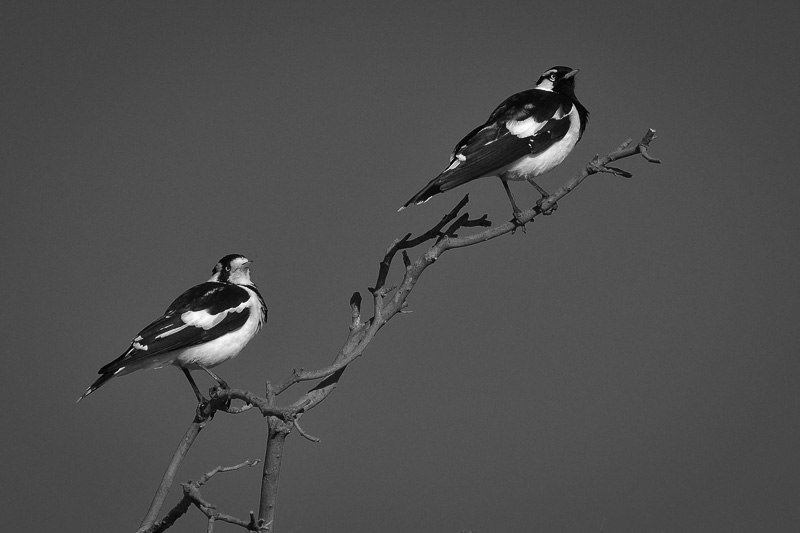
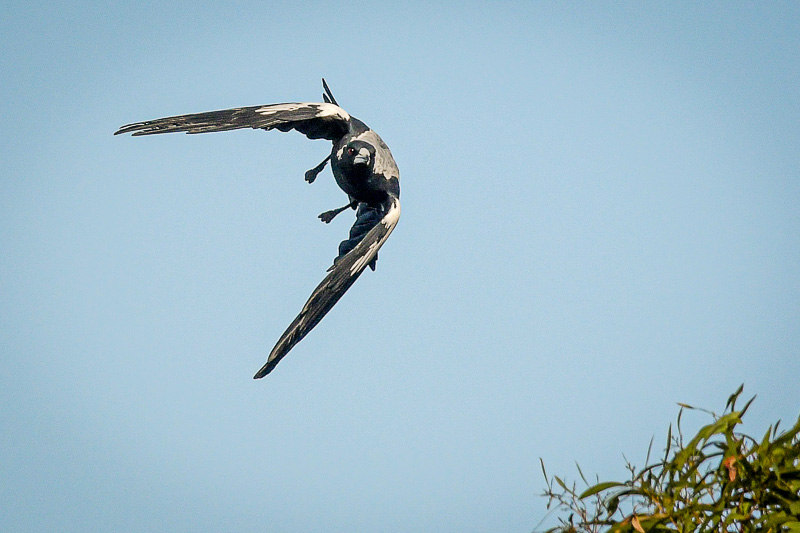
It is one of my great photo goals to make an image of a pair of Magpie-larks landing on a perch and doing their wing and call display.
I saw this pair approaching a tree and hurried to have a clear view, but.
By the time they landed, there was a leafy branch between me and the pair, and I missed the moment.
Looking at them, I turned the camera setting to monochrome, and dialled in some extra red filtration to darken the sky.
The result really shows the difference in the facial markings of the female in white, and the male in black.

As they now say in the best journalistic truth telling. “Digitally Modifed at the Source.”

Saturday Evening Post: I Fixed it up in Photoshop

When I was a wee broth of a photographer and served my time in a portrait studio, one of the jobs was “Spotting” the final finished prints of a client shoot. (Now it wasn’t always portraits, as products and insurance claims and the like were the bread and butter of the High St. photographer in those far flung days.
Spotting was—for the uninitiated—taking a fine brush, some suitable photographic ink, and carefully touching up any white marks that dust or fine lint may have marred the photo in printing. Dark marks were removed with a touch of “ferro”, (a highly poisonous product, called Potassium Ferrocyanide), which would, if carefully applied, (and you didn’t wipe the brush between your lips to get a fine point), slowly dissolve away black silver on the print to match the grey surrounds.

Another technique was hand colouring of portraits and wedding assembles. Careful note was made of the colour of shirts, dresses, hats, etc and passed on to the Hand Colourist who would carefully add the appropriate colour to the, usually toned to sepia (brown), prints.
One studio I was associated with had a reputation among the southern Mediterranean clientele. One of them finally revealed the secrets. Oh, we love your photos as they always give us Blue Eyes!
The hand colourist not knowing any different had just added blue to the eyes as she had always done.

Fast forward to the digital age. And among the first things just about anyone who was on the cutting edge of that revolution did, was to take a face and put it into a daffodil or rose. A person I knew, gained quite a reputation for being ‘creative’ as he showed prints of family and friends all looking good in the garden. And now most phones have a built in app for just about everything, including the famous tic-tok filters. Or was that snap-chat, I can’t recall.

I once had to ‘do’ a country wedding. Involved five sisters of the bride. Who wanted a group shot of the girls. Should be easy.
Makes photographing wayward birds a walk in the park. Literally.

Said girls all lined up. But to get them to look in the same direction at the same time for just say, 1/250th of a second proved impossible. Too many people to wave at, smile at or generally get distracted. In the end, I made about 10 shots of the group, and sent them on their way.
Loaded up all the images in Photoshop, did a quick softedeged cut and paste of each face, placed each on a seperate Layer in Photoshop and then carefully positioned it in the right location, body! Lots of hair, and hats and stuff to hide the edges so for all intents—it looked the part. Made the prints. No one complained.

I was quite astounded at the brouhaha, this week when the good Princess KaKa had the audacity to ship out a family pic of the royal brood, and of all things it seems to have “been fixed up in Photoshop”

Really. Must be the first mother in al history that has taken a shot of the kiddiewinks and then had the thought to clone out a hair or two, polish up the shoes, or get that crease out of the dress. When will that child learn to dress properly.
(Another reason to hire a pro. We check for things like that before we press the shutter as we are not emotionally involved in getting to all smile at the same time. )

How it all got past the sleeping Royal PR team is beyond me, but really. It was a pretty nice photo of the family, and normally, a print to hang on the wall.

But truth in the news business is as we all know, of first importance. Wink, wink, nudge, nudge.

Famed photojournalist Steve McCurry got himself in a lot of hot water a few years back for some off-handed ‘photoshopping’ on some of his pics.
Incidently, Steve also shot some of the last rolls of Kodachrome.
Don’t know Steve. Think Afghan Girl.
I remember the day I walked into the local newsagent and the latest copy of National Geographic was on the front shelf. I think I was mesmerised.


Been a quiet week for us. Between awful weather, a scarcity of birds and a few family activities we’ve been a bit of the home body has us.
But
I do want to share a link to a Flickr friend on mine. He live in Wales and has a Sparrowhawk come and land on his back fence. True!
He has made a few minutes of video of it preening. This is right up there with the best of Steve Mc, so click on the link and enjoy an invitation to the best front row seat you’ll get with a Sparrowhawk.


Thanks Martyn, Sparrowhawk.

Oh, and the header photo of Cassia, of Cinnamon, has had a little play around in Photoshop. !!@$$#W****&&^% 🙂

Saturday Evening Post: Rest or Nest?

I’ve lamented in a few places the past couple of weeks, that we have been a bit bird depleted.
Many of the areas where we normally work, seem to be quiet to a point.

Over the past few months most of the Black-shouldered Kites, that we have followed for a number of years, have finished nesting and have departed along with their fledged young to places far-flung. Hard to understand what has changed. The food seems plentiful, the weather I have to admit is anything but helpful, and perhaps as autumn is around the corner, the birds know things that we are not privy to.

At Point Cook, one pair has had around 5 clutches over the past couple of years. But they too have fledged the young and the trees and paddocks are empty. The female normally would leave the nest area as soon as the young are ready to fledge and bulk up and return a couple of weeks later and begin to plan the next clutch. This time she doesn’t seem to have returned. Perhaps, she has grown a bit tired of this nesting business and is looking for a break.

The male, to his credit, has maintained his station in the area. But each time we pass by, I wonder if he will still around.

We were travelling a local back road the other day, and spied a lone white shape high up on an old tree. EE cried, Black-shouldered Kite.
We didn’t have time to explore, but were going the same way a couple of days later and stopped for a looksee. And there we found a pair resting in the same general area. She was quite vocal and in the end he got the message and took off down the paddock, presumably to collect an offering for her.

The morning was very overcast and now I was left with light-grey and white birds on a milky grey backdrop.
I had been thinking of setting the camera to Black and White mode so decided to see what would happen. This one was shot with the “Red Filter” setting—makes the red eye of the bird a little lighter grey.

Be interesting to go back again, particularly after this bout of hot weather, to see if they have intent to nest,or if it was just a nomadic rest spot.

Along the Track: The Long Walk

We seem to be going through a cycle of seasons at present. Hot one day, cold the next, rinse and repeat.
Some birds that we’ve been following seem to have been completely misled by the changes of season and have already chosen to begin their winter moult.

After a great run of around 10 years, of a number of Black-shouldered Kites nesting pretty much continuously, (not the same pair obviously) the birds seem to have departed all the usual nesting sites.
One pair we followed for about 4 years in the one tree, disappeared over 7 seasons back, and never returned. No other birds have moved into the prime location.

A recent pair has had about 5 clutches—one was completely washed out in appalling weather. Now that the young have become self-reliant, they have left the area, and the female hasn’t been seen for a number of weeks. The lone male is still holding station, but, I suspect if the female has departed then he too will move on soon.
Normally, once the young are ready to fledge, the female leaves the nesting area, and bulks up for the next clutch. If they are going to re-nest, she would normally be back with a month or so. So it might be she has decided enough is enough and is out of the egg-laying business.

As Mr Anonymous was busy with his latest project involving grafting fruit trees, EE and I took off to the You Yangs. On a Robin Mission. But like everywhere it seems, there was little to be seen.

Mind, the day started with its own Warning Will Robertson—Danger Approaching, as we had hardly left home before we came to a fenced off and signposted road telling that we could no longer access the usual road to the Park. Hmm.
After a few turns, U turns, and a check of the GPS, we were back on the highway, bound south for the Park. Really if we’d have known we’d have gone that way to begin with and stopped at Gerry’s for a coffee.
But.
Things didn’t improve at the park. We had headed for a likely Robin spot at “Big Rock Picnic Ground”. But like the Arlo Guthrie song, “Alice’s Restaurant”: There was a big chain and a sign across the access road claiming “Close for Renovations”. (In Arlo’s song it’s for Thanksgiving, for all who know)

So with tail twixt legs etc, we moved on down the road, to another access point that required walking up hill. “Oh, a stroll will do us the world of good,” the ever optimistic EE.

Weather closed over quickly. And after a big loop around Big Rock, we’d only seen a handful of birds. Then a small shape flew into a tree off the track. And I only had the short lens, so not much hope of a great image. And no way to get close as the Bone Seed was impenetrable. As an aside, Koalas, and there are a few in the park, cannot negotiate through the Bone Seed and are prevented from reaching some of the favoured trees.

i made a few frames, in the gloom, and we pondered which Honeyeater it was.
Wrong.
When I viewed it on the screen it appeared to be a Black-eared Cuckoo. A new one for us. And one that is not well recorded in the You Yangs. Bonus.
More walking.

More walking. We changed locations to an area called Fawcett’s Gully. Used to an area that groups kept free of Bone Seed. But the dreadful plant has made a resurgence.
On to the “Seed Beds”. To find this area now overgrown with mostly native plants. But not necessarily endemic ones. The Seed Beds was used after a major bushfire to regenerate plants for replanting in the forest. A lot of the seed came from outside the area.

By now both sets of feet were well and truly sore, and we’d only had three families of White-winged Choughs to amuse us.
Hopefully as the cooler weather settles in and some winter visitors begin to arrive the forest will sing loudly again.

Enjoy.


Saturday Evening Post: Reliable Worker

After the long and rambling sometimes confusing post last week, I thought I’d best be a bit simpler this post.

Among some of the tools that I’ve used down the years for obtaining a successful exposure has been a Weston Exposure Meter.

I was fortunate enough to be gifted one of these as a teenager. As time has progressed I’ve owned about five. Three met with sad endings, being dropped or mishandled, one I think was stolen, and one became lost when we moved, once or twice.

There are some clever settings on the dial that records the correct exposure, and to avoid making this a long post I’ll just ignore them, other than to say they could be used to determine the exposure for the darker or lighter areas.

The meter was not battery operated, but used a light sensitive cell to read the light values. It could read a ‘Reflected” reading by pointing the meter at the subject and reading the light ‘reflected’ back.
The meter was also supplied with a little plastic dome, called uncannily, an “Invercone”. To use it in this mode, I’d attach the plastic dome to the meter and then hold the meter in the subject’s position and point the meter at the light source for an “Incident” reading of the light falling on the subject. (Bit more complex to describe here.)

For most of my own work over the years, I’ve always preferred the Incident method. Once you change to a meter built into the camera, incident light readings become hard, and so called solutions to that problem are at best workarounds.

Incident readings overcomes all the issues of working out where a ‘zone’ should sit.
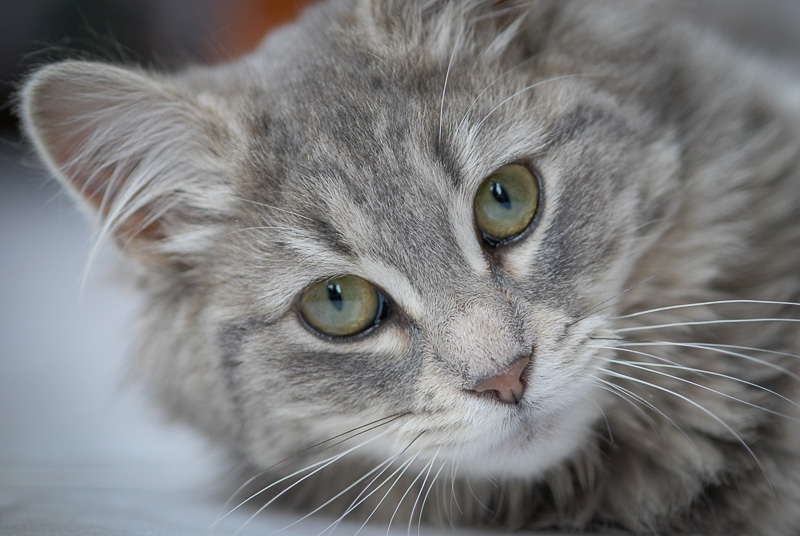
If I were to take a photo of say, Ansel the fluffy Mid-toned Grey Cat in bright sunshine, then one of Fluffy under a bush in the shade, and then a third of Fluffy looking out the window on a cold overcast freezing day, the amount of light falling on Fluffy is going to be significantly different. Obviously the greatest amount of light falls on the sunny day version. And the meter reacts accordingly and I’d change the rotating dial to match the Light Reading value on the screen. The BIg Red Arrow points the way.

Just for the ducks of it, I took my D500 and a 55mm lens outside and photographed the garden. I set the camera to A for Auto and made a picture. ISO 100, 1/125. f/11
Then I set the camera to M for Manual and took the trusty Weston and waved it about a bit, and found it read, ISO 100, 1/125th, f/11. I set that and made the shot.

Looked at both on the screen side by side and didn’t perceive any differences. 🙂
Not that I was surprised. 🙂

Here is a look at my current companion. Although these days it does spend most of its time in the camera cupboard. It also carries a scar of honour in the crack on the glass from one of its many adventures The “Invercone” is in the background.
And I placed it on an 18% reflectance Grey Card (Kodak R-27)


And here is Ansel, the Fluffy Mid-toned Grey Cat. Just in case anybody wondered.

Fluffy and I were being naughty, as she was sitting on my daughter’s table looking out the window.