Truth be told, boats, ships, water vessels and the like, are not my thing. Strange, as the family archivists inform me, that the family tree runs its course through what appears to be a stream of Cornish Pirates. Oh ahh, oh ahh meheaties.
But. I don’t think the call of the ocean managed to sneak down the gene pool to me. Take me to the edge of the beach, let me enjoy the water lapping over the rocks, or on a stormy day explode in force in anger against the land, and I’m satisfied.
However EE on our wandering down the Bellarine coast had booked to take the Queenscliff to Sorrento ferry. Now you’d probably conclude that there were several reasons for that. And the one I’ll share today is The Pope’s Eye.
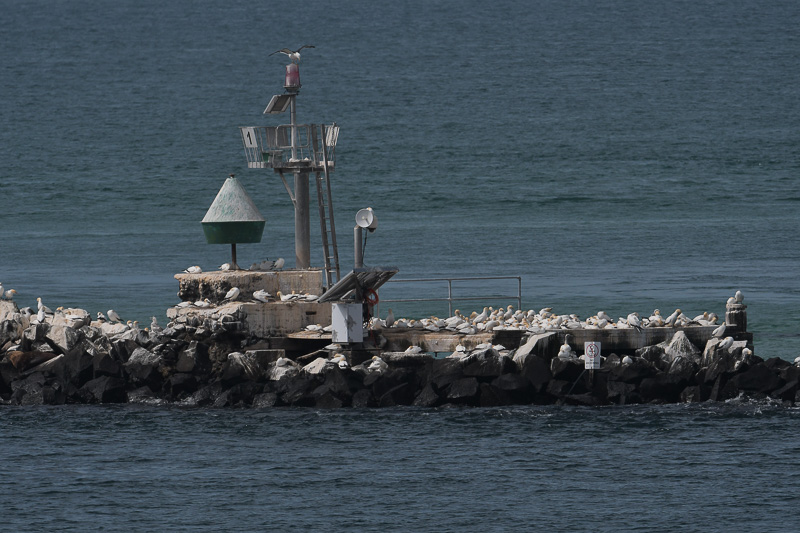
Sounds pretty much like some ecclesiastical mystery that involves, black coats and stuff, but as it turns out, The Pope’s Eye is a small man-made island that was to form the foundations for fort to protect Port Phillip Bay from intruders, such as old Cornish Pirates 🙂 etc.
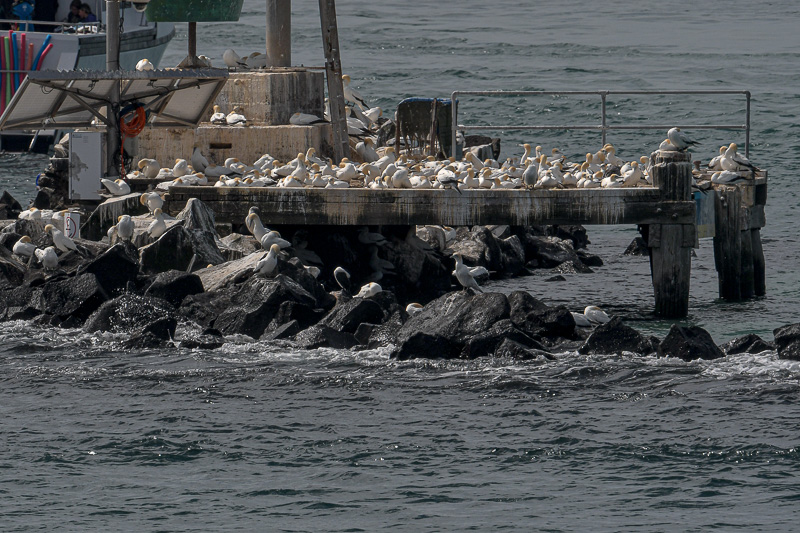
It’s located about 3km from Queenscliff and can be easily seen. No longer the military might, its the home to a large flock of Australasian Gannets that breed there. It’s also a great place for divers and has a wide range of underwater forests of kelp and the like.
The name comes not from any religious significance, but from the name of one of the men who was working at establishing the large basalt rock foundation.
Why chose the ferry. Well tis possible to hire a boat and travel out to the site, but remember my first para. Not for me!
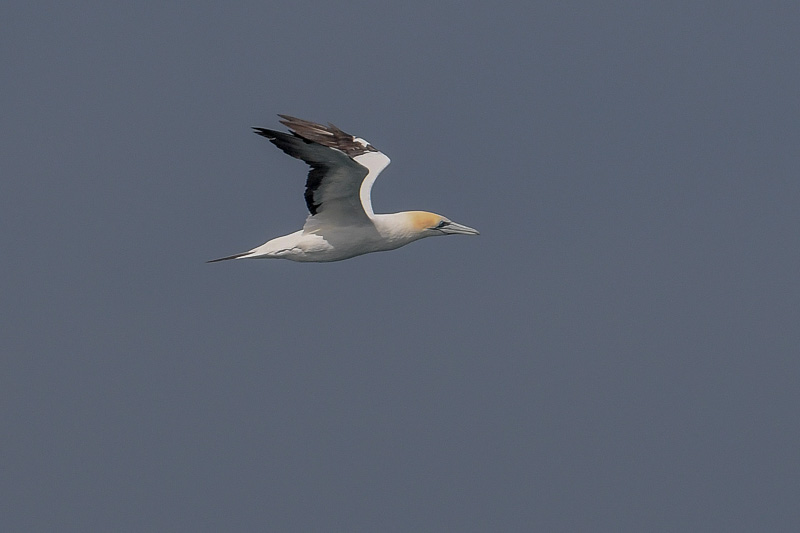
We took the ferry across to Sorrento, on the outward trip it runs quite wide of Pope’s Eye, but on the return to Queenscliff it does approach much closer and a long lens can provide excellent views. We, of course, were hoping that the Gannets might at least be in the air, coming or going and some great inflight shots might be the order of the day. However it was Gannets sleep-in day and only a few were in flight. Still, it made an interesting trip across the bay, and a fine meal in the Tara restaurant on our return.
Enjoy
The Pope’s Eye on the outward journeyThis Gannet was obviously happy to bob about in the swell. As we approached Sorrento a few Gannets were winging their way down the Bay.Another group were waiting for some action The Pope’s Eye on the return journey.A tight knit colony with little spare space A Pacific Gull decided to use the tallest pole for the best viewsThe SEAROAD Ferry outbound.
I didn’t expect to be showing another Gannet trip so soon, but the other day, the strong northerly winds and a very low tide exposed the sand and mudflats over the end of the basalt flow into the bay, and the conditions somehow suit the shoals of fish that work along the edge of the flats.
And of course the Gannets come up the bay to feast.
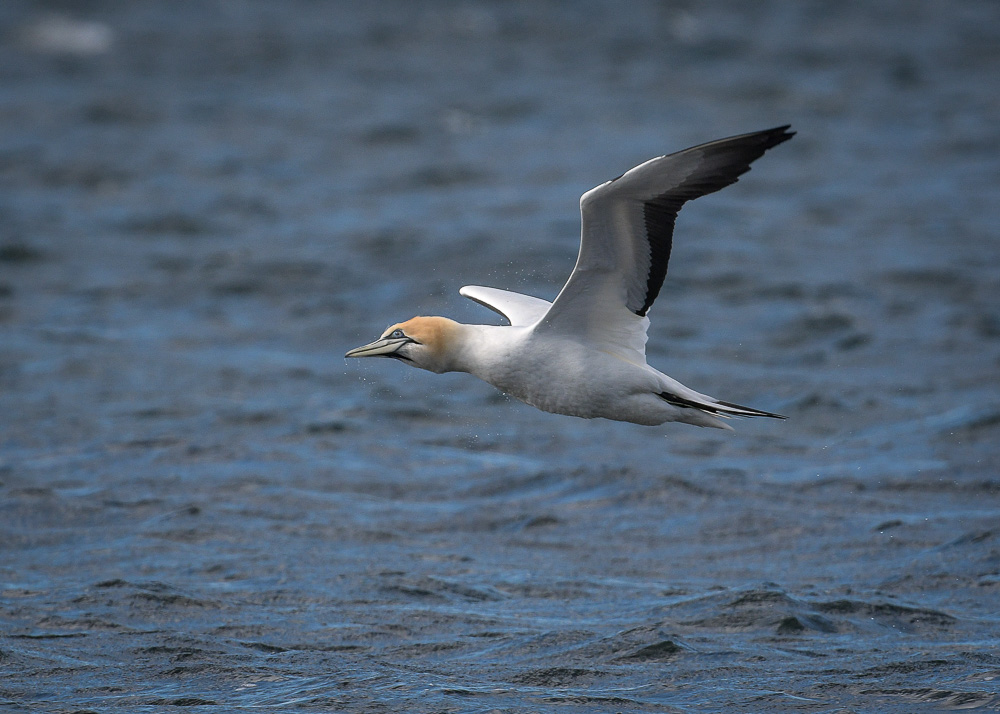
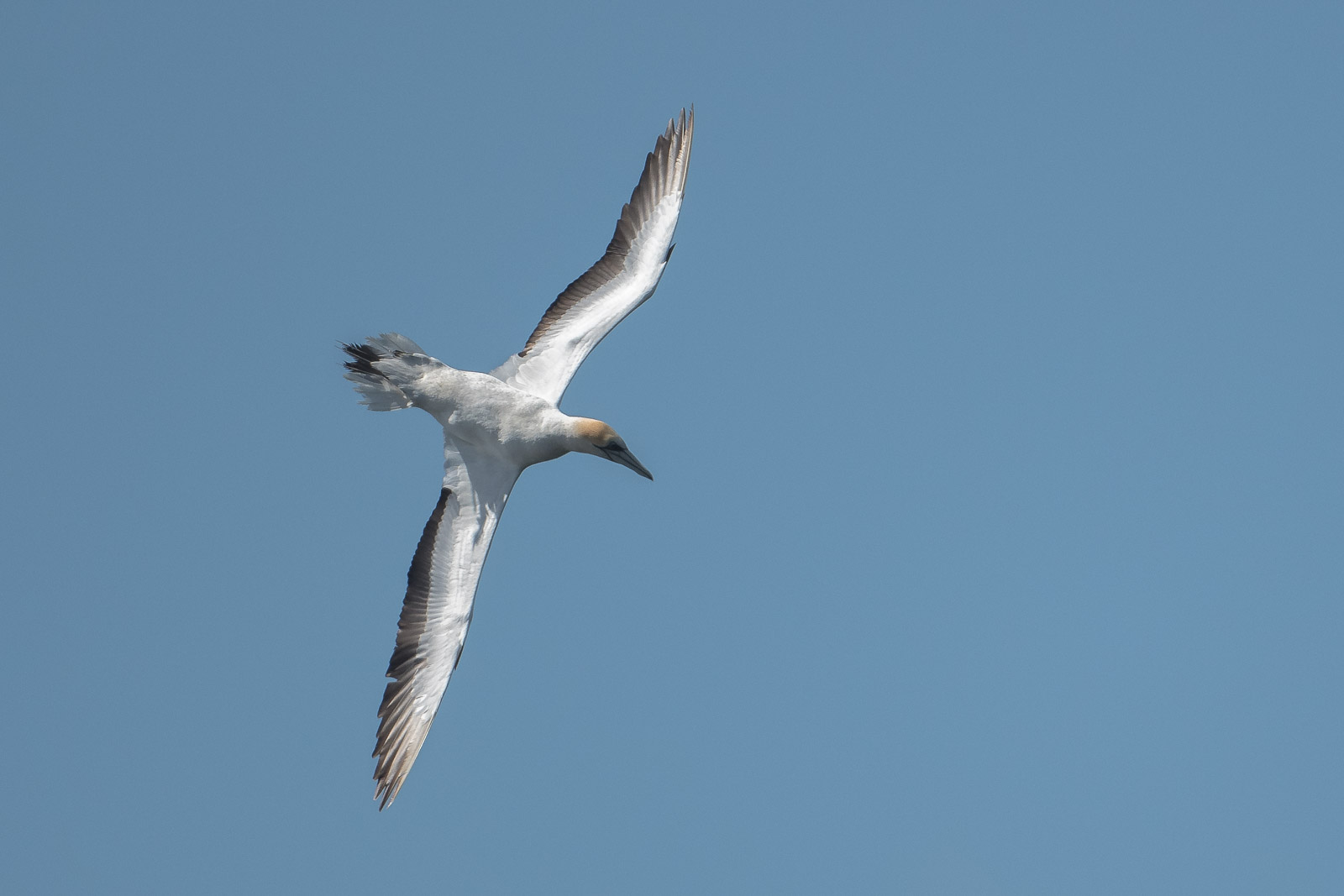
There is something quite magical about watching these creatures slice through the 40kmph+ winds, a flick of the tail, an adjustment of wing angle, a feather tip control and picking the right body angle into the everchanging winds is wonderful entertainment.
Here are a few from your wind-blown scribe standing in the mudflat at the water’s edge.
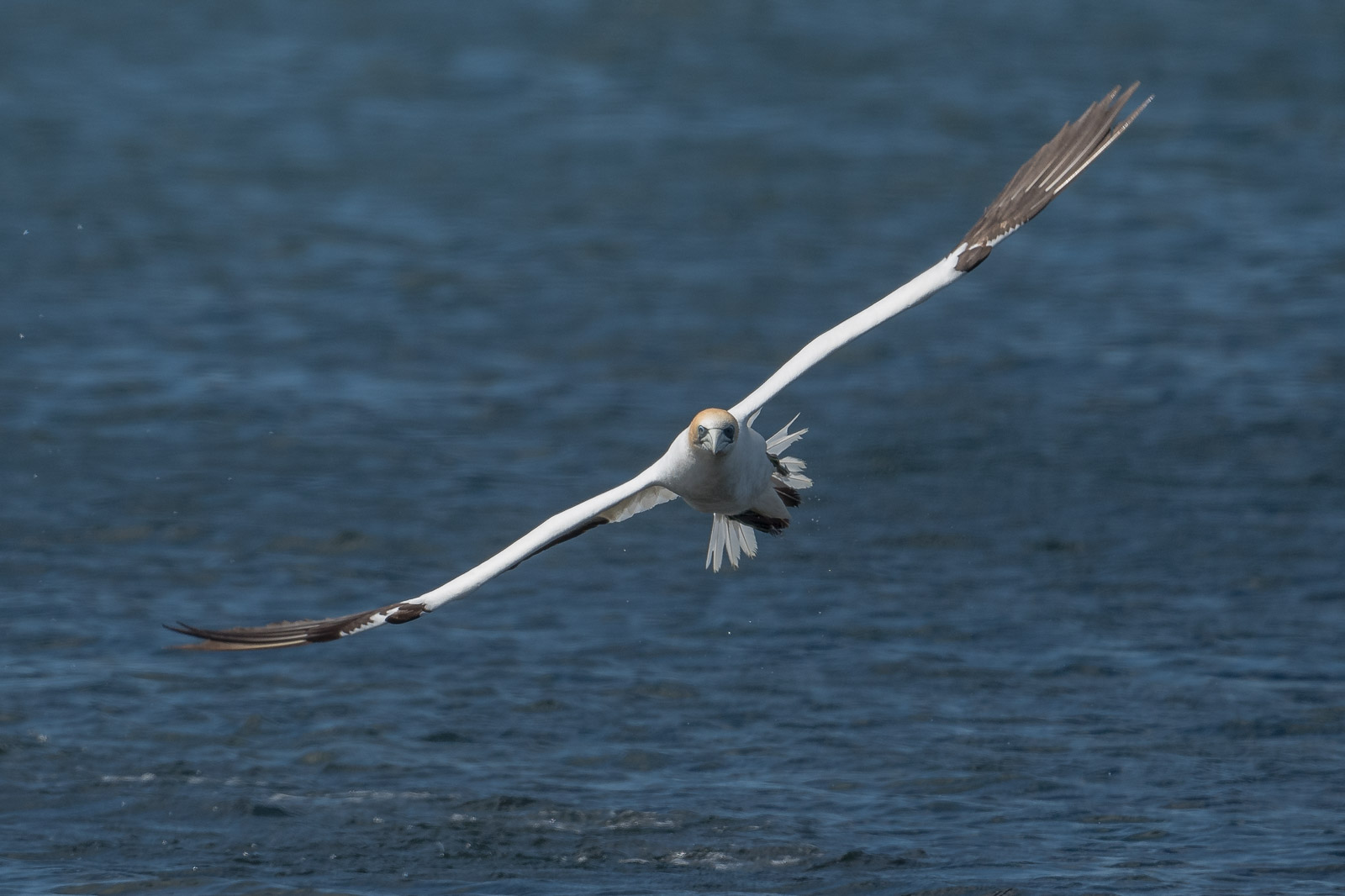
One photo does not do justice to the fine control they seem to have in the strong winds
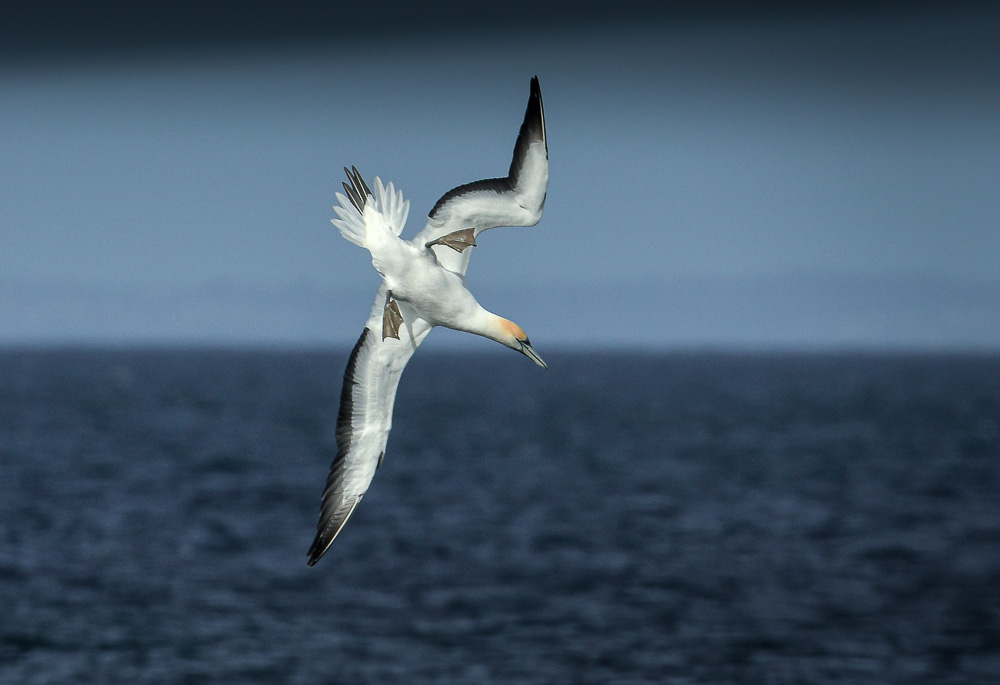
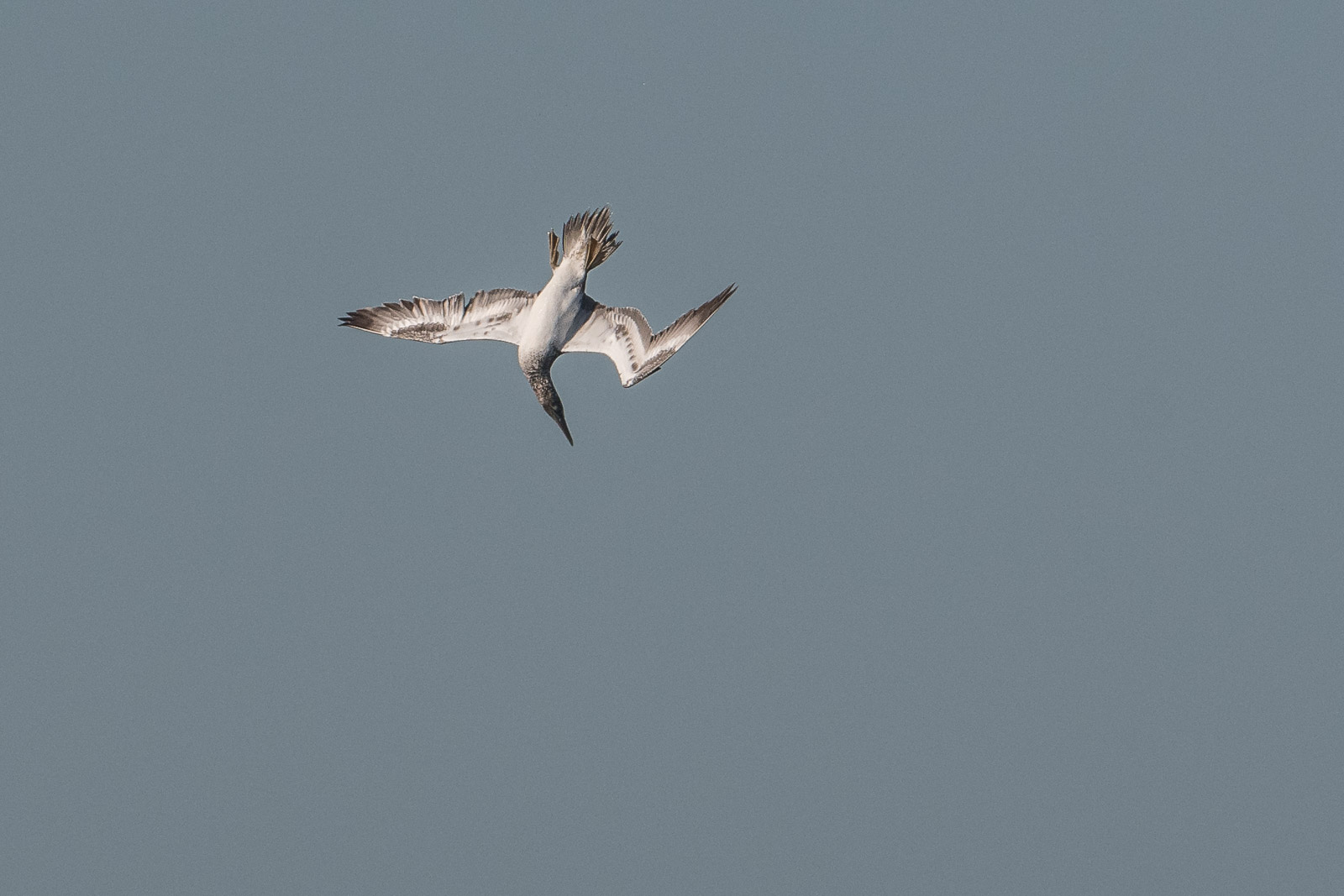
Roll over for a dive
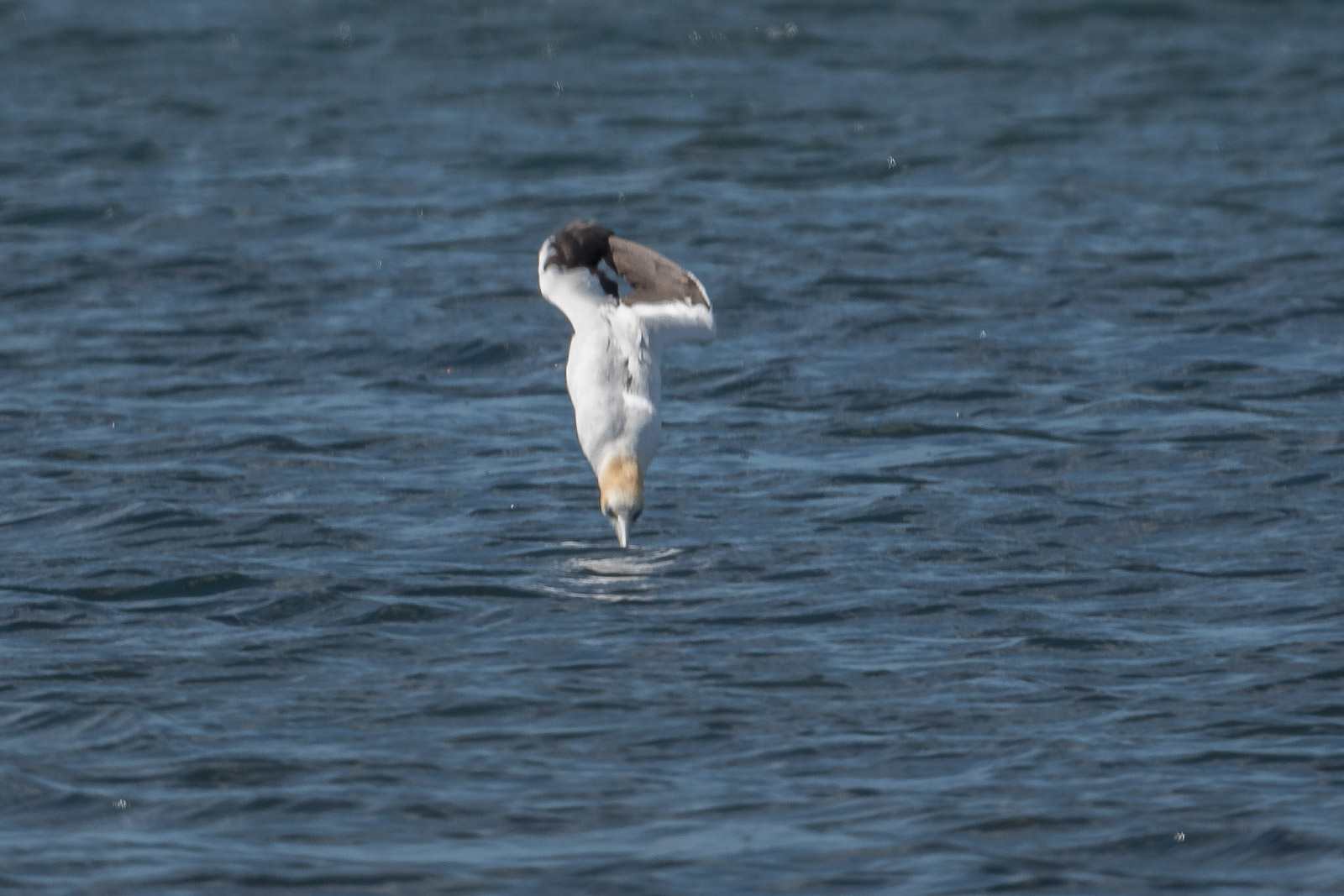
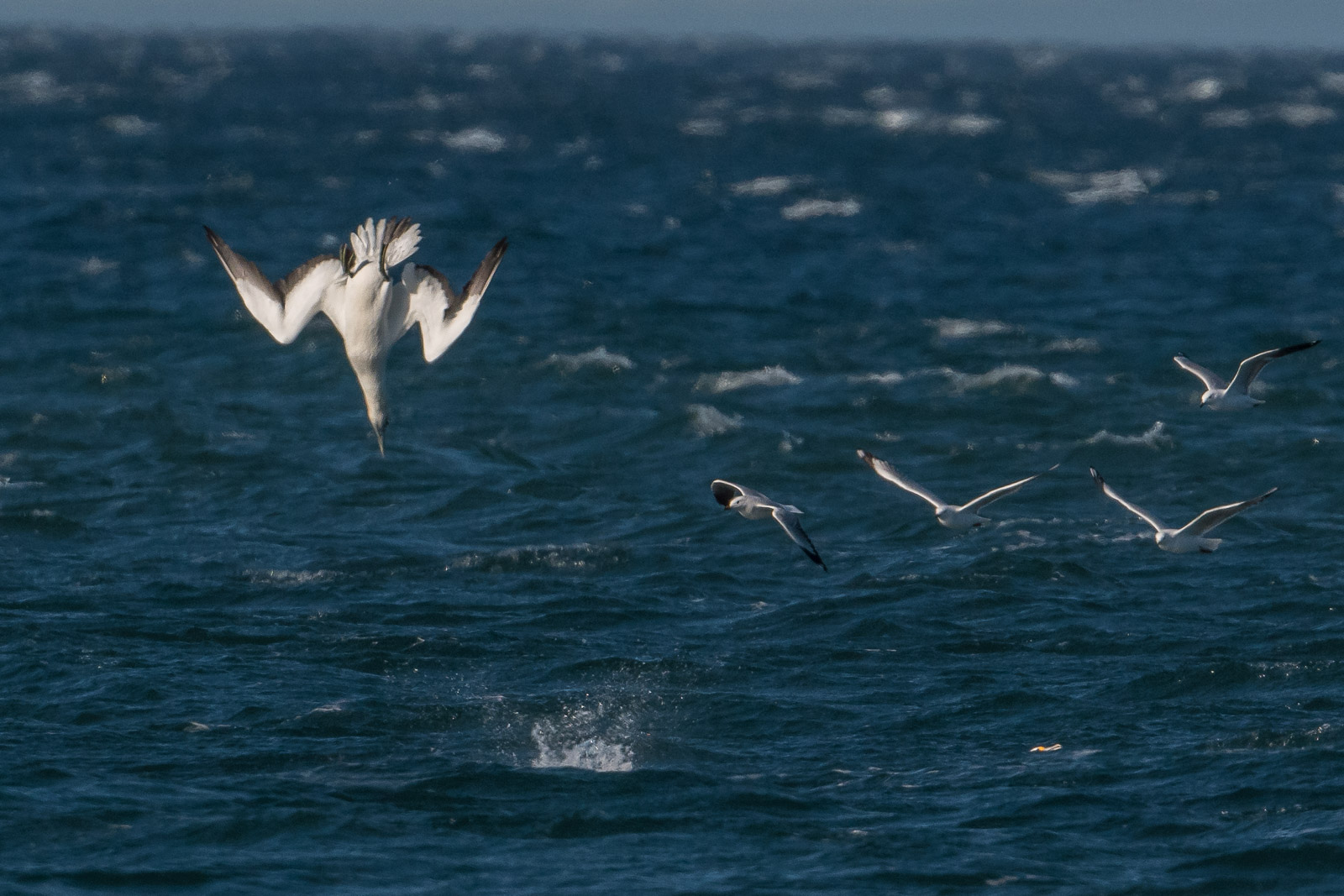
Locked on and down it goes
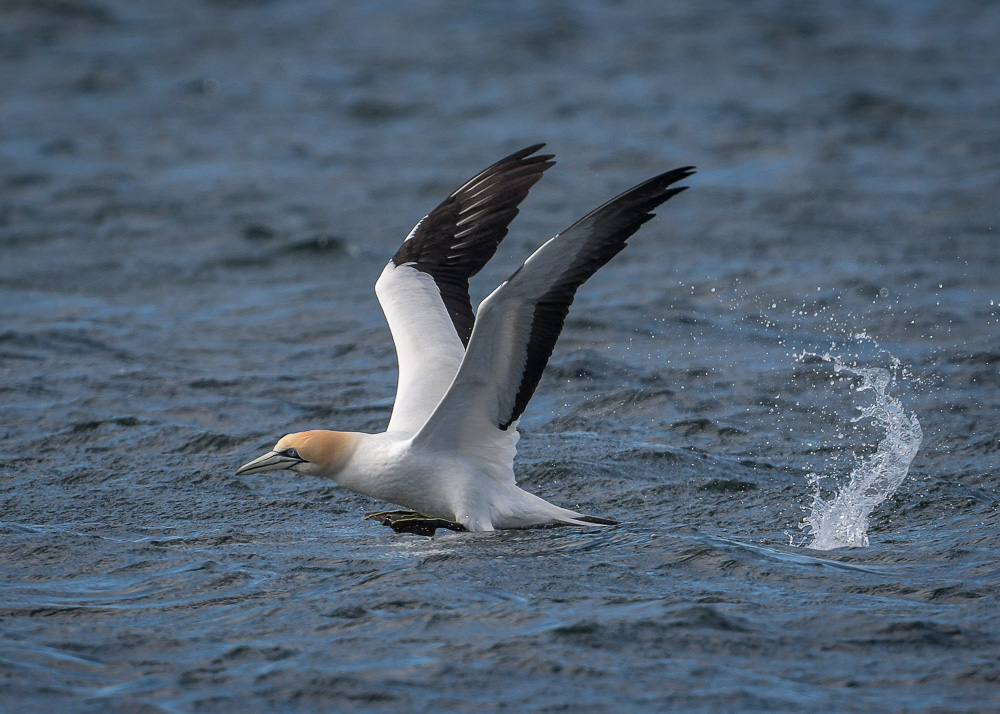
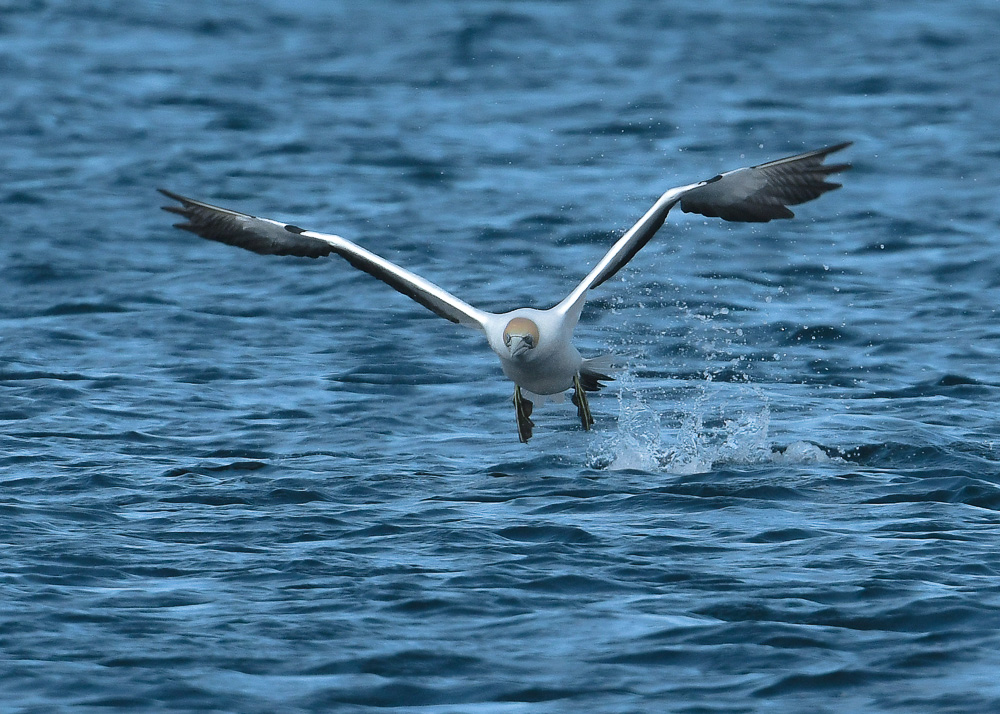
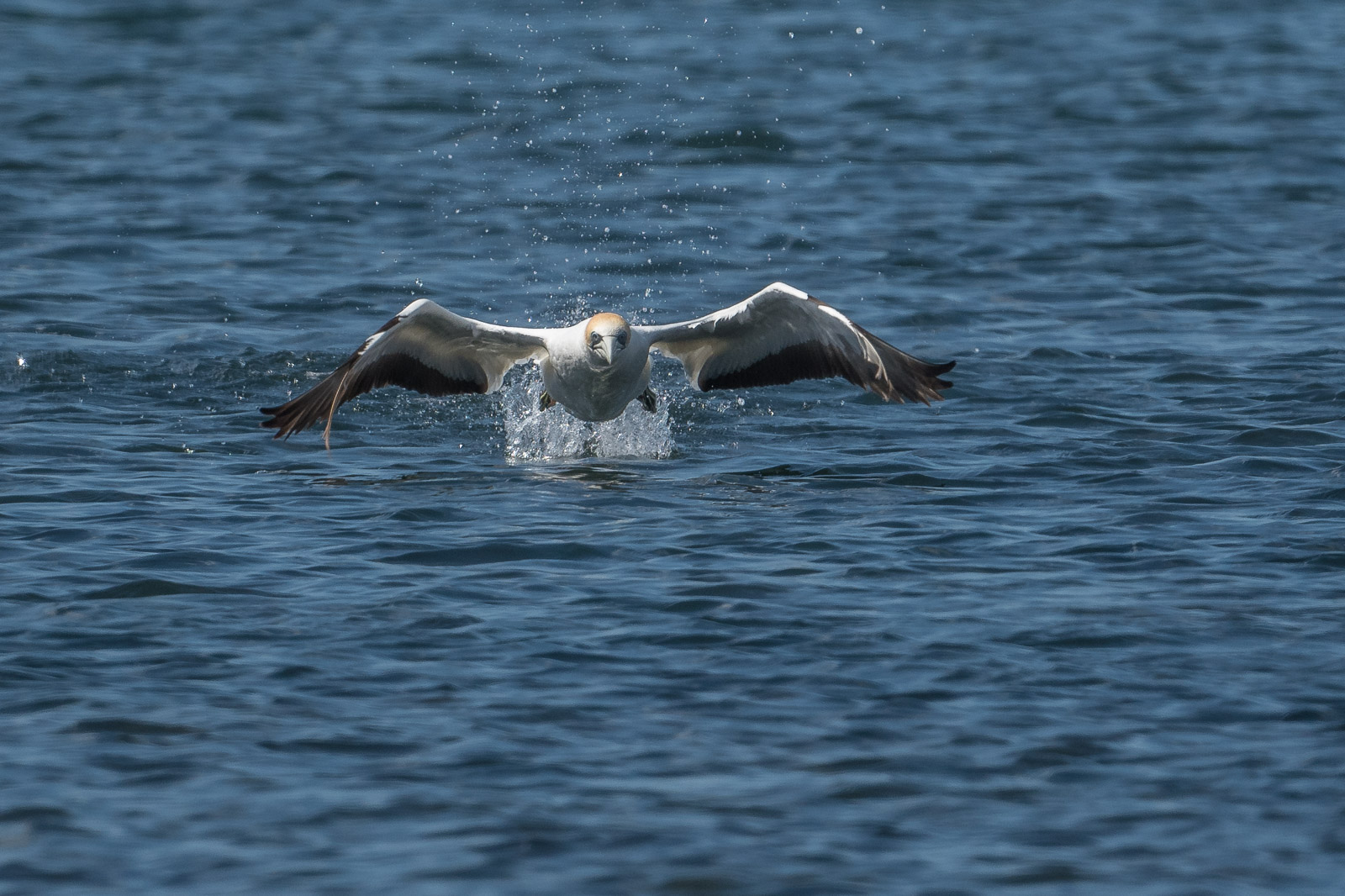
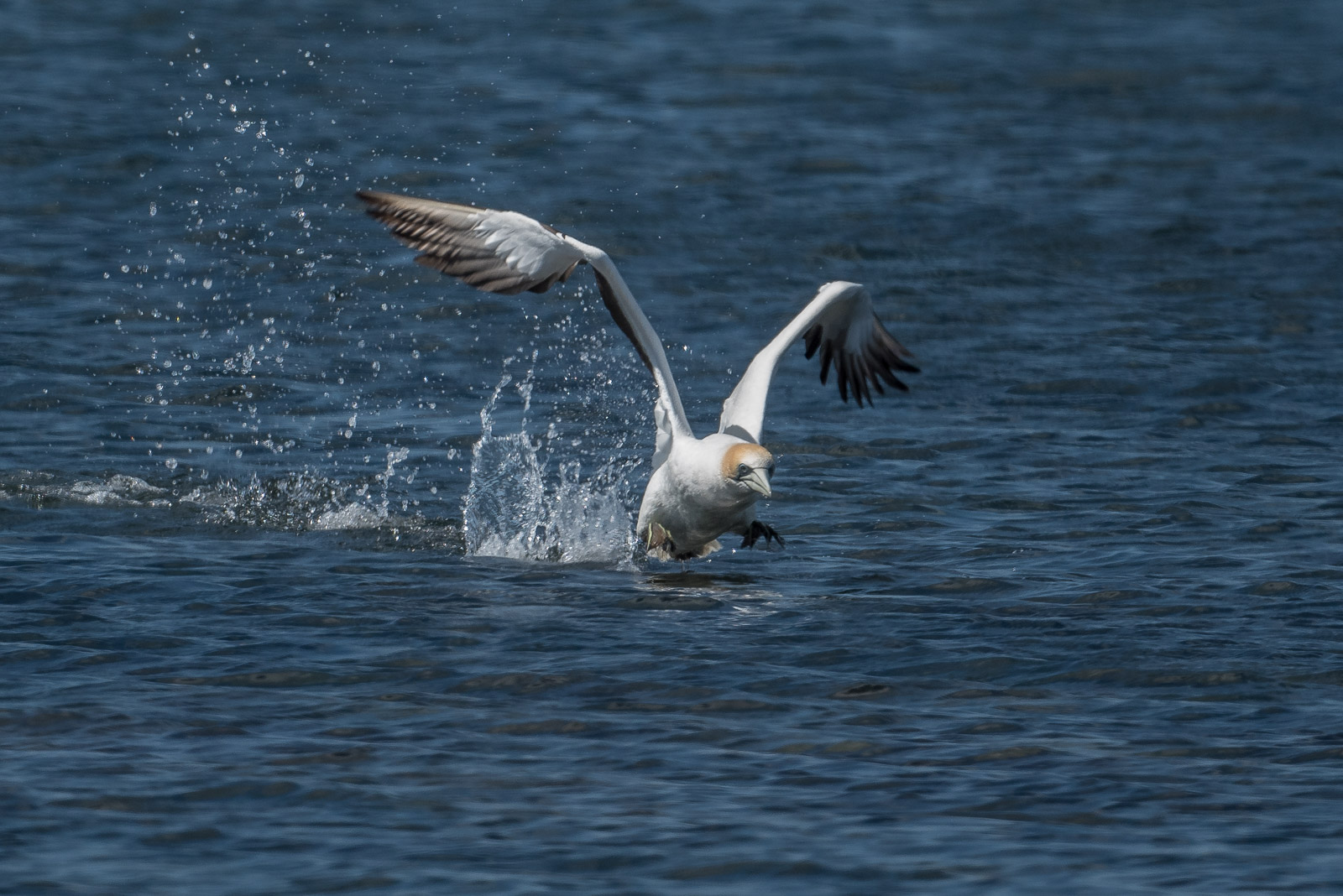
In that strong wind, it was just one wingflap and a jump and it was easily airborne again
Timing, timing, oh well, Just missed the best angle on the obligatory body shake to get rid of the excess water
Pretty excited today to see several young. They seemed to not come into close to the beach preferring to work in the deeper water
Pleasing to see that rich young colour set
Because of the shallow water they don’t do straight vertical dives.
Port Philip Bay is home to several colonies of Australasian Gannets. One of the larger colonies is near Queenscliffe at a man-made island called “Pope’s Eye”. The reference is a midshipman Pope who was involved in building the bluestone basalt annulus. Originally designed as a gun-emplacement to protect the fledgling colony of Victoria.
The area is managed by Parks Vic and the Portsea-Queenscliffe ferry passes reasonably close by on its journeys back and forth. There is also a live-stream camera setup, so its possible to get a sneak peak of the Gannets resting or nesting. The link to the camera sometimes is down, but today it is live on Youtube here. https://www.youtube.com/watch?v=qCB9pUbrme4 As I’m typing its a very wet and windy day on the rock.
On occasions, the Gannets will come up the western side of the bay, and at Point Cook Coastal Park, its sometimes possible to have them in close. There are some wind and tide connections that seem to favour this, and a high tide and strong northerly off-shore wind bring the fish in over the edge of the lava flow sand and mud flats and the Gannets can be seen fishing less than100m out. However it’s a bit hit and miss as to when the fish will run in, so the birds might not show at all, or be gone up the coast in what sometimes feels like the blink of an eye.
Here are a few shots from recent visits.
Australasian Gannet,
A small section of a hunting party at work.
Australasian Gannet, this is a Juvenile.
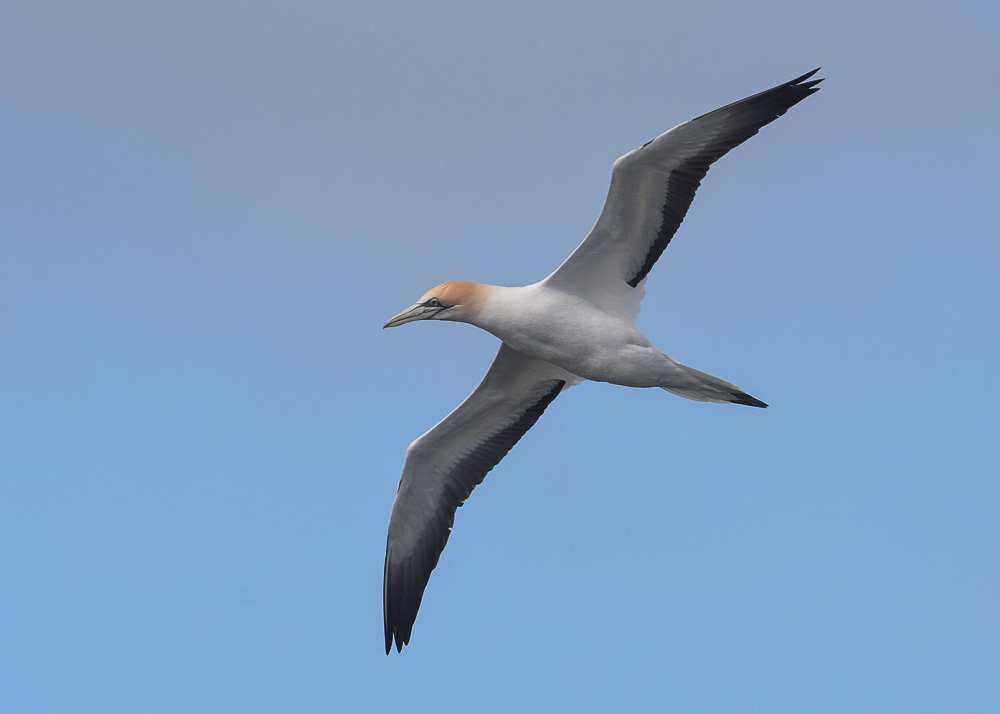
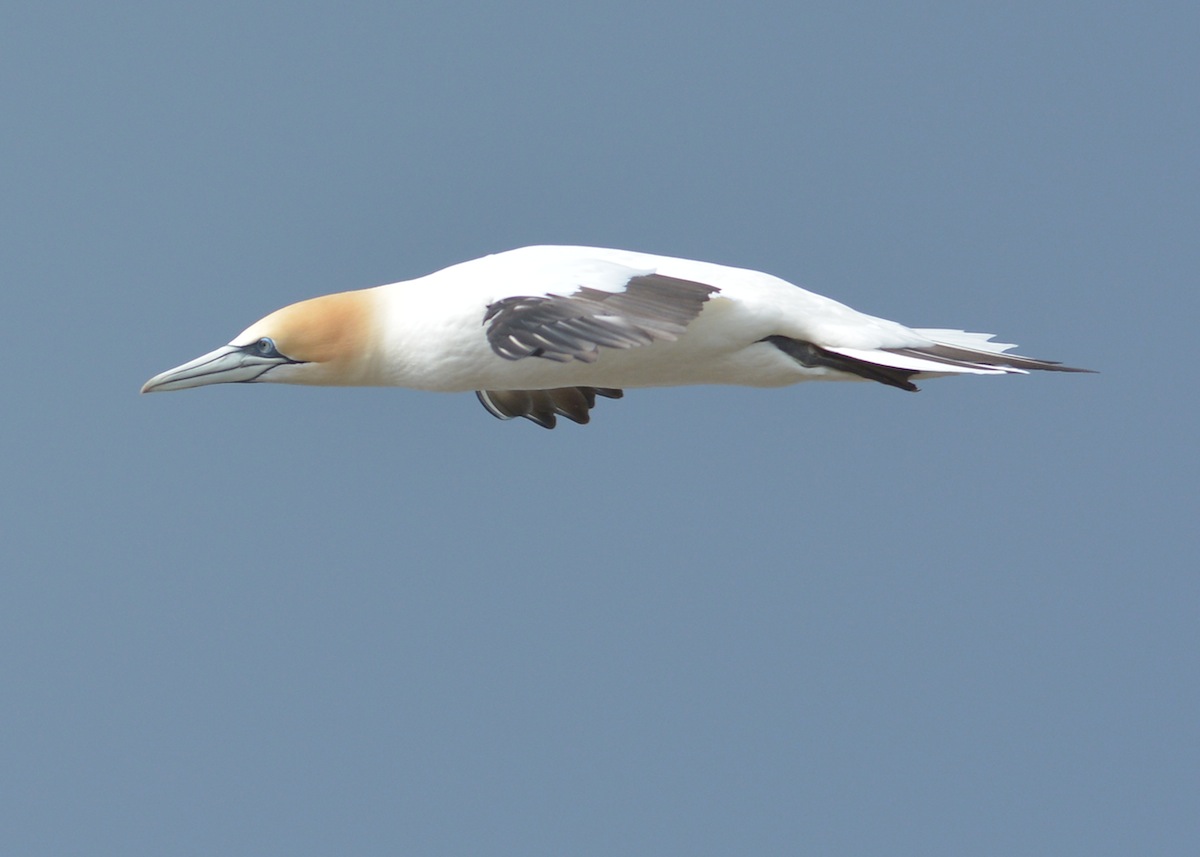
They are as smooth as silk in the air
Locked on to target
Moment of Impact. Legs tucked up for streamlined entry. They don’t catch by diving, but rather by swimming around underwater. The dive is to get them the depth where the fish are. Fairly shallow dive as the water here would not be much more than two metres over the mudflat
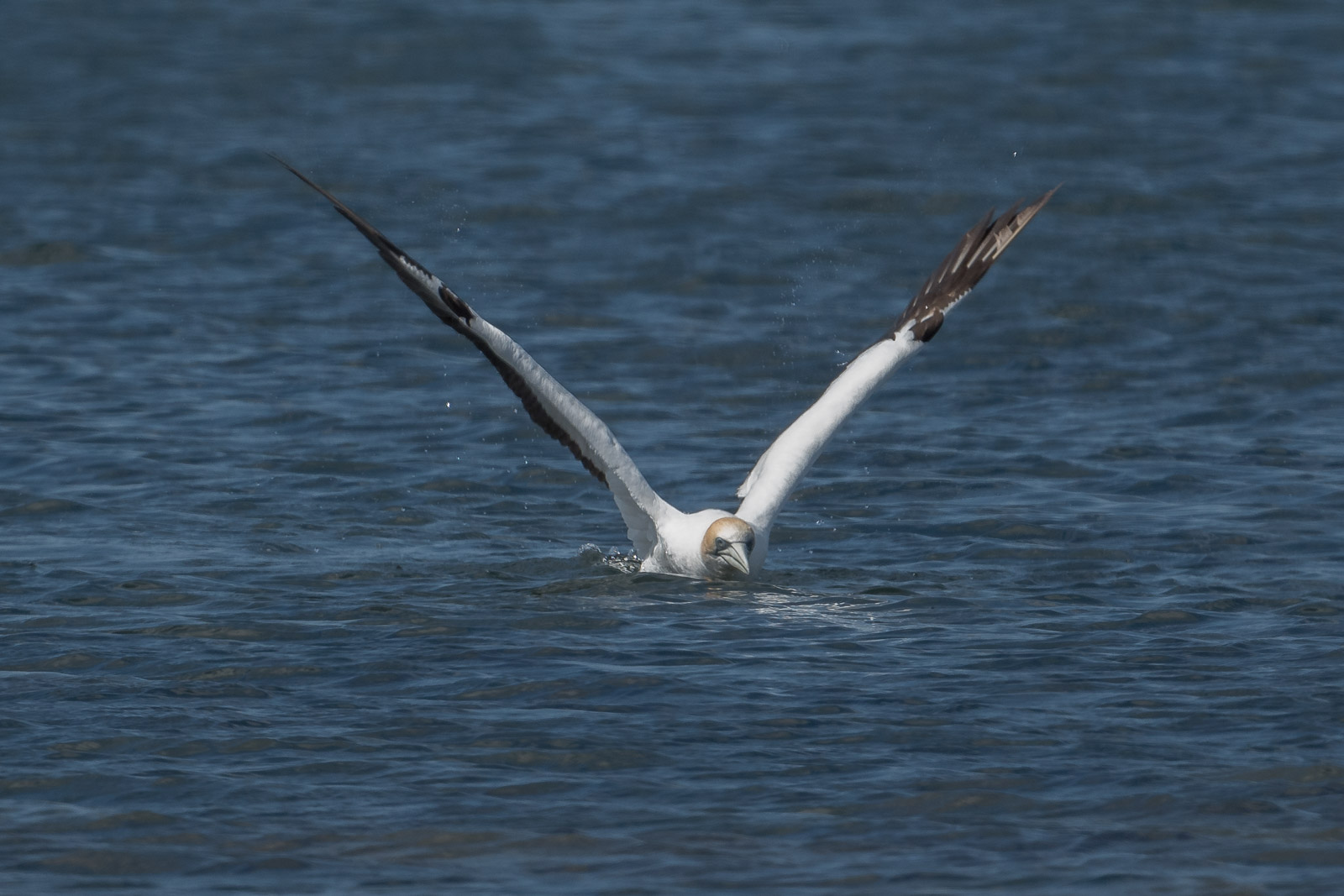
I’ve seen them do this, but never been able to photograph it before. When they return to the surface after a dive they lift right out of the water. So they must swim upwards very fast.
They seem to be able to pull themselves out of the water with little effort
In a recent article in “Nikon Users” magazine, an article on landscape photography had the following quote.
... the one thing we, as photographers, professional or enthusiast, must not lose sight of that we do this for a reason.

We enjoy it.

It's creative, and it's fun.

It's not easy, no one ever said it would be, but the buzz you get when you produce 'the' image is amazing.
Jeremy Walker. See here
Normally I like to keep a Saturday Evening Post to just one image that has impacted me during the week.
However, just for once I’m going to break with tradition, mostly because I think the images are related, tell a story, and also give an insight as to why I’ll be away this coming week.
We had, EE and I, made a trip to Point Cook Coastal Park to look for the return of Sacred Kingfisher.
It was one of those days where the weather was not playing to our advantage. A strong northerly wind was ripping through the trees, and out over the beach, sand whipping up with each step.
We had as they say had a bit of luck with the Kingfisher—All Bad! Not a feather to be found, not wing flicks and not a single distinctive call.
Why don’t we go to the beach, saith she. Ok, saith I.
And just as we arrived at the beach a small squadron of Australasian Gannets appeared, fishing in the water in front of us. I’ve noted before that a lowish tide, and an offshore breeze seems to bring the gannets in closer, and not doubt because the fish shoals are working in closer.
This was exceptionally interesting as the tide was quite low, and the edge of the sandbank was visible in places, and the rocky ledge was also exposed. So the birds were diving into the water not more than 30-50m from where we were standing.
Its the closest I’ve ever been to such awesome birds in action.
There is something intriguing, boarding on infatuation about watching big fishing birds explode into the water. One only needs to look over the majority of bird books/site etc. to see the numbers of eagle, herons, cormorant and osprey photos to know that photographers find them irresistible subjects
I’ve had several sessions with gannets out beyond the reef along the Point Cook coast and also down at Point Danger, near Portland. But these were frame filling birds, and because of the wind, they adopted quite a different approach to the attack. Normally we see them rollover and drop directly. But they seemed to drop the wings, hang out the legs, reduce speed and the torpedo-like slide into the water. Then after 10-15 seconds they must swim back up, as they fair bobbed out of the water, then settled back down to eat and prepare to takeoff. Fascinating.
“So”, she reminded me, “Why did we spend $40 to book a trip to see Gannets in the water next week?” Ya gotta laugh.
See how we go ah? Just don’t lose sight of the reason to be out and about.
This is one of the few that I saw rollover preparing to dive
Wings tucked, legs out, tail flared. Speed reduction technique
Impact
The rocks show how close to the edge of the reef the birds were working
Folded back wings preparing for entry
Coming up
How much power to get the big bird out of the wate
I saw a warning sign on the tool chest in the back of an RACV Roadside vehicle the other day.
Warning before beginning work have you made a Risk Assessment.
Good advice I thought for someone working on car repairs on the side of the road with cars, buses and trucks speeding by, each driver totally self-obsessed in their own world of radio, wifi, facebook and family troubles.
Good advice, I thought too for your average photographer at work on the beach. 🙂
We had spent the morning, in the sunshine—let it be said, around Point Cook. We had arrived at low tide, and around this area the tide recedes in some places out as much as 100 m or more exposing lots of interesting little rock pools and seagrass beds and rocks that mark the edge of the shallows.
Normally terns, cormorants and gulls are the usual suspects. And occassionally when the wind is right, strong winds coming inshore, Australasian Gannets that patrol up and down, just out of camera reach.
However on this day, with a strong off-shore wind, the gannets were working along the area just out beyond the farthest exposed rocks. I don’t know for sure, but hazard a guess they were going down to around the Werribee River mouth, turning north and the gliding past us, about midway to their turn around somewhere near Altona, at the Kororoit Creek outlet or Jawbone Park. Just a guess. About a 15 min and 10 min turn around time.
So after watching several passes and buckling on the TC1.4 Televerter for a bit of extra gain, I pondered, I could walk along the dry sand/mud, step on a few stones and be close to the action.
That would work.
So I set out. Ever alert as a big wave might squash my plans, or perhaps the tide would turn and maroon me out on the dwindling dry ground around the rocks.
As I stepped over one puddle to another, it was apparent that the tide was indeed turning, as the little riverlets of water were heading in to fill the pools near the beach. Risk Assessment time.
I ventured on to the far rocks and waited 10 minutes and of course the gannets didn’t turn up on time. Look behind me, ok, dry land all the way. Wait.
10 more minutes and the first gannets begin patrolling down toward me. Still a bit too far out for great results. They disappear up the bay. Wait.
15 minutes later, and a look behind indicates that I’m running out of time. And the birds appear. Remember that TC? Well at 700mm focal length, the closest bird overwhelmed the frame. Quickly take off TC, balance on rock, hope not to drop expensive optical devices on the rock or worse into the salt water. Risk Assessment zero!
Another 10 minutes and the birds are patrolling again. Not as close as the first pass, but I’m running out of options.
Look behind. Water is beginning to fill in some of the lower pools and its all a few minutes from joining together and wet feet slog home. Risk Assessment.
Retire now to survive for another day.
Australasian Gannets are interesting in Port Philip Bay. They roost on several of the navigational structures around the bay and on a man-made island called, “Pope’s Eye” near Queenscliffe.
Some reseach, indicates that the birds that fly up and down the coast line on the western side are primarily males. In other areas it’s pretty much a 60% female, 40% male mix.
I also discovered the link to a web cam on Pope’s Eye.
If you’ve ever wondered what goes on in a gannet colony, and you wanted to avoid getting wet, travelling to Portland, and the smell, then this is well worth the few minutes to view. Solar powered it only functions in good weather.
It cycles a pre-recording if the live feed is off. Bet you can’t wait for tomorrow.
It’s been a bit quiet for us of late. Too cold, too blowy, lack of birds. And hot chocolate at home…Yum!
We had been at Point Cook Coastal Park a couple of weeks back. Looking for Flame Robins—not too many, unfortunately—and EE’s Sea Eagle, (hers by virtue of she saw it first, not that any would be surprised).
By the time we had arrived there was a pretty stiff Southerly breeze at work, making walking challenging for EE and Dolly. However we found a sheltered spot at the beach, and opted for a cuppa and snack, and while we sat contemplating no Sea Eagle, Robins, nor Cormorants, (somewhat in that order of importance), a large mixed flock of sea birds arrived just about in front of us.
No doubt a school of fish was running along the edge of the sandbank a few hundred metres out. Outstanding among them was 25-30 Australasian Gannets. It’s really only on a Southerly that we see these birds in so close, so it was a bit of a treat to watch their controlled dives. A large number of seagulls and cormorants were also along for the feast and quite a few Greater Crested Terns.
Unfortunately for photography, they were just that little too far out, and mostly swung round into the breeze for lift off, which meant very few close passes. As it happened, however, I had packed in the Teleconverter, TC 1.4, so it gave me a little more reach with the 500mm.
Still for all that, all these images are huge crops from the D500. But it does reinforce what I’ve said previously about the lens. It does focus well, beyond the somewhat limited 30m or so of the cheaper tele/zooms.
Eventually the fish moved further out and up the bay, so we settled back to our now cold cuppas and enjoyed the action from a distance.
Made up for the lack of other special guests that day.
They seem to roll over, then correct and plunge straight down
No doubting where the target is.
Starting to fold up all the hardware
And down it goes. Interesting to see the Pied Cormant appearing in the sequence
Another of the roll over actions
All tucked up for a smooth entry
A juvenile. When you consider it’s actually upside down as it comes out of the roll over, their body flexibility is awesome.
Today’s trip was an early start and an hour or so’s drive to Portland. Destination: The Australasian Gannet Colony at Point Danger. This is Australia’s only mainland colony. We had, thanks to arrangements by our trip leader Iian Denham, the opportunity to get up close and personal with the birds. Iian had made arrangements with Rob Farnes, to gain access into the nesting colony area. Not right in, but up to a low wire fence. 5 metres is pretty close with such a big bird.
There are around 200 pairs on the headland, and they are nesting at the moment. Not much of a nest, but some seaweed and grass stuck to the rock with the most handy material available. Bird Poo.
Now the weather had only changed slightly from yesterday, and the main change being an occasional hint of sunshine between the squalls. We needed to leave the cars and access the area through a locked gate, and at the appropriate time Rob came down and let us in. About 14 birders and two whacky photographers. I’d chosen to run with the Wimberley Gimbal head. Given the birds were in a set location, and I didn’t want to be swinging that long lens around in the wind. Oh, did I not mention the wind. Blustery Southerly is how it was described. Evil intent wind with designs of sweeping me of the rock is how I describe it.
I also foolishly made the command decision NOT to take the long Driazabone nor my gloves, figuring the weather might hold. (shows how little I know about weather) Within about 5 minutes of being too far from the car to go back, the rain set in.
Most of the group headed for the ‘shelter’ of some low shrubs, but I decided not to leave expensive camera, tripod and lens to the elements, and hung on grimly. My hands began to ache in the cold. The Gannets seemed not concerned at all.
Just off shore (about 2 km) or about 3 wing flaps for a Gannet, is the main breeding colony of Lawrence Rocks, up to 6,000 pairs are out there. I could just make it out in the rain.
One of the opportunities for the birders here was a Cape Gannet that had attached itself to the flock, but try as hard as we might, we didn’t get a sighting.
I’m going to share more of the photographic challenges in a second blog, as I want to show a wider range of photos.
After getting back to the car, and turning on the heater, and attaching my gloves, we headed off to the Lighthouse area, for both morning tea and Rufous Bristlebirds. We opted for a quick cuppa outside, but those who ventured into the coffee shop, got not only a fine hot coffee and cake, but, just the best views of the Bristlebirds performing in the open. You gets what you pays for!!!!
After a look among the scrub, a walk to the top where the lighthouse stands, we bade farewell to the group, and began the drive back home. We had an appointment for Wednesday, and so it was impossible to stay longer.
By the time we were going through Port Fairy, it was lunch time and we were feeling just a little peckish, and the joint chief of staff decision was made to take fare at Port Fairy. Now- I recalled that yesterday I’d seen “Chicken Tandoori Pie” on the menu at Bella Claire Coffee shop, and we parked outside and then enjoyed a super pie, and another coffee. Things were indeed looking up. The service was great, the food amazing, and I found another pie place to add to my ‘Pies I’ve eaten” book.
To top it off back across the road to Cobbs Bakery and I picked up some Pasties to travel home with us for dinner. Too much fun.
We had a bit of time so went for another look along Gorman’s Lane. No rain, but, the tide was out and the waders were a long way down the beach. Too far for this adventure.
Here is some Gannet moments. More to come tomorrow.
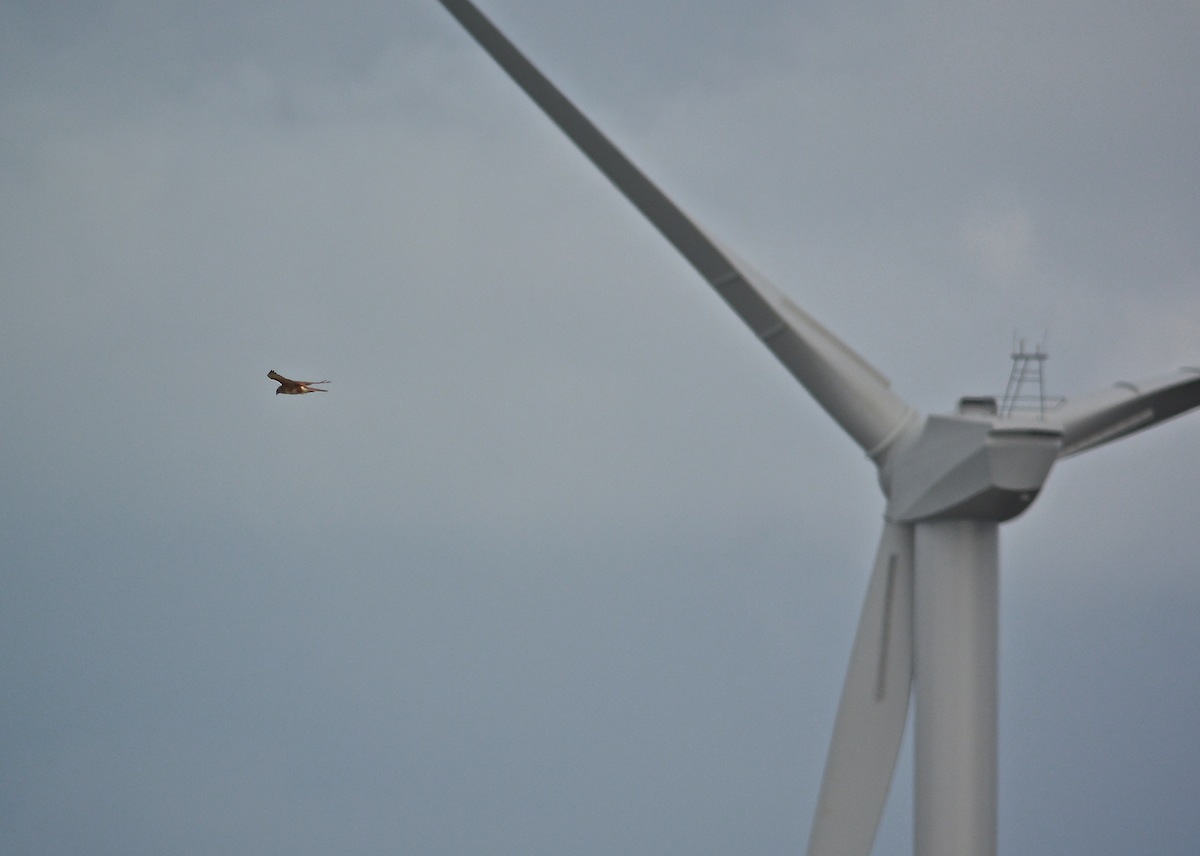
Brown Falcon and wind turbine.
Lawrence Rocks. Home to over 6,000 pairs of Gannets.
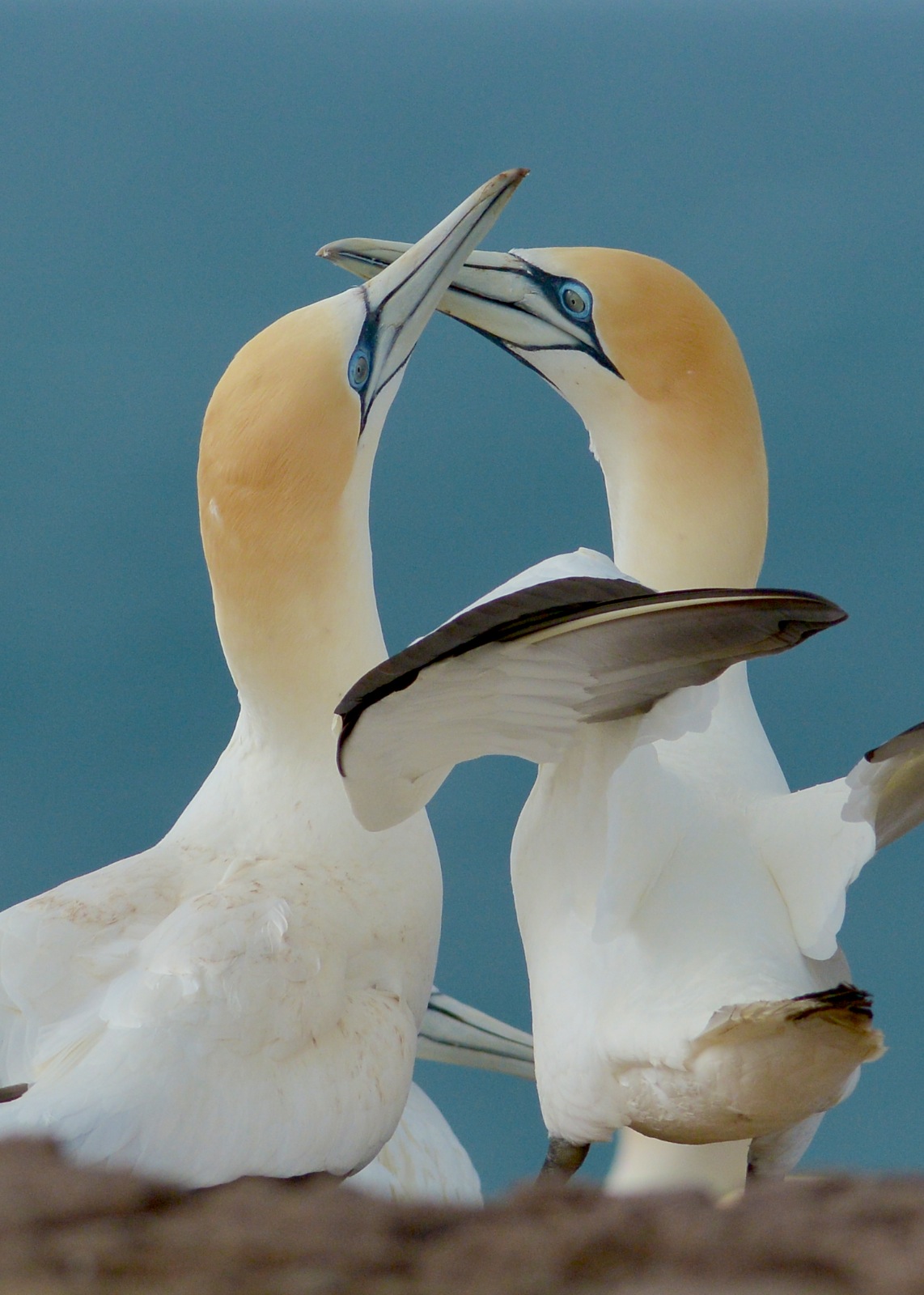
Mutual bill stroking between pairs as the mate flies in.
They were either against a dark sky or a dark sea.
Wing show.
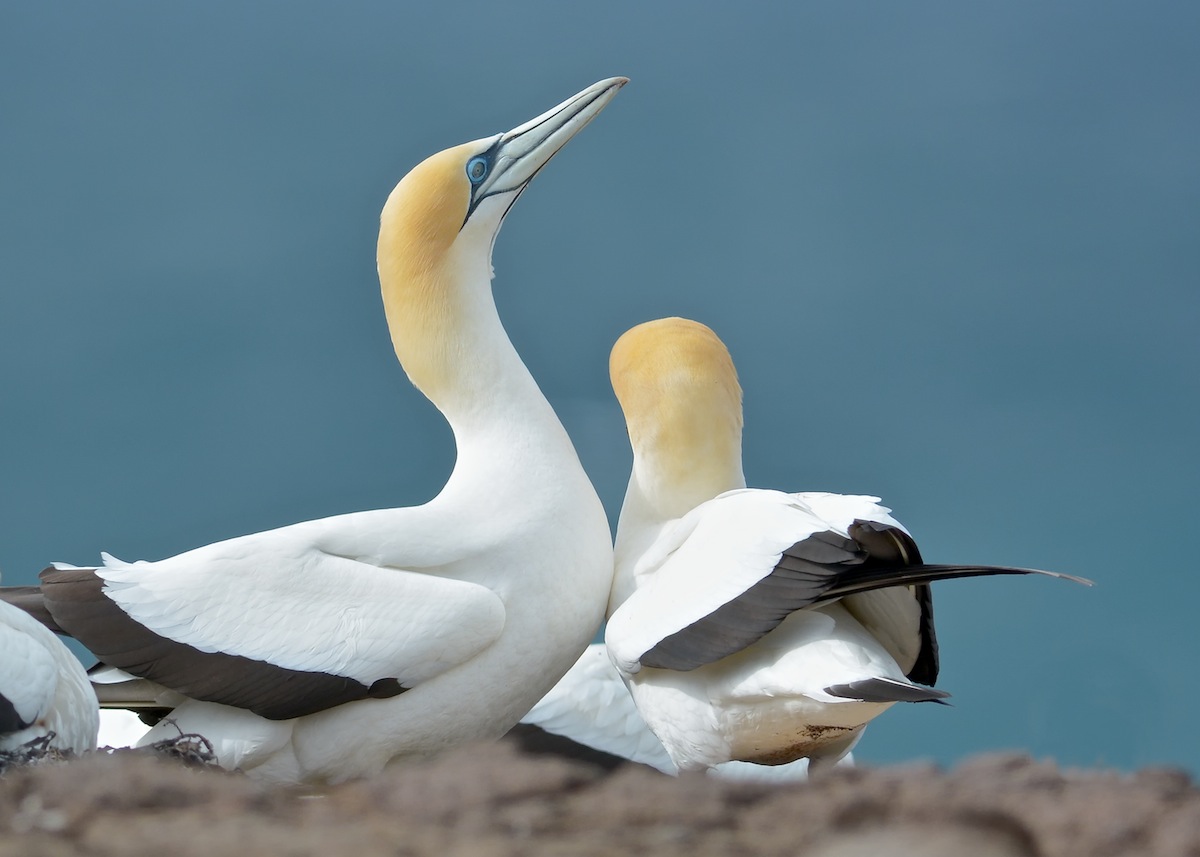
Sitting together before changing nesting duties.
Every now and then a drop of sunshine overwhelmed the overcast
Territory Dispute, “That’s my spot. Go find your own 2 square centimetres.” The hapless bird moved.
This bird has just landed and grasps the neck of the sitting one.




























 Birds as Poetry —— Just because I WANDER doesn't mean I'm LOST