With a nice sunny day in the offing, we took to having a day looking at some of the red-caps.
A good start in the Backpaddock found a pair that had been evading or eluding us over the past couple of weeks, down along the fence line toward the creek there are a number of old blackwoods that are fallen over an make great robin perches. As it turned out, he turned up to checked us out and then went back to hunting. No sign of any young or nest activites from either of them.
Over the road we went and had a bit of time with the Male Scarlet, but he didn’t want to come to play, so we moved on to a tree full of Tree Martins, and their obviously recently fledged young. Much flying twittering (birds used to do it before the electronic thing, remember? – No , thought not) and for the young resting and feeding. Looked great in the sunshine.
A gorgeous White-fronted Heron flew down to feed in the dam and really looked statuesque in the early morning sunshine.
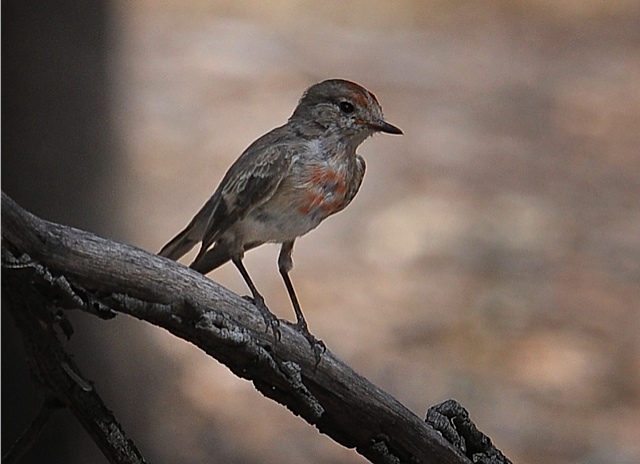
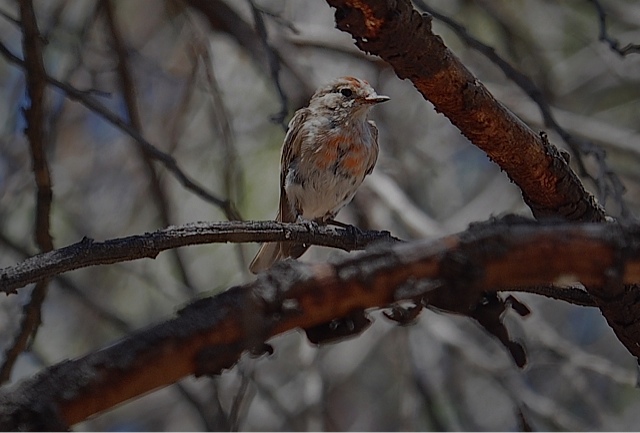
Then across the paddock to where the young robins had been seen the couple of days previously. A good cuppa, and a bit of a rest, and bam. There they were. Two young birds, one definitely moulting in a very copper top, and chest feathers. He also has a good show of beginning black wing and back coverings as well.
The local territory male took exception to it feeding in his patch, and much scalding and tree flying and bumping forced the young ones to move on. He sat in the quiet of a new tree and tried the redcap D’reet call. Got it a bit wrong, but practice as they say will give him the right notes. Nice to hear, and to partly recognise the notes of the call.
The local male is really starting to show the effects of a busy summer. No doubt he’s raised a few young. His feathers are now starting to show a lot of wear. He’ll moult out in just a few weeks, as March rolls round. How quickly the nesting season will come to an end.
Then on a whim we went back again toward the walk in track, and Will.I.AM Scarlet was waiting to greet us, and give us the benefit of his local knowledge of the quick paths through the trees and shrubs.
It is just on a year since he and his then consort a young female Red-cap turned up See Jan 2012 here for details and photos. Amazing now to see him as beautiful dapper bird.
Hadn’t see him so vocal or relaxed for quite awhile. No sign of his lady, nor of any young.
We had been planning a day at the Western Treatment Plant, but the temperatures, winds and general conditions resulted in the day being called “Total Fire Ban”. WTP management policy closes the farm on Total days, and just as well too. Who wants to drive around in a hot car in the hot sun and hot wind looking for hot birds sitting in the shade. So. We stayed home, and then thought. We’re up early, its still reasonably cool. Let’s go see Jack, Jill and Nevis, and take them a cool drink of water.
They were well into feeding by the time we got there, and the next thing surprised me completely. Dorothy had just finished topping up a water feature, when a shrill CHRIP, CHRIP came from one of the Robins and all three of them landed in the tree closet to the water. Then the young one dropped down and took a quick splash. Meanwhile the second water feature, – the one with the enclosed bathing area- was topped up, and they all went together to investigate.
Recognition? Sense of water? Relationships? To be honest, I really don’t know. All I know is they came for the water. And called to one another to all go to the one spot.
Just when it seems simple, it all gets more complicated.
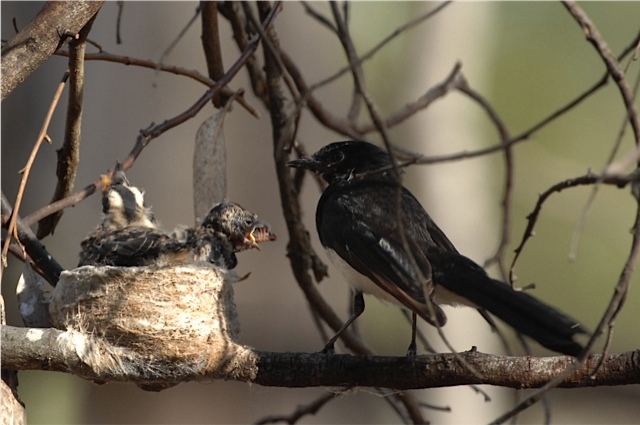
One thing, they had a good bathe, a good drink, and a bit of a social gathering.Later in the morning, I went to look at a Wagtail event, and they were having trouble with a Shingle-backed lizard that had wandered by. It was really distressing the two birds, and they called in reinforcements from their neighbours and the shingle back was harassed by about 5 birds. As they don’t move very quickly it took the lizard 10 minutes or more to get out of range. Not that I think it took any notice. After all that feed the chicks was the next move.
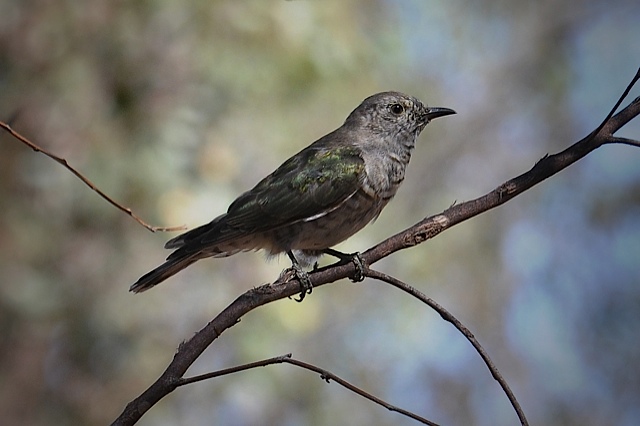
And just as I was packing up, a young Horsfield’s Bronze-cuckoo popped by. It fed out in the open, so it was lovely to see the beautiful bronze, green gold feathers in the sunlight.
It picked up a small piece of plastic tubing and had several attempts at turning it into food. In the end it just spat it out.
So a day that started of with a no show no go, ended up quick instructive and probably asked more questions than it answered.
Nevis drops by at the call of water.
A quick tub in the water feature was appreciated
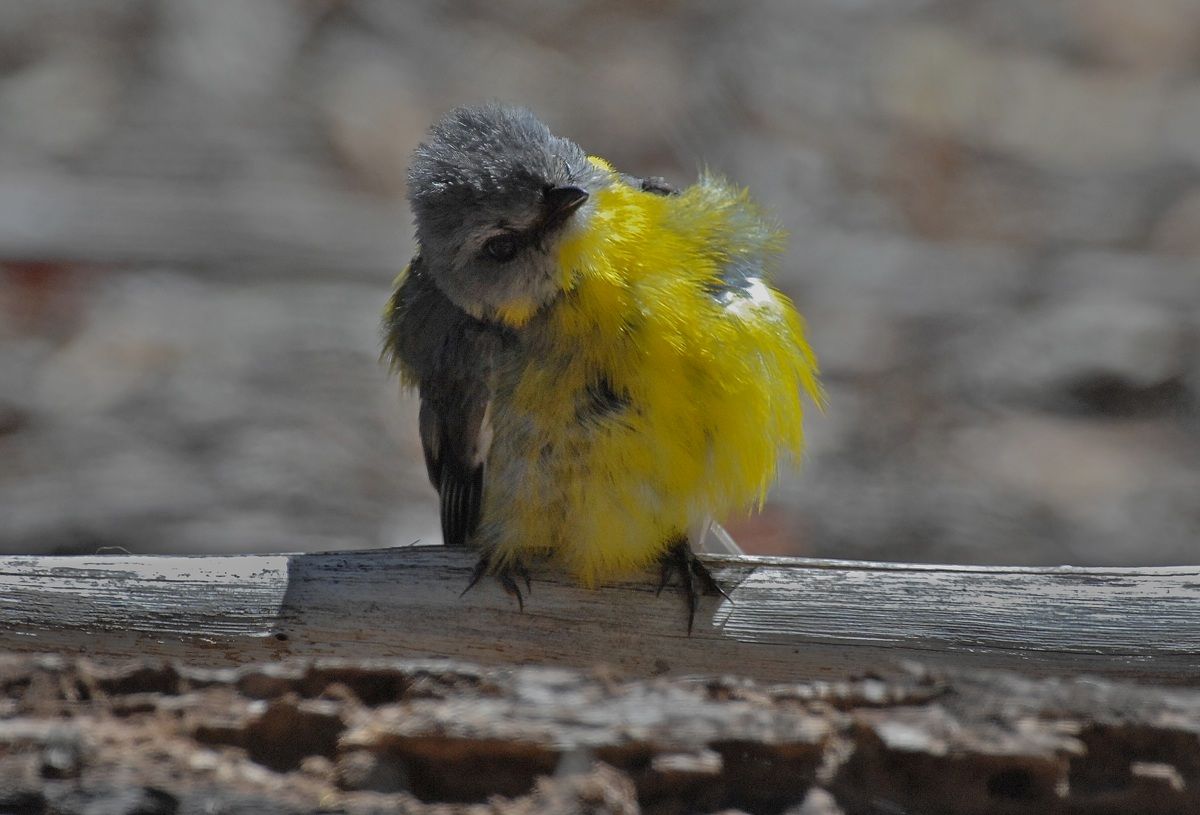
Shaken not stirred.
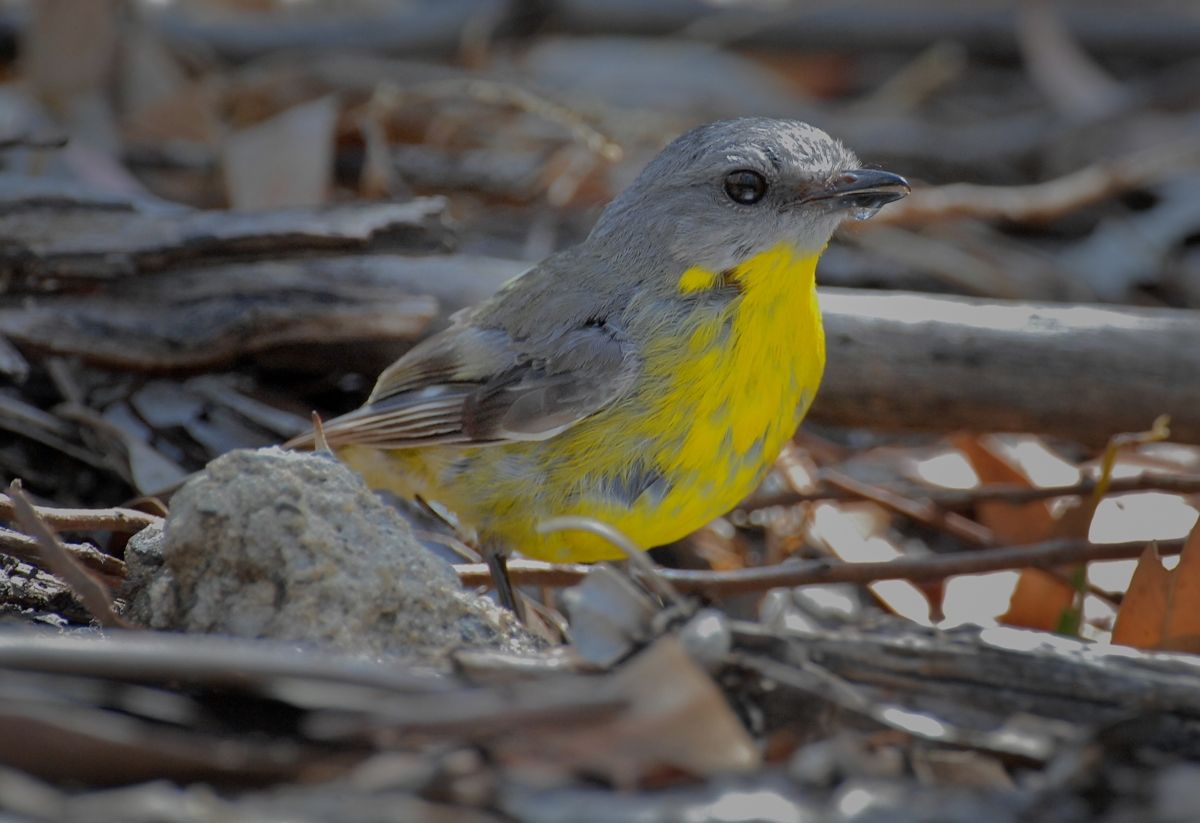
Jill in one of the nicer shots I’ve managed of her. The typical Eastern Yellow Robin pose is done to a treat
Now that big grub should stop you annoying the ugly Shingle back Lizard
Nevis taking a hunting break.
Horsfields Cuckoo hunting in the leaf litter
Iti looks like a nice grub, but tastes really horrible.
Just as the weather goes back into climate overload, and the weather man predicts high temps, we decided on a stroll to the former Bandicoot Hilton to see how the redcaps were faring.
On the way we lucked out and had a chat with Travis the Bandicoot Hilton concierge. He was doing the usual fence and gate inspection, and informed us of the pending likelihood of another lock out due to fox renovations. At this time of the year its not a concern as there is plenty of other things happening in the park. But as the release day for the Bandicoots is rapidly,as they say, drawing closer it’s likely to be about the same time as the Flame Robin return, and another season’s opportunities with the flocks will go down the gurgler.
A big problem for us with the redcaps out there is the lack of info this year on territories. As they are quite furtive little birds when nesting, it is really difficult to know where to look with any assurance. Knowing the area each pair is moving about in narrows where to look. But we lost that opportunity for this year, as we couldn’t get in.
Travis made the point, and I agree, that the best piece of environmental information comes from being in a spot for an hour or so and logging what is happening. Even a butterfly going past is helpful info.
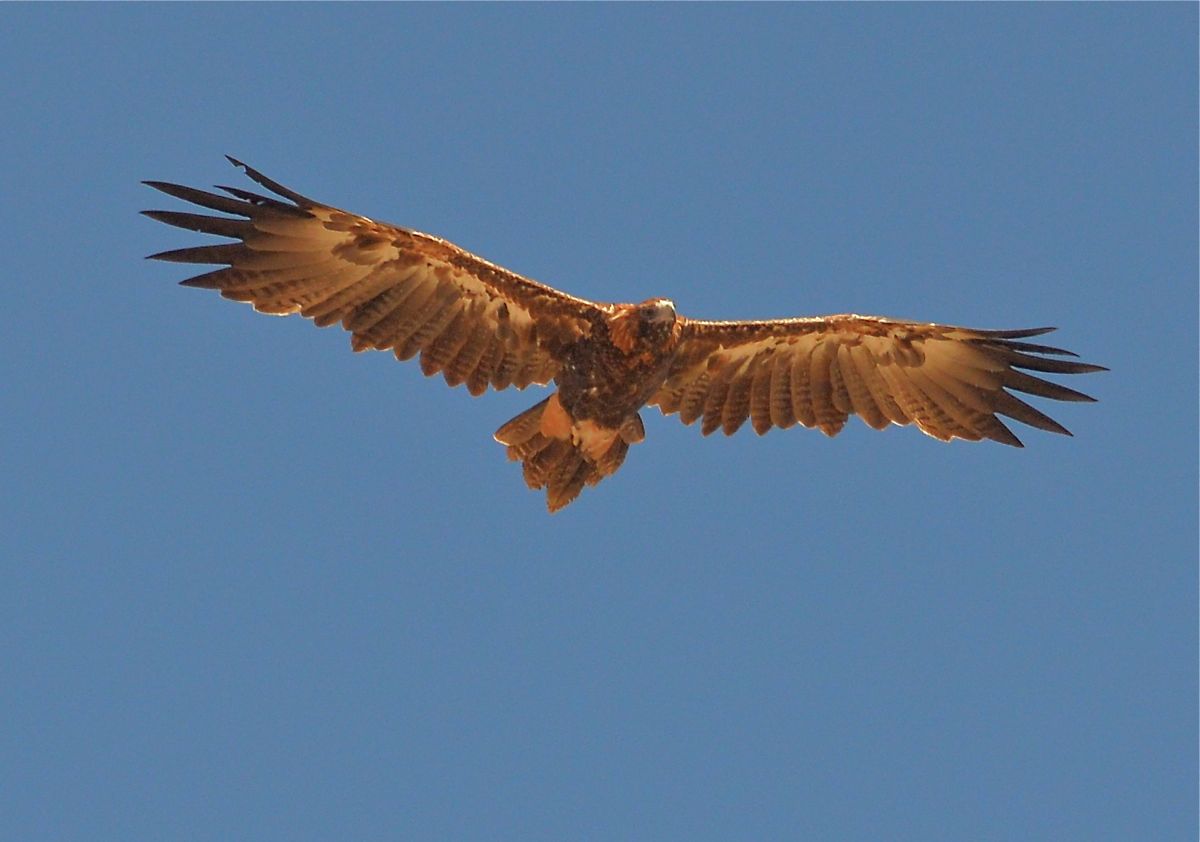
He did warm my old heart, by explaining that the old, now somewhat redundant fence-line, across Gellibrand Hill was in stages being removed. So it will be easier to gain access down to the area south of Gellibrand without a hike around and down. And then a hike. Back up again. That’s the part that keeps me out of there at the moment. Must go see if the Wedge-tailed Eagles know about all this.
After an hour or so around the area inside the fence, it was obvious today was not to be a red cap red letter day. Major find for the day was a Brown Goshawk that propped in a tree for a bit of a rest. Then a Brown Falcon cackling as it sped by, and high overhead a Little Eagle doing its U shaped dive and dips So we sauntered on down to the old dam area. It, as I suspected is rapidly running out of water, and won’t be much fun for wintering over waterbirds.
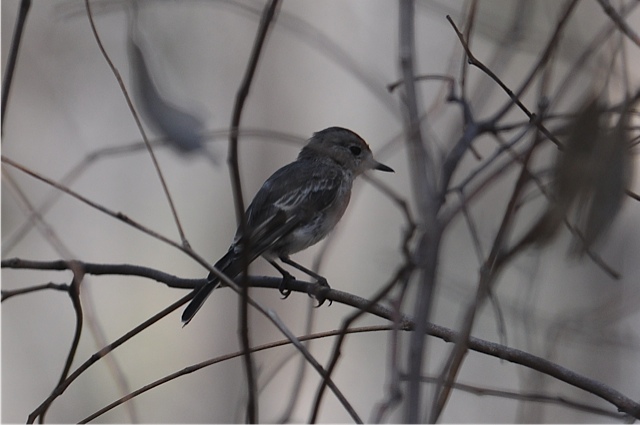
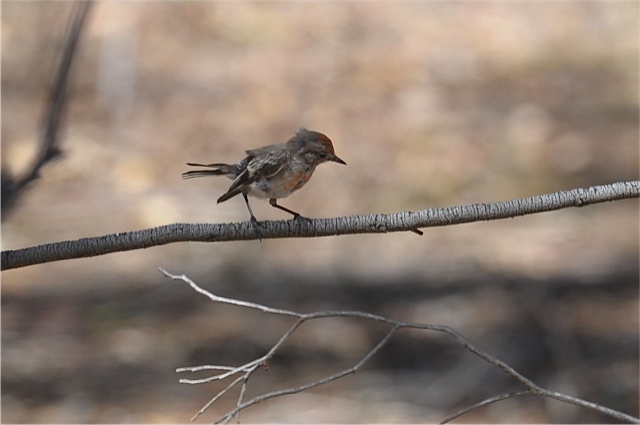
And quickly we came across a very co-operative Shining Bronze Cuckoo, and then a small family party of Red-capped Robins, a female, two juveniles, and a pair of older juveniles moulting into adult plumage. One of which is no doubt a male. He was very attentive to the female, feeding her several times in the 30 minutes or so I was watching. But trying to get near for a photo was not going to work. I’ve said before, when you chase them at 5m, they will fly 10m. Then when you’ve halved the distance, they fly another 10. Now the base is 15m and they are tiny little blobs in the viewfinder. But. I was in a hurry and gave it my best shot anyway. He is quite skittish and I must go back and settle down and see what happens.
Lovely to think there is a replacement or two for the pairs that don’t seem to have survived this summer.
I’ve taken to mailing the pics out of iPhoto to get them in here. Size differences, but over in Flickr the majority of the images are available a bit larger in size.
This way you get a spread rather than just the isolated ‘best’ of the day.
Brown Goshawk
Shining Bronze Cuckoo
Shining Bronze Cuckoo
Shining Bronze Cuckoo
Male Red-capped Robin Moulting in.
Male Red-capped Robin beginning to show chest colours
With few cooler days and a little less family activities now the granddies are back at school, we’ve been spending a couple hours out with one of more pairs of the Eastern Yellow Robins. As there are about four Wagtail nests on the go at the same time, its been an added interest to see the Willies hard at work. Two nests have produced three each of young on the wing, and the others look like matching that next week.
No marathon five chicks at a time for these clever wagtails.
With Jack and Jill its become obvious that the young bird (Named Nevis), is indeed from one of their broods. They both look after it and provide food and advice. My heart is set on there being a second young one further out in the low gum regrowth, but I’ve not been able to convincingly find evidence. But. Both adults spend a good deal of time out there. And Nevis visits from time to time.
Nevis also has taken over one small strand of blackwattle re-growth, and can usually be found in the area.
It is now accepting of our movements and will come within a few metres to feed or sleep.
Today was a bit of a highlight as Dorothy was working with Nevis, when Jill came by to see how things were going. Two robins in the same branch. Me. Well I was down the paddock photographing trees. Or something.
Its enough to make you hang up your camera in shame. But she did get some lovely shots of them together and a friendly Willie Wagtail, who thought it must be a family photo opportunity!
Nevis later came down the track and propped in the shade of a small bush, tucked its head under its wing and went to sleep. That’s trusting.
Newly hatched and not yet ready to meet their public. Williie Wagtail hatchlings.
Two young Willie Wagtails out of the nest. Their more adventurous sibling is on another branch. Waging a very short tail.Nevis asleep on the branch near my camera sitspot.Nevis showing how much it has grown out of the early feathers. Another week or so it will be hard to tell from the adults.Dorothy’s shot of the day. Jill came by to check on Nevis and stayed for the photoshot. Some times persistence has its own rewards.
We decided on an early trip to the Western Treatment Plant. I don’t like the early morning light as you’re driving into it and so all pics are backlit. But, the weather man promised doom and gloom for the pm,(and for once he was right), so we took our chances.
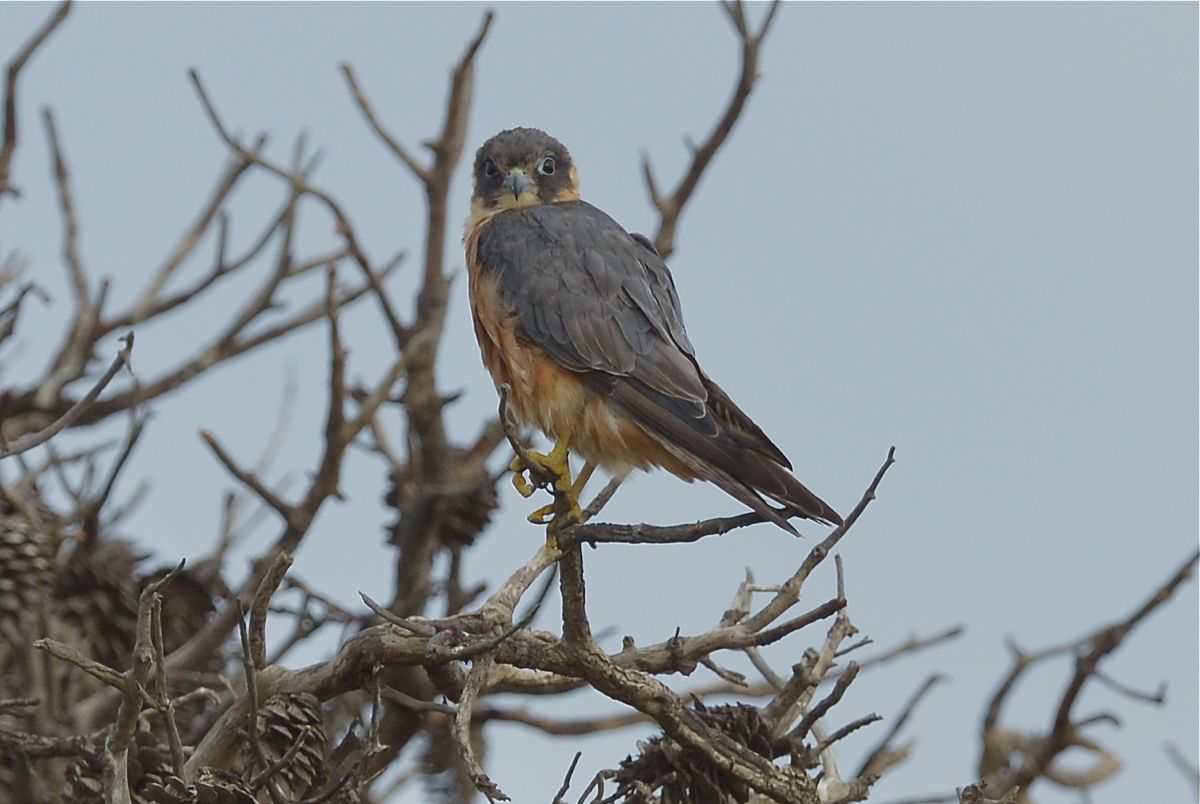
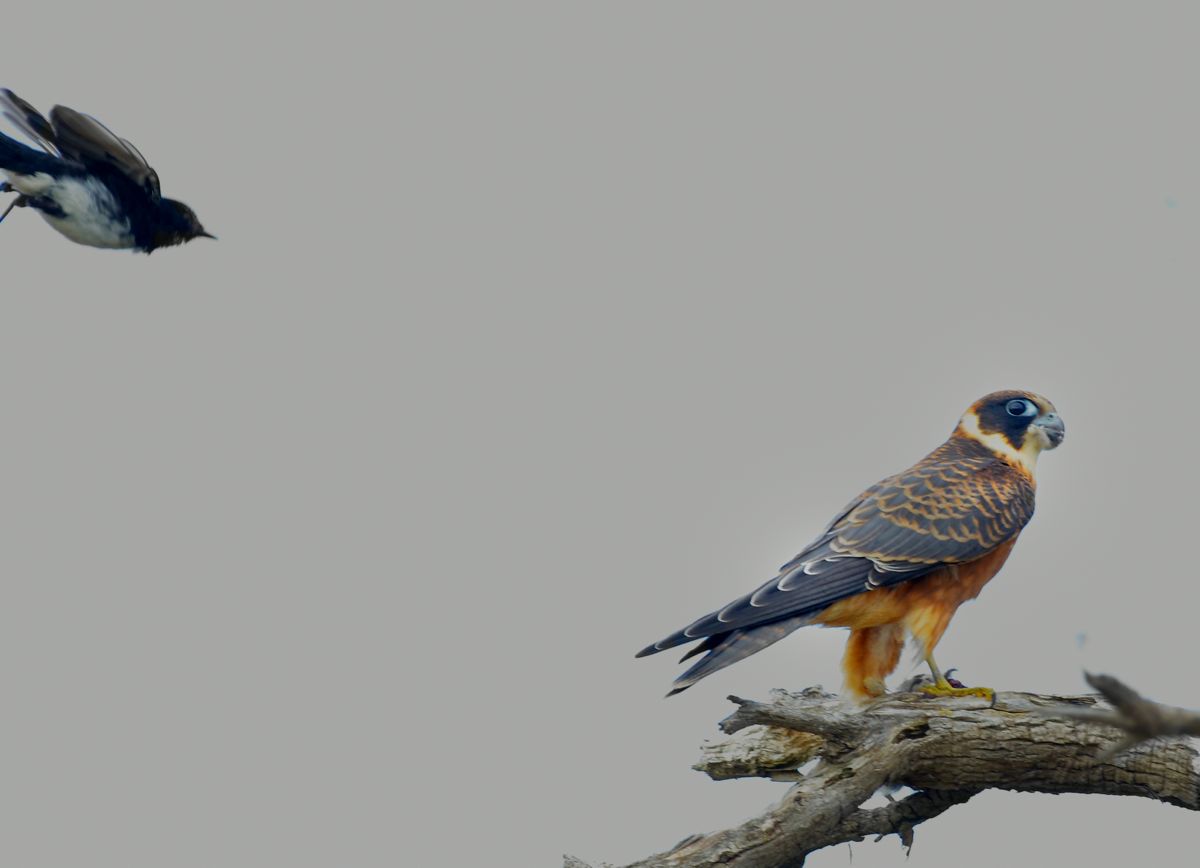
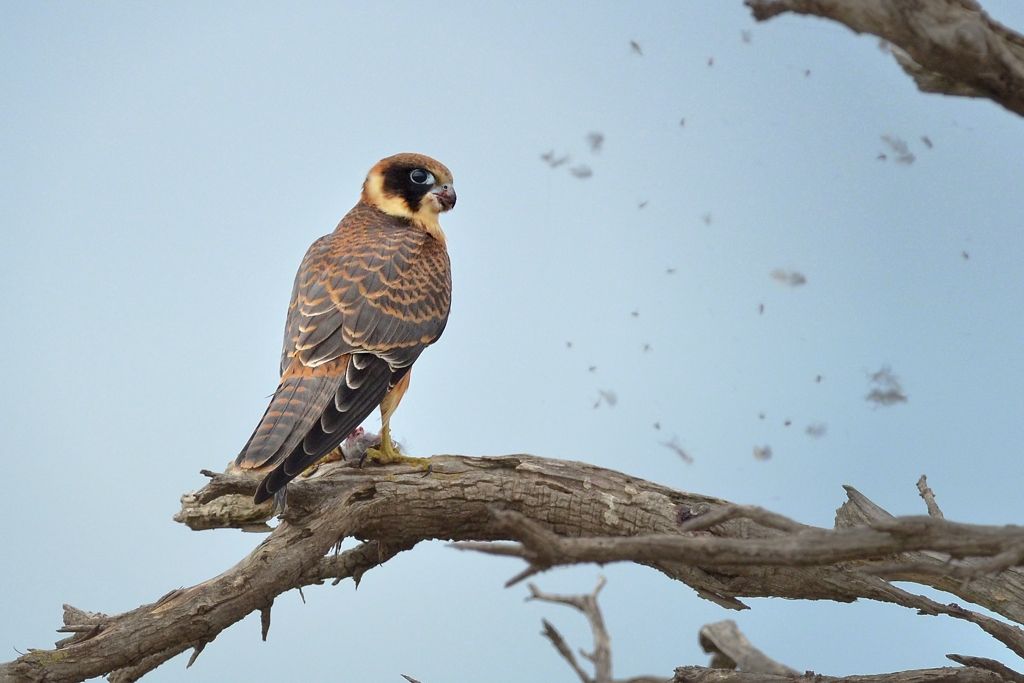
Mr An Onymous and I had spotted an Australian Hobby up on the road to Ryan’s swamp, so I was all prepared to give it another looksee when we noticed Two Hobbys (Is the plural Hobbies?) on the trees near the pump house. So we stuck around, but the light was against us, and also the distance to the trees. But we thought it a good start to the day.
As we went past the tree line near 65W Road, a Hobby was sitting surveying the ponds. From this tree, I suspect it can see most of the Treatment plant as its amongst the tallest trees in the area. So another quick photo session we moved on.
Just where the road doglegs around Ponds 35E, Dorothy spotted a young Black-shouldered Kite, and she set out to make some pictures.
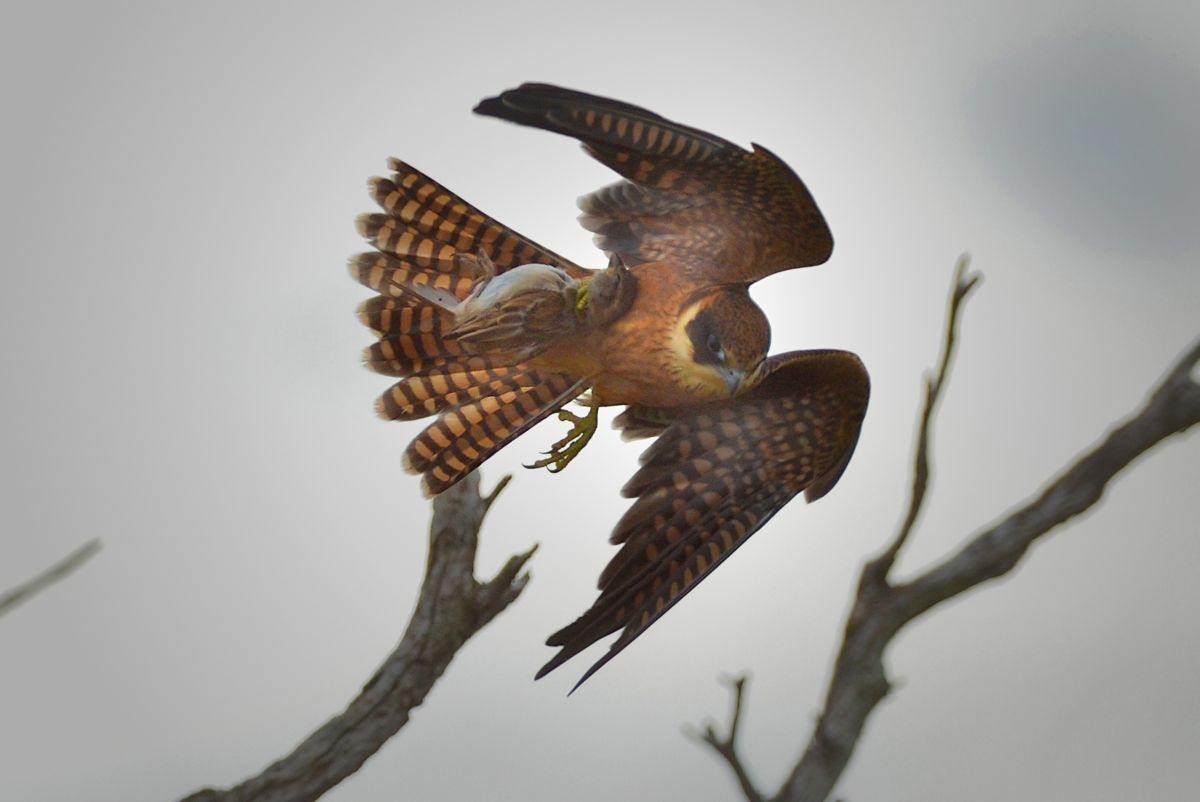
We’ve worked out its not much good two people harassing a single perched bird, so I stayed with the car, and as there was bush full of active Fairy Wrens I thought I’d was a bit of time following their activities. After about 5 minutes, they went quiet. Really quiet and disappeared. So did every other small bird. Before I had a chance to work it out, out of the corner of my eye, a grey arrow of wings and a “Thud” on my left. Turning about, I found a Hobby sitting on a branch about 2 metres up and about 2 metres from me. In one talon a hapless sparrow, that only a few seconds before had been amusing me with its antics with its friends.
It had obviously planned the attack to end in that tree, but hadn’t been able to calculate my presence. Startled it glared (can bird glare?) pondered its opportunities and took off. Of course all this happened against the light, so any hope of those prizewinning shots was dissolved. But I got a few action pics to make up for it.
More info: from Flickr
The Hobby had landed in a tree about 2 metres from me. Because the trees around and above were a canopy, there was no way out for it. The trees on the left and above meant it couldn’t fly out and up. and the 3metre bushes on the right (where it had snagged the sparrow), were another barrier. So. Its only way was out past me. It choose to leap and go low to get speed. Hence this shot. Once past me, it circled around and gained height over the trees. Then flew of to feed its young one.
Mind it was all over before I had a chance to think about it.
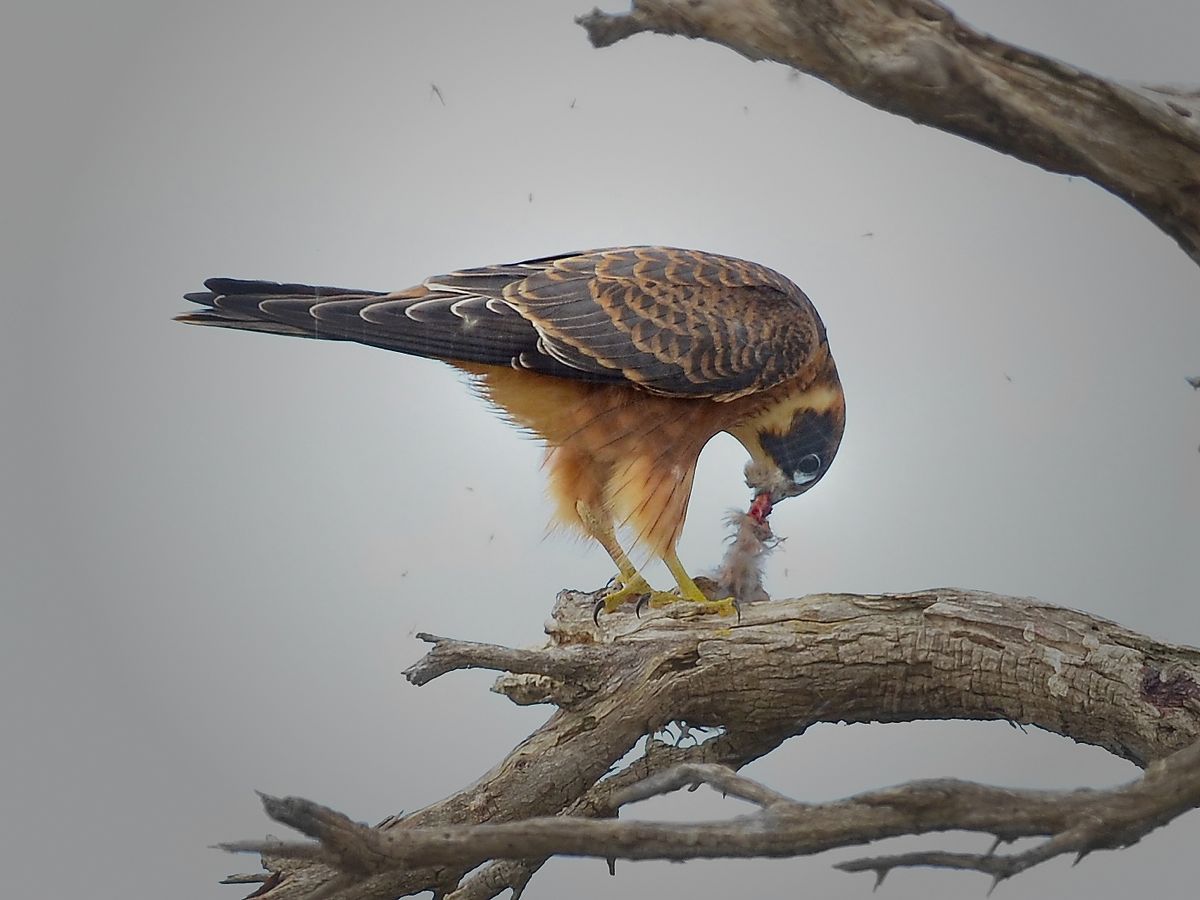
I think this was an adult bird as it flew 50 metres and met a younger bird with much screeching and it took the sparrow for another trip up and down the roadway before landing in a suitable tree to consume its breakfast. I ambled around to get the best light, and as I did the Hobby was accosted by a Willie Wagtail. Now most times Willies throw themselves into the act of removing unwanted visitors with abandon. Falcons, Kites, Ravens and Harriers are all the same to this little agitated bird. But not this Willie, and not this Hobby. It was very careful about its every attack. Staying quite a few metres out of range and running quick scolding attacks, but not getting anywhere near the Hobby. Very smart Willie. Given the young bird was holding a sparrow, it wouldn’t have taken much to add a wagtail to the morning’s feast. In the end discretion did not become the better part of valour and the Wagtail sprang on to the Hobby’s back, to be repulsed by a wing wag. In the end, the Wagtail went off to find something else to do.(Most unusual as they most often win).The Hobby settled down to removing the feathers from the meal.
They flew in all directions in the breeze, but a lot of them ended up in a spider’s web in the same branch. Sort of formed a curtain for its activities.
By now I was settling in for some good shots, when a car came along the road. All to much for the Hobby and it was airborne. Too far to follow in the long grass. WTP being renowned for its slithery creatures.
I went over to the car driver and explained that she had scared off my subject. She replied, “Well the Black-shouldered Kite was gone, and I came to see what you were doing!”
Then to top it off on the way back a White-bellied Sea-eagle on a fence post on the 85W lagoon road made for a good conclusion.
Australian Hobby surveying breakfast optionsHobby with sparrow breakfast making a break out of the treelineThe hapless sparrow is being held by the neck.Juvenile with sparrow, being carefully harassed by a Willie WagtailFeathers fly as the Hobby gets down to business. The feathers are stuck on a Spider WebI can only imagine how good this might have been had the light be better.White-bellied Sea-eagle over the bridge near 85W pond.
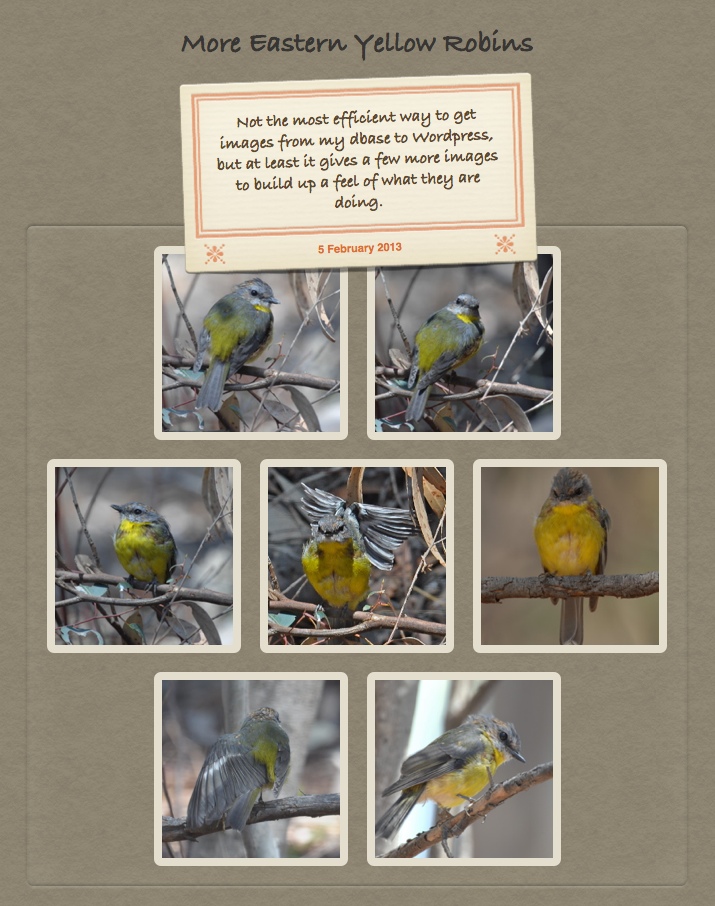
Since last November we’ve been following and monitoring a number of Eastern Yellow Robin pairs.
All four pairs have made nest attempts and two have been successful. A third pair has eluded our best efforts. The fourth pair. Jack and Jill, have had a least 3 nesting attempts and for various reasons all have been failures. The last one being blown down in a storm just as the young were hatching. We’ve had little success tracking them since, and only occasionally do we get more than a glimpse. However over the past week, they have looked like another nest might be possible. Still as of today, she is far from building, and not even prospecting.
After we located them today, we also had what can only be described as a magic moment as a third bird appeared. This one is a very young bird just having begun to moult into its first adult plumage. It still carries a lot of the brown feathers with the light chevrons. As to where or from whom it came that mystery is beyond us.
However Jack didn’t seem to perturbed by its presence, and even offered it a big fat grub, which it politely accepted. I’ve no way of knowing if it is one of their previous hatchlings or if it might have come from the families further along the roadway. It might even be on its way from some other location entirely.
Hard to find hard data on how the second moult takes place, but HANZAB seems to give the impression it is about 3 months (but I’m not sure when that timing starts, hatching, fledging or juvenile.). It its three months from hatching this young gun would be a late Oct or early November bird. One of the pair up the road match that time frame.
Will it stay around? Be interesting to see if we see it again.
Jill on the other hand was further down the field and working up a sweat over a Grey Shrike Thrush that was hunting along the downed leaves and twigs in the scrub. She seemed to take particular offence when it reached a certain location and Jack joined in the battle cry. The call is a bit like a Willie Wagtail chatter, but only two or three notes. So the question still remains. Does she indeed have young ones down on the ground? Only time will tell, as I can’t bring myself to go into the area and look really closely. She seems stressed enough.
All in all a good day, and certainly a lot cooler. And not as far to drive as Goschen.
New Bird in town. All dressed up with a few brown baby feathers still showing
Jill in full cry against a Grey Shrike Thrush that seemed to take an interest in the area she was guarding.
And all the Wagtail females are back on the job with new nests and new families on the way. This is one of 4 nests we located today. About a week to fly for these three fat chicks.
On the blog here, sometime back I added a link to “Natural Newstead” a blog run by a great birdo, and naturalist, Geoff Park.
He reports the doings of the creatures he finds in the local area, and because it is such a diverse habitat his posts are always interesting and informative. Check it out.
Given that its about an hour and half from home, we’ve been trying to find a day to go up for a look. He located a nesting Kestrel sometime back, so really what more excuse did I need?
However some family events, the heat and other non birding things have narrowed down the window of opportunity so to speak.
With another family gig on the way at the end of this week it was now. Or much to late for the Kestrels.
Braving the heat is one thing, getting up really early is quite another, so we arrived up there about nine-ish.
Met the guys, at the Loddon River and spent some time with a Sacred Kingfisher at nest. (see their blog)
We made the run out to the Kestrels using a map and a photo of a tree. Now in the end we didn’t really need much help at all, we found two of the young sitting in the shade on the road as we drove down. Having good road sense, (thanks Mum), they quickly took to the wing. We stopped and walked back to sit in the grass and see what was happening. To begin with they very active in the early morning but as time went on it grew hotter and they grew tired, and so in the end Mum hunted, they sat in the trees in the shade. Clever Kestrels.
Lovely to see them and to hear their raucous calls for food.
For lunch we’d (I’d) planned for a pie at the local Newstead Bakery, but Geoff suggested instead a drive to Guildford for great pies.
And. He was right. Now at Guildford there are not to many shops or stores, or houses so it didn’t take us long to figure out the General Store was the action attraction.
Lentil and Vegetable and Red-beef Curry. We took one of each and shared halves, No telling how we’d have handled the division of food had Mr An Onymous been with us. Now its true that I’ve been known to drive a fair distance for a pie on occasions. See some of the other rambles on this site. But I have to say these were well worth the drive.
If you are in the area and pies are a must have staple food (and I cannot imagine why they wouldn’t be!!!!) Then Guildford does them elegantly. I’d even pick up a couple to take home and pop in the fridge for another day.
Now all that I’ve read on the Newstead Blog is just how it is. Plenty of birds, plenty of places to look and great people to help.
That may be part of what birding does for us.
Juvenile Nankeen Kestrel, sheltering from the wind. Waiting for Mum to supply a meal.Said Mum with said food.Waiting in the shade, not flying about in the hot sunshine. Clever birdWedge-tailed Eagle. Low down, in a moderate tail wind. Cruising at about walking speed.
Jack and Jill continue to elude our attempts to locate them regularly. For what ever reasons they might show for a few minutes but then are gone. Do they have a new nest? Are they still in the same territory? Are they now simply out of season?
Given the extreme heat of the past few, and the coming days, we decided to provide them with a little water feature. There is no permanent water close to their territory, and although they probably get enough moisture from the little bugs they hunt, we thought a little extra help can’t be all that bad.
So we set up two small water feeders. Not deep enough to bathe, but plenty for drink and a quick splash. Because of the risk of foxes, and ‘roos and echidnas and other birds, its going to be a bit of a drama. And because we are ‘meddling’ with nature, we’ll probably get kicked out of the “Nature and nature only” club, but at least the little guys will have a bit of relief over the next few days.
The Willie Wagtails were the first to find the new addition, but I suspect the sound of ‘splashing’ is enough to alert other birds. The Superb Wrens passed by but didn’t stop.
Both Jack and Jill made visits during the early part of the morning and it already was hot. At least we now know they are still in residence.
Because of the heat, the female has her wings right away from her body.
The female pops by for a quick sip of water. The base is hidden under the stone and branch, so its still pretty much “bush”.
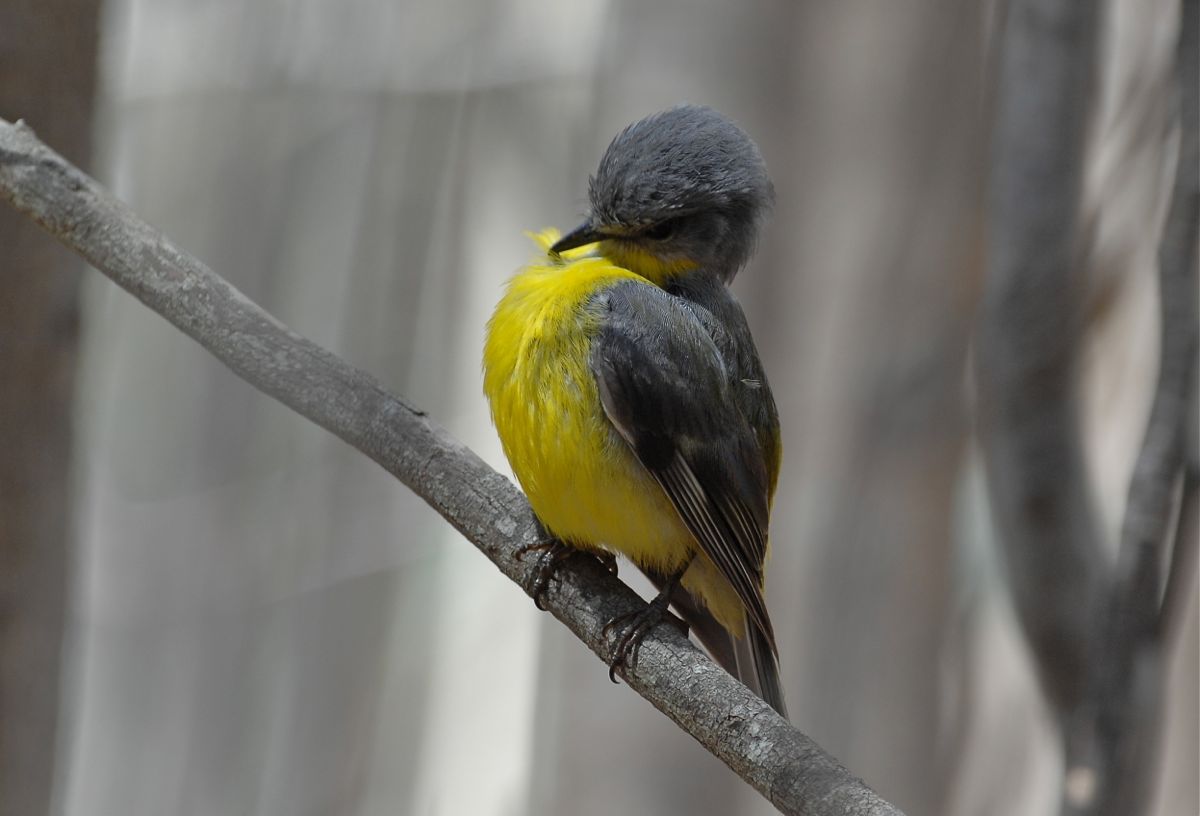
The male in the sunshine. Like many birds, he seems to be in somewhat of a trance in the sunshine, and he is leaning further and further over, like he’s mesmerised. They all seem to do it, so it must be good fun.
The WordPress.com stats helper monkeys prepared a 2012 annual report for this blog.
Here’s an excerpt:
600 people reached the top of Mt. Everest in 2012. This blog got about 8,800 views in 2012. If every person who reached the top of Mt. Everest viewed this blog, it would have taken 15 years to get that many views.
As a photo instructor, one of the things that I always pass on to my landscape/cityscape -pictorial photographers is keep an eye on the weather chart and when we get a slow moving high on the synoptic chart with some light southerly winds, then expect to have clear skies and great light in the morning and the afternoon.
And today it all come together, and I remembered why it is so great to be a photographer and have your eyes wide open for what ever the golden light brings to your lens.
We took the chance for an evening trip down to the Backpaddock. As luck would have it, (about time some might say), we found two pairs of red-caps and their offspring. The males both are hard at work with the young who are developing quite an independence and at one stage were all feeding together. To the angst of the two males who have territorial honour to uphold. So while their young happily fed, flew and chirped about, the two males did branch dancing and name calling.
The late evening sun was just rolling through the trees, and deep shadows everywhere, but from time to time it was a magic moment.
Also saw but didn’t photograph, the elusive White-throated Treecreeper about 60 metres in from the Map Shelter, so Ray will be pleased. It was on is own it seems, which is not so good. We were hoping for another small family to take off.
We also found one old tree with at least three Striated Pardalotes nesting. Very noisy.
Young Red-capped Robin in the evening sunshine.
Male Red-capped Robin in supervisory duties
Juvenile Red-capped Robin, with dad in the background
Striated Pardalote at nest site. How does that big bird, get into that tiny hole?
The high wind meant an awful day among the trees, so we declined to go out and robin hunt.
It did infact calm down after lunch and on the pretence of a cup of coffee ah? We first stopped of for coffee and a quick shop, and then on to the birds.
Going past the wagtail nest, it was obvious that nature had indeed taken its course and two of her young had flown from the nest, leaving three bewildered leftovers behind.
On the return journey we checked again and three had become two. So no doubt we’ll see an empty nest the next time round. Well done Mum!
On a sadder note, Jill lost her clutch. The high winds had bought down a large branch from a tree which had upended the nest tree in its wake. Not sign of any eggs, or young, and I suspect she only just hatched them yesterday to this morning.
It took me a little time to find the male, he was squabbling with the neighbours over territorial rights. And eventually we found Jill, none the worse for wear, and already being fed by Jack, and sitting in v shaped branches, checking out the view in the new housing estate. Hope she picks a more secure tree this time.
Meanwhile the pair next door, e.g. further up the forest, have started a new nesting programme, so their previous young must be well advanced. All a happening thing.
Five have become three. If we’d have meant to fly we’d have been given wings
A couple of hours later.
Where did eveybody go? Two late starters in the flying game look as though they are wondering what all the fuss is about.
Had a walk about with Richard and Andrew H, the other day. Not many photos, but we were each able to share bits of the park with one another, and the learning curve is good.
Down along one of the tracks, we’d been lucky enough to spot several pairs of Eastern Yellow Robins and I was keen to wander back over there with a bit of extra time and see if I could figure out what was really going on.
We started of with Jill and Jack, she is still sitting on the nest, and Jack is still the smart boy hunting about.
We had a quick look in some blackwood wattle saplings and out came a new (for us) Eastern Yellow Robin. It has a little white bib under its beak and did a bit of preening for the photograph.
We crossed another track and soon located a third pair who as it turns out have at least two young off the nest, and after quite a bit of patience and perseverance I managed to locate enough small movement to suggest a fledgling, and with a bit of moving about finally got a glimpse and a photo.
We’ve not worked with these birds before and it was evident they had no intention of letting us get to close to their pride and joy. Each appearance was through the thicket of blackwood saplings. and they lead us on a merry dance for quite awhile.
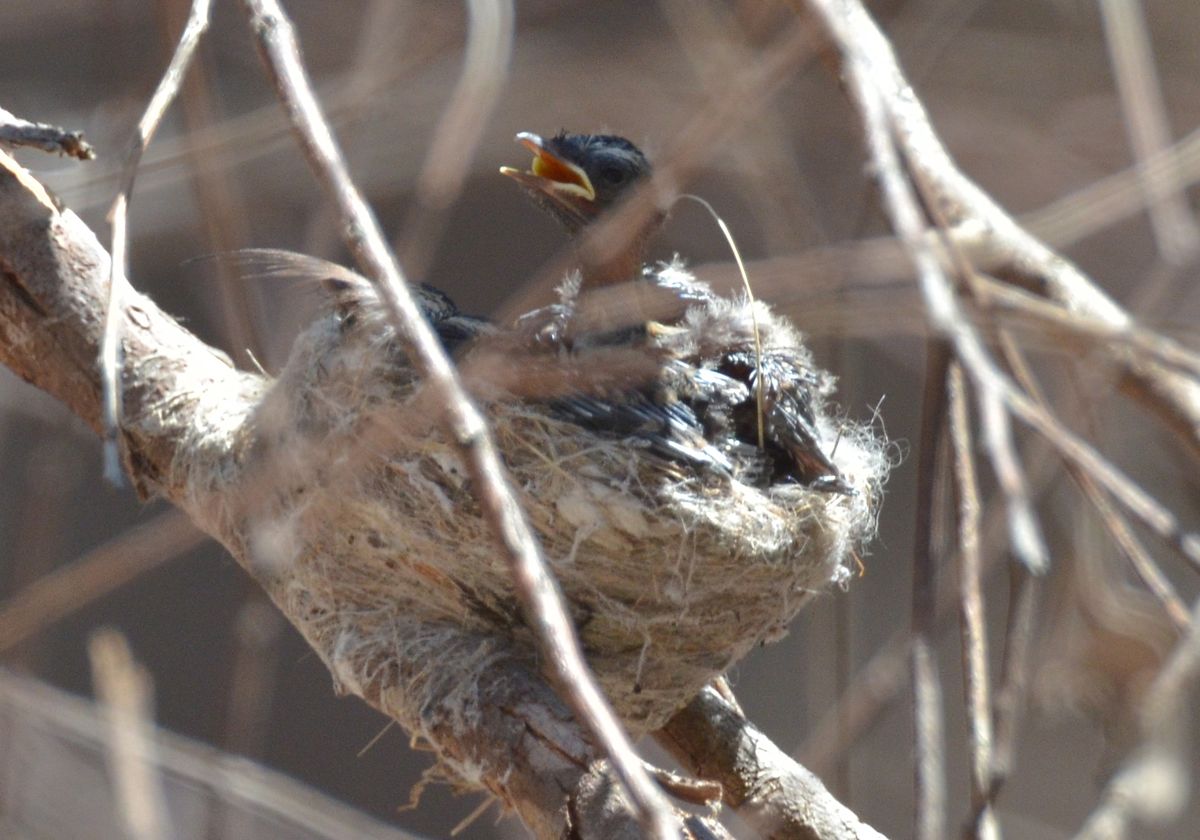
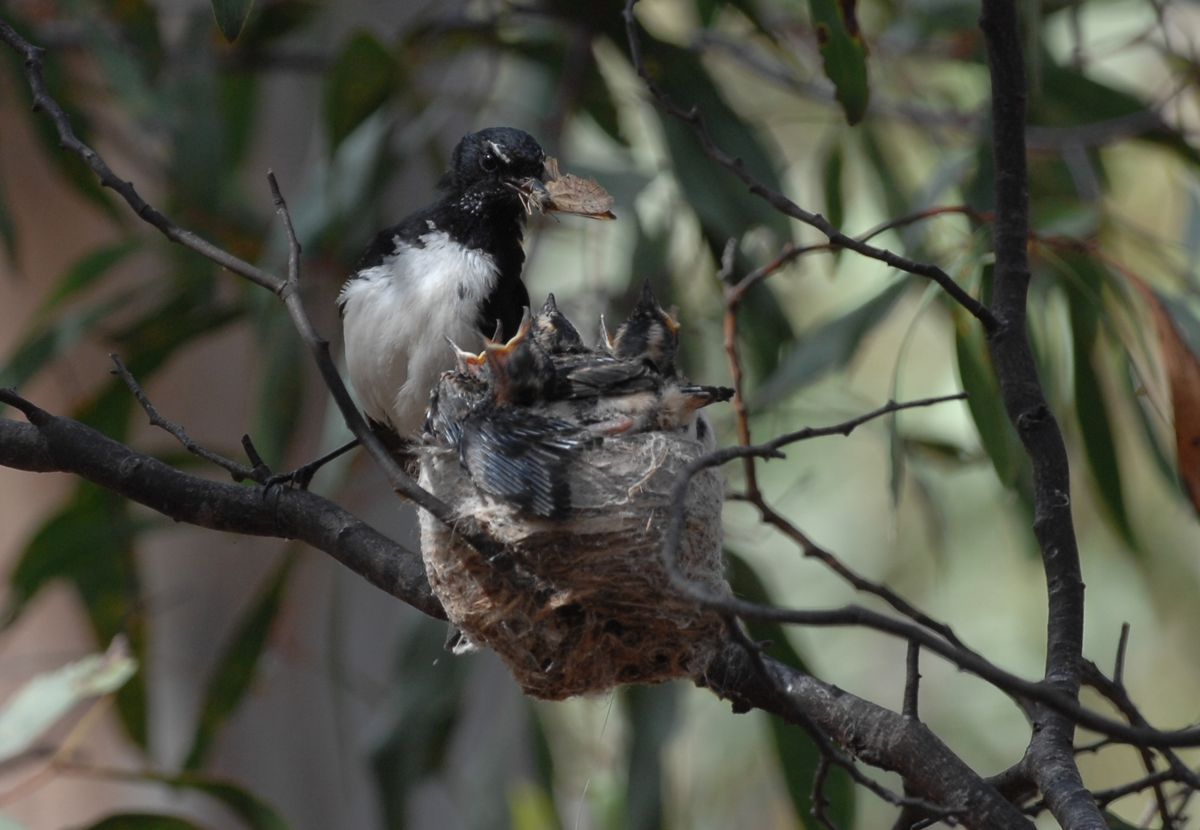
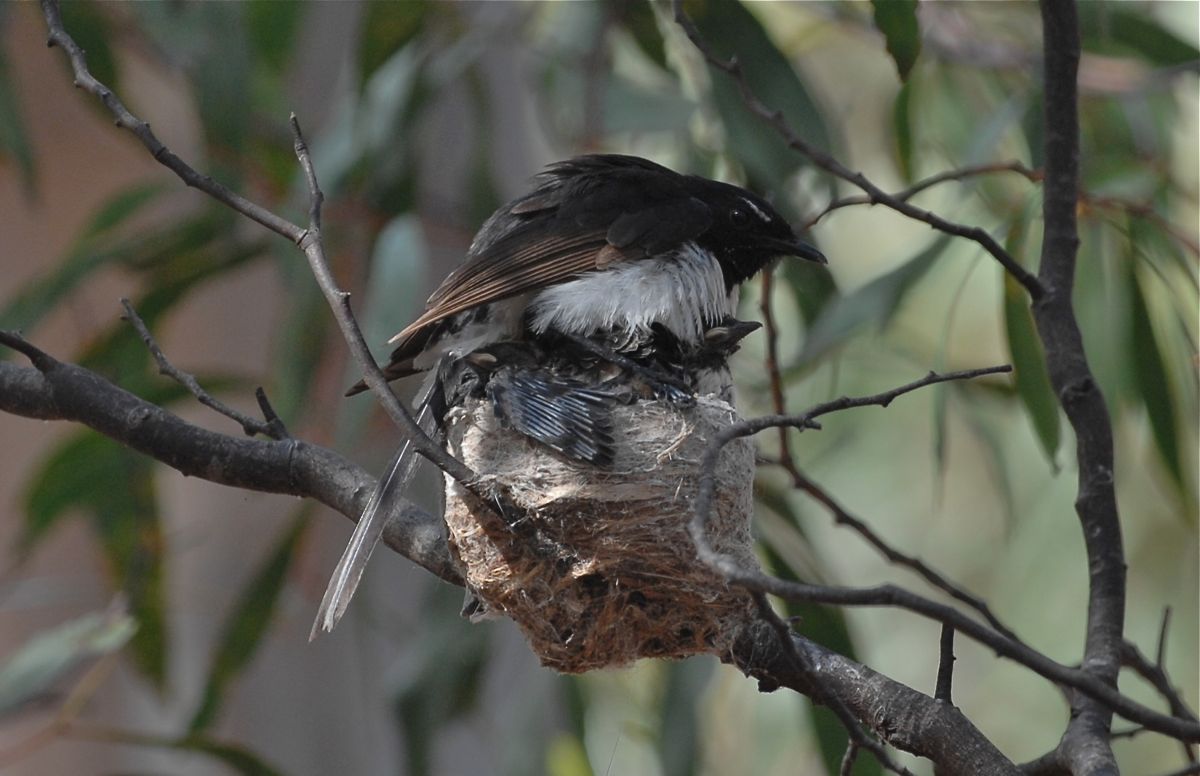
Down the track one of the wagtail pairs are now filling little mouths at a great rate. When it became evident to the female we where in the area she proceeded to push them down into the nest, an mission that is becoming increasingly difficult due to a) the small size of the nest, b) the size of her brood and c) the number of young she has in there and I think five in the reality.
A bit of a preen to look at my best for the photographPerhaps if I close my eyes really really really tight and can’t see you, you won’t be able to find me. Fledgling Eastern Yellow Robin that sat perfectly still for about 20 minutesNow who’d like a nice big butterfly for morning tea? Anyone?Crouch down, crouch down. Get in the nest, tuck your wings in. Stop peeking. Mother Wagtail squashing her brood back into the nest















 Birds as Poetry —— Just because I WANDER doesn't mean I'm LOST