Add a little Sunshine, and enjoy

After the past couple of weeks of somewhat inclement, to downright ugly weather, we had been thinking about another day down to the WTP.  Not in the fog, most said, so we looked with interest at the little icons that the tv folk put up for weather, and even went to BOM to get a broader picture.  Tuesday looked the go, but, as usual with all good plans, important things came up, and so Tuesday came and went.  However Wednesday promised even better, and a nice *definition – not to strong* northerly wind to go with it. Which meant a little interior warmth coming in, so goodbye fog.

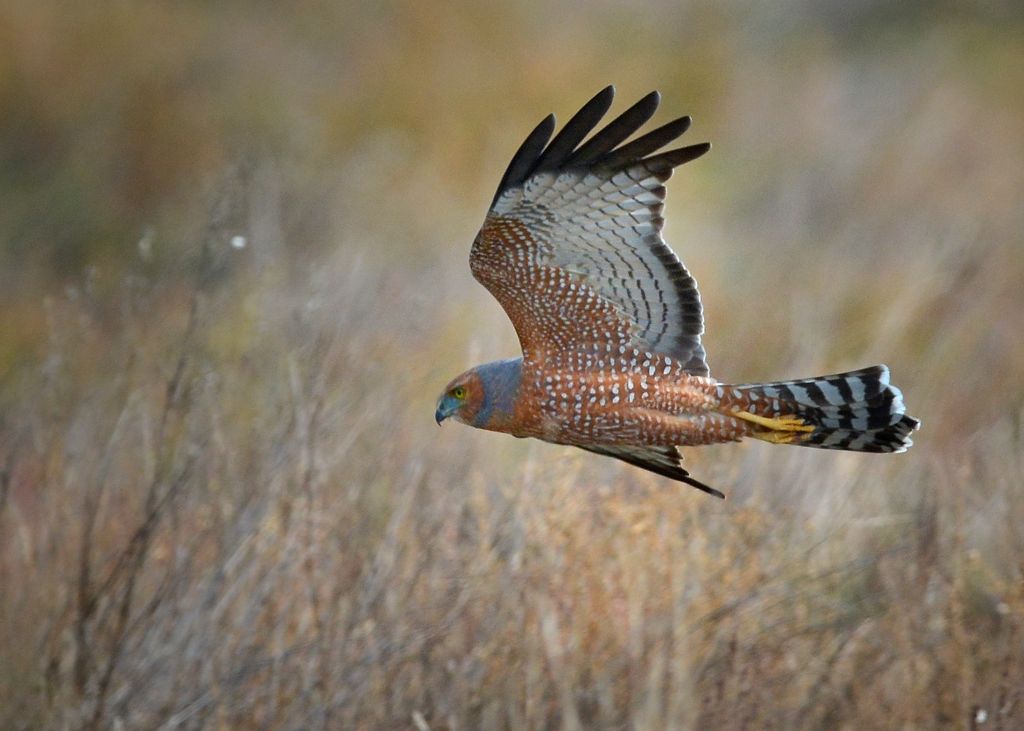
We picked up Mr An Anoymous and headed down for the afternoon.  As predicted the wind was blowing toward the water and the big birds seemed to delight in it, and it quickly became a raptor day out.  Which is good, as I’ve been wanting to give the new Wimberley Gimbal head a real work out, and see if it makes me look like a birds inflight photographer.   I’ve raved about it before, but now with good reason.  I delayed, I think I’ve said this before, buying the real thing just because they are expensive.  And they are.  But, you’ve got to think laterally on this, one Wimberley will last a lifetime, produce rock solid pictures day in day out, and save your tired old arms from holding the long lens up, and then just at the crucial point nerve jitters sets in and he images are blurred.  Yep I know Image Stabilisation, Vibration Reduction, get with the times mate,  move on in life, spend even more money.  But, good as VR is, its as many limitations as it has advantages, and I’ve really grown to like the 500mm f/4 especially on the D7100- with its real focusing mechanism.

It looked however a bit quiet as we rolled down Paradise Road. A quick look for the missing Northern Shoveller, but no sightings.

We did find a large flock of Pink-eared Ducks in a pond up toward The Borrow Pit, and settled down behind a couple of small trees near the waters edge and 15 minutes later had some great shots of the ducks as they paddled past, filtering water at a great rate of knots.  I’d not really noted before, but the water is a constant stream, flowing out just at the base of the bill.  They must sift a lot of water in one day.

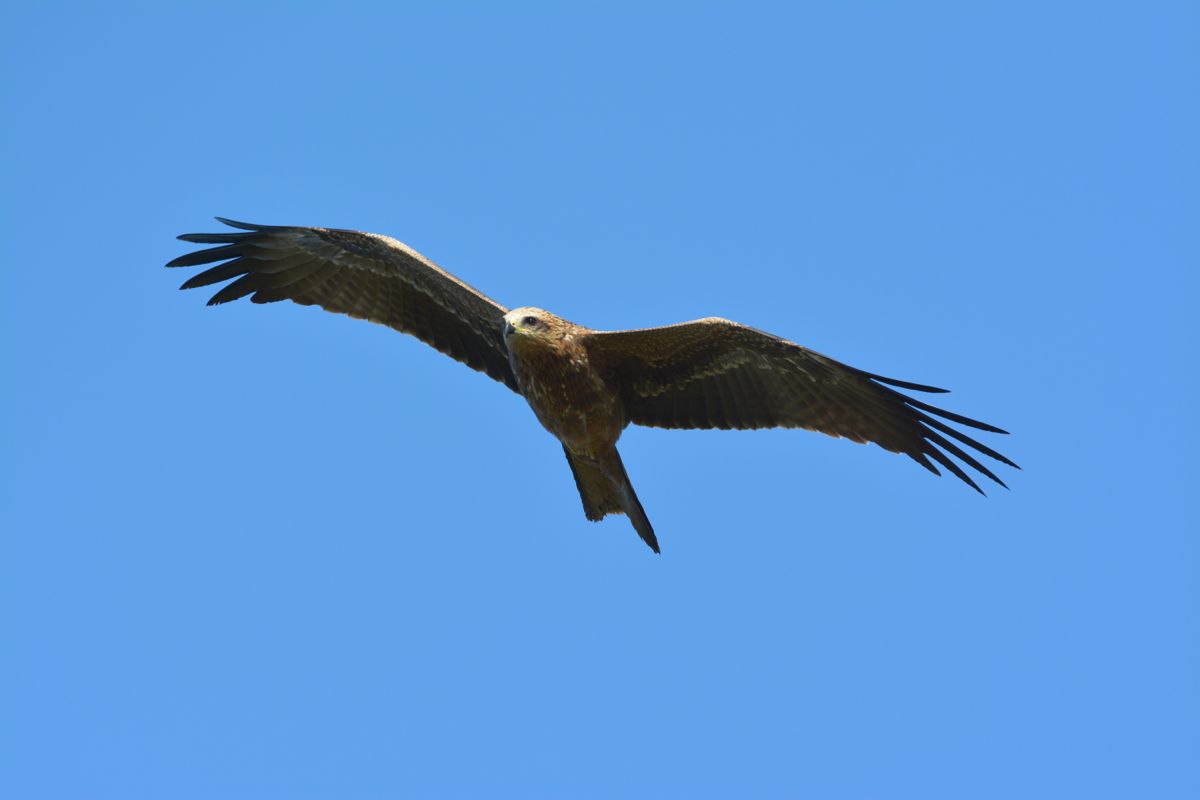
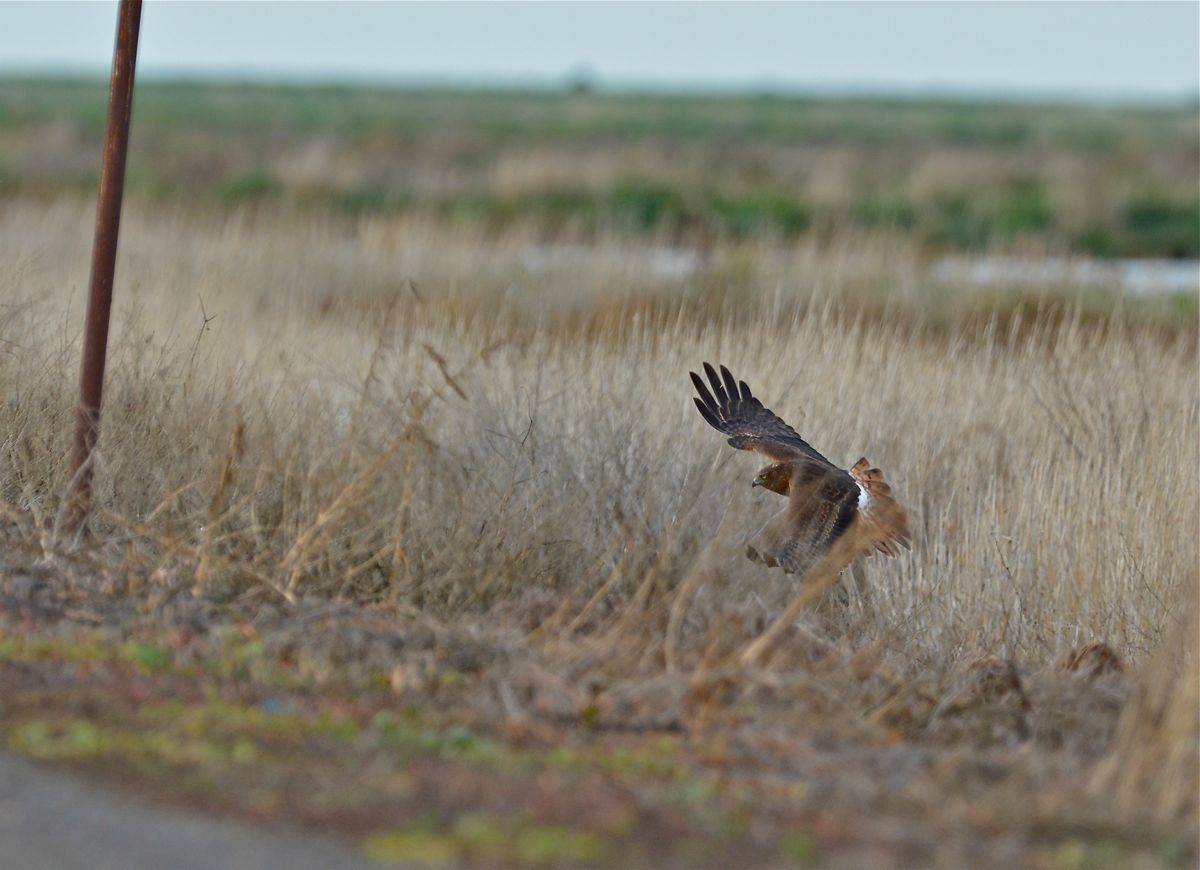
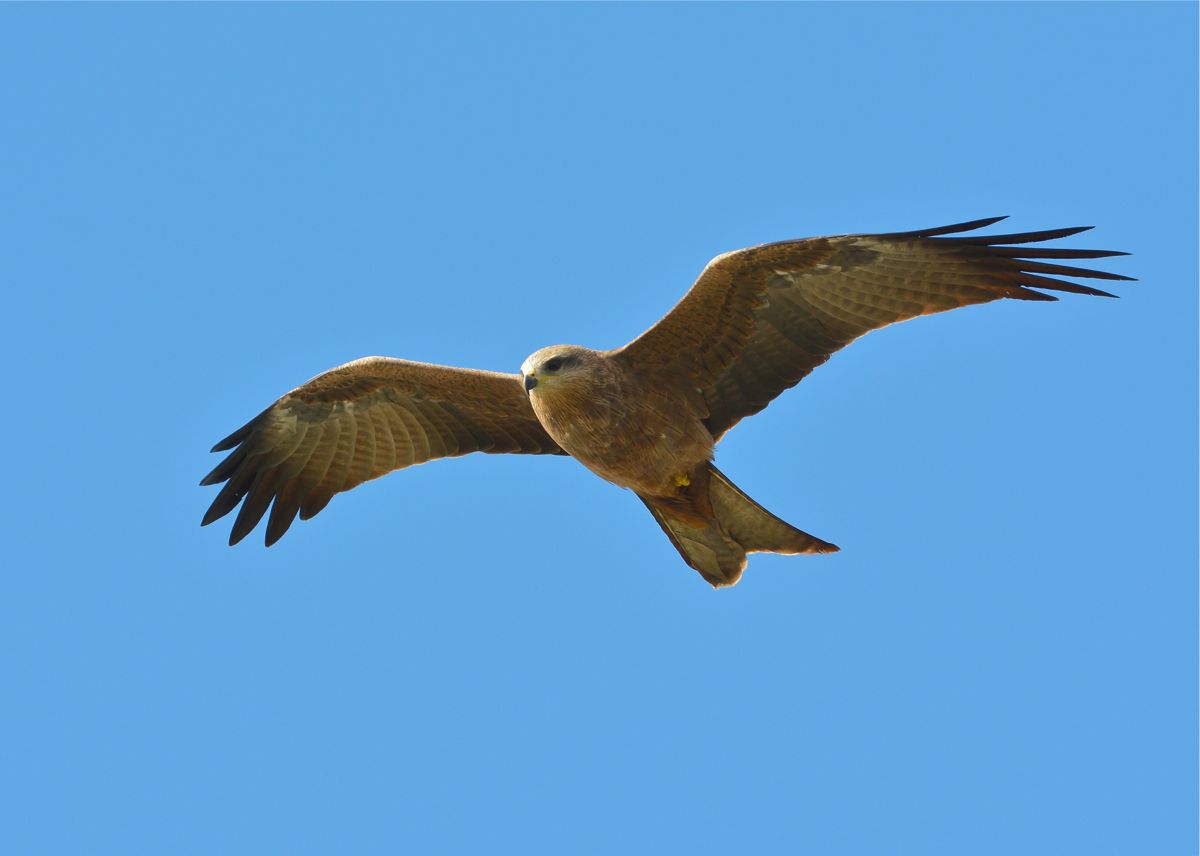
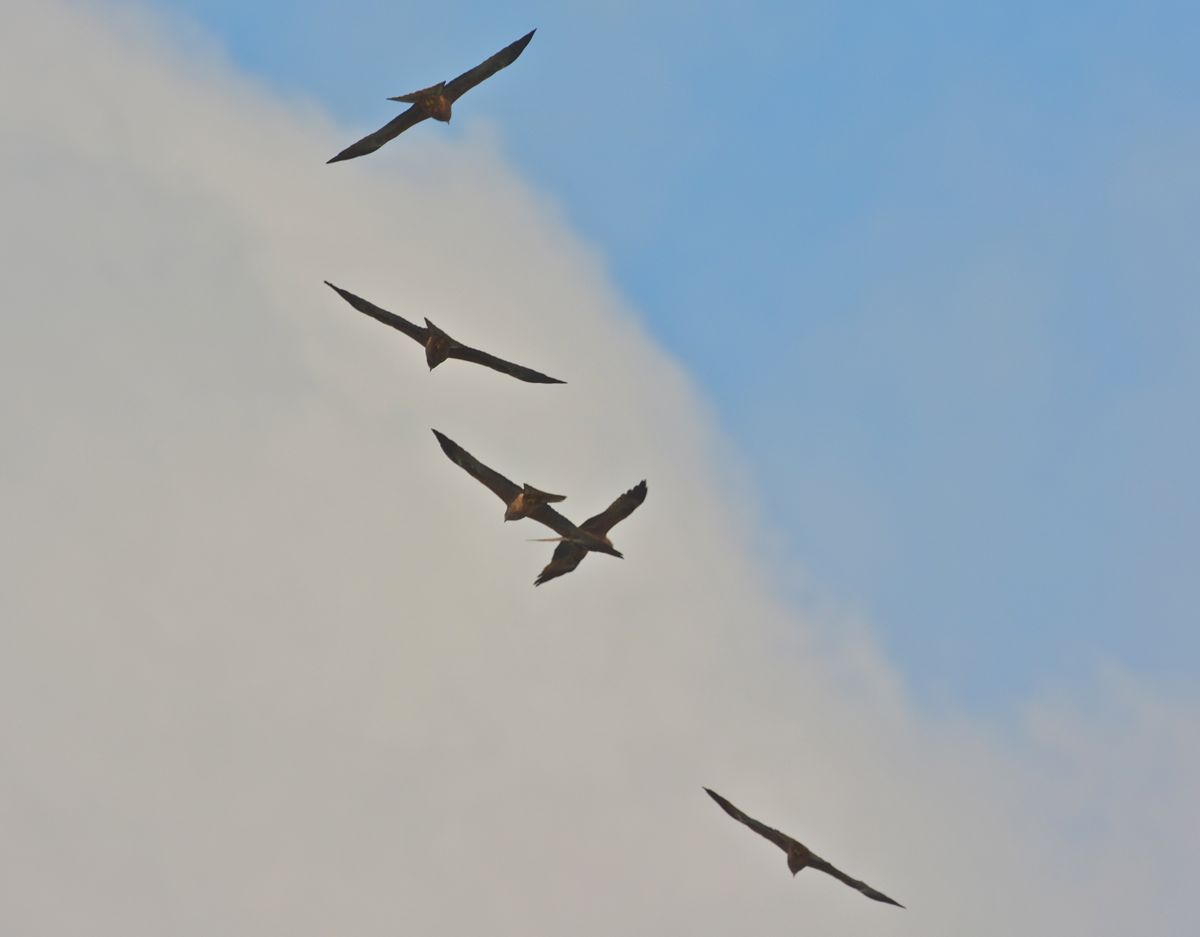
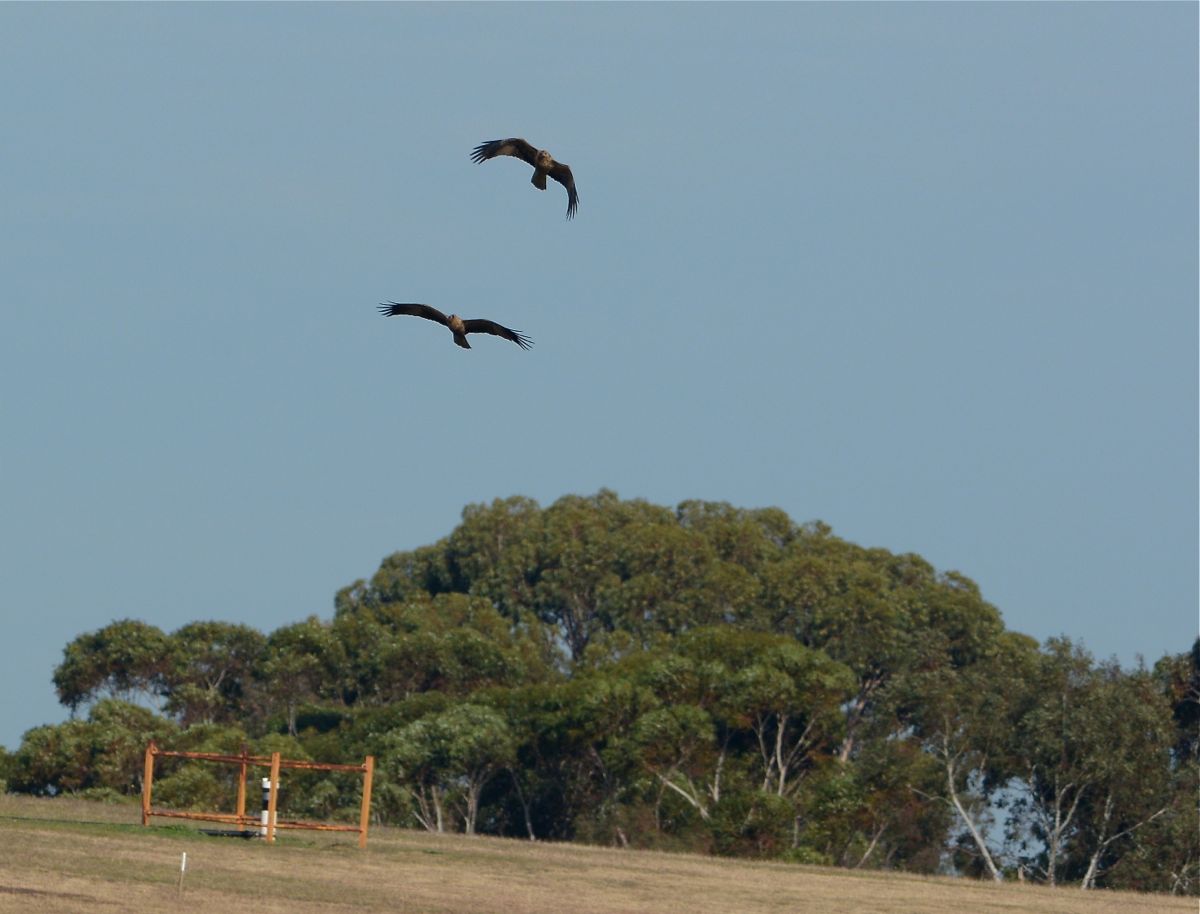
To our amazement a little further along the line we found about 30 Black Kites in dance in the air.  Most looked like juveniles, but masters of the stiff breeze they were and me and the Wimberely were in Inflight heaven.  After so many passes by the birds my arms were tired only from pushing the camera around. Great start.

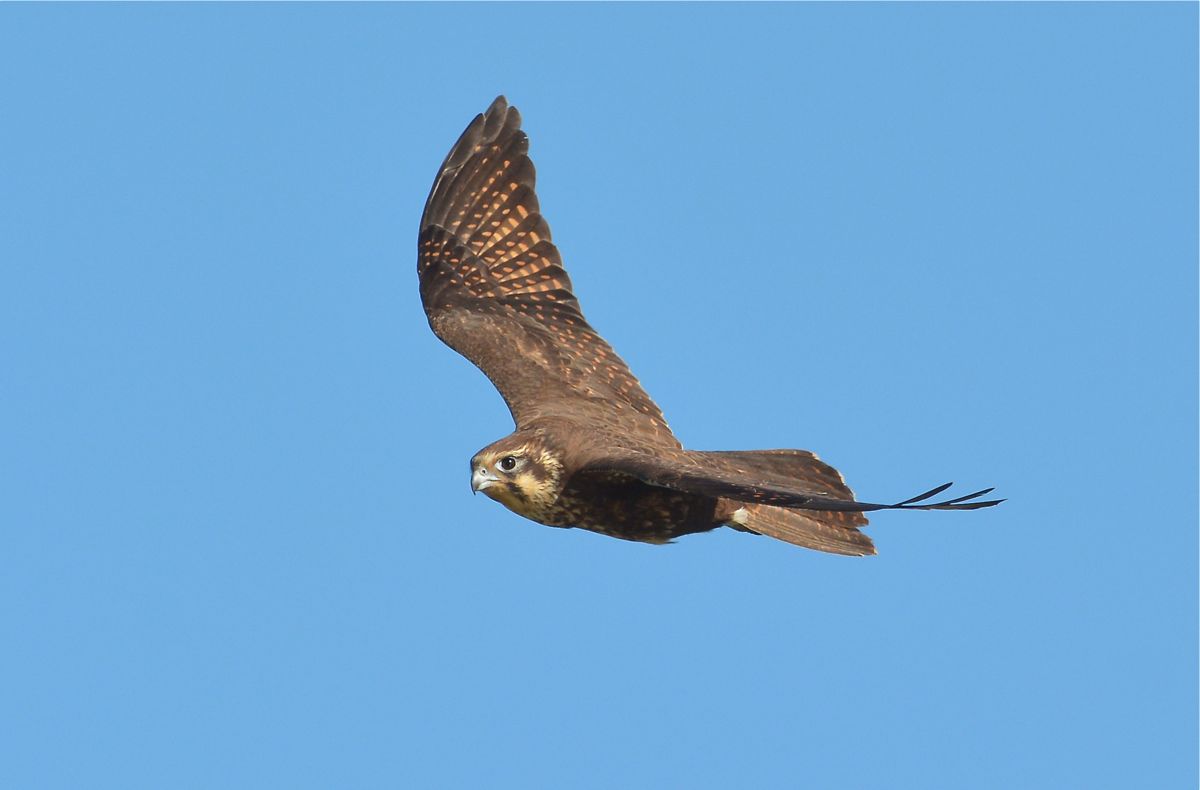
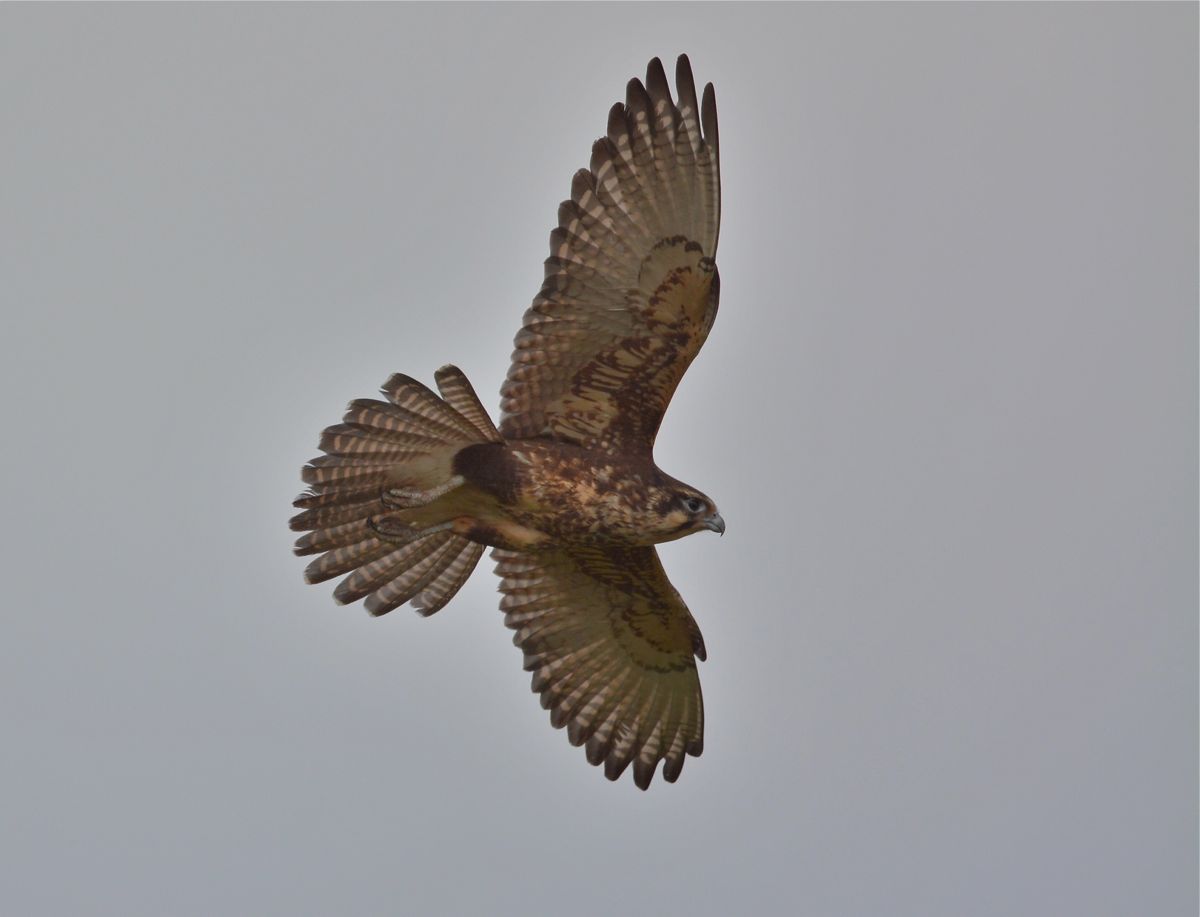
Then a Brown Falcon decided that if it mixed with a flock of Ibis, then it might not be noticed.  The Brown Falcons seem to be a bit of target practice for the bigger birds at the moment. Geoff Main on Flickr has a series of Kite vs Falcon, and there is another report of a Black Falcon taking the prey from a Brown. So maybe this Brown sought a bit of shelter.

Further on, and a Whistling Kite was making short work of someone’s family member and calling out to all and sundry to announce its feeding.

Some Cape Barren Geese along Lake Borrie kept us busy for awhile an even had the male come advancing toward us wings displaying.  Don’t think he liked the little grey car.

And out on the Murtcaim (n) outflow the four Brolas made a brief appearance until just about being run over by a cross country rally expert in a 4WD, not sure if he was a birdo or just needed to get home early. Hope he made it. The Brolga took off and went to a safer paddock.

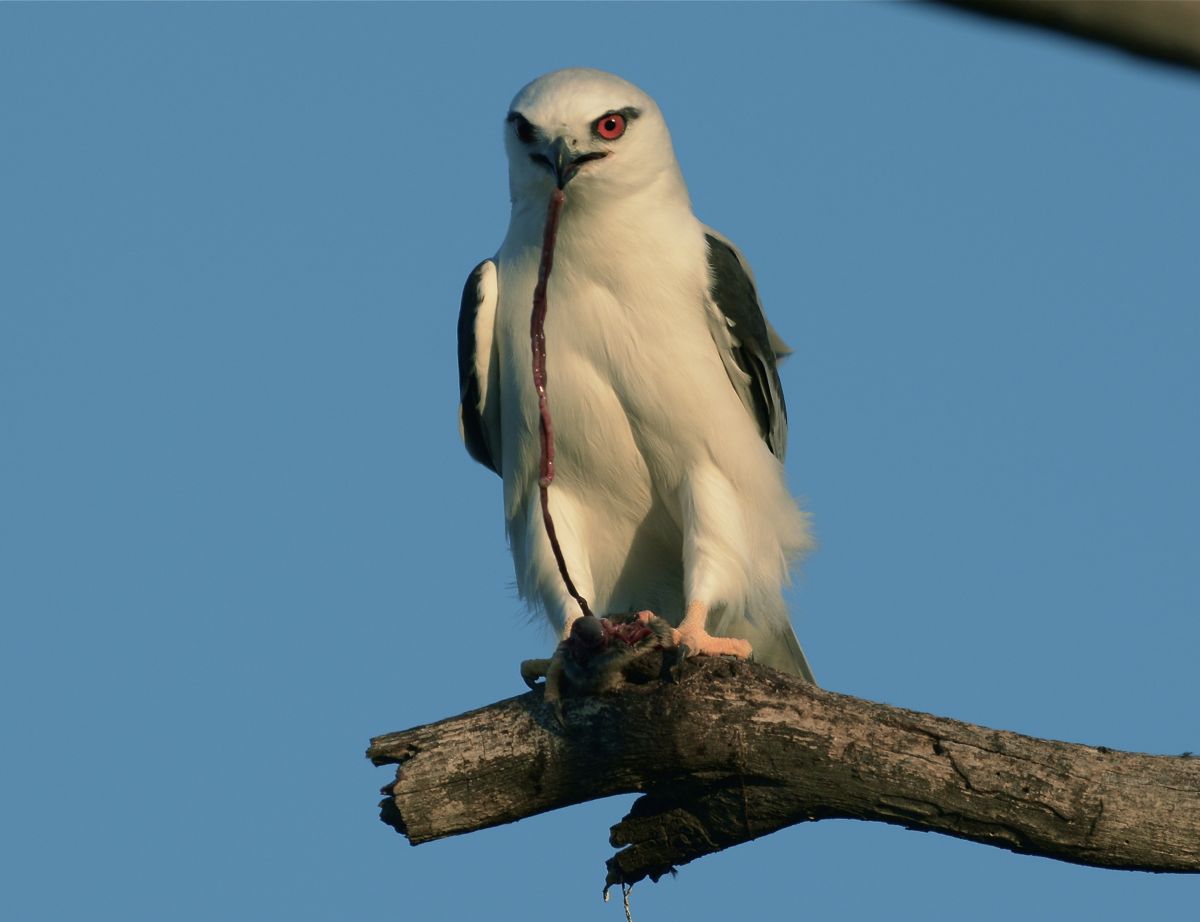
Back along Beach Road, and it was the turn off a pair of Black-shouldered Kites to show they were serious and one took a mouse pretty much infront of the car. Three people with cameras going ‘Ohhhh”, not shot taken.

Then just as the sun was setting and we were already in going home mode, around the corner on Paradise Road. A Hobby sitting in what was definitely the last of the evening sun. And the light was gone.  It however let me get the car up close enough so that a shot or two through the open window was possible.
Not a bad day to be out in the sun

As Mr A says, paraphrasing me, quoting him, “Any day out photographing birds is a good day,  if you get to see birds its a bonus.”
We had the bonus.
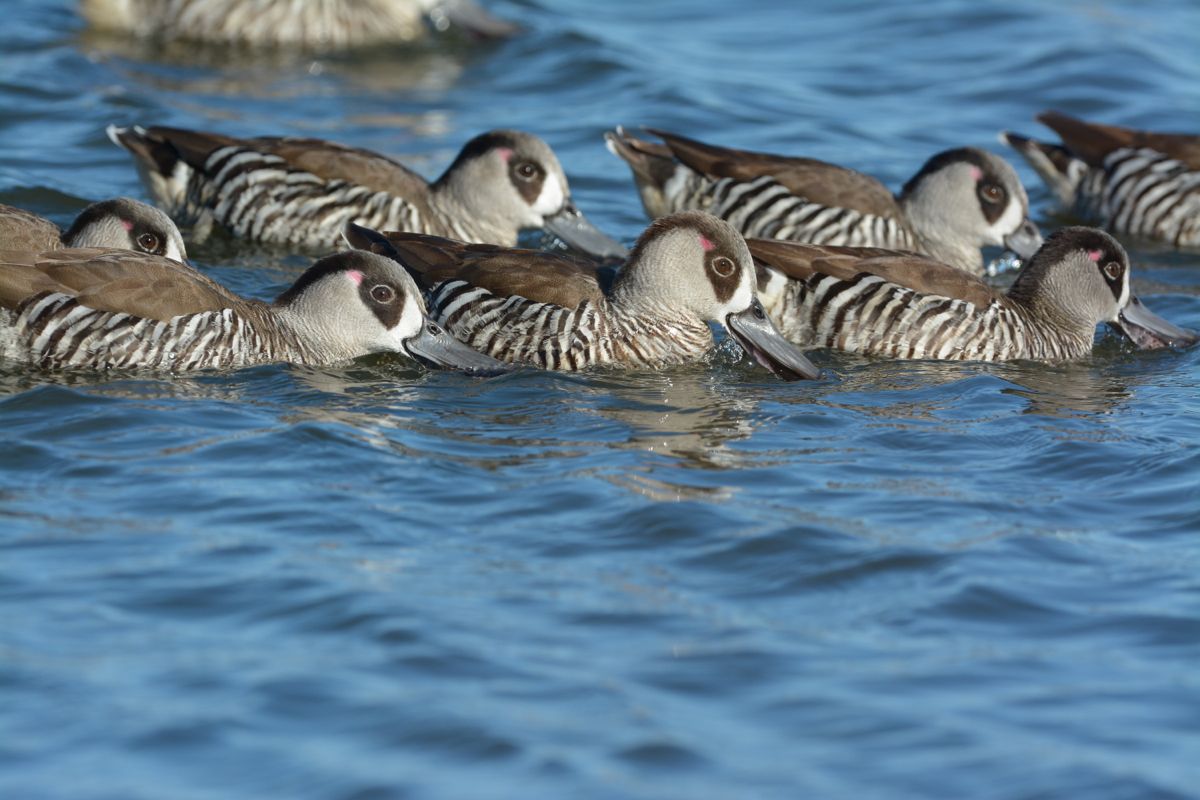
Pink-eared Ducks hunting in  line.
Pink-eared Ducks hunting in line.
Brown Falcon
Brown Falcon
Whistling Kite on prey
Black Kite, one of about 30 in a flock.
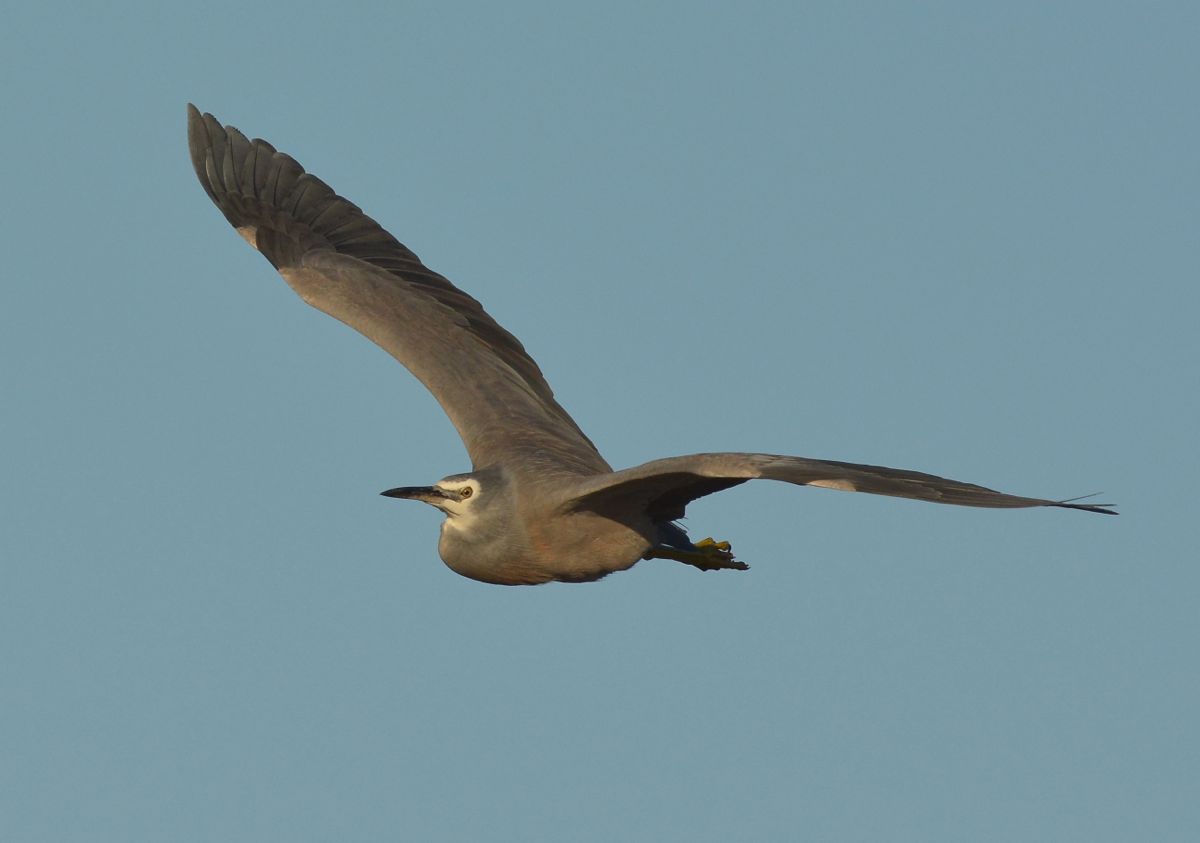
White faced Heron in flight with neck tucked up
Nice catch.  Black-shouldered Kite taking a late evening snack.
Nice catch. Black-shouldered Kite taking a late evening snack.
Mr Percival's relation sitting in the late even sunshine, warming it all up for the night.
Mr Percival’s relation sitting in the late even sunshine, warming it all up for the night.
Hobby in the very last rays of the evening sun. Can only imagine how good these might have been if we'd been a few minutes earlier.
Hobby in the very last rays of the evening sun. Can only imagine how good these might have been if we’d been a few minutes earlier.

Here’s one of the Hobby in silhouette by Mr An Onymous.

Hobby against the evening sky. (C) 2013 Mr An. Onymous


Little walk

Between the weather and some other family activities, we’ve not been out near Woodlands in about two weeks.

The afternoon looked moderately clear, and after a really long decision process over ‘mow the lawn’ or go look at the birds,  we were in the car and heading out.

Just about everybody has been saying that the bird activity has quietened down out there, and  a couple of reports show next to no activity from the Flame Robins at all.

A quick look around the dam area revealed that the reports were indeed correct. Not even a sight of the birds we’ve come to expect as locals.  Even the Little Pied Cormorant and the Australasia Grebe had moved else where.

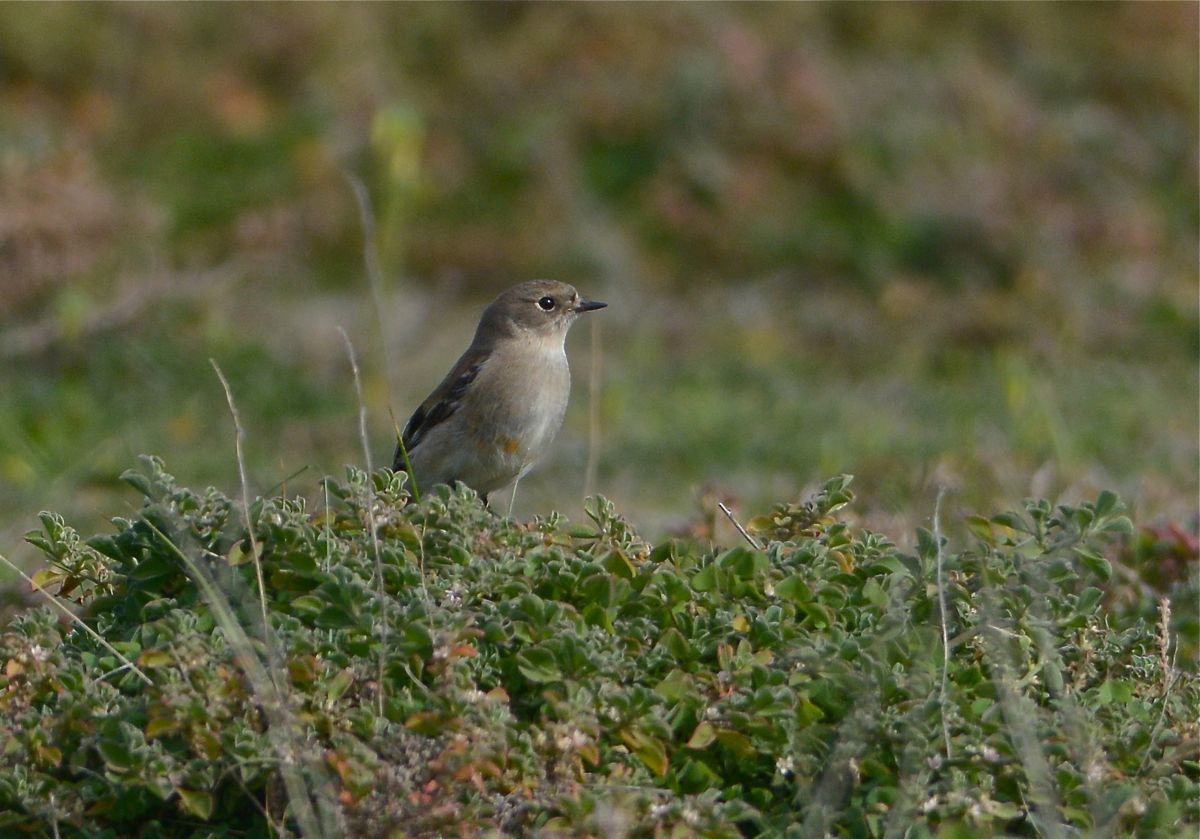
Bumped into Neil A, as we went back up the paddock and he’d found a single female Redcap.  At first I thought it might be Primrose, but no such luck, perhaps one of her daughters as I’d seen them together a bit some weeks back.   Then after about 10 minutes Primrose did turn up.  She has  a somewhat dilapidated coat, as she won’t moult completely for about a month or more just before the season starts.  No sign of Lockie, and I think the brave little dude must have become Goshawk snack time.

No other Redcap males in the area, and Neil reported seeing only one in the area inside the backpaddoock.  I think they’ve moved further down the range, but don’t have time to get out and do a good scout about.

While we were talking a Grey Shrike-thrush moved on to a tree nearby and taking a small stick began to poke it among the bark on the tree.  Very quickly it came out with some goodie attached, and the bird calmly jammed one end of the stick into the bark for leverage and then like a kebab ate the goodie off the stick.  I’ve always admired the GST for its lovely melodic sound, but now I’m even more impressed at is ability to use tools.

Into the back paddock, and the reports were indeed correct. Not even a wing flap, no tree creeper, nor  sitellas.  Not even the rush of Thornbills.  After a bit of a scout round, we took to going up hill into the open scrub area just before the first hill.  And here we found a small hunting party of Flame Robins. Perhaps 3 males, and 2 female/juveniles.   But they were quickly gone.

What seems most strange is that a fortnight back, there were close to 30-40 birds working over the area, now just a handful. Perhaps they’ve all gone to Torquay.

Much to do, but not too many great images this winter.

My friend Primrose.  A bit bewildered by all the activity in her area
My friend Primrose. A bit bewildered by all the activity in her area
Grey Shrike-trush, jamming its implement into the bark to get a better purchase on its kebab.  More on Flickr
Grey Shrike-trush, jamming its implement into the bark to get a better purchase on its kebab. More on Flickr
Will.I.AM O' Scarlet came by to see that we were not intruding on his territory.
Will.I.AM O’ Scarlet came by to see that we were not intruding on his territory.
Flame Robin, one of only two females I saw today.


Mists, WTP and looking for birds

Given the near week of rain we’d had and our inability to get out to the bush, we were watching the weather details on the tv with a touch more than avid interest.

In the end, Thursday looked like the go.  Frost on the ground, little fog in the morning and sunny day.   Sounds just about right.
Plug into the universe that Mr An Onymous lives in, and we are right to go.

As we drove down the Geelong Freeway toward the Point Wilson Road turnoff, it did look a bit nigglingly worrying that we could hardly see the car in front, and the verges of the road occasionally seemed to disappear completely in the fog. Oh yeah, fog.  Not your “Oh, it’ll burn off after breakfast, fog.”  Nor your “It’ll be gone by morning tea fog”, but your, this is pea soup, English fog, and you can expect to drive over London Bridge at any moment fog.  Exposure times were looking like f/4 at a fortnight.

And of course once we got into the WTP, (they’ve put up a new gate and entry on Paradise Road. Very nice.  Your water rates at work.), it became obvious that right after heavy rain in  strong wind, fog will just about wipe out all hope of seeing birds.  After all, if you’re just barely able to see the road to keep the car on it,  oh, whats that- a GATE, stop car quickly- then its going to be harder to see a Whistling Kite slipping across a paddock. Speaking of paddocks, where were they?

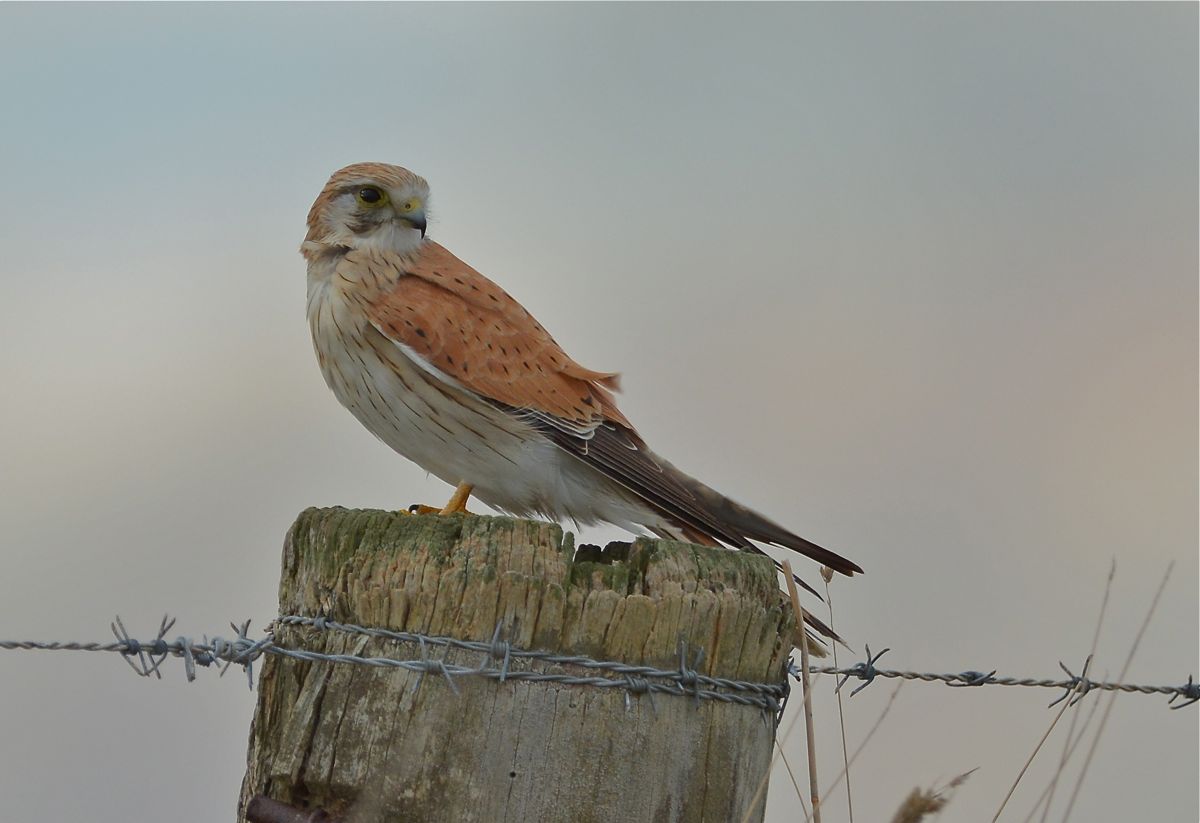
Then we found a Nankeen Kestrel, sitting on a post on the side of the road.  I think we snuck up on it as it couldn’t see the grey car in the grey fog.  But then suitably surprised, it thew and promptly disappeared in the fog.  Hmmmm.

Let’s go and photograph some trees in the mist.  That seems like a good idea, there are some nice looking old skeletons up near The Borrow Pit, and let’s face it, any respectable Orange-bellied Parrot is not going to be out and about today, so we went.

And.  As we got further into the plant, with more paddocks, and more water in the ponds, of course, the fog got, well, thicker.  How could you tell?

So breakfast fog came and went, so did morning tea fog, and lunchtime fog was giving us a good run for our money, and then the first hint of a bit of blue sky and things became a little ‘clearer’.
By the time we were ready to go, and certainly by the time we’d hit the Highway Lounge in Werribee for a cup of coffee on the way home, it was.   Clear.  Oh well, perhaps that is why we enjoy going, there is always next time to dream about

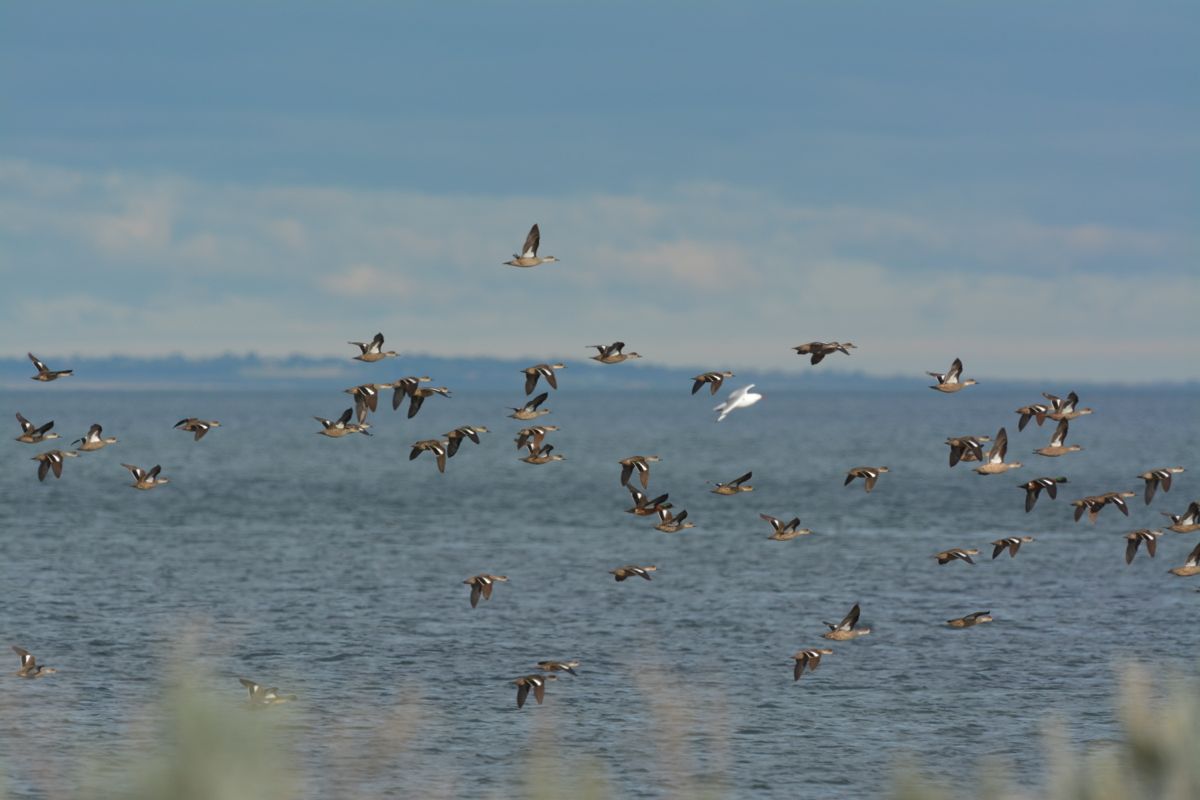
Pink-eared Ducks airborne in the fog.  Now they had seen a Swamp Harrier come over the water, and were gone.  Oh, that was what that dark shape was.
Pink-eared Ducks airborne in the fog. Now they had seen a Swamp Harrier come over the water, and were gone. Oh, that was what that dark shape was.
Pink-eared Ducks getting radar guidance to avoid Swamp Harrier.
This is the closest I've ever been to a sitting Swamp Harrier.  Now I know what they look like in the fog.
This is the closest I’ve ever been to a sitting Swamp Harrier. Now I know what they look like in the fog.
Down near the beach with a bit of a break in the cloud and some sunlight came out and the Black-shouldered Kite responded with a wing stretch.
Brown Falcon down on "Brown Falcon Bunker" at the turn on Twenty Nine Mile road.  Most WTP visitors will know this bird.  here it's having a bit of a preen in the sunshine.
Brown Falcon down on “Brown Falcon Bunker” at the turn on Twenty Nine Mile road. Most WTP visitors will know this bird.
here it’s having a bit of a preen in the sunshine.
I've only ever seen the odd one or two Pied Oystercatchers. Nice surprise to see a veritable flock.
I’ve only ever seen the odd one or two Pied Oystercatchers. Nice surprise to see a veritable flock.
Black-shouldered Kite, sitting on a solar panel with the sharp metal spikes to keep birds from perching on there.  Yep, they work well don't they. Its showing a good deal of warpaint from its last meal.
Black-shouldered Kite, sitting on a solar panel with the sharp metal spikes to keep birds from perching on there. Yep, they work well don’t they. Its showing a good deal of warpaint from its last meal.


Visiting friends on Queen’s Birthday weekend

Monday of the Queens Birthday Holiday weekend dawned with a splash of glorious sunlight coming in through the windows.

“Lets, go visit someone “, she said.  Good idea but who?  And we came to a reasoned conclusion that we hadn’t seen Rosie for a couple of weeks and that settled it.

Besides it was a holiday and the Woodlands park would be filled with every man and (his/her) (several), four-legged bird scarers.  And I’ve grown tired of answering the ‘what are you doing with all that photo equipment”, question And the inevitable discussion  on the rights or wrongs of Australia not having a Bill of Rights. So bypassing Woodlands and the bird scarers we travelled on  westward.

So Rosie, here we come. Nice quiet area, just far enough of the track to not have to listen to endless cars passing.  And the pleasure of Rosie, if she was taking visitors.

We arrived at her little area of the bush, the past weeks rain had given it a little extra lift, and a good stand of grass is starting to show in the open areas.  But. No Rosie. She is a female Rose Robin, that somehow is out in the open basalt plains rather than in her normal wet hillside environment.  Not that we’re complaining. It might just be she is a nomad in winter like the Flame Robins. Time will tell.

While we were scouting around, a small family of Flame Robins came through. One a particularly thin and tall bird with a quite dramatic yellow plume on his chest.  Things were getting interesting.

When out of the trees and on to the ground flew a familiar little brown bundle, with appropriate wing fanning and tail twitching. Rosie was taking visitors.

Working with her on a good day is a real delight. She moves fast, but does a circuit of the small wooded area, so its possible to see her come by every  10-15 minutes sometimes.  I settled on to a log and waited and sure enough she flitted in.  She also seemed somewhat agitated by the Flame intruders and spent a bit of time chasing them out of the area.  The Flames not being territorial at the moment simply moved up the paddock a bit.

Then back she’d come and on a number of occasions  landed on the branches near me, and then above me and alongside me at distances the lens wouldn’t focus down too.   It pretty amazing to have a little tiny bundle of feathers in arms reach sitting on the side of the tree with the feathers going in and out as she breathes.  Most times I stop breathing for fear of frightening her off.
So we photographed, she hunted, then rested then came back again.   We had hoped that there was a male to accompany her, but after several hours its pretty much a conclusion she is on her own.

Then to make a good day a great day, a pair of Eastern Yellow Robins also moved through and some Yellow-faced Honeyeaters to finally fill out a good day visiting friends.

Rosie with her moth catch
Such a tiny little bird and a real hive of activity. She hardly seems to stop
Looking well in the early morning light.
Rosie, you're too close and filling the frame
Rosie, you’re too close and filling the frame
Yellow-faced Honeyeater hard at work on the blossoms
Interesting Flame Robin male, who seemed to be independent of the small family group that was working in the area
Eastern Yellow Robin, on a tree waving in the wind trying to keep its head and eyes on a target grub

Ever wondered what Train Spotters and Birdos have in common

Ever wondered what Birdos and Train Spotters have in common. Seems they both fall under the same collective noun  “Spotters”

Mr An Onymous found a reference to birding down at the Western Treatment Plant and an interview with well known Birdo David Torr.  He is member of Werribee Wagtails among other things an a driving force on the BirdLife Australia Photo database.  And you’ll often find on the Birdline site reports of his findings out in the field.
Anyway if you’ve never wondered, like I’ve never wondered if there is a even somewhat tenuous connection, then have a look here.
If you just want to see what David and the group are doing for the endangered Orange-bellied Parrot, then look as well.

Good on ya  David.

http://www.brimbankweekly.com.au/story/1548579/trains-planes-and-wagtails-spotters-share-their-passion/?cs=1182


The amazing story of the Harrier and the Falcon

I’ve had some interesting comments over on Flickr,and also by email on the incident last Thursday involving the Swamp Harrier and the Falcon.  As there are a lot of images from the few minutes, I thought it might be worthwhile to share a few more here and outline what transpired.

The light was fading badly by early afternoon, and a rain band was enveloping the You Yangs (a range of high hills near the treatment plant), and so it seemed worthwhile heading for home.
We were coming up the road alongside the Little River and just as we neared the crossing over the river, EE spotted a Brown Falcon on top of a post.  It was close enough to warrant a look. And we stopped.  As we did, and got the cameras ready to get a shot of the Falcon, a Swamp Harrier swung in and landed about 10 metres on the other side of the road from the Brown Falcon. And still we didn’t think anymore of it. Not wanting either bird to throw into the air, we pondered our next move.  Had we moved away from the car, either, or both would have certainly taken to wing.

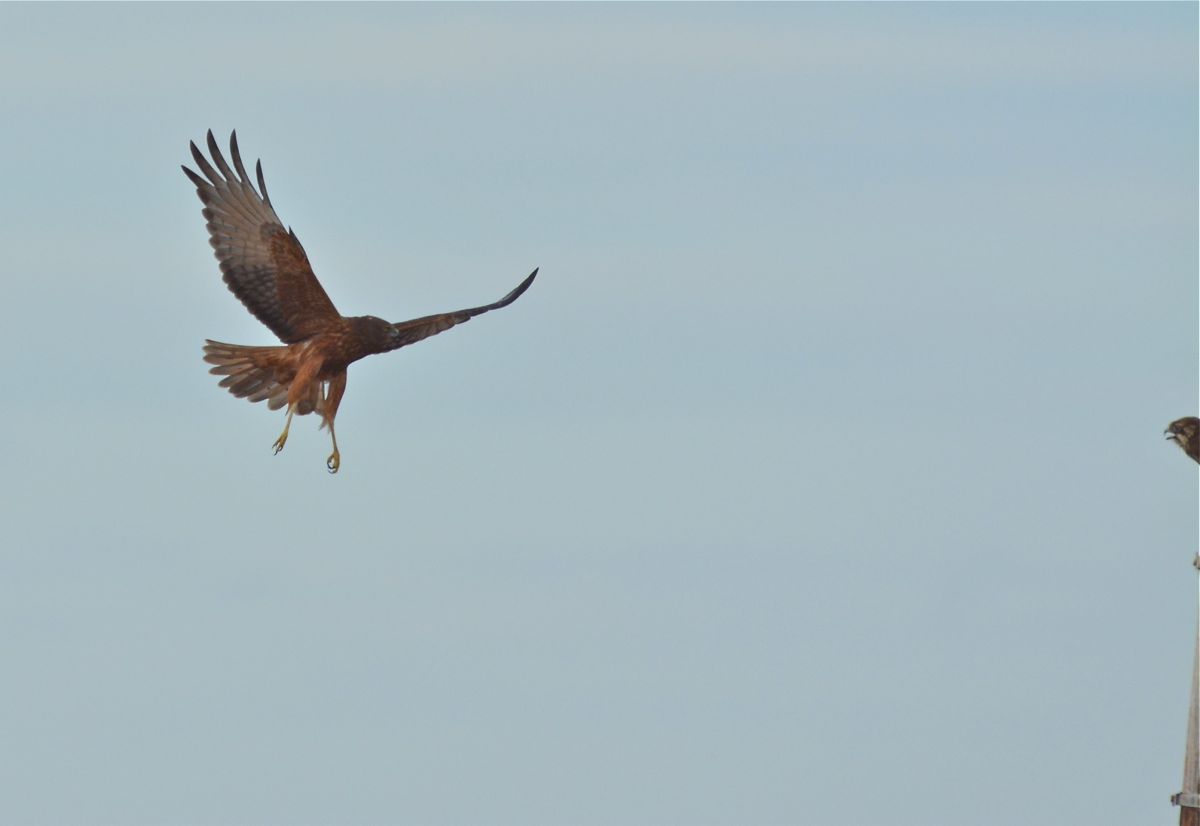
Seeing that I don’t have many – write that has hardly any- really useful pics of a Swamp Harrier, I decided to point the lens at it. And as I pulled the camera round, it threw and was airborne straight up. It then swung round on a very tight circle, and by then the Autofocus on the camera had well and truly grasped it, and I began to get some sharp shots, and a sharp view.  Even then I thought it would gain height and be on its way.  But.  It swung the legs round like a pendulum and covered the 15 or so metres to the falcon faster than I could really work out what was occurring.
It wasn’t until I saw feathers fly from the falcon that I was really up to speed on the unfolding drama.
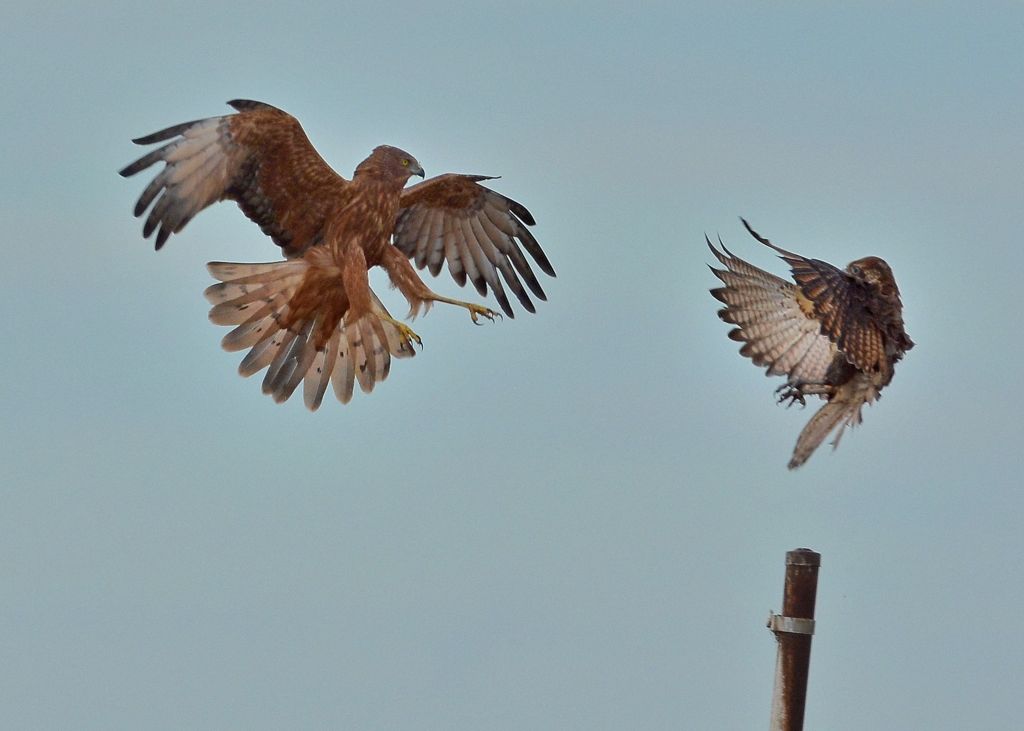
The falcon was taken completely by surprise and could only raise to defend itself. Pretty hopeless really.  The long leg swung out and grained a good clawful of feathers on the lefthand wing. The flacon dropped immediately to ground, and the harrier had already steadied itself in flight and made another grasp but missed.

With the falcon in the grasses, the Harrier did what they do best. Hovered over the area. Eventually realising it wan’t going to get any  further it pulled back and landed at the base of the falcon’s post.  And sat glaring into the grasses.  After a few more minutes it had obviously recovered its breath and took off to see other things.   After a long time, perhaps five minutes or more the falcon emerged and flew away.  It was gone by the time I’d swung the camera round.

Spent most of the yesterday morning pouring over the books,  HANZAB, Debus, Hollands trying to work out what might have gone on.

Several things I found out. The Swamp Harrier is nearly twice as heavy as the Falcon. Females are around 900 gram.  Falcons are 450(M)  to 600 (F) gram.
Swamp Harriers can carry off an ordinary farmyard chook.  They have, and we’ve seen them surgically pluck a coot out of the water with the greatest of ease, not even altering flight to do it.  Ducks and rabbits are apparently also with in their range.

I have no doubt that had it managed to get a grasp on a wing, and do some damage to the flight muscles and or wing bones, then it would have easily despatched the Falcon.

Its sheer cunning and boldness in the entire adventure was very calculated and well executed.
I have a new admiration and respect for the Harrier, and just a hint of compassion for the Falcon.
No doubt these battles go on all the time, and given the sheer number of raptors that frequent the Western Treatment Plant, the small area must make it even more likely to happen.

Here’s the photo journal.

Gaining height as it heads across the road. The road and posts are visible in the lower area.
Target in sight. Now with speed and surprise on its side, the falcon has yet to react.
The falcon has seen the danger but it's too late to just slip down and away.
The falcon has seen the danger but it’s too late to just slip down and away.
Immediately after the strike. I didn't get the attack shot, but saw it through the viewfinder on the camera as the mirror was down!
Immediately after the strike. I didn’t get the attack shot, but saw it through the viewfinder on the camera as the mirror was down!


Keeping its height it narrows in on the out of balance Falcon.
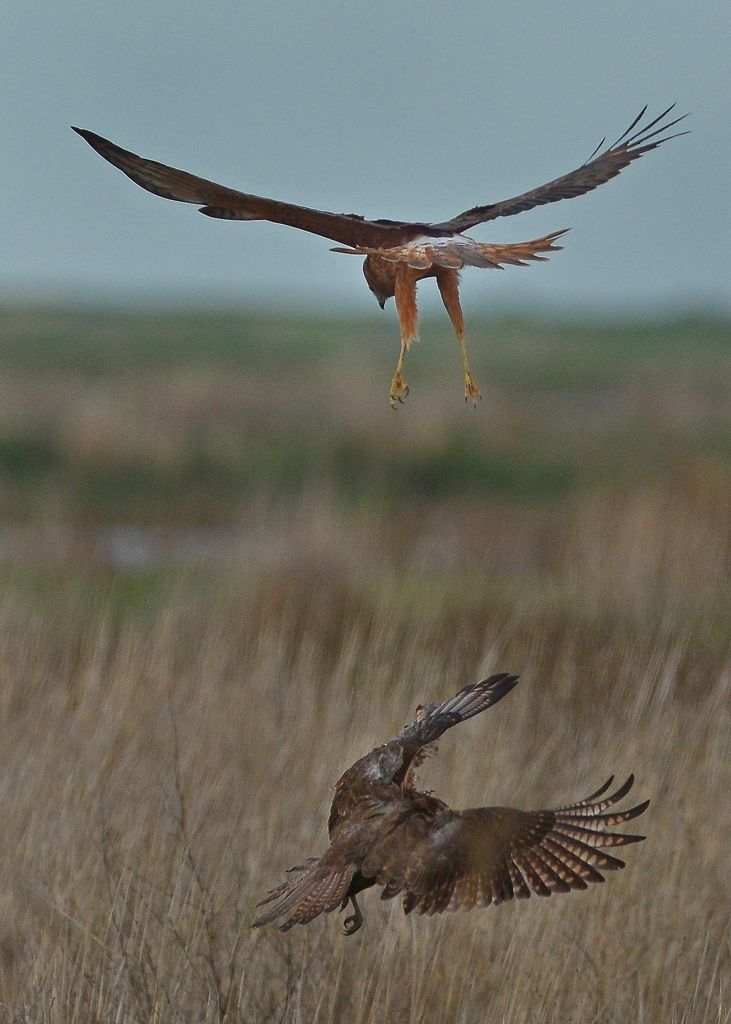
Falcon has regained a breathing space as the speed has taken the Harrier out too far.
Heading for the grass, Harrier in pursuit
Made it. Too low now for the Harrier to reach it in the grass, but I thought for a few moments, it might follow into the grass.
Hovering over the area, it quartered the grass for a couple of minutes


Still not satisfied, it returns to the road to wait.


Pink Robin at Woodlands

On Friday, we looked out the window early in the morning to a clear sky and by breakfast a lovely sunny day.  Not to be wasted we packed to go out for a morning’s sit in the park. But. By the time we’d got the car loaded, it was a bit, well, you know, overcast.  So I went in to get the Drizabone and just as I came out to the car, it began to rain.

Back inside.

But by lunch time the rain had receded. Think that is the technical term.

We headed down the old hospital dam area and were hard pressed to find a bird. Any bird. After a lot of scouting about, we did locate a small hunting party of Flame Robins. So it was beginning to look better. The scrub near the dam is mostly Blackwood Wattle, and I was lining up on one bird when I heard a loud “TICH TICH” in the greenery right next to me.  Peering into the undergrowth I could see some movement, and the TICH TICH repeated.  But it didn’t match any calls I was aware of too loud for a Red-cap, and too sharp for a Scarlet, and the Flames have a much more sedate contact call, more of a trill.

Then as calm as you like, it hopped out of the greenery, and on to  a stick.  And I managed one shot, before it danced about on the ground and then moved to another tree. Fascinated, I followed.  EE was on to it by this time as well, so we were going to get a good id.

At first I thought it might be a darkly coloured female Flame. But its attitude and stance was far from Flame-like.  It also carried on its wings some distinctive rich Tan ‘broken arrow’ feathers. Most of the robins I know are white, or buff in that department.

More mystery.  Once home, the id books weren’t much help, the best being a drawing by Nic Day of a Pink Robin.  So off to Flickr.  And mostly the response was Pink Robin.

Spent this morning pouring over HANZAB and Bowles “Flycatchers and Robins of Australia”, now the book is pretty much outdated, and if you don’t mind, we don’t, because of our very strict policy of “Rules for Ethical Bird Photography”, take pictures of birds on nest like that anymore.  After all cutting down branches from nesting sites, (and allowing the hatchet marks to be seen in the photo), is as Paris Hilton is want to say, “Well, so yesterday”.

But among the pics of the Pink Robin was one showing the tan wing bars.

Excited I attempted to borrow EE’s field guide. She uses “Slaters, Field guide to Australian Birds’.  Never try to borrow someone else’s field guide.  Answering the ‘why? question is too hard.

Slater really nails the id with the Pink Robin as ‘not having any white tail edges, unlike most other robins.” Bingo.

My bird doesn’t have those white markings.

So here is a Pink Robin. First for me, anywhere let alone in Woodlands.  Hope it might stay around a few days.


Edited update: Checked with my source of all things in lists at Woodlands and Richard says no records of them before.

lcriding suggested Ms Pink, so Ms Pink it is. Hope she approves.

DSC_3838 DSC_3839 DSC_3840 DSC_3851 DSC_3888

Where do all those Black Kites come from, or a day at the WTP with a few friends.

We, Dorothy, I and Mr An Onymous, took a trip down to the WTP on Thursday.  It was the only day in the week when the weather people could give a definitive,  no rain.  But some got a bit overenthusiastic with the little weather icons and put  the Sunny Day one.  Hmm, never believe an icon.   We go there early morning, and already I was looking for the coffee shop.  When the exposure is F/8 at a week, I begin to worry.  Still we motored up to Ryan’s (former) swamp for a looksee and came acoss a lone Black Kite in a tree by the side of the road.
I whipped out the tripod with the new  Wimberley Gimbal head and set it all up. The patient Kite sat through all that, and allowed me to take its pic.  It was, rather unkindly, I thought, suggested that by the time I’d have it all setup, the bird would have died of old age.  But. Not so.

The Wimberley head is such a piece of engineering. I’d like it even it it didn’t hold the camera. Which is does, and elegantly and securely. The main advantage is the weight of camera/lens is balanced, (like a see-saw) over the centre point of the lens/camera combo, and the centre weight of the lens. Dah dah the lens becomes for all intents and purposes “weightless”.And will move effortlessly  and stay in position without tightening up anything.   However, it does need to be setup, and that takes a couple of minutes.   If we owned a Toorak Tractor then I’d leave it set up in the back and just open up the bombbay and outload the whole thing.  But.

From there we travelled back to Paradise road, with the intention of finding the elusive Northern Shoveller. Truth is, its still elusive.  Perhaps Illusive.

But we did find a pair of Nankeen Kestrels hunting just east of the pumphouse and they’ve been there a couple of weeks.  So the hunting must be good.

On toward the East end of the plant, and we found the no go zone while the Orange Bellied Parrots are in session.  Not wanting to be the ones that scared the last Orange Bellied Parrot to death, we turned toward 15E Outlet. Which is just as well, because by the time I’d got the Wimberley set up again, just about all the ducks, cormorants and small birds in the area, put to wing and were gone!  Strange I thought. Not because of the remarkably attractive Wimberley I hope.  And before you could say,  “Was that a Whistling Kite call I heard?”  The sky above us was filled with Black Kites.  I counted 38 in the area I was looking at. EE numbered 30, and Mr O saw another 15 or more in the other direction.  Had to be over 70 of these massive birds all in the same area, all circling with no real height gain, and all in easy photo reach.  Now I know why they say such good things about the Wimberley.  It works.  Standing in one spot, following circling birds while holding a big 500mm lens is really hard on the arms. about a minute at a time I reckon.  But with the big W.  I stood photographing those in sight, looking to find the next one, easily swinging the lens about.  10 minutes passed and it seemed like 10 seconds.  As they finally peeled away and move out along the shore line, 3 grown adults laughed, and yelled, exhausted by the intensity of the moment, and yet overwhelmed by the sheer size of the flock and their casual moments.  More birds in 10 minutes than in days down there.

So it couldn’t get better.  This is the place that John Barkla calls  a “magic place’, and it had more to show yet.
We stopped to watch a Brown Falcon on a pole just on the Little River crossing. A Swamp Harrier swung in and landed about 10 metres from the Falcon.   We were getting into position to photograph it, when it leapt into the air, circled to gain height and then thew itself at the completely surprised Brown Falcon.  The Falcon rose up in defence, but it was pretty much a wasted effort. The long surgical legs swung in and it grabbed the falcon’s wing with feathers going everywhere. The falcon immediately dropped to the tall grass below with the Kite in hot pursuit.  The Harrier then ‘harried’ over the area for about 2 minutes then landed back on the road and peered into the grass.  After a few minutes of that it took off for other parts. The images on Flickr show the event and the said damage to the wing of the Falcon.

It emerged about 5 minutes later and flew off seemingly none the worse for wear, but a lot wiser in the way of Harriers.
Had the Harrier grasped some important bone on the wing, no doubt it would have crippled the falcon who would be no match for it in a straight fight. The Harrier being twice the falcon’s fighting weight.

We took a trip around Borrie, and there found two Sea-Eagles engaged in a battle. Locked together they cascaded out of the sky and into the water about 10 metres apart. Would have been great to get it all on file, but I managed only the evacuation from the water and the get-away.    What surprised me was the speed and strength the birds came up out of the water, having been just about completely submerged.

And just to finish off a nice day, a Whistling Kite came out in the small break of sunshine and enjoyed the strong off shore wind.

Having filled one memory card for the day, I was pretty happy with the events, even if the icon got the weather  wrong.

Black Kite in the dark of early morning.
Brown Falcon in a tight turn on a strong wind
Where's everyone going?  My birding knowledge didn't figure out they were 'out of here"
Where’s everyone going? My birding knowledge didn’t figure out they were ‘out of here”
And here's why. Two of the mob of Black Kites that wafted in.
And here’s why.
Two of the mob of Black Kites that wafted in.
Black Kite #36
Black Kite #36
Black Kite #55
Black Kite #55
Kites as far as the eye could see
White-bellied Sea Eagle lifting itself out of the water
Taking in the sunshine. Whistling Kite
If I sit quietly on the post, will you go away and stop annoying me. Female Nankeen Kestrel
If I sit quietly on the post, will you go away and stop annoying me.
Female Nankeen Kestrel

Out on the Cumberland Homestead site

Took an early morning walk out to the old Cumberland Homestead site.

It overlooks Melbourne Airport and was recently part of a control burn that Parks Vic had carried out. What with the rain and all, the grass was beginning to recover nicely and only a few trees carried the scars of the fires, while a goodly number of new growth gum and wattle were charred remains.

Still its always a good walk as the grasslands are still pretty much open areas and suits the big birds hunting.

It wasn’t long before a pair of Whistling Kites put in an appearance and one posed with the airport control towers in the background. See it on Flickr.   From my vantage point of  a large log in the middle of the paddock the birds make frequent low passes across the paddock.

Till of course the local Brown Falcon showed up.  Then it was a bit of a yelling match, and the big birds politely left the area.  The Falcon was then harassed by a number of magpies and ravens, and eventually driven off by a Magpie Lark.   Size is not a big deal in all this.

I walked back up toward a small ridge that runs down beside the Greenvale Creek. (normally dry, but today had a small flow of water from the rain.  At the top of the ridge there are several open areas among the old Greybox forest and the Robins has traditionally hunted up there. Last year many of the females retired there for much of the winter.

And I wasn’t surprised to find a small hunting party going about its business.

Found a White-throated Treecreeper near the map shelter on the way out, and a number of Silvereye and a couple of Varied Sitellas doing their usual upside down thing on the bark of the big trees.

Whistling Kite in a light breeze.
Flame Robin, male, brightening up a dull part of the park
One of a number of females at work up along the Greenvale Creek Ridge


Rodger’s work on display at Light Factory Gallery in Eltham.

Rodger Scott,  he of “Swallows in flight R Us.”  on Flickr here, has in conjunction with his art group,  Wild4Art has an exhibition of his fabulous paintings at the Light Factory Gallery in Eltham. It runs to the 16th of June, and if you’re in Melbourne, and want a way to fill up a couple of hours then take  the drive out to 21 Brougham Street in Eltham.

Rodger is one of the four artists with work on show, and it was really excellent to spend a morning in the gallery with the works and to contemplate both the makers style, the works and the bird themselves.
The Light Factory has to be one of the most suitable galleries to show this kind of work. It has an amazing high window set that lets light literally pour into the viewing space. Like many of the buildings and spaces in Eltham, it is both highly functional, and also uses a lot of recycled material in construction.

Loved to be able to stand back and see the work as a whole and be able to get up nice and close and personal with the image and feel the character of the bird as each member of the group has found expression.

We, Dorothy, I and Mr An Onymous made the trip over on a rainy day.  The idea was simple,  view the art, have lunch, photograph birds.  No one said anything about the weather closing in and the rain pouring out of the sky.  Exit ideas of walking in the bush.
We settled instead for a table at the “Tea House”, the fabled food hall attached to the Gallery.   After a nice Pie,   I had a Borcastle, But have to say the Bean and Leek bake was going to run a very close second. The others, the usual foccacia etc, and a cup or two of Queen Mary tea, it was obvious the rain had won.  So.  We had another cuppa and then we went home (used to be song about that once  ?)

Well done Rodger, congrats to you and your colleagues for a bold and entertaining exhibition.

No pics allowed!!

A wander about in the Wright Street Grasslands.

Had a chat with Travis, the Bandicoot Hilton concierge, the other day, and he was really excited to announce that they had taken out the last fox from the fenced off area. It had finally taken a bait. (Which is some ways is really cheating don’t you think) Subsequent bait layings had not been taken so it may be that foxy loxy is no more, and the serious business of putting untrained bandicoots into the area can proceed.

Well done.

But, of course that leaves the gates well and truly locked and the area inaccessible for us over the rest of the Flame Robin season. I suspect they’ll be well on the way home before we get past the first of the bandicoot sentries.

So I took a wander today down the other end of Moonee Ponds Creek. It can be accessed from Mickelham Road, and followed back up toward the old quarries.

Didn’t find much, but then my expectation level was pretty low anyway. After all it was simply to see what could be seen.

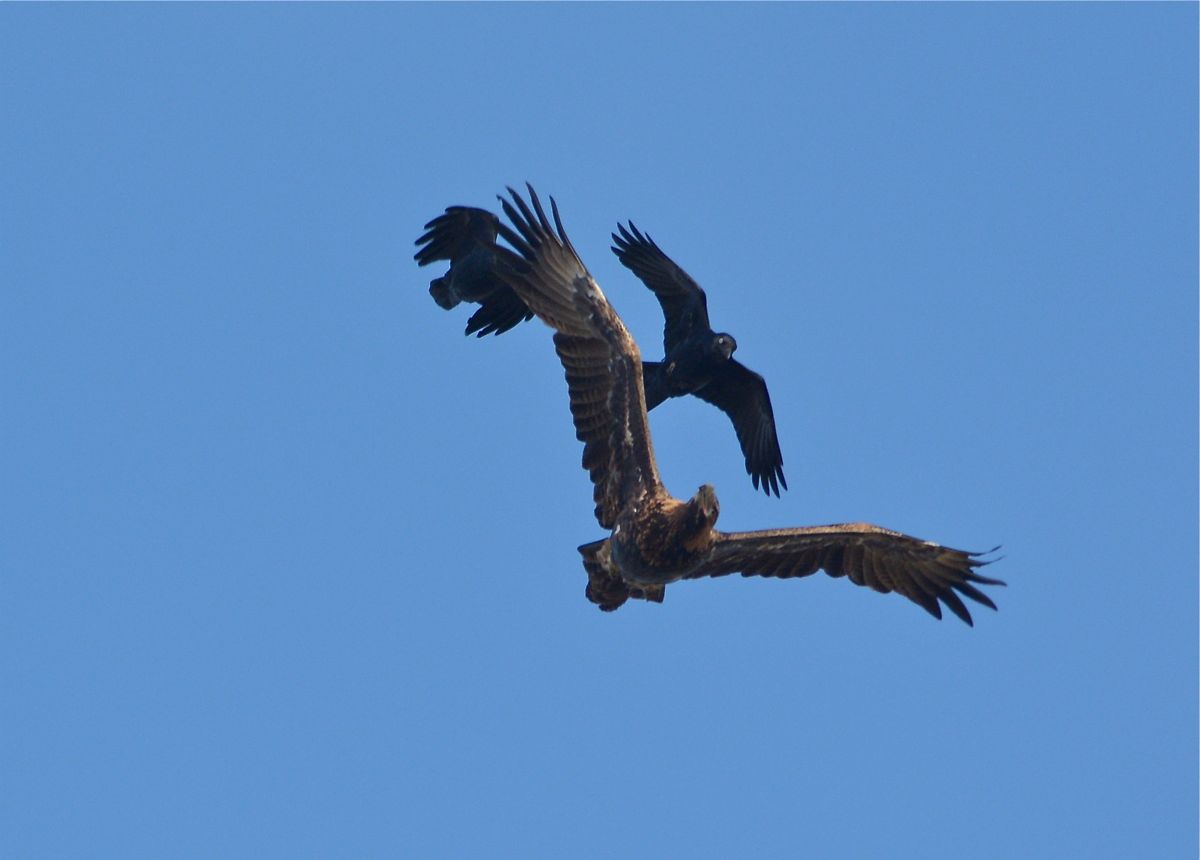
A Wedge-tailed Eagle was harassed by some Ravens, and then not satisfied they turned their collective attentions to a Whistling Kite, for good measure.

There is a dam just south of the Bandicoot Hilton, and it has a good collection of water birds and today was sporting a Hoary-headed Grebe, (my first in the park) and a very smart looking Zorro bird – Black-fronted Dotterel.

On the way back to the car, I wandered to the wrong side of some pretty thick box thorn, and was amazed to see not one, two, but three female Flame Robins hard at work in the early morning sunshine. Had I known that earlier I might have stayed there and then popped round to the Coffee  and Pie shop, just around the corner.  Mmmm  Lamb, rosemary, curry and vegetable.  But I had the Veggie Pastie and smiled in the sunshine.

Zorro bird at the top dam.
Two Whistling Kites enjoying the light breezes
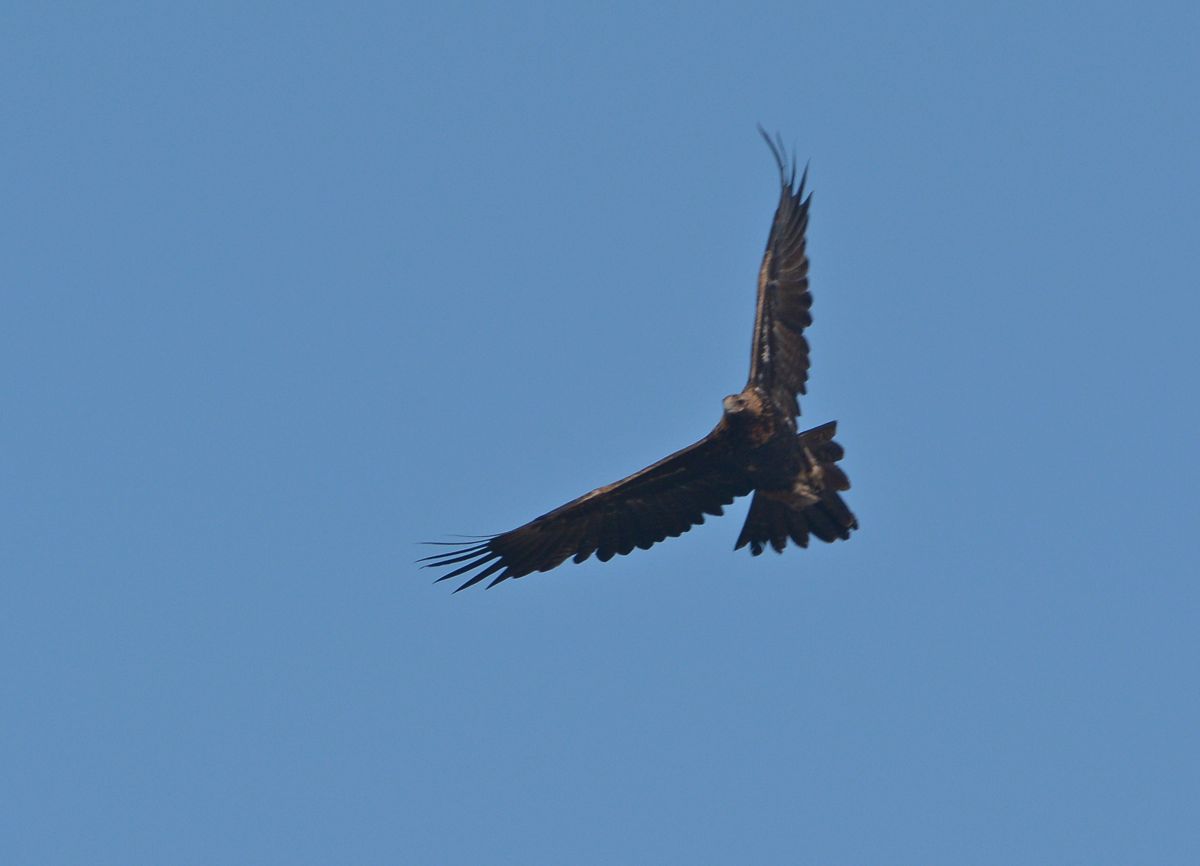
Wedge-tailed Eagle looking for updrafts to gain some height
Attack of the Ravens
Outnumbered, this Whistling Kite found it hard to gain space to escape
SItting pretty. Flame Robin female feeding in her own little bit of heaven

Yet another spin around the Western Treatment Plant

Spoke with Mr An Onymous, and he was pretty happy to take a trip down to WTP.  The weather at the time looked, well, sad, so we waited until the weather person on the telly said, “Fine”, and as she would know, we went with her recommendations. Wednesday.   Would a person with an auto-cue mislead you?

Most will know that I’m a great fan of WTP in the late afternoon.  The light seems to me always to be at a better angle. But, morning light offers s softness that is also hard to resist. And we get to stop off somewhere for a late lunch on the way home.  So, we went in the morning.

The “Clear” skies didn’t eventuate, but at least it didn’t rain. There was little or no wind so the raptors of the field were going to have to work that bit harder to get, and stay airborne.

We went down by the Spit to look perhaps, for Brolgas, perhaps.  But were pretty infatuated with the way the early morning light was playing over the shallow pools, with its soft mellow yellow and orange, so we played creative photographer and enjoyed the moment.

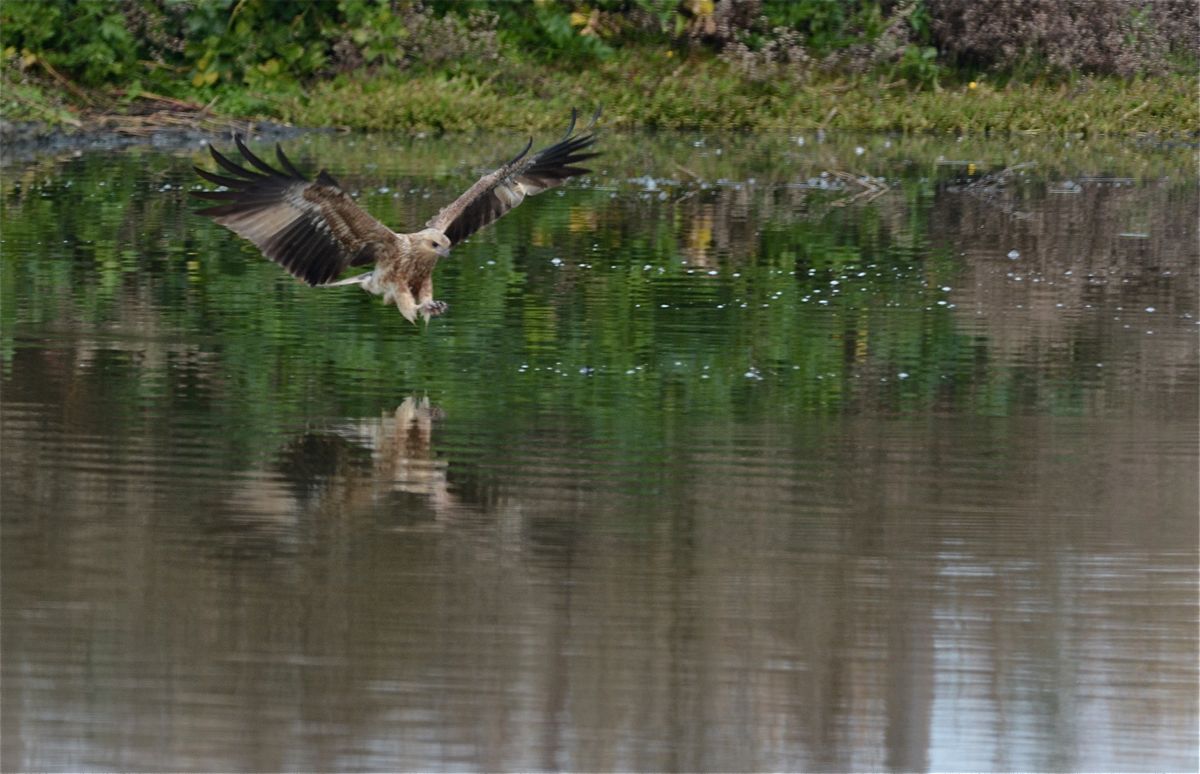
We spotted a Whistling kite on one of the ‘new’ logs that have been placed in the pool, and were just setting up to photograph it when it suddenly took off. As usual we blamed ourselves for setting it to air. But, it circled the pond, and with clear intention swung down and attempted to grasp something from the water.  It missed, so did we, and astounded we watched as it regained height, dropped is legs and swung in for a second pass.  This time the shutters went, but not being a great inflght person, what I got was hardly super. But enough to show the bird meant business. So new sets of rules.  1. Be ready, 2. Always anticipate they may do something unusual. 3. Brush up on inflight techniques.

A couple of Black-shouldered Kites were sitting on one of the many solar panel settings in the paddocks.  The birds ruin the panels by crapping all over them, so the clever people who design these things have added specially spaced spikes to convince the birds to (a) perch elsewhere, and (b), don’t defecate.   Seems like a good idea.  Doubt though that the birds see it as any more than just another challenge in their day, and so have just taken the spikes to be part of the scene.  This pair is really interesting to us, they seem to be a pair that stays together over the entire year. Not just at nesting. They always seem to be in the same area and hunt together.  Today was no exception.

I finally found a flock of Pink-eared Ducks that were close to the road way and accessible. I also learned several things from this encounter.  1. They don’t like intruders. 2. They will return to a perch pretty quickly. 3. With the tripod buried among the grasses they will not be alarmed when they return. and 4. Cars driving along the roadway, put them to flight, and they quickly return. So corollary of  4. is, you get good exit and return shots if you’re sitting in the grass.

Also managed to see several foxes plying their trade. One was  a bit inquisitive about said photographer, sitting in the grass,and took quite awhile to finally disappear along one of its tracks.

Around the beachside to the east of the Little River mouth, the road runs across a causeway, and there is a large log jutting out into the sea. Most travellers through the WTP, will have seen at least once a raptor sitting on this log. Today, the place was filled with a Whistling Kite, devouring its latest catch.  We waited until it took to wing, and then wandered down along the beach to see the remains, a few wing feathers of a Magpie Lark. It had jammed the carcass into the cracks on the branch so it could more easily deal with it.

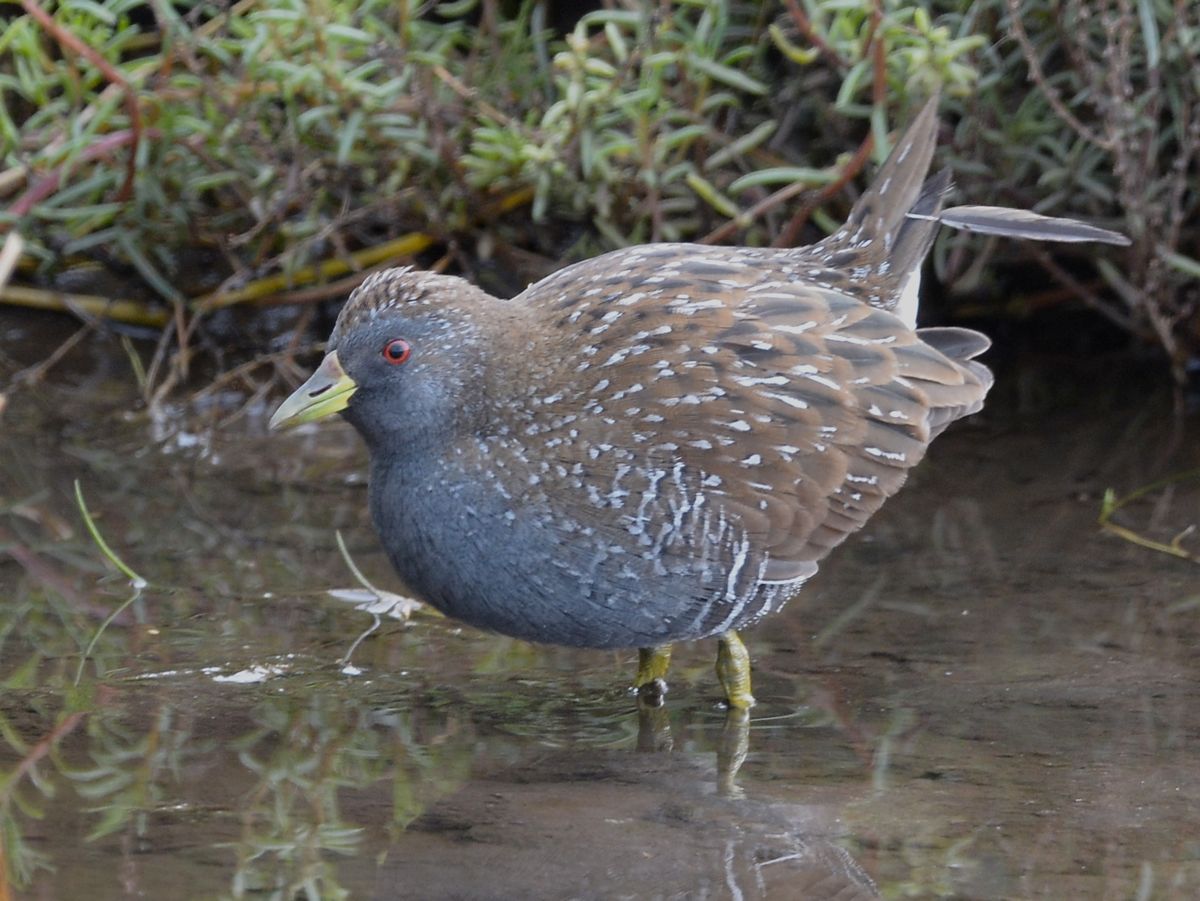
Just past the causeway we found a small tidal pool with a number of Red-kneed Dotterels feeding and disputing about territory. Then a EE noted a white tail flick in the grass, and out came a Spotted Crake. The Dotterels immediately took umbrage and forced it back into the grasses, then they all took off and to our pleasure the Crake came out to feed.

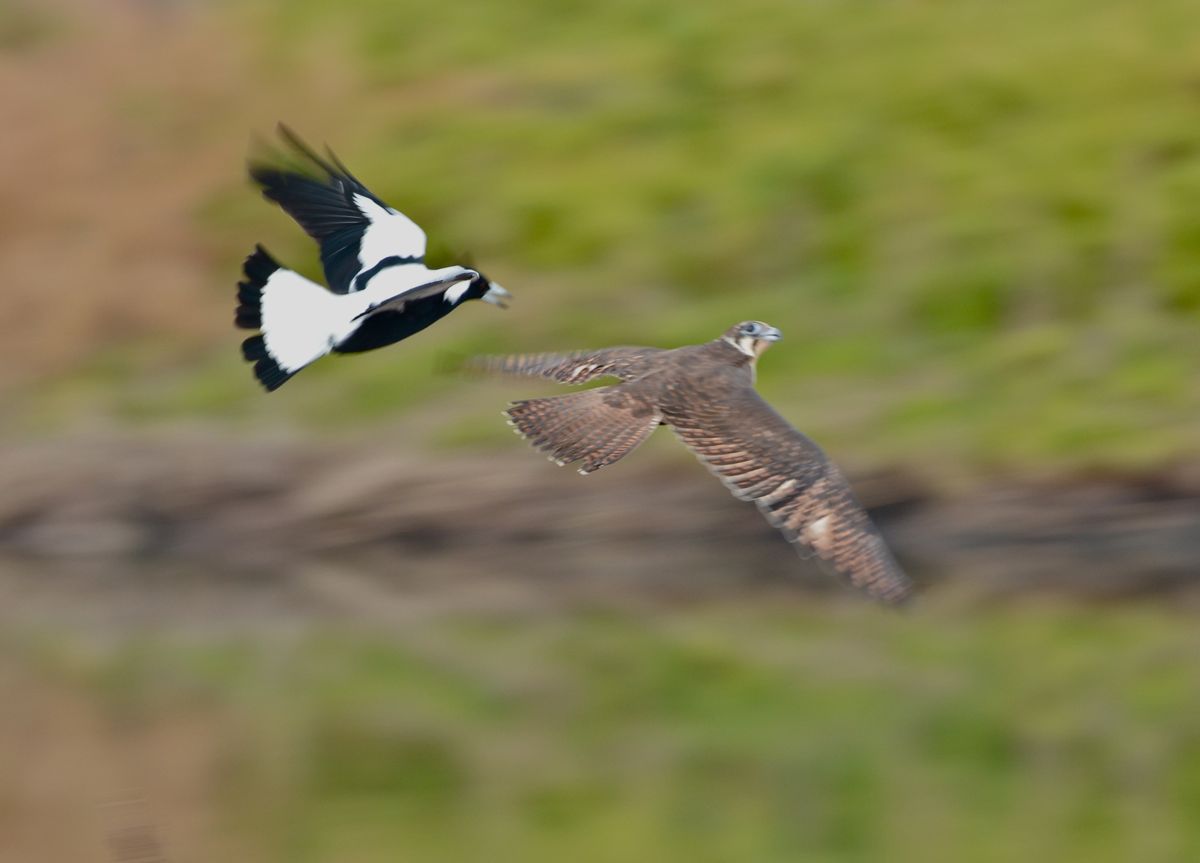
On toward Borrow an stopping at 15W outflow, I found a Pied Cormorant being fed by its parent.  And then we spotted a Brown Flacon who seemed to have a complete dislike for Whistling Kites. And then to have a Brown Falcon being put off by a Magpie.

Not a bad mornings work. A stop on the way to look for the Northern Shoveller, no such luck,and coffee at the Highway Lounge ended a good morning out and about.


Whistling Kite 'fishing'.
Whistling Kite ‘fishing’.
Black-shouldered Kite pair


Pink-eared Ducks at rest
Magpie in hot pursuit
Whistling Kite enjoying the fruits of its labours
Hoary-headed Grebe in a misty pond.
Spotted Crake.
Spotted Crake.
I know there's food in here somewhere.
I know there’s food in here somewhere.


Take a bunch of photographers, add birds, WTP ponds, and sunshine with rain, and what have you got? Cold, Wet Happy birdos

Birdlife Australia, Melbourne Photo Group. (why are these things always a mouthful?) had a day down at the Western Treatment Plant.  Not being a number counter, I’ve no idea how many of us rolled up to the meeting place at Point Wilson Road, but there were more than 4.

Andrew H, He of the Flickr site here, came down with us  as a visitor.  The weather looked, sort of like the weather to stay home, turn on the heater and read a book, or dabble on Flickr, but hey, a chance to catch up with a bunch of dedicated bird photographers beats that any day.

Mr Swallows in flight are Us. (Rodger) was there as well, and among the others me mate  Ian Smissen.  He has a blog over here.  His post on the day’s activity is his 1,000th day of blogging.  Not a bad effort ah?  Pop over and have a look and congratulate him. 1000 days!. (some people will count anything <ggg> ) I was stoked when I got to 100.   He’s got some nice images to accompany the story as well  Well worth the look.

Sonja Ross took us into the plant and a bit of car shuffling got the cars number  to a convoyable size.  One long line of cars over the entire plant didn’t seem like it would work too well.  At the same time, the team doing the initial “Orange-bellied Parrot” survey were in the plant as well, so we promised to stay away from their working area.  My other mate, Helmut, got invited along for the survey group and so we missed one another. Next time. See him here.

Sonja was keen for us to locate, find, discover and photograph a Northern Shoveller that had been reported, here, there, anywhere, everywhere in the plant.  A bird that obviously took a wrong turn on the way to breakfast and ended up at Werribee.

So to the day’s tasks.  As we travelled along Paradise Road, the radio crackled with descriptions of what the lead car could see.  Fine, but by the time we got there, it was an empty paddock.  A call on a Little Eagle, changed to a Whistling Kite, then back to Little Eagle, then to Whistling Kite, and when we finally arrived to see the tree, the bird was hidden behind branches, and the best I could say was ‘It has feathers”.

The next worthwhile was a group of cattle in a paddock, (remember it is a working ‘farm’.) and of course with cattle go, “Cattle Egrets”.  But they took to wing and we didn’t get much of a chance to even get the camera out.

Next the ponds alongside Paradise Road, and a tiny brown fleck on a post got some attention. And the usual banter of Little Eagle, Swamp Harrier, Light morph Brown Falcon, began.  Too far to id.  My shot with the 500, and a bit of patience gave me a Whistling Kite.On to Walsh’s Ponds.  As we passed by the River, a little speck of sunshine peeked through the clouds and the crowds were entertained by a lone Spotted Harrier making its ‘languid’, (I love that word), way along a dry pool.  We were higher than it was, so got some nice looking shots across the top of the bird in flight.

At Walsh’s Ponds.  Here  was the last know sighting of said Northern Shoveller.  But of course that was yesterday, and the bird was no where to be seen.  Among a lovely resting mixed flock, of Red-necked Avocet, Banded Stilts and Black-winged Stilts stood a very drab looking bunch of brown feathers. WIth its head tucked under the wing on the far side it was impossible to even guess what it might be.  The only solution  was to run through the possibilities of what it wasn’t. Light morph Brown Falcon and Swamp Harrier were quickly dismissed.

Then the bird graciously woke up, and showed its head and beak, and the single word Godwit, resounded across the bund. Then to the books to work out, Black-tailed or Bar-tailed or light morph Brown Falcon.  In the end, the straight beak ended the options. Black-tailed for sure. The other option was to phone John Barkla, (he’s in Siberia with the Red-necked Stints. I wonder if his arms are sore from all that flapping?) and get a better description. JB remained unphoned.

From there the road took us up along the run to Borrow Pits.  A few Whistling Kites managed to give Andrew a chance to try out his inflight techniques.

By the time we’d gotten to Borrow for lunch, so had the rain.  And it did.  However, pop on the Driazabone, pull out the deckie, prop up the esky, and get out the thermos with the Earl Grey, and what rain?  Lunch over, the sun came out in abundance, the phone rang and the informant had found the elusive, (illusive?) Northern Shoveller back at the Paradise Road Ponds.  Quicker than you can say “Pack up the Esky”, the convoy was travelling at ‘a safe and practical speed’ on the road back to the ponds.
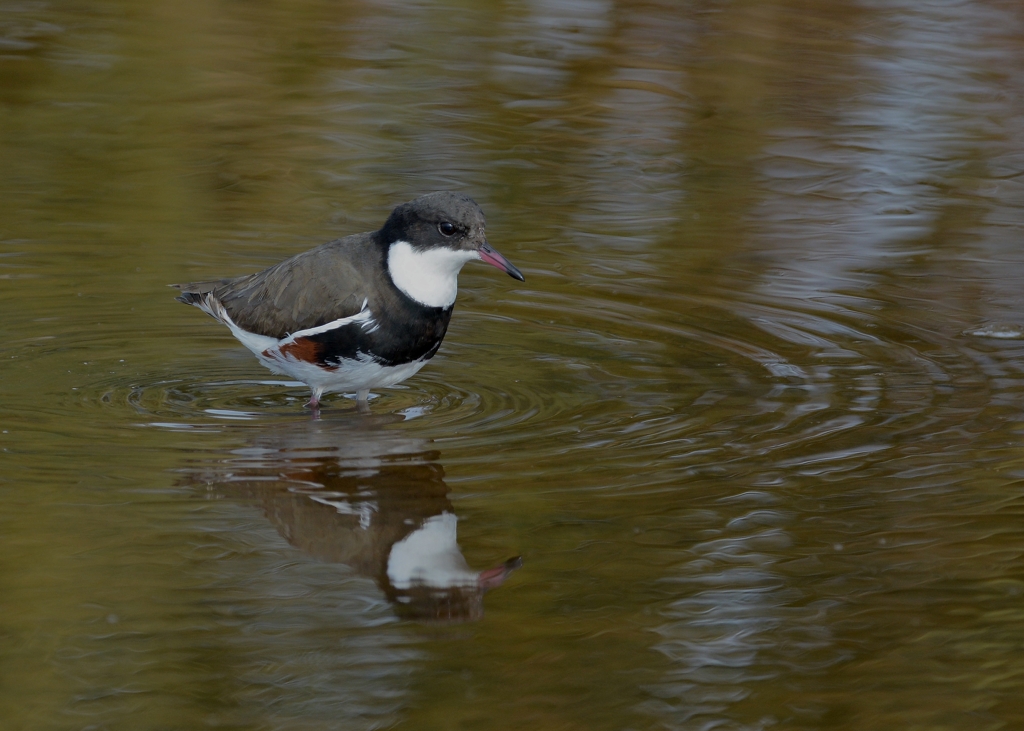
We decided to take the long way back, and went down to the 15W Outflow and Andrew got some nice Pelican, Pacific Gull and assorted Cormorant shots. As well a few Red-capped Plovers were hard at work on the tide line.

We ambled back past the ‘OBP” observers and down along the beach,  where a Black-shouldered Kite made a pretty site sitting on a post.  Lots of Swamp Harriers in the air by the river, but none close enough photograph. Typical.

Just before we got to the group we passed a small pool with two very accommodating Red-kneed Dotterels, and we had a few minutes to get some great shots of the pair.  On arrival we were informed the Shoveller was now on the other side of the pond. And if you played your binoculars over the distant reeds, you could, with a bit of imagination see the mystery bird. Or was it a light morph Brown Falcon?

Onwards to Beach Road, with the sun diminishing and the rain increasing.  Not to be outdone however Sonja stopped at the Outflow along the Beach, and as the tide was just on the flow, the birds were beginning to work back to the shore.  Time to plant the tripod in the mud, play with the new Wimberley gimbal mount, and wait.  And in the end the Red-capped Plovers and the Red-necked Stints came by.  The Stints are ones that didn’t get their passports stamped for the long journey north, so don’t have any colour, but a nice show of brown and cream feathers looked good.

Down to the last ponds on Beach Road and a beautiful Black-shouldered Kite presented on a post in the middle of the pool.  With the dark You Yang hills behind it looked a treat.

A bird call and then home.  All in all a pretty fine day’s photography, and nice to have some chats with birdos.     Worth the drive.

Easy to see hard to identify. Whistling Kite at Paradise Road Ponds
Spotted Harrier, doing what they do best. Low languid flight.
Black-tailed Godwit
Black-tailed Godwit
Pelican on a turn
Pelican on a turn
Pink-eared Duck rearranging its feathers. This is with 500mm + TC2.0
Pink-eared Duck rearranging its feathers.
This is with 500mm + TC2.0
Red-Kneed Dotterel
Red-Kneed Dotterel
Red-capped Plover and worm
Red=necked Stint, who didn't brave the journey to Siberia.
Red=necked Stint, who didn’t brave the journey to Siberia.
Black-shouldered Kite in the misty rain, You Yangs background

A fox with a paddock all to itself OR. Why is the backpaddock closed again mamma? (My momma told me there’d be days like this- Van Morrison)

As of today, Friday 17th of May, a single fox apparently has the run of the Backpaddock until it’s caught.  Don’t hold your breath.

What I’d been predicting for a few weeks has indeed come to pass. The bandicoot Hilton has been once again been made off limits and a big chain and padlock and a sign saying ‘Close for Thanksgiving”  < Apologies to Arlo Guthrie and “Alice’s Restaurant”
My mate Neil A went out today and got in, but the gate was then locked and it was fortunate a passerby came along and phoned the Vic Parks people and eventually a ranger came by with  a ‘tough luck mate’, story, and let him out, otherwise, they’d be looking for a fox and Neil. My money is still on the fox.
So unless the Flames decide the tucker is better on the outside, the White-throated Treecreeper extends its territory or the fox just simply gives itself up, that’s another season I can write off.
For all the money spent on this project, it seems to me just to be a rort to employ or give people some reason for getting more money from the government.
Call me cynical, skeptical and a bit peeved and you’d be playing with the right coloured pencils.
Looks like a few more trips up to Craigieburn for us.
The website by the way does not indicate a closed park.
Rant over.
Oh, in case you’ve never seen a fox.  Here’s one now.
For the folk involved in the great fox hunt. This is what you’re looking for. Good Luck. You’ll need it.
 Please open the gate for the rest of us sometime before the Flame Robin flocks go back for summer.
Fox: single inhabitant of the Backpaddock.  (Not this one its from Werribee, but you get the idea) Oh, along with some fox hunting gear and appropriate handlers.
Fox: single inhabitant of the Backpaddock.
(Not this one its from Werribee, but you get the idea)
Oh, along with some fox hunting gear and appropriate handlers.