Returning to old familiar territory

Due to weather, family, and associated activities, I’ve not had a chance to be out and about for a few days.  Nothing to do with the Garden Gnome, so let’s blame the weather.

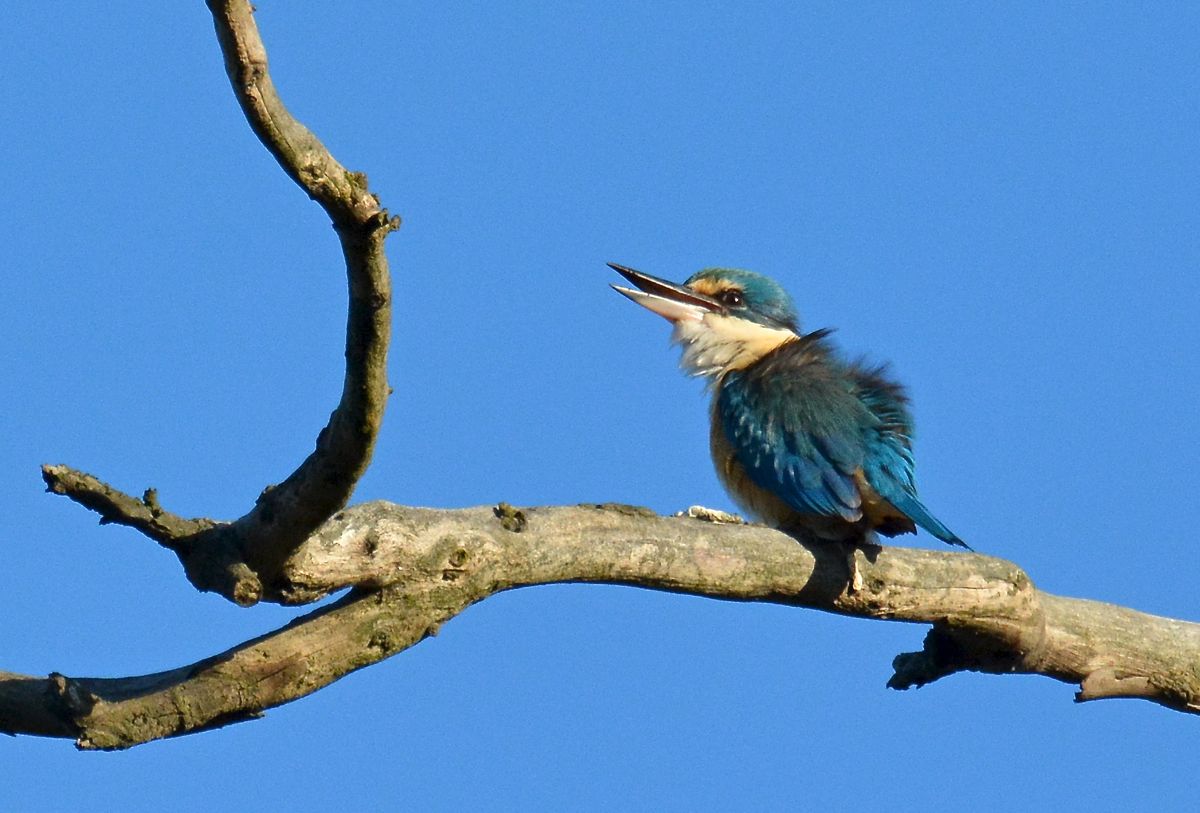
Richard A had told of a pair of Sacred Kingfishers at the Somerton Road Carpark, and as these were among some of the very first birds I photographed, and in the area where I one morning found myself getting serious about Bird Photography, I was quite looking forward to finding a bit of time to go look see.

I like this area in the early morning as the sun runs  across the landscape of old River Red Gums in a really spectacular way, and the Parks Vic people have done a super job of keeping the feel, but also opening up some parts of the area for parking and picnics. The advantage is plenty of sunlight getting into the trees and making the photography just a tad easier.

I used to spend a lot of time some years back out there photographing the River Red Gums in all their glory.  Some of you may even remember filum, well that’s what I started out there with.  Black and White, as I remember (dimly).

So when the daylight started to touch the horizon this morning, and I could still see a few stars and the moon, it was going to be a clear morning with some sunlight, and so not even thinking twice, I left and was out in the park just as the early light began to caress the landscape.

At that hour of the morning the gates are locked, and so I parked outside and ventured in.  No sooner had I managed to get through the fence, than the familiar “Pee, pee pee”, of a Sacred Kingfisher welcomed me to the park.  It was sort of like stepping back in time, (only now the old bones creaked).

Took me a split second to find first one, and then the other. Pretty much where Richard had described.   They did a number of circuits of the lager trees and we three had a merry time.

I then went up the hill to the top of Woodlands Hill and looked out along the rolling green paddocks.   It does look a treat with some light on it.

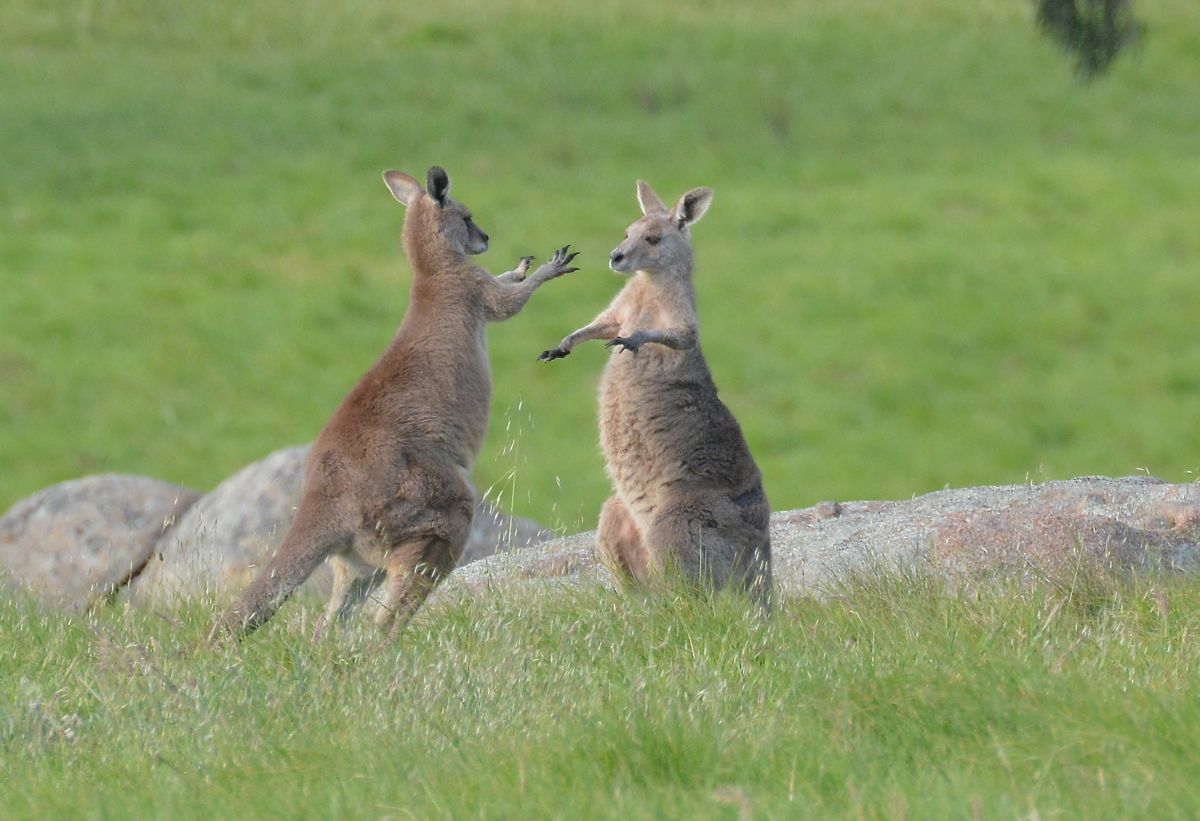
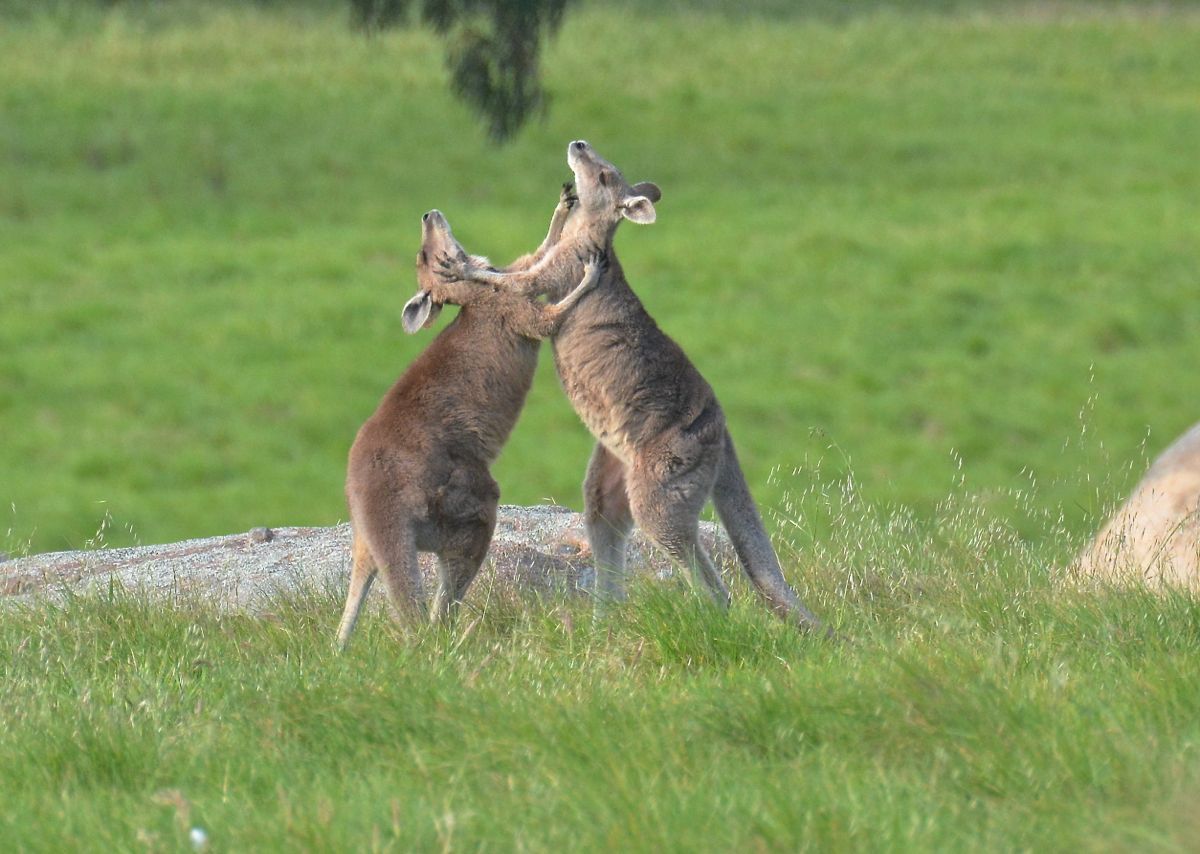
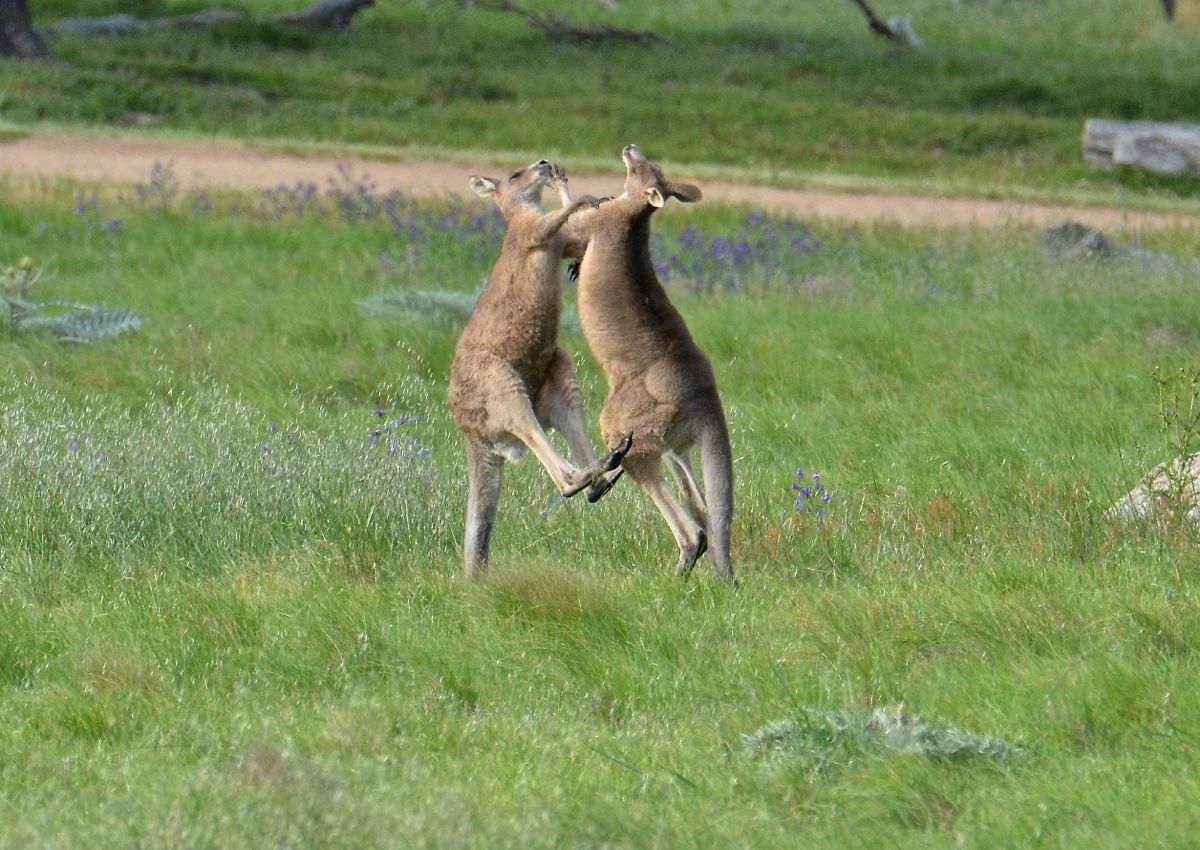
While I was breakfasting, some young Eastern Grey Kangaroo bucks decided to have a bit of fun and play at kangaroo boxing.  For the males, this can be a extremely serious business, and sometimes with deadly consequences.  The starring punch is to set back on the tail which increases the height, and then kick forward with the huge back legs. The tail then acts like a spring and propels the feet forward for a direct blow to the other one’s stomach.  With two big bruisers, the noise can be quite alarming.  The danger is also that the claws are really sharp, and a serious injury could easily be inflicted.   Its not uncommon to see the big blokes with multiple scars to show how dangerous it is.

But for the little dudes, its just play, and so nothing more than pride gets damaged.

Some Weebills and a few Yellow Thornbills among the She oaks made for some interesting subjects, just trying to get them out of the fronds on the she oak was the biggest challenge.

Back at the carpark, the Kingfishers were hunting, and some Brown-headed Honeyeaters were feeding some very hungry youngsters.

Nice to take a trip back along the old paths and see the changes.
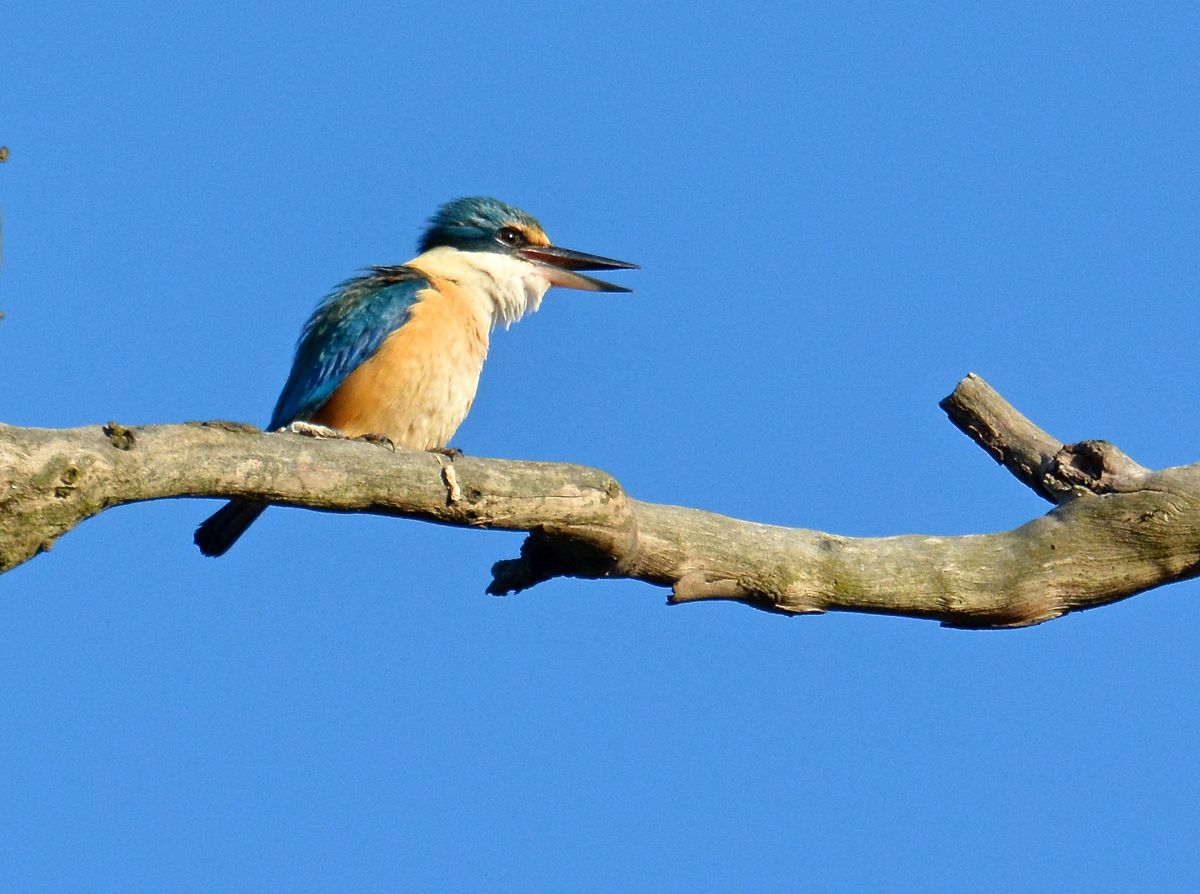
Announcing his return this Sacred Kingfisher flew from tree to tree with his loud call reverberating among the gums.
The amazing aqua colours show up well on the back view
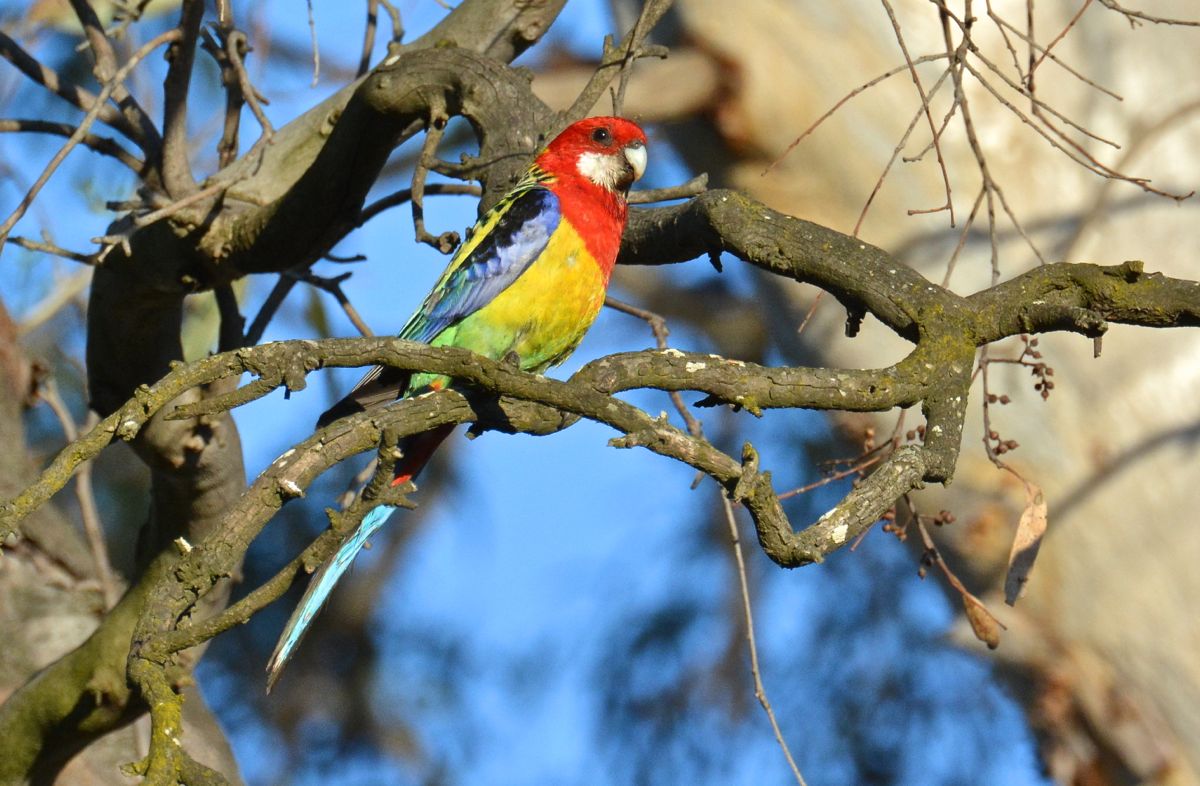
Eastern Rosella, one of many parrots for the morning.
"Let's play a nice game of Kick one another"
“Let’s play a nice game of Kick one another”
Locked together its really a matter of who gets the best position
Rearing up on that huge tail gives a wound spring that carries the legs forward with incredible power.
Yellow Thornbill among the She-oak leaflets.


Good Chough Hunting

Yesterday in spite of the high winds and the heat we ventured out to Woodlands for the morning.  We’ve taken to coming into the park through an open area and following a couple of Kangaroo pads along the redgums and sticky wattles.  Just a nice way to walk with the spring grasses in full colour.

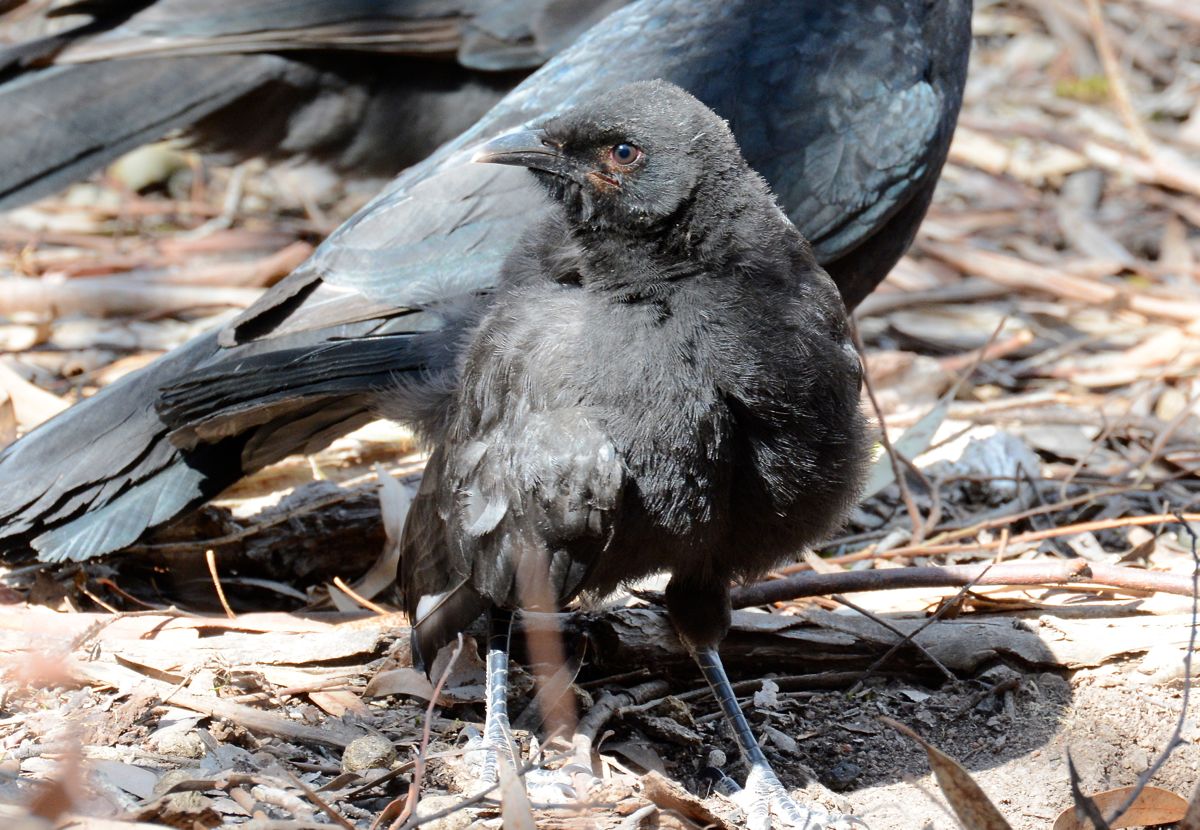
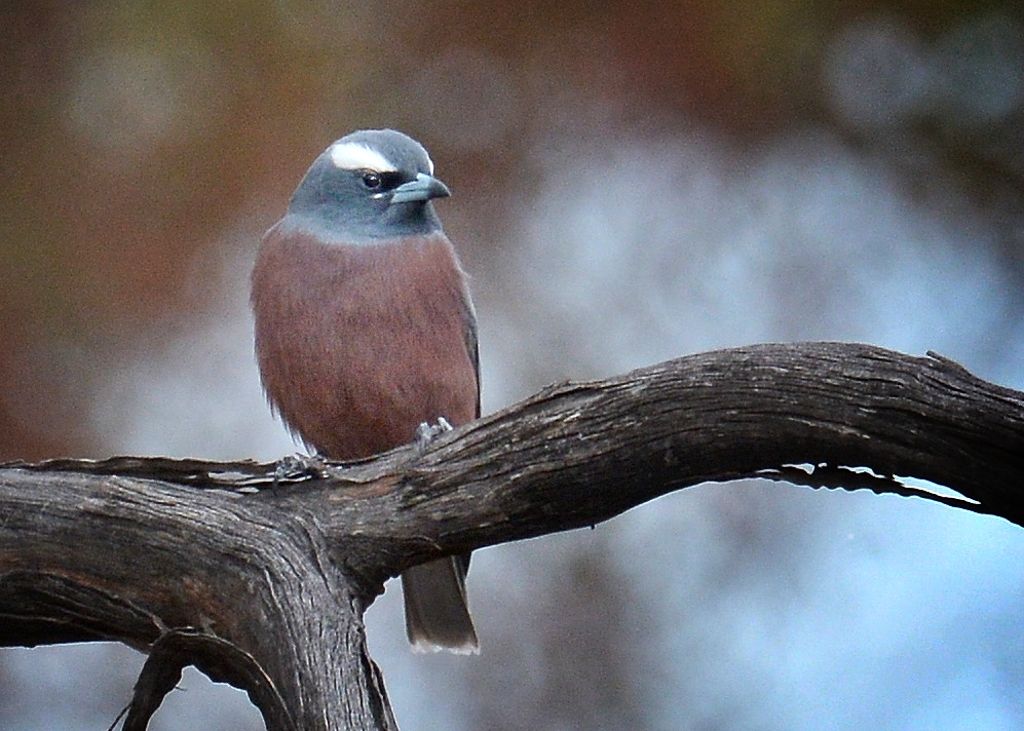
Just crossing over from one track to another we came across, first one group of White-winged Choughs, and then a second smaller family of perhaps 7 or or so birds.  Both groups had several young and I walked back to enjoy a few moments with the larger group, and discovered their young were two recent fledglings, because they still have lots of down on their heads and backs, and one older juvenile.

The gregarious nature of these birds and the communal way they nest extends it seems to the way they nursery the young.  The young were fed by which ever bird managed to find a tidbit to attract one of the young.  And attracted they were.  The other thing that I noted was the steady stream of chatter that they put up as they hunted about, and most of it seemed directed at the younger birds.  Several adults would stand by and chatter away at the young bird as it picked its way over a log, or was scratching at the base of a tree.

The big thing for the day for me however was that even though Choughs mainly walk or fly away if approached, these birds were unconcerned.  After a few warning calls, they simply went back to looking after the young.  I sat on a log and watched for about 10 minutes or more, and then two of the adults came over an worked around the area I was sitting.  Completely ignoring me. I took this as a hint, and as they moved, I followed.  In the end I was sort of in the middle of a Chough hunting party.  They didn’t fly or run away, and if I moved one way or the other, they would note it, and then move around me.

After about 30 minutes or so of this, they met up in an open area with the second smaller group.  They seemed run up to each other and do ‘group hugs’, with wings outstretched much shrill cooing and a kind of family reunion meet and greet.   After a few minutes of the wing waving, calling and Chough Staring, the groups moved off, and I followed the second group and again they didn’t take much notice of me.   This smaller group had two recent fledglings.

At one point a rabbit broke from the grass (that would have been my fault), and there was a huge outcry of alarm and some birds taking to the air, but it quickly settled and they dropped back down to hunt near me.  They didn’t do any alarm calls as I moved among  them.

So after about an hour of Chough hunting, I am no more familiar with the family activities, don’t understand any more of Chough language, nor behaviour, but at least they were relaxed enough to allow me to get close and make some nice portraits.

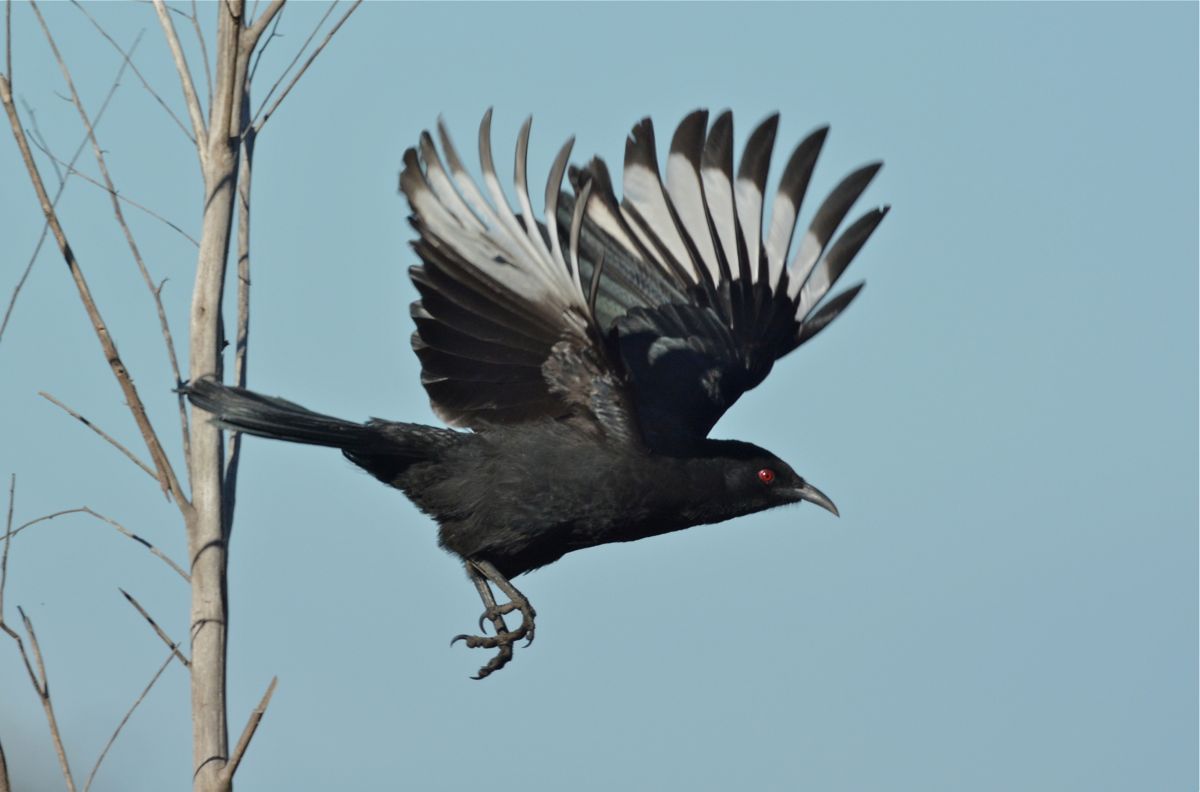
The other thing I learned about the white wing feathers is that they are black feathers with a white insert. The white is surrounded by black tips along the edges.
Much lecturing and wing spreading to get the message across. Perhaps like all kids, it wasn't getting the message.
Much lecturing and wing spreading to get the message across. Perhaps like all kids, it wasn’t getting the message.
Learning the art of finding food amongst the leaf litter
Recent fledgling with its brown eye and baby feathers.
Young bird being lectured in the finer points of Choughness.
A juvenile, still has the brown eye colour
Recent fledgling, still carrying baby down
White-winged Chough "Meet and Greet". Much wingwaving, group hugging and chatter.
White-winged Chough “Meet and Greet”. Much wingwaving, group hugging and chatter.

A morning at Goschen Bushland Reserve.

We had to take a trip back up to the family acres during the week. (Astute readers will see the euphemism in there).

On the way back we left early in the morning from Swan Hill, and after some family duties (again an euphemism), we headed on down to the Goschen Bushland Reserve. This little clump of trees and shrubs is a truly outstanding area for birds and no matter what time of year, there will always be something to find.   We took the back way down which gets us onto the Woorinen Road and is a very pleasant drive among the trees and wheat lands, if somewhat dusty.

After about three hours, (no euphemism in there), we had seen an array of birds and EE had nailed some new species.  Including the Rainbow Bee Eater.
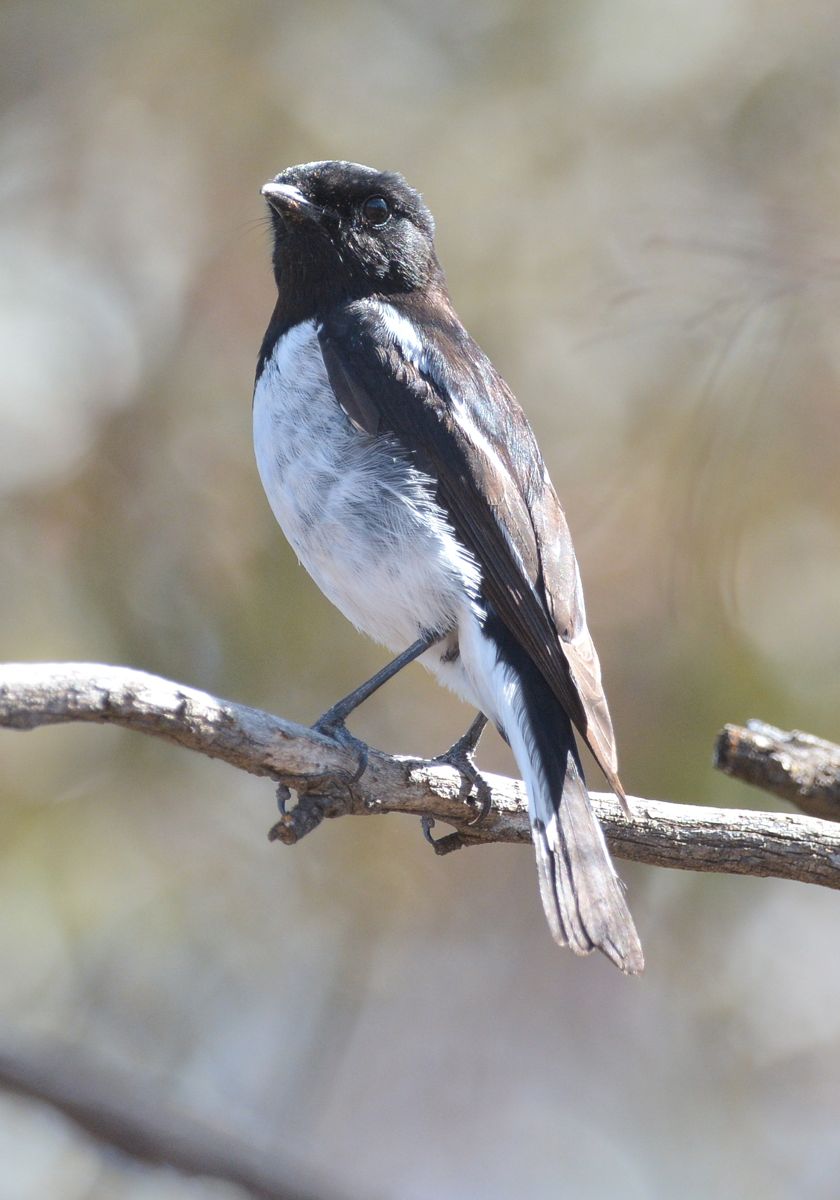
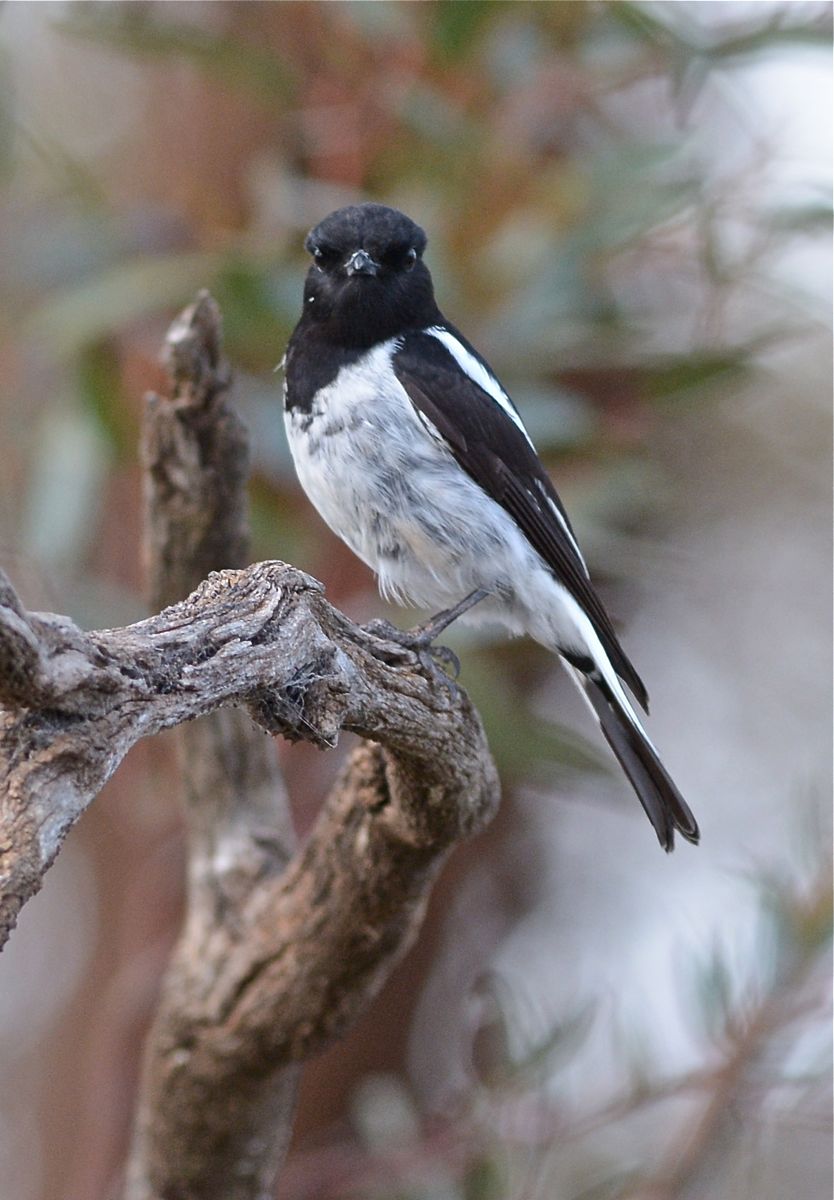
Top of the day however was a pair of Hooded Robins. (those who’ve followed here before will know there is pair we’ve photographed there previously), and they had only in the past day or so fledged at least two young. We got a good look at one of the young, but in the end Mum was getting quite distressed and doing a ‘broken wing’ display on the ground so we moved out of the area.
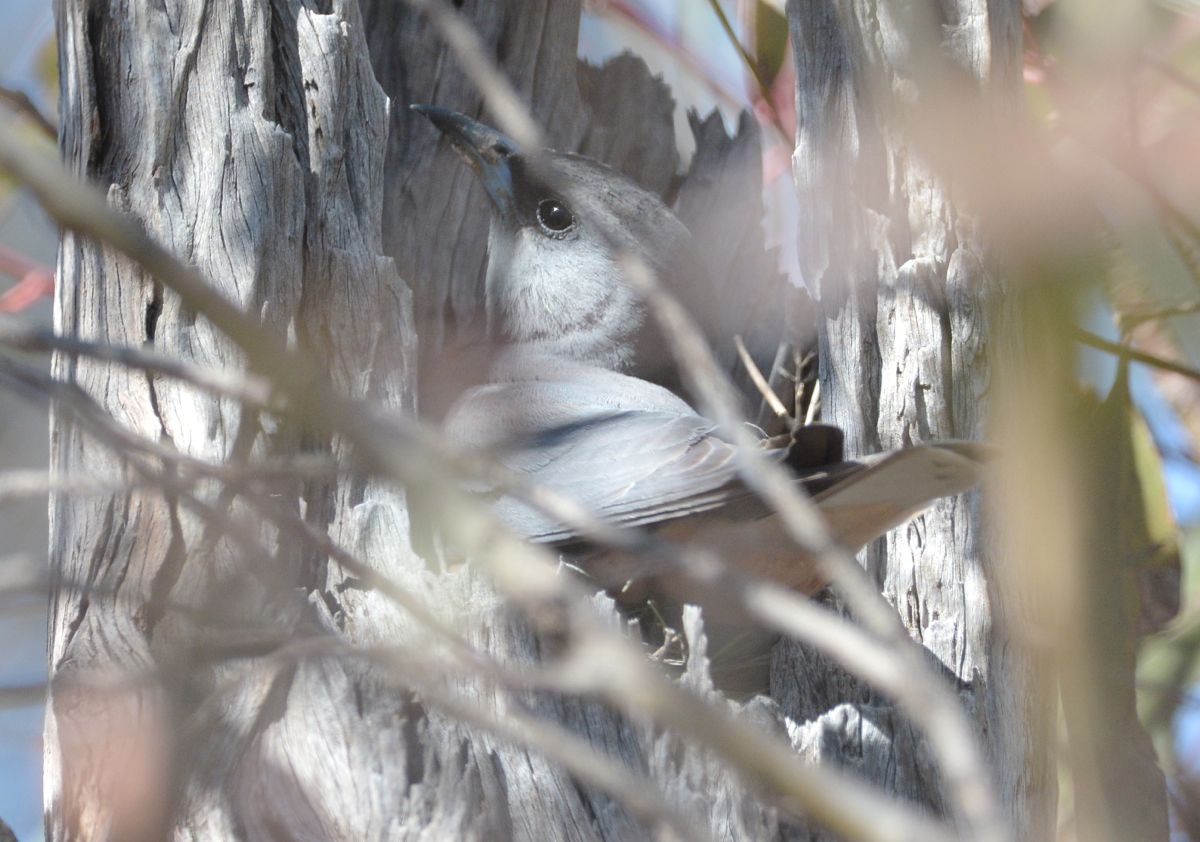
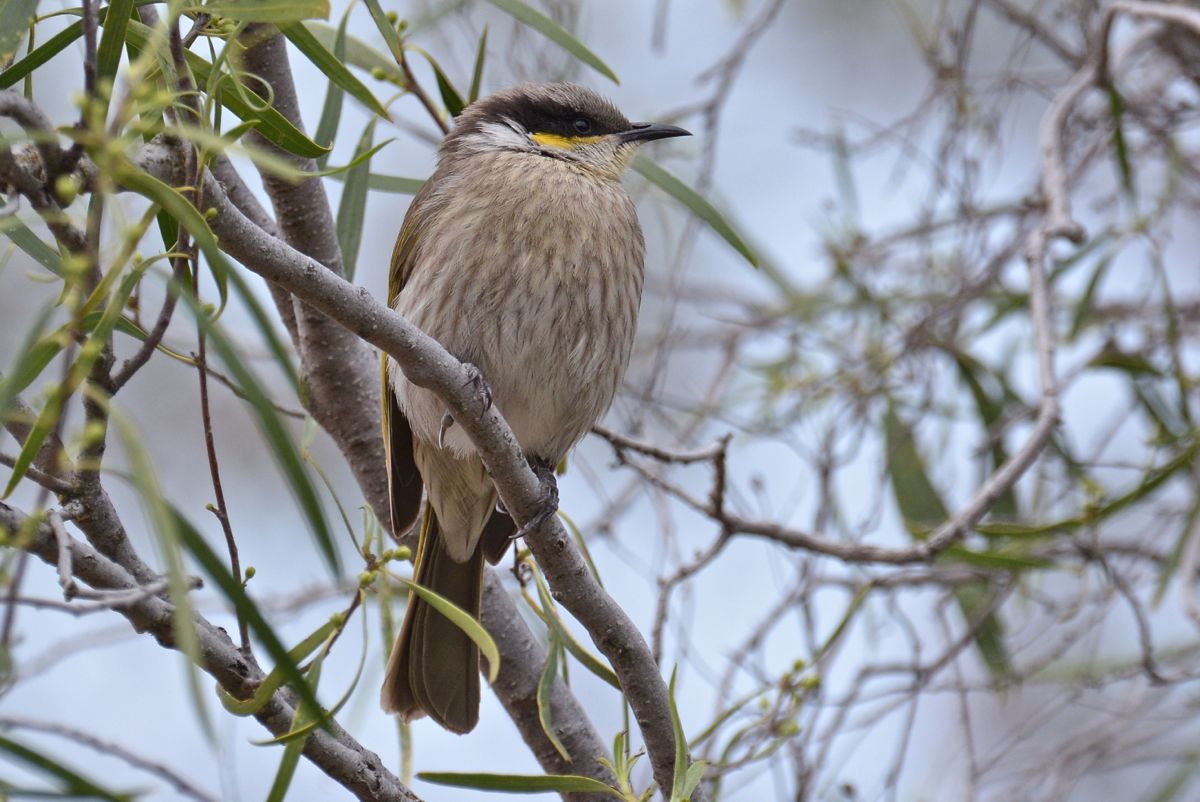
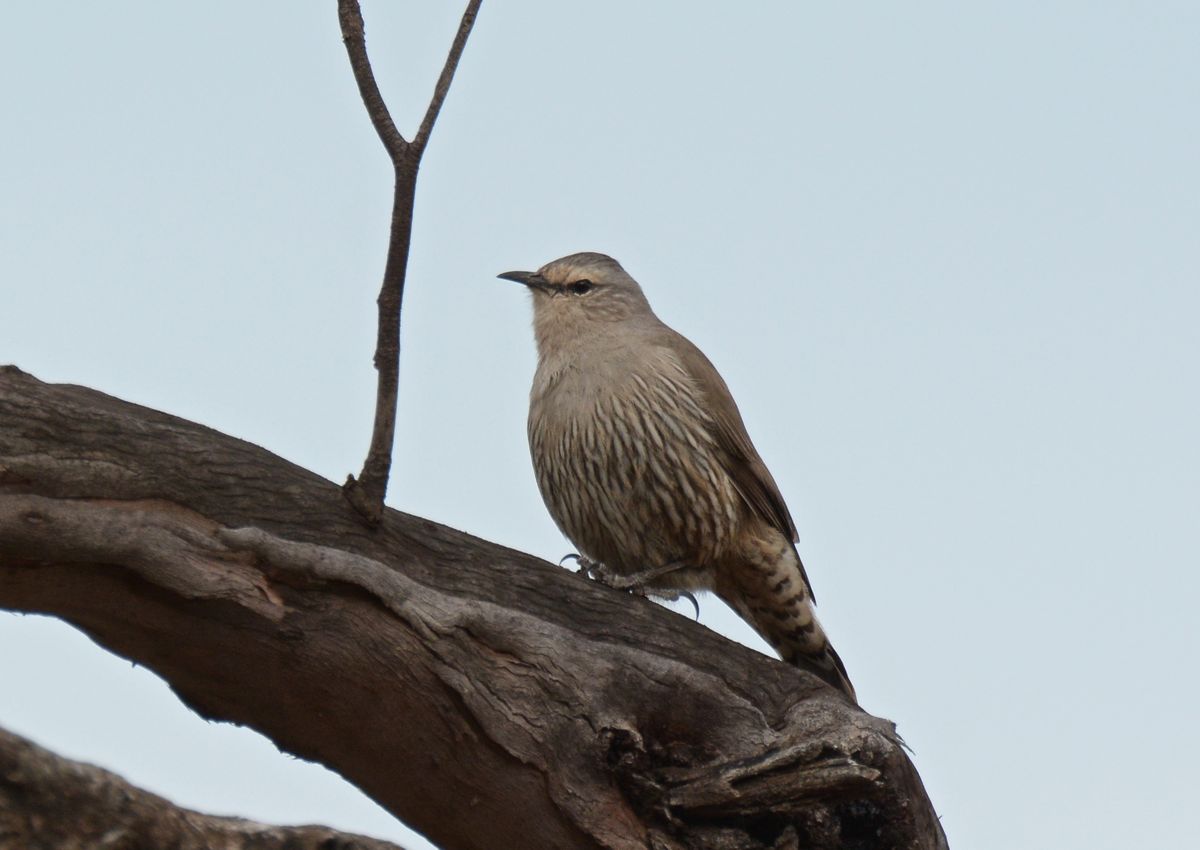
Next turned up the Rainbow Bee Eaters.  These are the most stunningly coloured birds and the metallic colours simply sparkle in the light.  I’d not noticed before how hard that is to record with the camera.  Plenty of White-browed Wood-swallows were nesting, and I managed to locate a female on a nest. Well to be truthful, I was stalking a Hooded Robin, and walked right past her nest.  She quickly regained composure, I took a shot and moved away.   I really dislike disturbing them.  There were also plenty of Masked Wood-swallows as circulating as well, and no doubt nests to looked after.  A few Brown Treecreepers and some Singing Honeyeaters, lots of White-plumed, and EE remarked its funny to drive all this way to photograph whats in our backyard.
And of course as is the case, the Black Honeyeater was no where to be seen.  Another chance another time.

As we drove out we spotted some young new fledged Willie Wagtails, and by the road way several White-browed Babblers, but it was time to go and so we moved on.

Just as we crossed the railway line at Kerang, on a most conspicuous tree, we noted a Wedge-tailed Eagle and a nest. Too much traffic behind to stop and go back, so we had to be content with what we had, and journey on to Eaglehawk, and the Eaglehawk Bakery for a “Mulga Bill Pie”.  Worth the drive. (No euphemism in there)

Most elegant and distinctive Hooded Robin, male.
"Leave me alone".  Caught in the act on her nest
“Leave me alone”. Caught in the act on her nest
Hooded Robin, family group. Junior thinks its feeding time.
Very annoyed female Hooded Robin, she was most protective of her recently flown young.
I often try but hardly succeed, to get a sharp shot of the White-browed Woodswallow.
Rainbow Bee Eater. The streamers in the tail suggest a male
New fledged Willie Wagtail

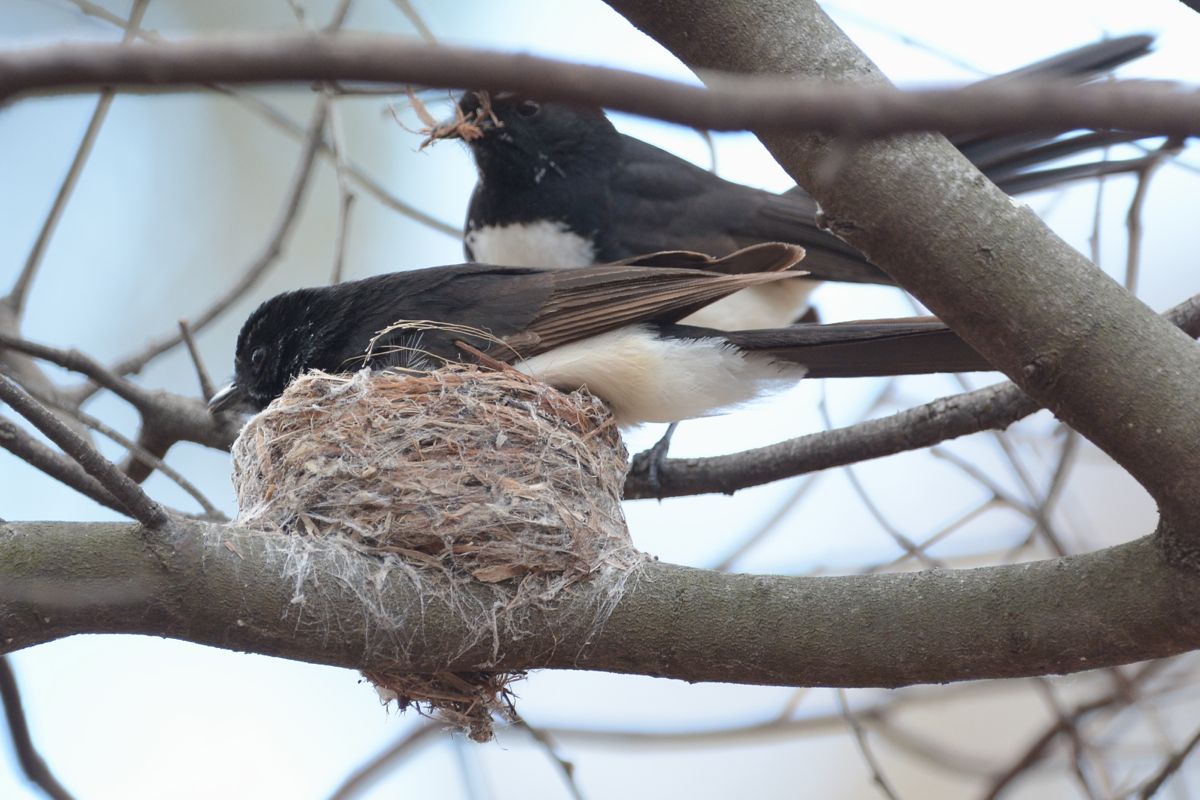
Willie Wagtail Construction Company

******* Update 20th October. *******  Sad to report that the pair had lost the nest.  As well as two of their close neighbours.  Probably Ravens, or perhaps Kookaburras.   Willies are making new nests as I write.

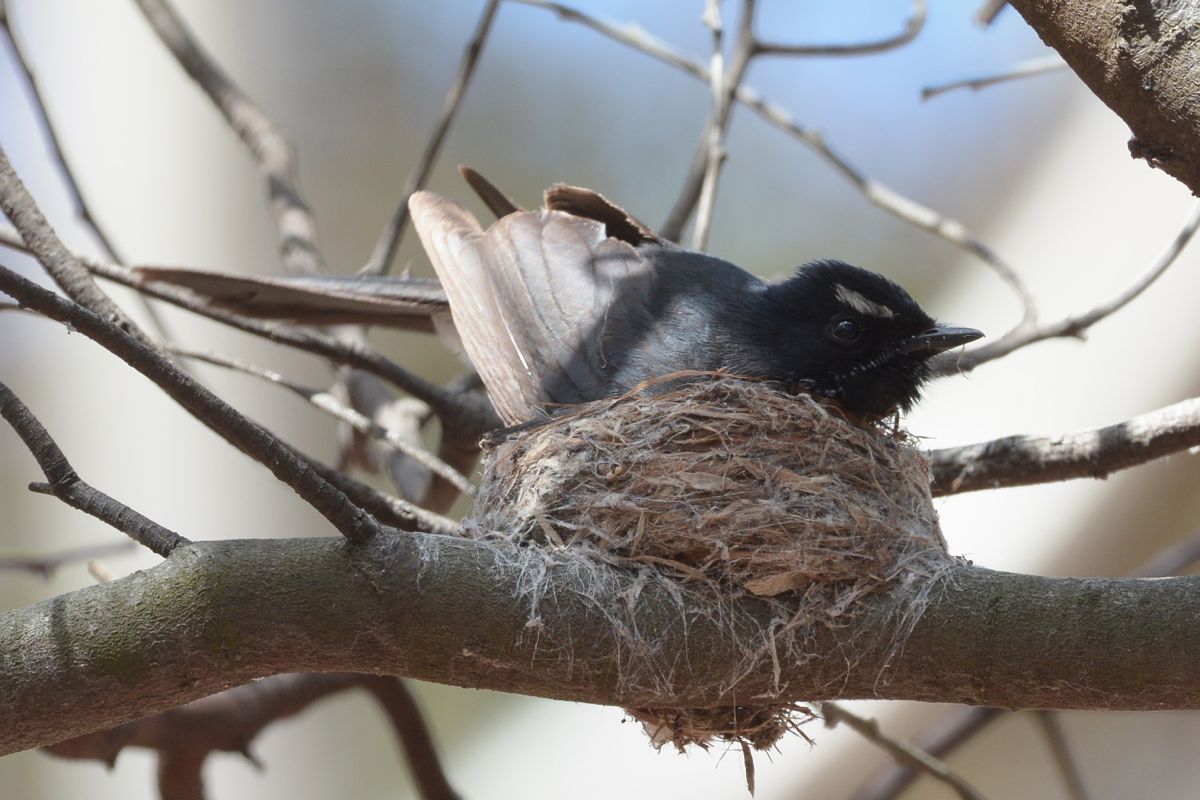
Over the past couple of weeks the number of Willie Wagtail pairs have increased in the area.  Each of them are well into their preparation for nesting, and several are actually well advanced in the siting and construction of their first nests.

Within about 100 metres there are 3 pairs all hard at work.  This pair is in the same area as one’s we photographed last season, and she managed 5 young off one nest.  No reason to doubt they are not the same birds.  Will be interesting to follow along.

The pair both work on the nest, and a big part of the preparation is the gathering of spider web.  It’s the web that binds the whole nest together, and also binds it to the branch. So the first job is to put in a good foundation of Spider web. And given she gets it right round the branch is something to consider as a work of art at the very least.

So here is  a few days of work from this pair.  Once they figure out we are not immediate threat, the work just goes on around us.   Try not to frustrate them too much and so I site the camera and attach radio receiver and use a radio remote control from about 50 metres back.  That way at least they aren’t worried too much by the human presence.

All loaded up with fresh cobweb its time to get a good foundation laid.
Wrapping the web around the branch is an art form.
Next a good first floor goes in.
Both male and female work on the nest building and both sit on the eggs
As the building progresses, its pushed and poked to give just the right fit inside.
Its alway accomplished with a lot of chatter.

WTP on a hot afternoon

Took an afternoon to revisit the WTP, but as the weather has wont to be of late, it turned first into a very hot afternoon, and then a very dreary hot overcast evening.  So the chances of excellent photos diminished by the moment.

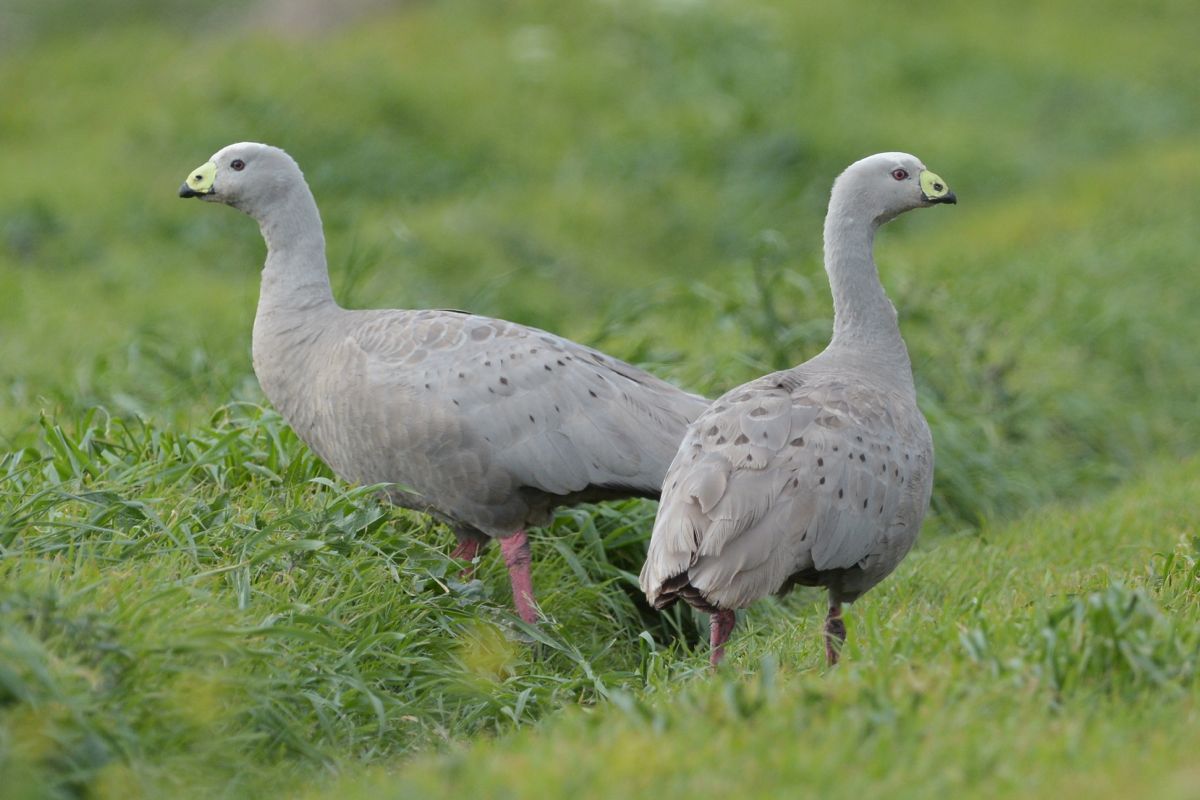
Did manage the Brolgas down along the Murtcain (m) _ love the double spelling.   Also found a pair  of Cape Barren Geese, but without any young, so have concluded that they must have lost the clutch they were attending.

No real display of Raptors and try as we might we didn’ t locate the Black-shouldered Kites nest along Beach Road but that just gives us a chance for return.

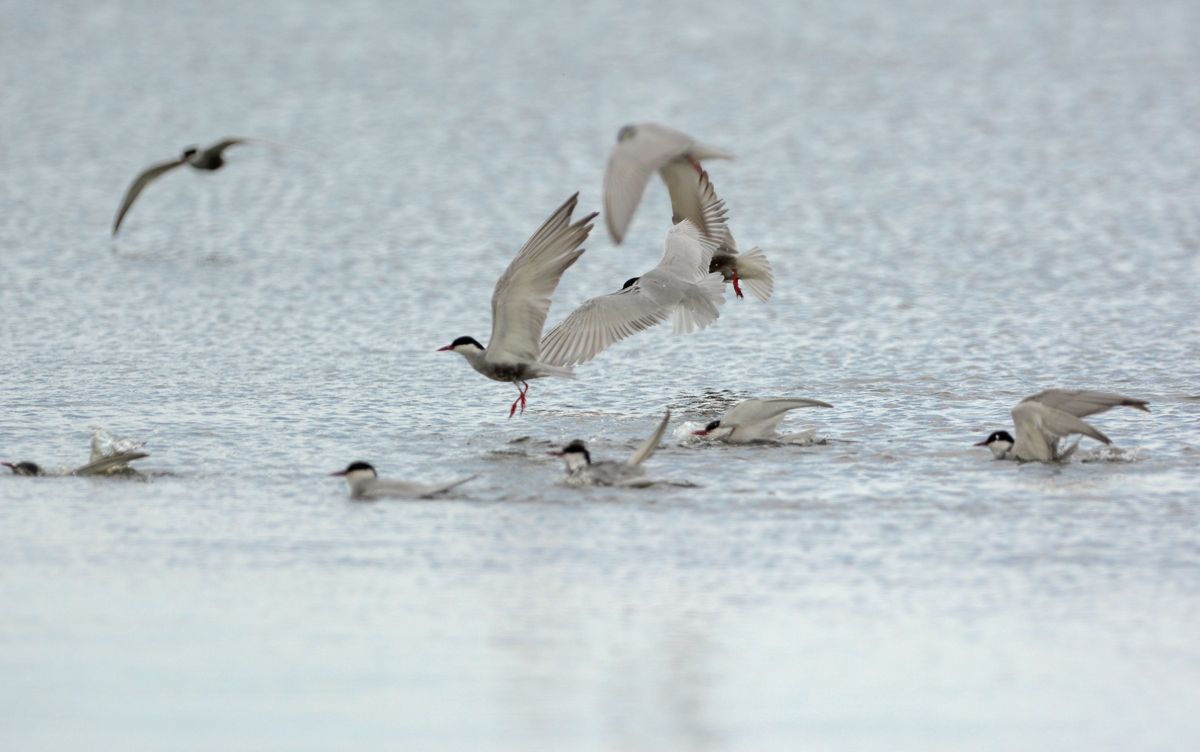
The waders are starting to return in good numbers and we saw several Ruddy Turnstones up on 280S hiding among several hundred Whiskered Terns.

In the end the weather beat us, and so we beat a hasty retreat to home.

Brolga pair. I was so excited I forgot to level the camera.
Whiskered Terns bathing.  They seemed to take delight in dropping down on one another in the water
Whiskered Terns bathing. They seemed to take delight in dropping down on one another in the water
One legged stance on this Spoonbill kept us amused.
No its not a Spotted Pacific Gull, it must have been somewhere to get oil on its crown.
Cape Barren Geese
Cape Barren Geese

An Open Day at the Western Treatment Plant

Realise I’ve been very tardy of late with posts in here, but we have as they say been somewhat occupied with other activities. So much so that I spent 10 days at home with the Garden Gnome, cleaning, raking, moving, chopping and other things that those with gardening tendencies delight in. Me, I’d rather be behind a camera in the scrub, cuppa at the ready, and the breeze flowing though the trees and the sunshine making it final part of its long journey down through the openings in the tall tree canopy.

But. It was not to be, and the work around the house, inside and out had to proceed, and with good reason, as will become clear in the next few weeks.
In the meantime, had the chance along with EE and Mr An Onymous, and Ms  In Cognito to be hosted by Melbourne Water at an open day down at the Western Treatment Plant.

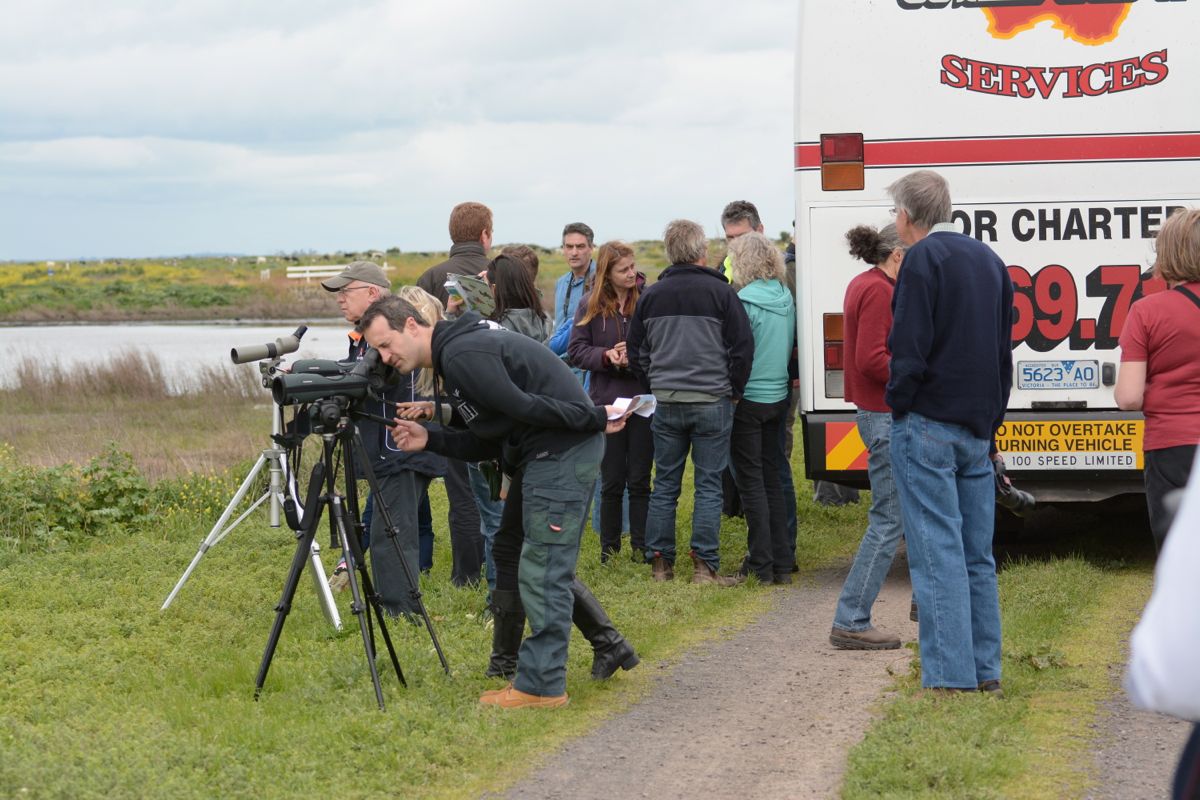
The day consisted of several streams, and we chose the “Wetlands” and the “Historic” tour.  And Melb Water provided the folk to talk about it all, and to show us about the plant in really great big tourist buses.  And to explain along the way the various operations and  the planning and development of what the plant is doing and going to do in the future.  Super.

So much fun to sit in a bus and be driven about the plant, downside was not being able to stop for every interesting bird that went by, but did learn lots of things.  Even got to see my mate Helmut from Flickr on the side of the road, and got everyone in the bus to wave to him.  Not sure anybody other than me understood what was happening, including Helmut, but hey!  I thought it a good thing at the time

After a bbq lunch, thanks to some hard working service group folk, we were back in a bus for the afternoons foray, which covered the historical side of things.  It took us to see some first inhabitants special areas and the work that is being done to keep the heritage and open it up for access to the local people of the area as a park and meeting place. What impressed me most by all this was the opportunity to develop the land and keep it pretty much  a ‘meeting place’ as in the past, but now as a part of a modern housing development.

The highlight of the day was a visit to the old township inside the plant of Cocoroc.  Funny when you Googlemap things that is the identity given to area for shots taken around the eastern end of the plant.
Cocoroc was a township of about 500 people who were the workers in the plant. Known euphemistically as “Water men”, they controlled the flow of “stuff” around the plant and how it was distributed out on to the run off paddocks.   A full working township with bus stops, swimming pool, town centre hall, an historic water tank, and a football field. Having played the odd game of country footy in me time, I was pretty excited by  the chance to walk out on to the old ground and imagine the games that would have been played there.  A beautiful Black Kite played in the the breeze overhead and made it all that more special.

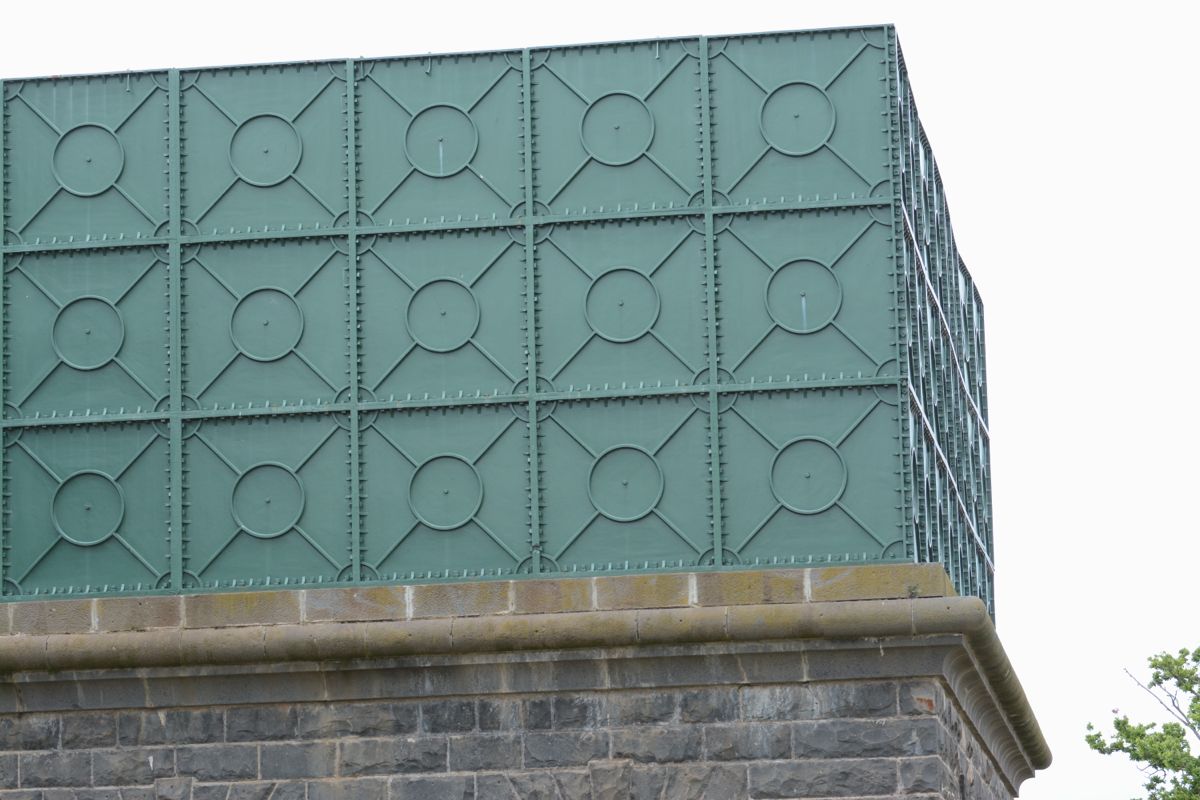
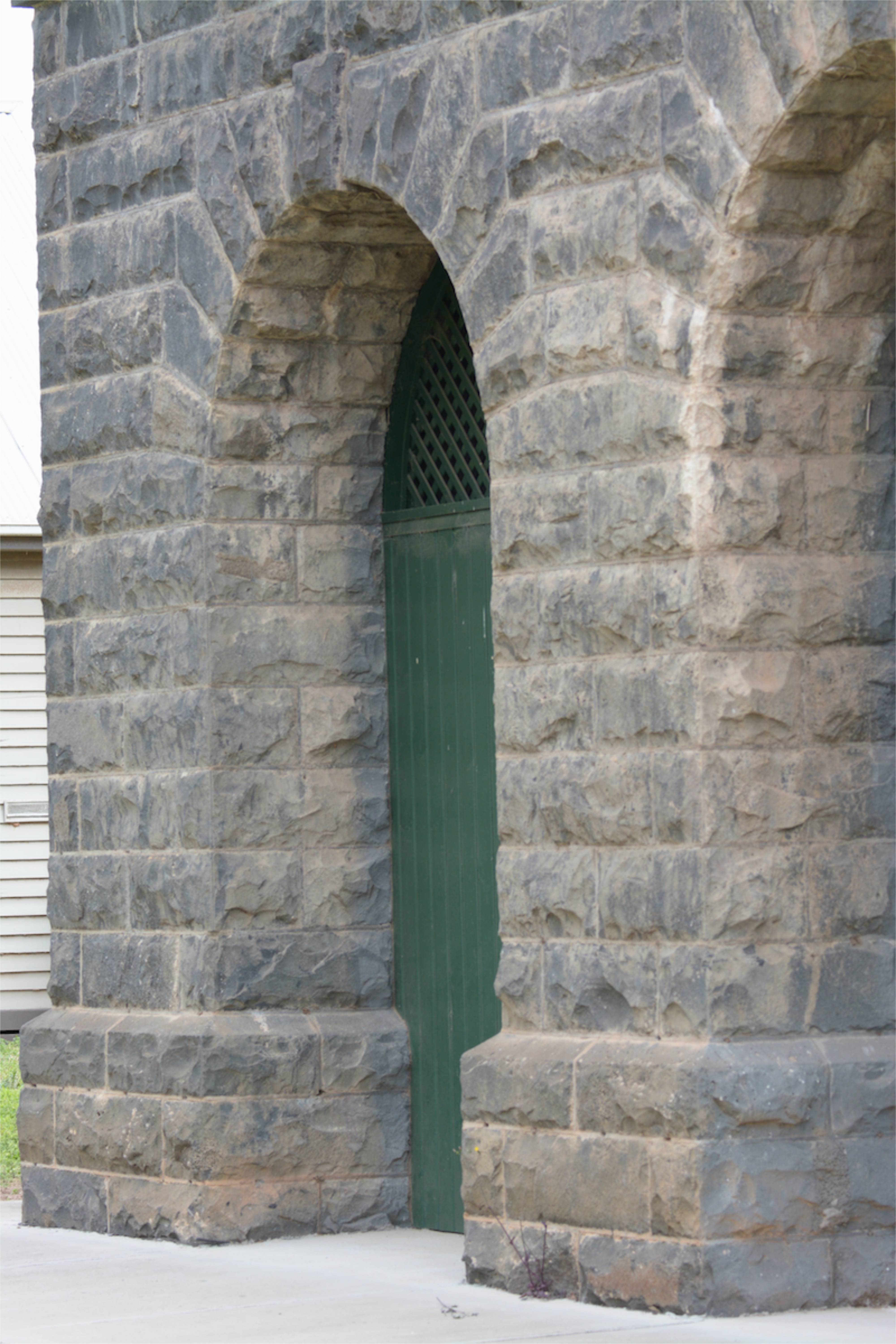
The old water tank was originally part of the water supply system for Melbourne before the Yan Yean Reservoir was opened in the late 1800s.  The tower used to stand on the  top of the hill near where the Eye and Ear hospital is today.   It was moved to Cocoroc, and was part of the fire defence system.  It has been restored by Melb Water and now is in pristine condition and the area under the tank is to be used as part of the information centre in the future.  Super

If the plans go ahead, then in the not to distant future Cocoroc might well have a revival as Melb Water has plans to relocate is Information Centre and some of the operations out to this location and the town will indeed be part of the heritage restored in the plant.

A bus stop for a look at the variety of wader birds in the plant.  Many have just made the trip back from summer in Siberia.
A bus stop for a look at the variety of wader birds in the plant. Many have just made the trip back from summer in Siberia.
Male Superb Fairy Wren
A lovely magpie who quietly carolled at me as I moved closer for a portrait.
Detail of the water tank at Cocoroc
Detail of the support arches for the water tank.
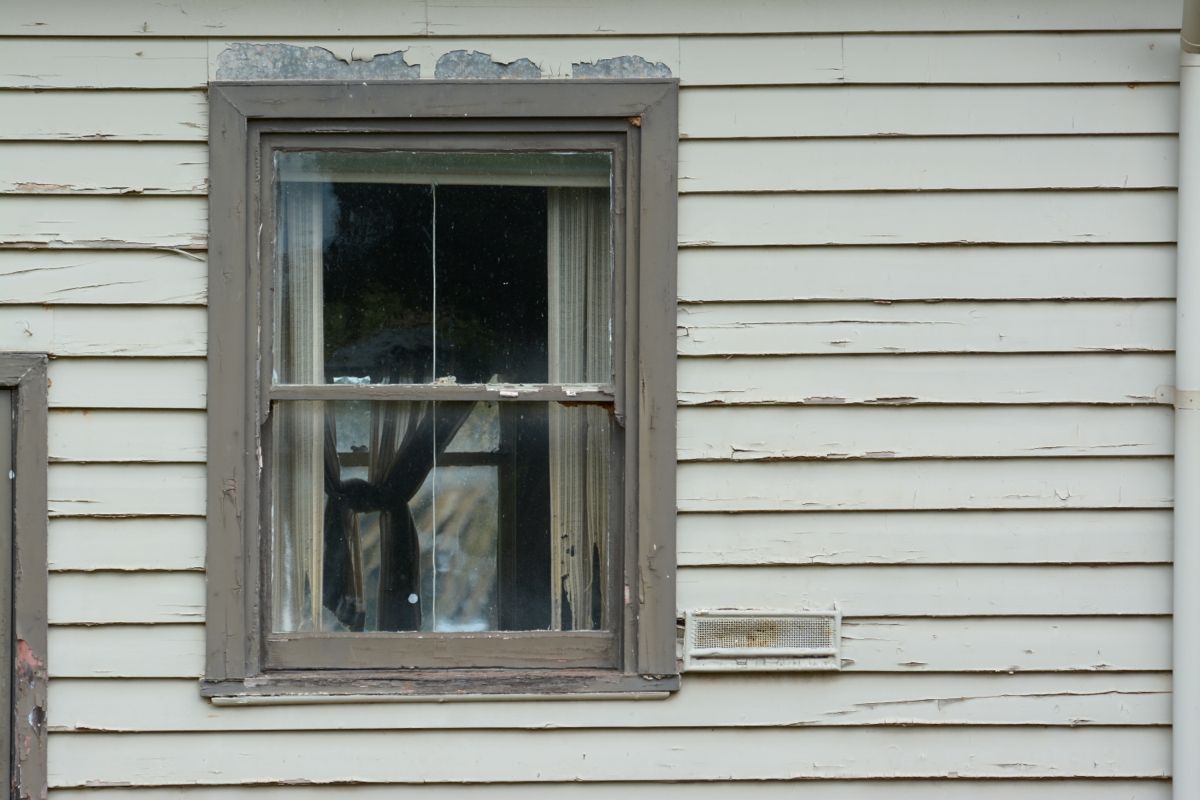
Cocoroc Detail.  Showing the signs of ageing.
Cocoroc Detail. Showing the signs of ageing.
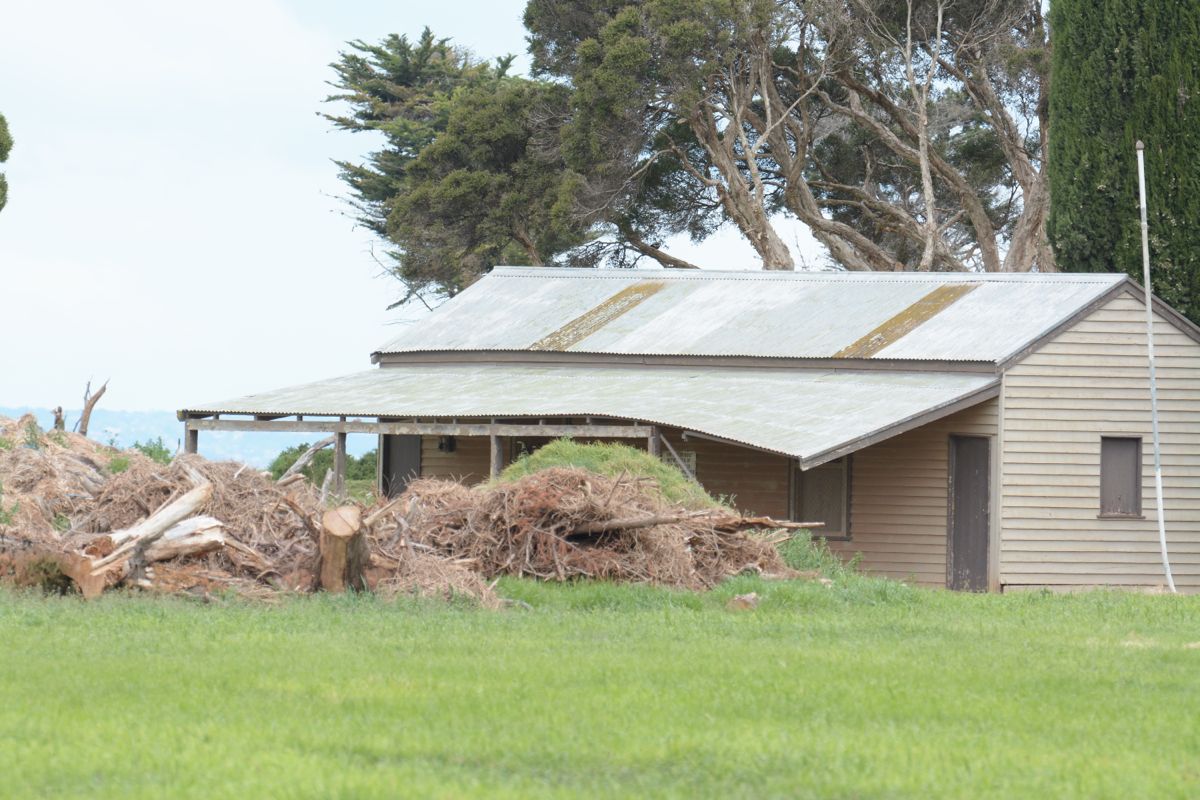
Cocoroc footy sheds. One can only image how much talk, noise and liniment are connected with the history.

Wandering in the land of Goschen

One of Victoria’s prime birding locations is a tiny woodland reserve in the Mallee, called Goschen Roadside Reserve.

Situated just outside of Lake Boga, it is a remnant piece of scrub between the vast wheat lands of the Mallee and the irrigation farming near the Murray River.  It started out as the site for a small country township, but for reasons, it never was completely established.  A school, and a community hall a playing field and a tennis court marked most of the human activity in the area.

But due to its location it does indeed seem to be home to an outstanding number of species.  There is a huge telecommunications tower in the same stretch of scrub, and as little tackers we’d ride our bikes out to gaze at the amazing structure. (Well when you were a little bloke growing up in a country town, there wasn’t all that much else to do!)

We, EE and I had by family business, the necessity to travel up that way recently, and after some pondering, we decided to stay over in Swan Hill, and well, Goschen is really on the way if you take the back roads to Swan Hill. Problem solved.

We stopped of in Bendigo at the Eaglehawk Bakery for a pie.  The Eaglehawk bakery folk have taken the “Mulga Bill from Eaglehawk” story, (thanks Banjo), and made it part of their marketing strategy and a Pennyfathing bike is located in the store. (for those unfamiliar with Bill’s attempt to ride this new fangled thing,  look it up.).

They also have added a Mulga Bill pie to the pie routine,  lots of big lamb pieces with a rosemary sauce. And you thought pies were fast food take-away tucker.  So with a pie, a cup of Mint chocolate and a few minutes rest from the travel, things were looking good.

An hour or so later we were entering the heart of Goschen.  The old hall is starting to look a bit the worse for wear, and someone had helped themselves with the help of their angle grinder to the posts that held up the tennis court fence, but the birds were active.  Lots of very noisy Rufous Songlarks, each proclaiming its share of the paddock.  We quickly found a Hooded Robin, and it was obvious he was working hard to feed a female, but we didn’t locate her.  In the middle of all this two blokes in a ute arrived and wanted to know what we thought we were doing? Some local community watch!  They were worried that the hall might have been under threat from vandals, and had come by to check it out.    After a bit of discussion and realising we were pretty harmless, if some what weird to be looking for birds out there, satisfied they went back to more useful endeavours.  Turned out they’d been students at the local Goschen school, all those years ago.
We went on to Swan Hill, stayed overnight at the Riverside Caravan park and had a stroll in the late afternoon light along the river and watched the thousands of Little Corellas make their noisy journey in to roost in the river bank trees for the night. On the way back we saw hidden in the willows on Goat Island a Nankeen Night Heron, so that was a bonus

Next day had us on the way to Balranald, and the family acres. We stopped in town for a coffee, and a bun, and yep, picked up a couple of pies for later on. Can never be to careful about that.  The trip was worth it to the pie shop alone.  The secret of a great pie is in the pastry, and Balranald Bakery hasn’t lost that art.  Yum.

While the coffee was draining I looked out the window to spy a Black Kite sweeping down the main street, under powerline height. To the Camera. And chased it round the corner, as it was  making its run up the next street.  Nothing like a Black Kite in a country town  to bring you down to size.

On the return in the morning we again popped in to Goschen, and this time a huge flock of both Dusky and White-browed Woodswallows had arrived. Maybe 50-60 birds.

Mr Hooded was still on the go, and some Singing and Spiny-cheeked but no Black Honeyeaters.  Another flyover by a bunch (hard to call them a flock) of Black Kites and it was time to make the road sing as we dashed to Glenrowan, but, that’s another story.

The Land of Goschen.
Singing Honeyeater
Singing Honeyeater
Hooded Robin overlooking his domain.
Brown Treecreeper
Brown Treecreeper
Little Corellas settling noisily in for the night


Nankeen Night Heron, Goat Island


Mr Hooded Robin
Mr Hooded Robin
Country street directions. "Go down to the first power pole, hang a left there, and then go by the trees till you come to...
Country street directions. “Go down to the first power pole, hang a left there, and then go by the trees till you come to…
White-browed Woodswallow

Return of the Woodswallows

Every year a welcome event is the return of Woodswallows to nest in the Sugar Gums area in the Woodlands Historic Park.

Mostly we get Dusky and sometimes the White-browed.  The Duskies come in huge numbers and by the end of breeding season they can really fill the sky.

They are not only great masters of flight, but can glide superbly as well. They are quite gregarious and seem to play interesting games that have some unspoken rules, but with a little bit of cleverness it is sometimes possible to work out the moves.

We were down the sugar gums looking for our old friends the Eastern Yellow Robins, from last year.  But with little if any success.  Perhaps that was a call over there. Perhaps, but no.

The day before we’d seen no Woodswallows so weren’t taking much notice until almost out of no where a family arrived.  Up to 60 or more birds, calling, flying, sailing through the air, loudly perching on trees and shrubs and hunting.  We really wondered if it was a flock that had just arrived and like returning home, wanted to check up that every tree and branch was in good repair for their adventures.

Anyway here some pictures of these gorgeous birds.

Dusky Woodswallow
Dusky Woodswallow
Dusky Woodswallow with a snack
Dusky Woodswallow Tail display
New arrived and full of energy


Not quite Nat-Geo.

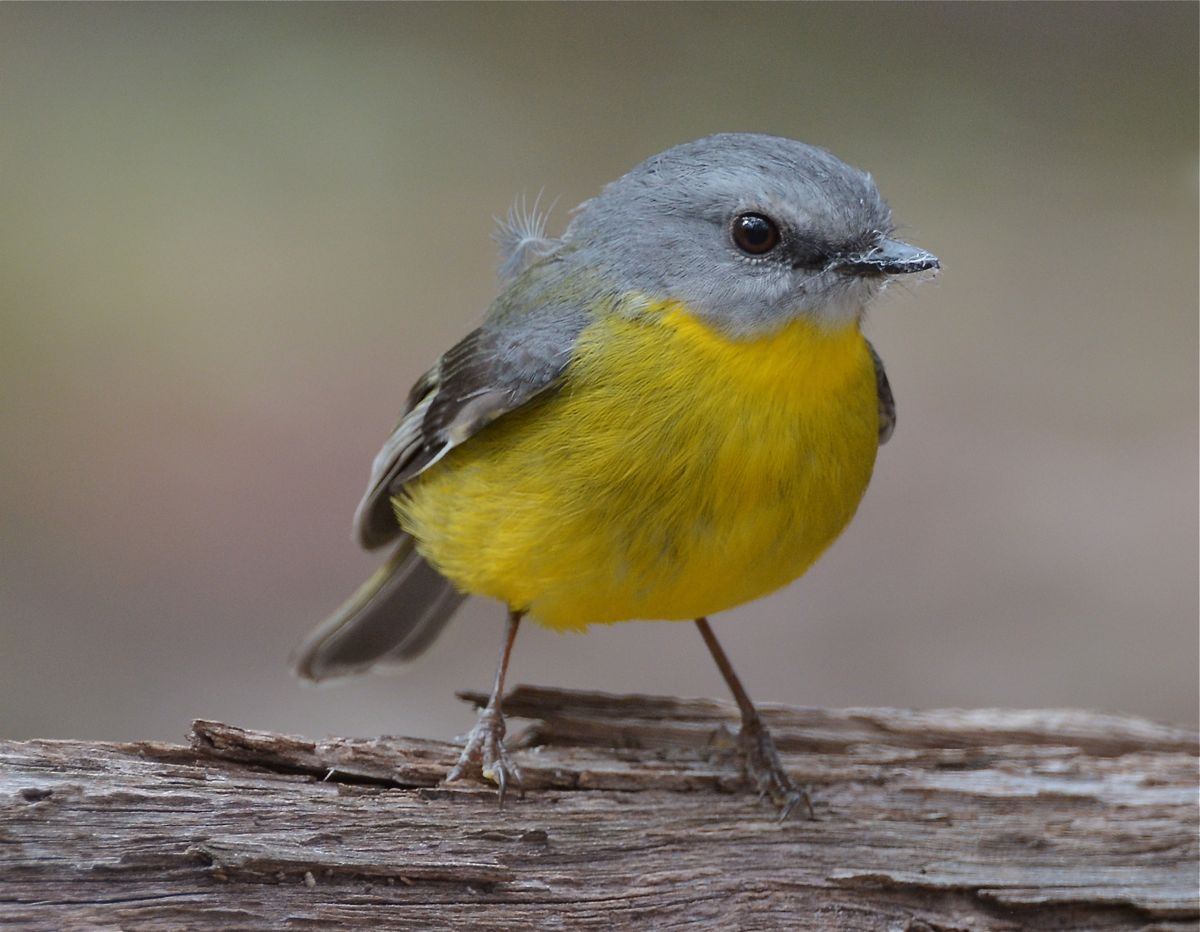
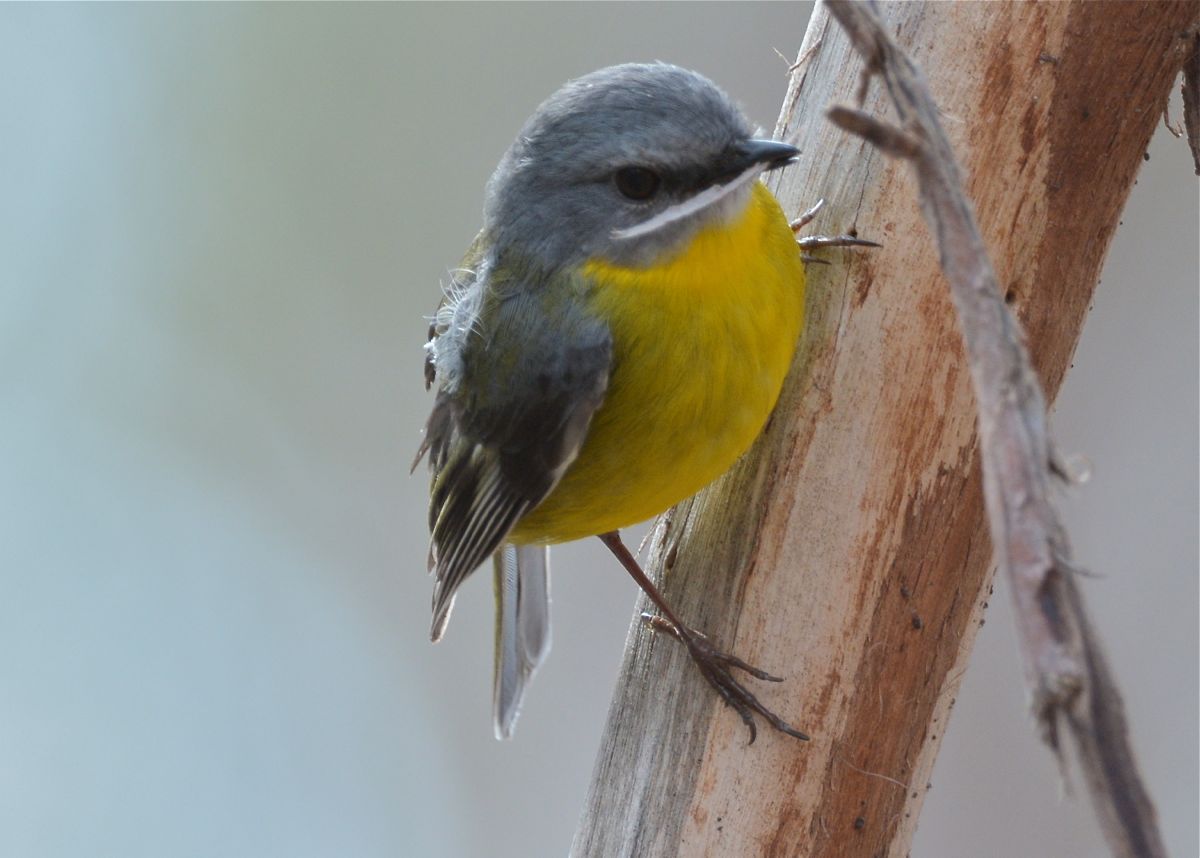
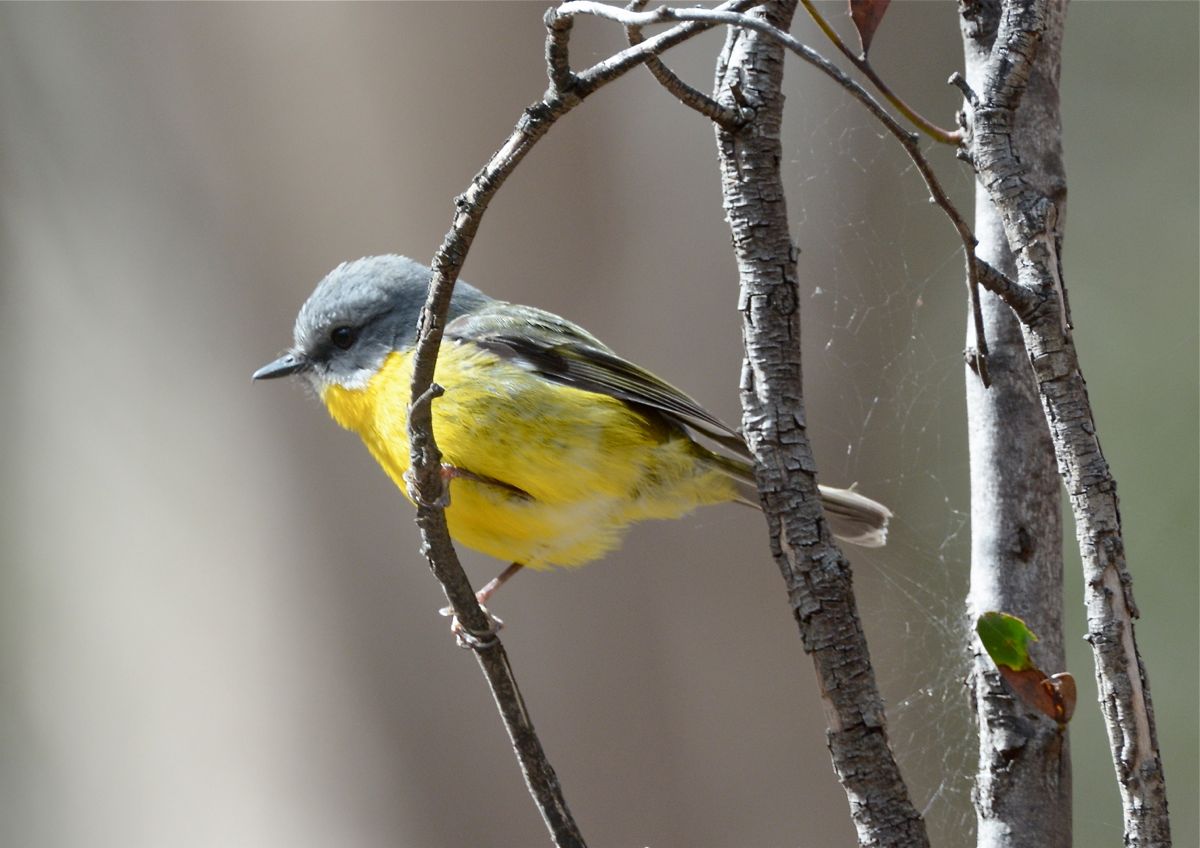
We’ve been extremely fortunate to locate a pair of Eastern Yellow Robins. Try as we might last season, they eluded us time after time.  But this year, we’ve been able to locate them as she prepares for nesting.

Because of the way we work, birds that get visited regularly get names.  This pair is no exception and Karen and Jimmy they’ve been dubbed. We normally pick couples from classic literature, or tv series or some such like, but this pair were named as we were watching an ad and the very proper and correct voice-over blob, said, “Let us introduce Karen and Jimmy”, and we said. “That’s the names we’ll use”  Now for completeness I can’t even remember what the ad as about and haven’t seen it since.

When you spend a goodly amount of hours in the bush in one location, sometimes it’s wonderful weather and no birds, or great birds and hopeless light, and sometimes nothing much at all.

As Karen gets ready to nest, she needs to bulk up for the 3 weeks or so on the nest, and Jimmy helps feed her.  So a quivering bird on a branch and shrill chitter is a good pointer to a feeding moment.   The process is so quick, that, blink, and you miss it. As he torpedoes in, she takes the food, and he sprints away.

So as I was sitting in the open, I saw Karen fly in, begin the wing fluttering and thought. This is my chance,  National Geo for sure.
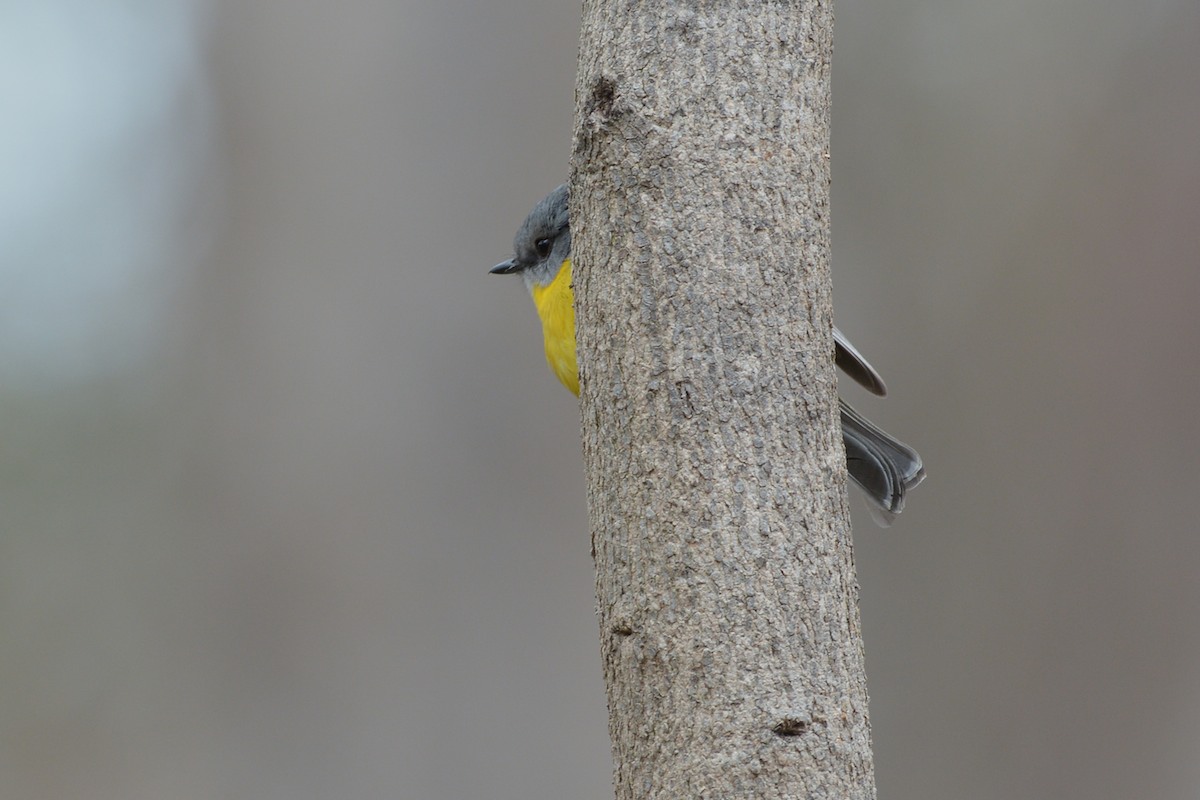
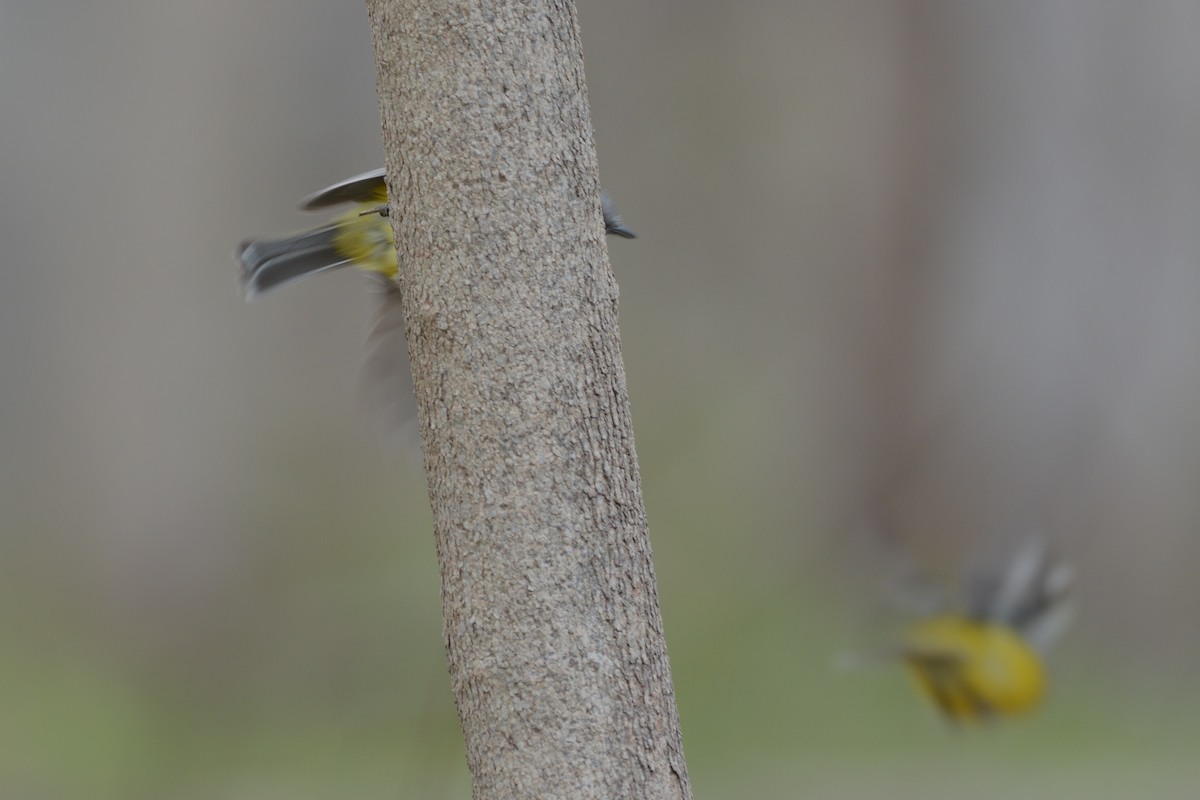
Then she moved to the other side of the tree!

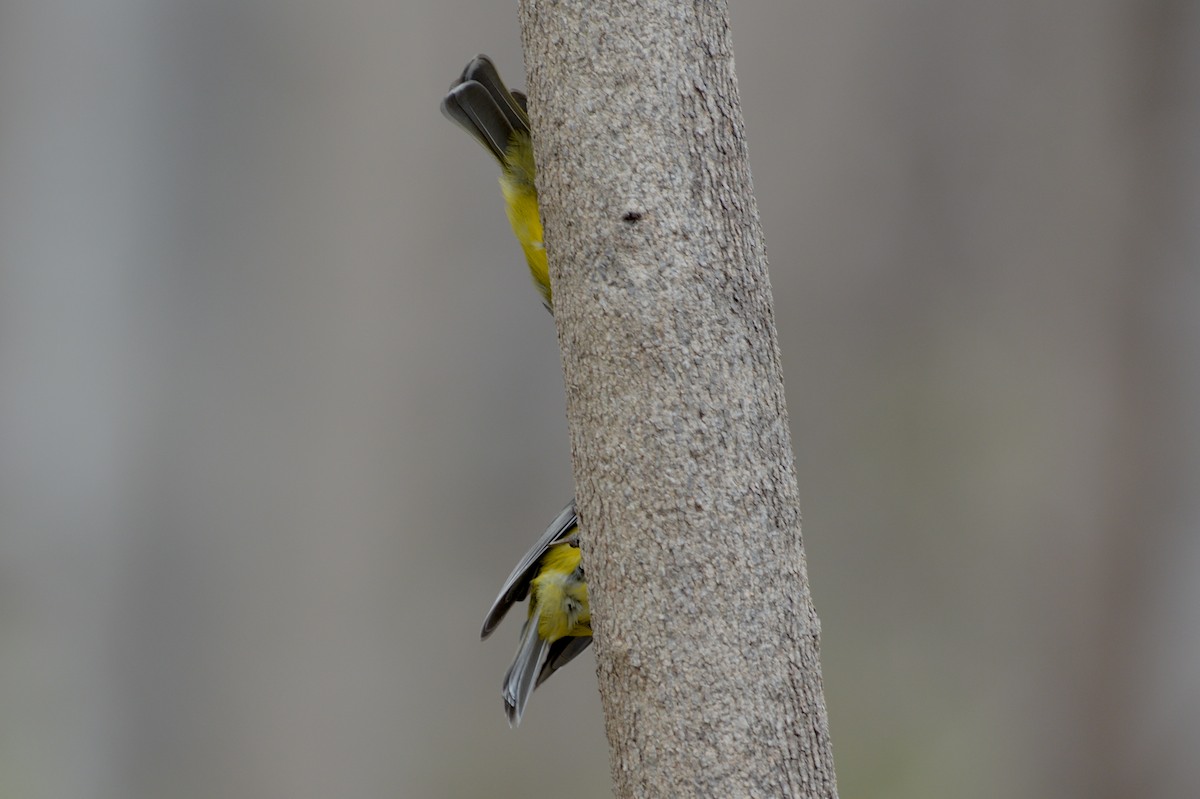
All I get is a tail poking out.
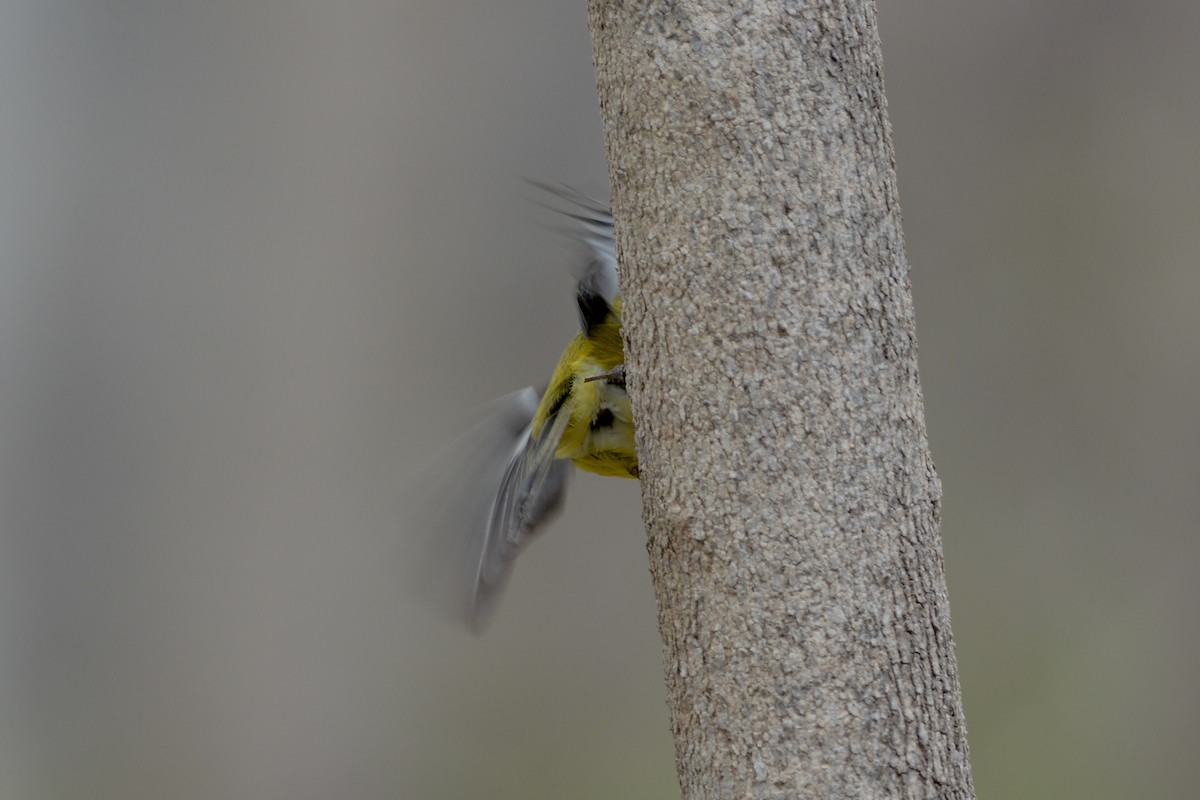
He sweeps in, deposits the grub, and is gone.  All on the other side of the tree.

So enjoy my misfortune.

Hopefully there will more opportunities to follow.

Karen arrives and moves to the far side of the tree.
Wing and tail fluttering and high pitched twittering indicates food on the way.
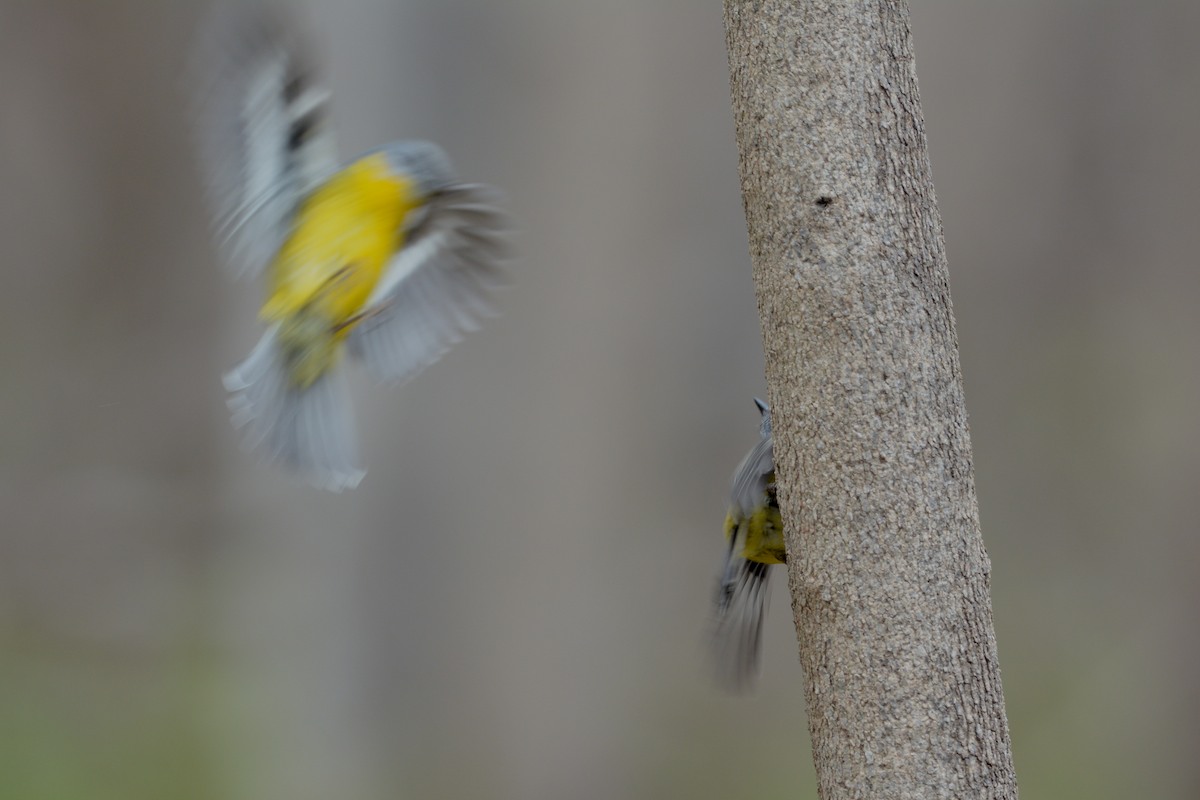
Inbound at supersonic speed.
That's it. My great shot.
That’s it. My great shot.
Rocket man takes to the air.

Spring has sprung

The backlog is getting to me.  Can’t seem to find the few minutes to write even some halfway coherent stuff to make it worthwhile blogging.

But it would seem, in more ways than one, that Spring is upon us.  The early blossoming plum, almond and peach trees are a real giveaway. The slowly decaying winter wattles, and of course the lack of Flame Robins in the Backpaddock, or anywhere for that matter.

We’ve spent a few hours over the past few days, between the high winds, and the torrential downpours, trying to eek the last few great shots out of the dwindling numbers of Flame Robins in the Woodlands Park.

I know when spring is here, they sit on branches and deliver that lovely rolling rollicking song, and then within a week or so, its quiet.

One of the techniques we use to photograph birds is work out the territories, and so more easily predict (?),- is that the right word?- where they may be. As spring and obviously the nesting season fast approaches, its nice to have that all figured out before the female sets up house an then goes furtive and we hardly see either of them.
For the Red-caps its a scarce time, for the Scarlet Robins, its almost impossible to determine where in the large territory she might choose.

So we decided to have a look at a couple of pairs of Eastern Yellow Robins.  Not because I want to know where the nests are so I can set up and annoy her, quite the contrary.  If I know there is a nest in that area over there, then I’ll do my best to stay away from it and give her the privacy she needs.  So we generally sit back about 30-40 metres and watch what takes place.  If they hunt or perch out near where we are sitting we enjoy the moments. But we don’t chase them. It is after all said and done. Their living room.

Last season we had a bumper time with Jack and Jill, two really lovely Eastern Yellow Robins that got to the stage that when EE came by they would flutter down to see what she was up to.   Made for great photography.

We’ve tried to look for them in the old territory a few times since without success.  No idea where they’ve gone. Torquay?   But, today, it seemed like a reasonable morning to have a bit of a sit in the bush and just see.  And we did, and we didn’t see them at all.  Usually within the hour or so, we’d have spotted at least one of them working the logs and greenery. But not so.  So we spent an extra hour just in case they were late sleepers. But. No.

We like the sitting part, as it helps work out who and what else is in the area and can work out predator patterns, other forest users, where the Goshawks are going to nest, and how many Superb Fairy wrens can there be in one colony.

So armed with our knowledge we began the trip home.  We diverged from the track to have a quick look in another territory, as there was a pair there last season, but very furtive birds, I probably only got about 3 or 4 photos of them in the entire season.
Not a minute of the track, and she flew by laden with Spider Web.  Then another trip, then stopping by the tree we were standing near, she proceeded to gather more web and was gone. To return to strip bark from another tree, and go.
Now, we might be considered to be a bit on the slow side, but by now both of us had concluded. She’s nesting. And she was.  Then he came by with a big grub, and topped her up, and away she went again.   So at least one pair have taken the Spring time as here.

No doubt we’ll see more of this pair as thing progress.

Collecting Spider Web
Spider Web over the back feathers
FIne bark to decorate the nest
The male hunting for morsels.
Hard work, but look at all that Spider Web.
Typical Eastern Yellow Robin pose

Nikon is Disappointed With Its Mirrorless Camera Sales, While the Rest of Us are Disappointed with Nikon Mirrorless Cameras

I know, I know, I promised not to do politics, camera reviews and other controversial stuff, but this turned up today, and given my tirade sometime back.  Well, I can’t help meself

Here’s the scoop

Nikon is Disappointed With Its Mirrorless Camera Sales, While the Rest of Us are Disappointed with Nikon Mirrorless Cameras

http://www.photographybay.com/2013/08/08/nikon-is-disappointed-with-its-mirrorless-camera-sales-while-the-rest-of-us-are-disappointed-with-nikon-mirrorless-cameras/?awt_l=5VUC6&awt_m=JoK26fI8dv62xu

Nuff said really.

Oh, here’s the original rant.

Buying an FZ200

https://dslrephoto.wordpress.com/wp-admin/post.php?post=2160&action=edit&message=6&postpost=v2

Prancing Pardalotes

My posting here have taken a hit over the past few weeks,  not because of lack of getting out, but because of getting out. Just to many filing, sorting, deleting and tagging of images to keep up a steady repartee on WordPress.

EE and I were out looking for Eastern Yellow Robins the past week.  Not, I must say, one of our highpoint weeks, but you’ve got to put in the quiet days to get the magic days.  But while we were sitting looking a most interesting moment occurred on the old tree we were using as base.

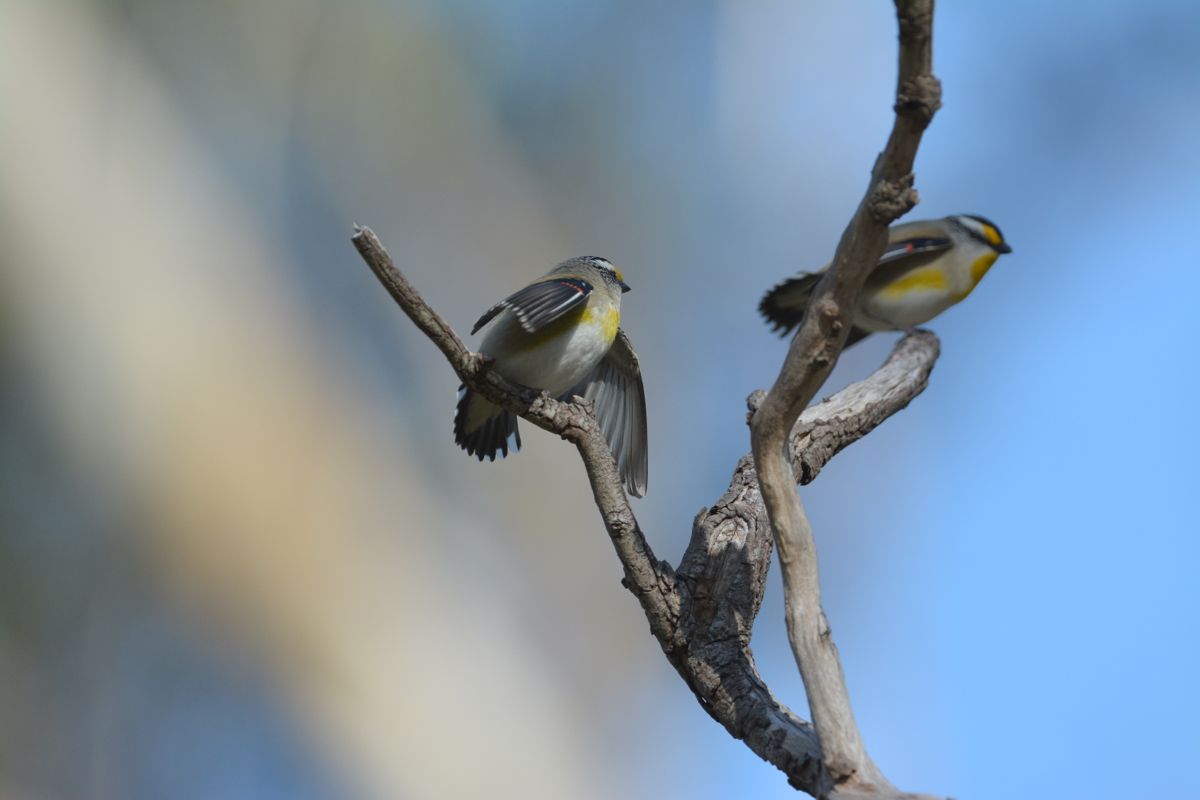
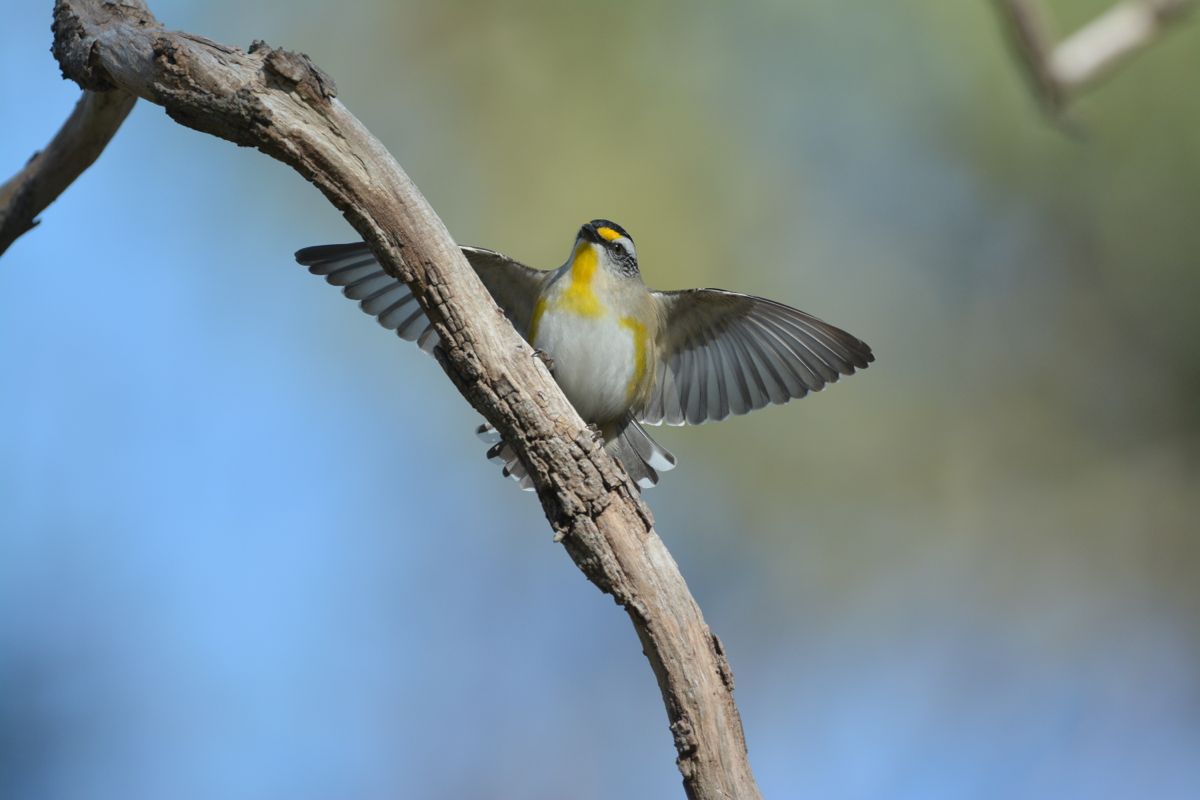
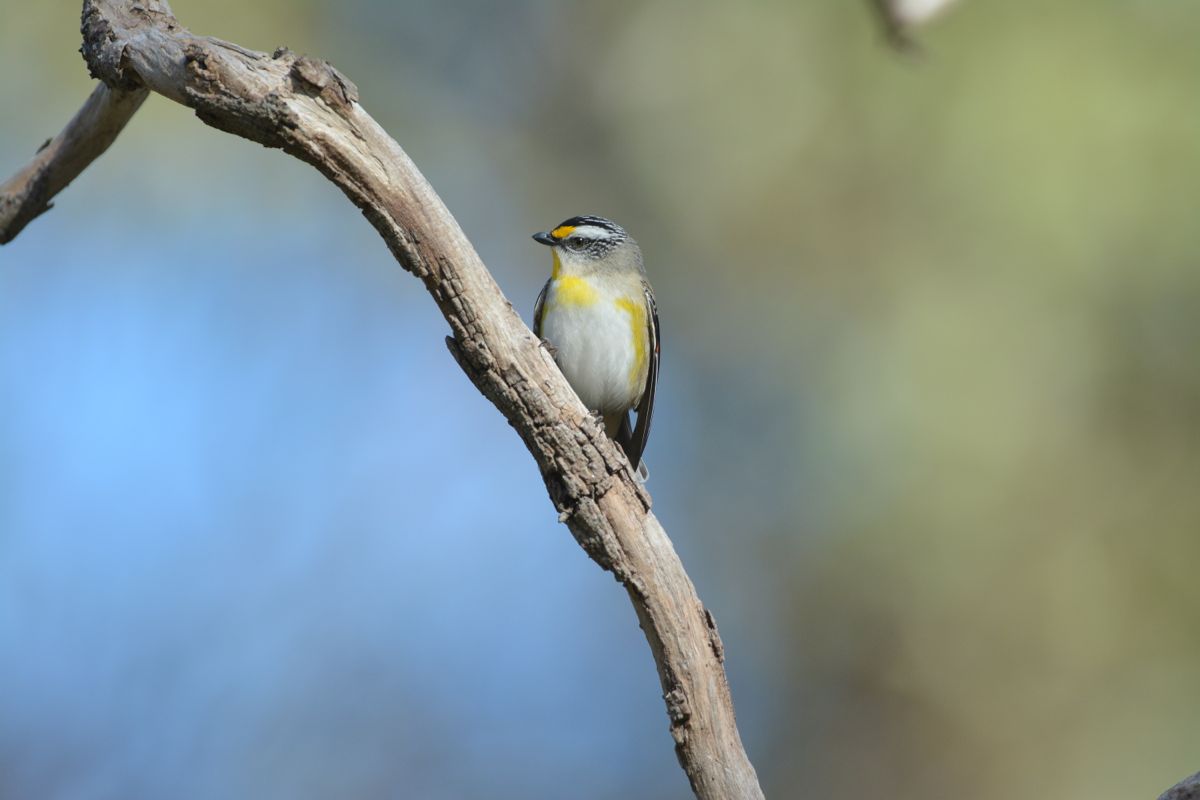
A pair of Striated Pardalotes came on to the tree and began their usual “per. plink” chatter. But then the rate became quicker, and the volume increased, and plainly out in the open they began to display.  At first we thought it might be a young juvenile begging, with the wing fluttering and the lowering of the body, but both birds were indulging in doing it. And they followed one another back and forth along a couple of branches.

No contact was made by them, and they kept a small distance apart.  So I discounted a couple of males having a territorial dispute.  They seem to go into flying chest bumping as their opening gambit.

They kept it up on and off over the course of about two hours. Then completely disappeared (as Pardalotes are quite capable of doing).

At one point, they both seemed to be very interested in a small hole in the old tree trunk and popped in and out a number of times.

So perhaps its the beginning of a mating ritual?  I checked the venerable HANZAB, and it responded with the ‘insufficient data’ type comment, so we’re really none the wiser.
Still a couple of hours in the sunshine with some very active and attractive birds is a good day out.

Wing waving with a slow wing movement
Much calling and fluttering
Fluttering wings and body pressed on the branch
They kept a distance from each other.
Both were wing fluttering
Lovely shape on the wings
Crested headed shows as well.

When Dreams come True

EE’s away at the moment. Shhh, don’t wake the kids.

And as I had a week to ‘myself’, dropped a note to Mr An Onymous and we agreed that WTP on Wednesday in the sunshine would work.  So we set off. Worried of course that without EE to spot things we’d like as not miss an elephant in the middle of the road.

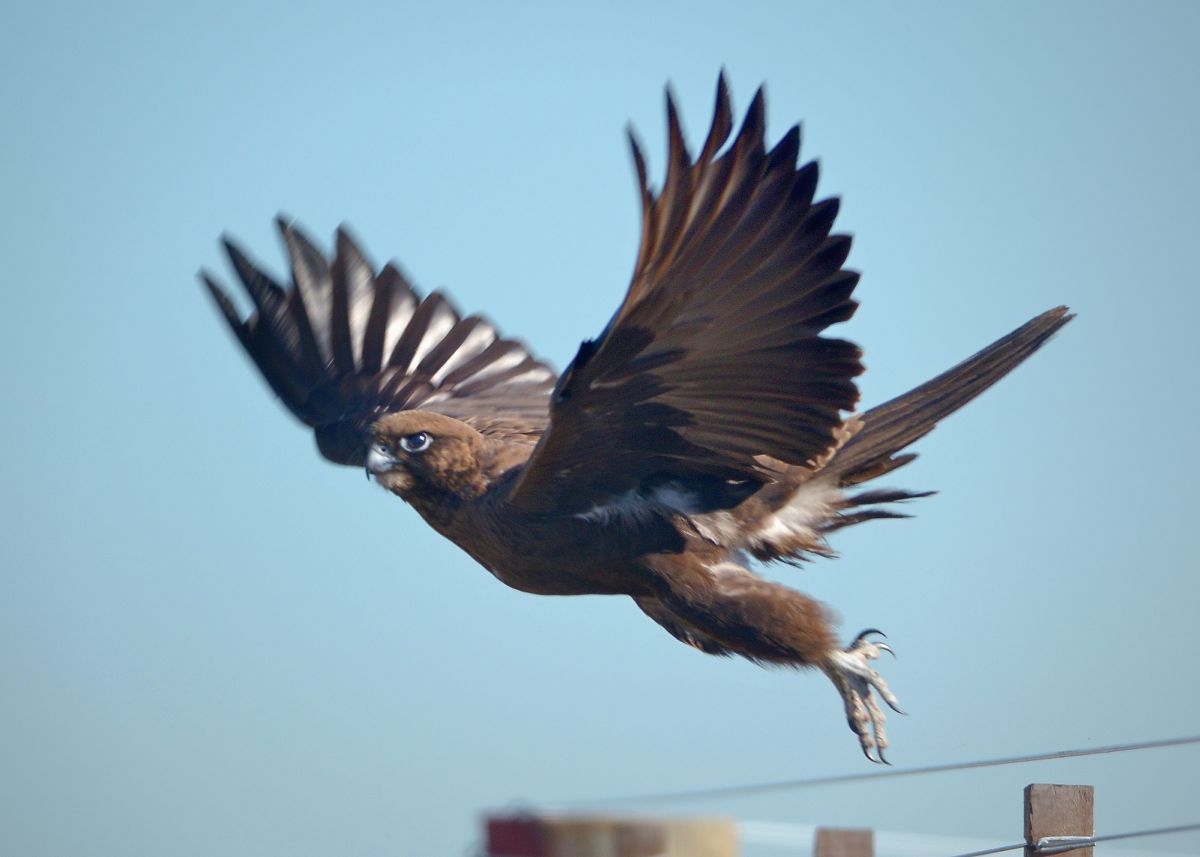
On the way in along Paradise Road, we got our first surprise.  A big black shape sitting on the fence on the road ahead, but the light, isn’t that always the way was wrong and all we were going to get was a dark shape.  So, rather than sit and ponder, we decided to drive on. That’s when it exploded off the fence.  At first I thought it a “hobby”, a joke in there somewhere, and it was gone.  Then An called, “Its landed back on the fence behind us.”.  Ok, let’t turn the car around and head back as now the light will be ‘over your left shoulder dear, said my mother”, and it was, and the colour was great, and lo and behold it was a Black Falcon.  Very elegant and impressive.   Might be a good day after all.

The tide was out, and we went along the coast, plenty of ducks of various varieties, but no shore birds at all.  Mr An, has been wanting to spot a White-bellied Sea Eagle for quite a number of trips down there, but no such luck. Interesting to contemplate but when EE and I go it alone we see one or two regularly.  Sorry about that.   So we scoured the sea, bunds, grasses and ponds, but no sign of a Sea Eagle. What sort of a tour guide am I?
The Brown Falcons must have recovered from hunting season and were out in force and we followed one from post to post along the beachroad, and I did my best to get the car in a position for An to get the best results.  Pull car over sharply on an angle and he gets a good shot out the window. I get a shot of his elbow and part of his 300m lens  Them’s the breaks.

We took the road down to the Spit, or Murtcain (m) depending on whose telling the story.

On down to the Murtcaim (n) outflow, and the tide was in, but a pair of Black-shouldered Kites amused us for awhile until one snagged a mouse and then landed on a box thorn, and of course I just had to get a shot. Nice in the afternoon light.

We drank tea and pondered that it was indeed a Magic Place.

On the way back along the road, I was checking each fence post for another Brown Falcon, when off in the distance on a gate post, was a ‘HUGE’ white blob. Focus binos, and … It was the elusive White-bellied Sea Eagle.

Dilemma: A. Drive down fast, and the bird will fly.  B. Drive down slowly, the bird will fly. C.Drive down a bit, then walk, the bird will fly.  We opted for C. Just about ready to get out of the car, and even though we’re still a long way away, the bird threw.   Now normally they will always fly away from our position. But. Not this time, it slowly got a bit of height and then drifted casually down past our position with the sun “thanks, Mum” over our shoulders and close enough for detail.
The D800 to my left was going berserk. Finally a spot disappeared in the distance, and we regained out collective breaths.  Wow.  Big smiles all round, I’m back in the flavour of the month Tour guide handbook, and the D800 is smokin’ writing out the images to the card.
Talk about fill your dreams.  So he’s got enough images of a White-bellied Sea Eagle to fill his quota on the photo site, and I’ve got a story, and a satisfied photographer.
Mr An Onymus no doubt will post the images on his photo stream  “Na-na-ne-nana”, on the ANTI-social networking website,  In_cognito. 

But, there was more to come. As we headed out the gate, a Nankeen Kestrel, landed on a post by the road way, and then dropped into the grass just in front of us, and rose with a mouse in tow.  It happened as quickly as that.  Settling in to consume the mouse, it suddenly was attacked by a marauding Black Falcon. Kestrel takes mouse and flees, but the Black Flacon was all over it, and completely out flew the hapless Kestrel.  Out gunned, she dropped the mouse and fled.  The Black Falcon must have claimed the prize as it too took off in the other direction

Probably enough for one day.  So we headed for home in the late evening light

Black Falcon
Black Falcon
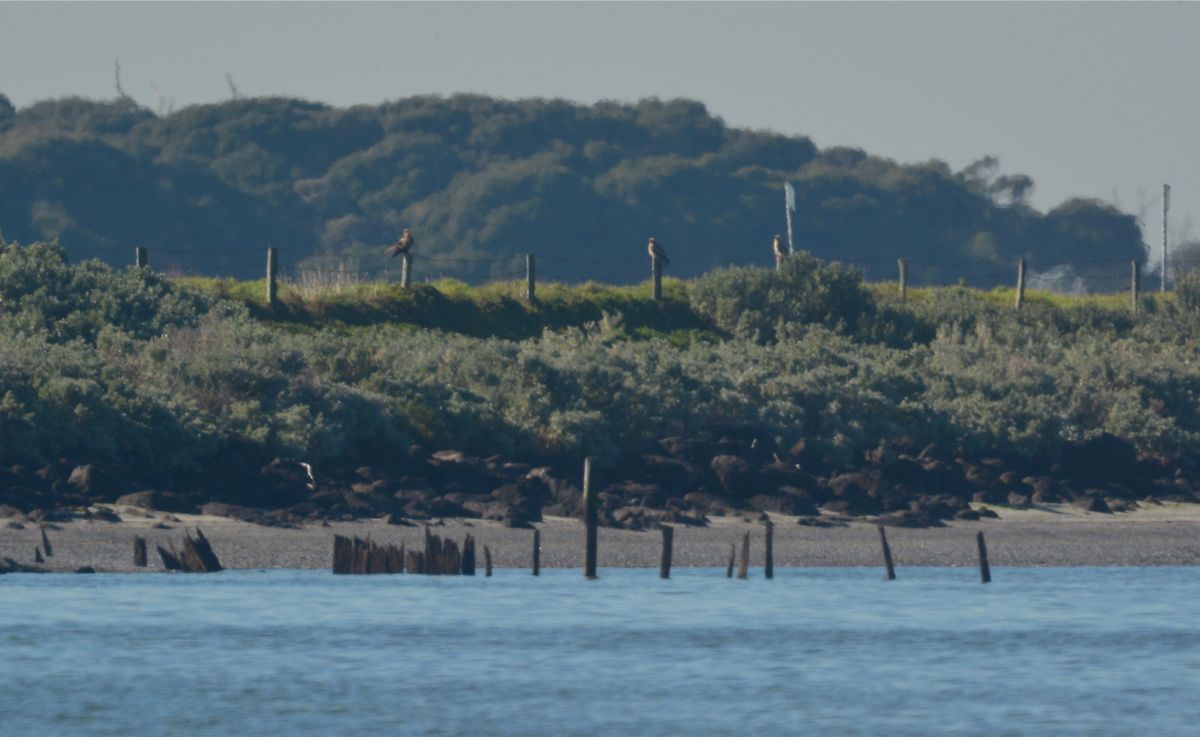
Three Whistling Kites on the fence in the distance. They always are.
Lovely Brown Falcon who played fence hopping as we drove along the roadway
A Black-Shouldered Kite with its mouse finding radar
Seen one you've seen 'em all.  Just another White-bellied Sea Eagle.
Seen one you’ve seen ’em all. Just another White-bellied Sea Eagle.
Nankeen Kestrel, just about to enjoy her evening snack. She is already aware of the approaching marauding Black Falcon
Swamp Harrier doing just that. Harriering.


And just in case you don’t get over to the Anti-Social Networking site, IN_Congnito    here is a cut from Mr An’s photo stream, “Na-na-ne-nana”.

(C) 2013 Mr. An Onymous


White-winged Chough nest building

The Flame Robin flock seems to have moved on out of the Woodlands Backpaddock area. That figures, as we have access to it this year, (unlike being locked out last year), but for reasons only birds understand, the majority have moved elsewhere.
Given a reasonable day, I decided to have a bit of a walk further afield and perhaps track down some of the new feeding areas.

But no one said anything about ‘The Frost’  as I drove out just on sunrise, the fields were as they say in the classics White.  And when I started to walk over said fields the grass underneath crackled.  So put on the ski hat, gloves and scarf.  And still the cold cuts in.

I was going to ply my trade along some back tracks, kangaroo pads and a few areas where the old gums have opened up the area for grass and moss beds.  But.

No robins. No noise, no Thornbills, no robins. In the background the beautiful and unmistakable mellow descending whistle of the oboe like call of White-winged Choughs. I really like these birds, but have so few even ok photos of them. Too hard as they are black, dig around in the undergrowth and never seem to be out in the open for me.  The calls indicated that at least three separate groups were at work in the forest ahead.

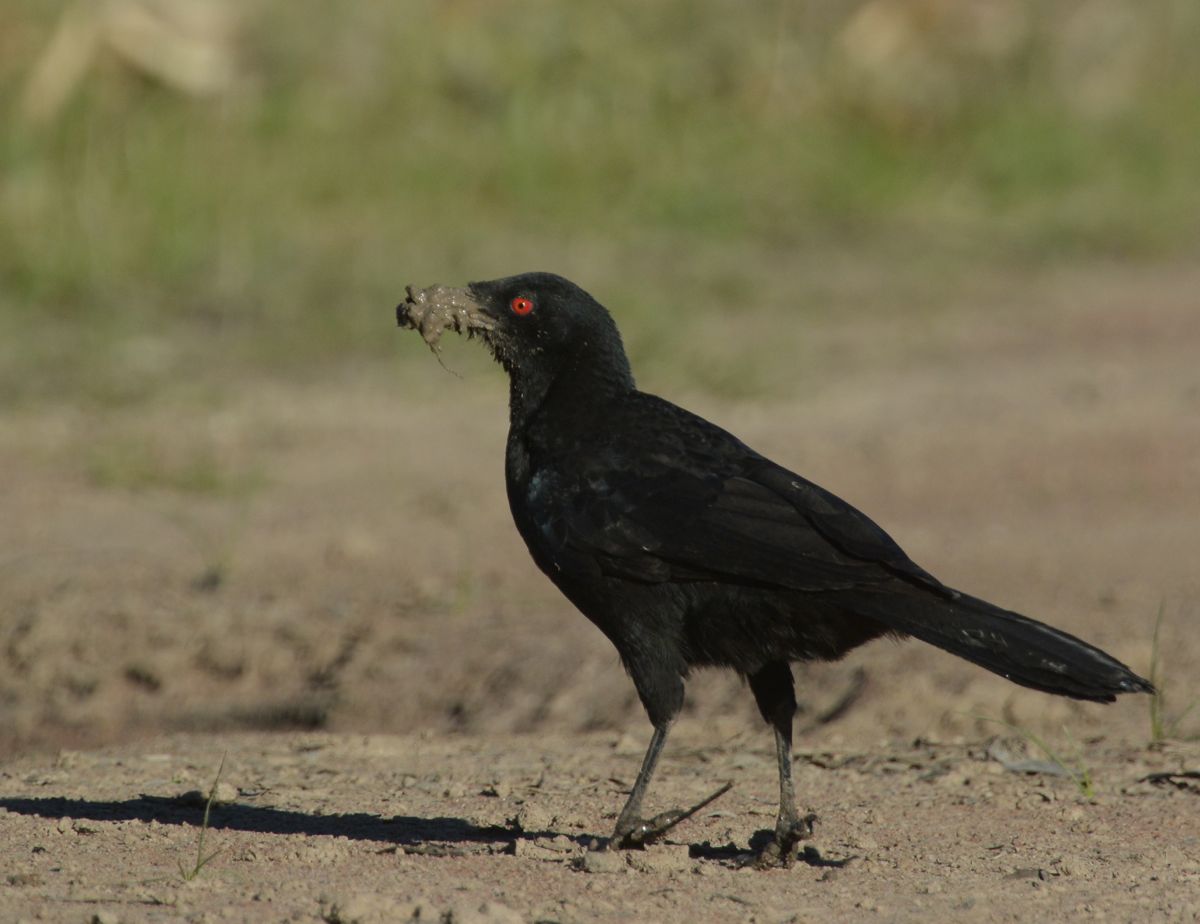
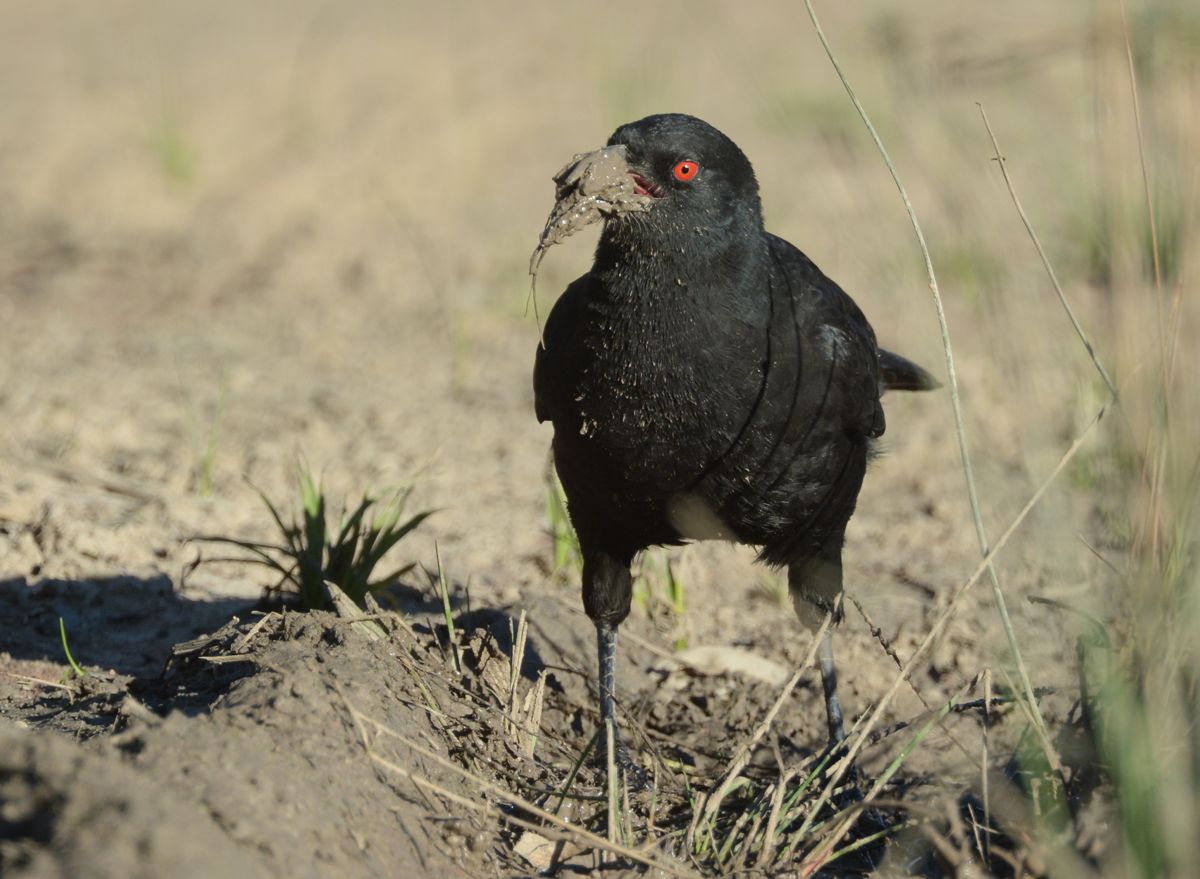
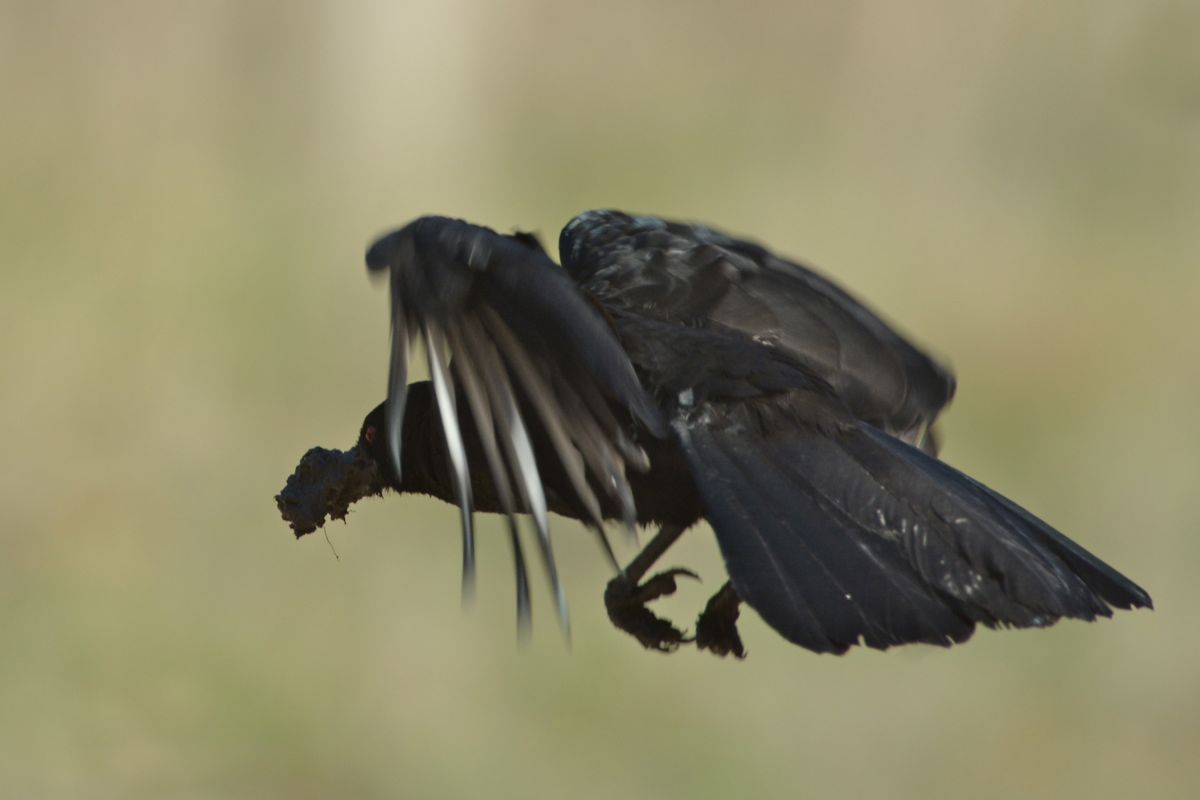
To get to a new location, I had to cut along a vehicle track and then enter a well groomed Kangaroo pad.  As I was walking down the road, in the sunshine ahead, I saw a White-winged Chough on the roadway.  Then it turned and flew, with a beak full of mud.  They build a communal nest out of mud.  It is a large round pot shape, and really quite a work of art.  They also communal nest the eggs, and have long discussions over whose turn it is to sit next.
Now, the light was all wrong for me, and I had no idea where the nest might be being built, although some trees are more likely candidates than others, so I moved past the mud seep on the side of the track, found a suitable out of sight location with some good strong front lighting, set up the camera, and waited.   And waited.  No doubt the passing by had not gone unnoticed.

Then after about 5 minutes some black shapes wafted through the undergrowth on the other side of the road. The committee had decided to check me out.  And they sat.  So did I.  After a few more long minutes, one moved out across the road to take a peek from behind, and one moved up closer.  And sat. So did I.

Given I seemed harmless enough, the consensus was back to work, and they wafted down on to the grass to pick up some mud gathering implements.  Choughs, I quickly discovered don’t just gulp a beakful of mud and take off.  They carefully prepare some grass, twigs, etc and then dab it into the mud, much like a painter would do to prepare a brush,  And not just any mud.  It has to be the correct consistency.  Not that hard stuff over there on the edge, nor that really sloppy stuff near the water, but this fine, sticky stuff just near the weeds.  And dab they do.  And twist it about, and then dab again, until that’s about as much as can be loaded up, then it’s off to the nest.

They also seem to be able to work with the consistency.  A little bit of the hard stuff, blended with the softer mud, wrapped in more grass, given a quick dash in the water, apply more sticky mud.  It’s a craftsmanship that was as much fascinating as perplexing to work out.

After about half an hour work stopped for awhile, and I took a quick look for the nest.  Not to harass them while they are nesting, but to be able to avoid the area and give them the peace that a nursery deserves. But, to no avail.  Cleverly hidden high up in a gum somewhere near, I suspect.

The supervisor came along for a bit of a look at proceedings. You could tell it was the supervisor. No mud on it.

So with their lovely cries ringing in my ears I went back to the more mundane job of looking for Flame Robins.

Nest building is communal work.
With a good bill full, its time to go.
You take 1 part hard mud, 2 parts sticky mud, a bunch of grass and dab.
Just right for nursery
The longer bits of grass must be used for binding the work together.
A runup to get airborne is needed.
Another load of building material is airborne
The Supervisor. See, mud doen't stick to it.
The Supervisor. See, mud doen’t stick to it.
Why are they called "White-winged" Choughs. Now you know.
Why are they called “White-winged” Choughs. Now you know.