
It takes a little over three weeks for the eggs to hatch and another 24-27 days for the little birds to grow ready to leave the nest for the first-and-last time. When they do emerge, they are mini versions of the adults. And quickly pick up skills to feed themselves.
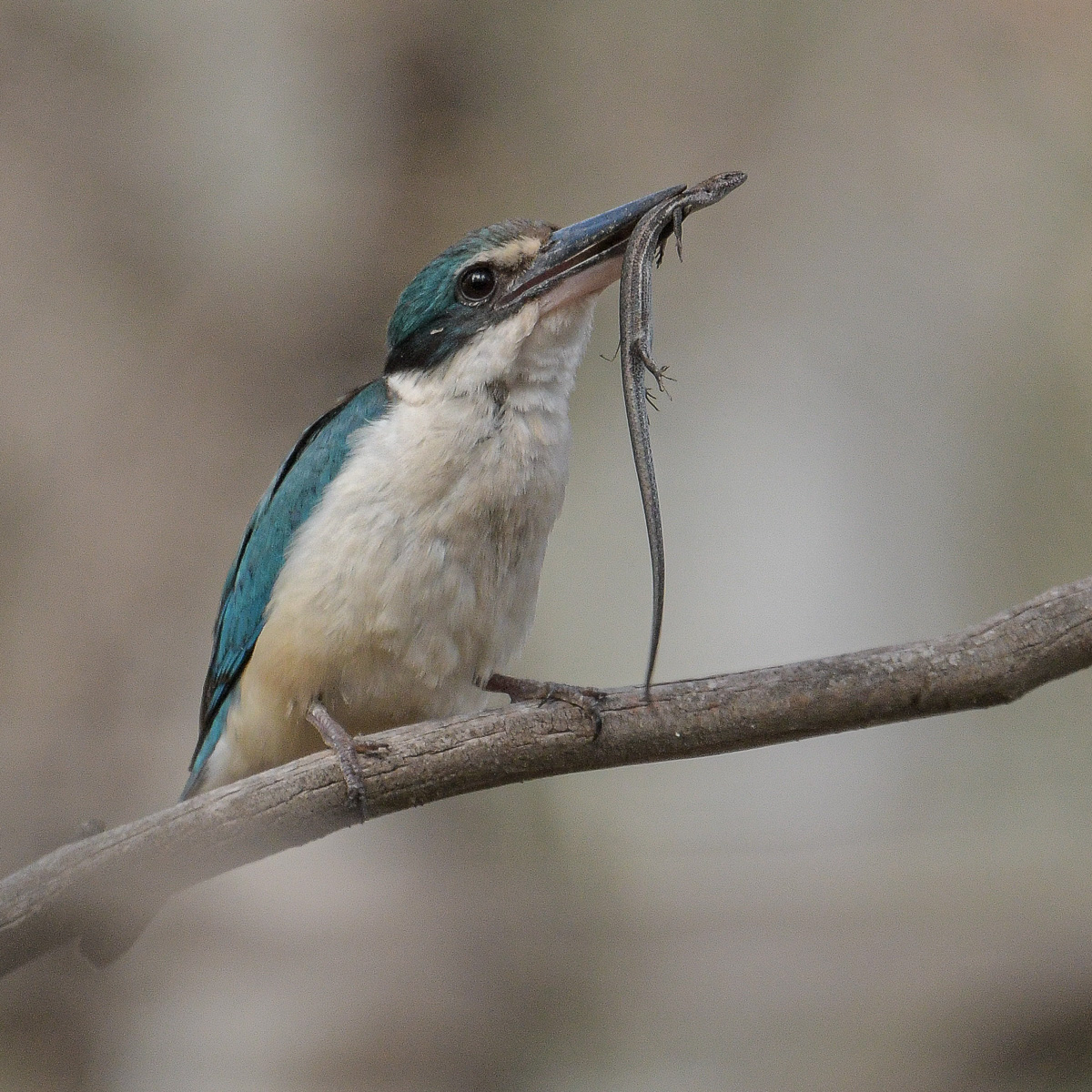
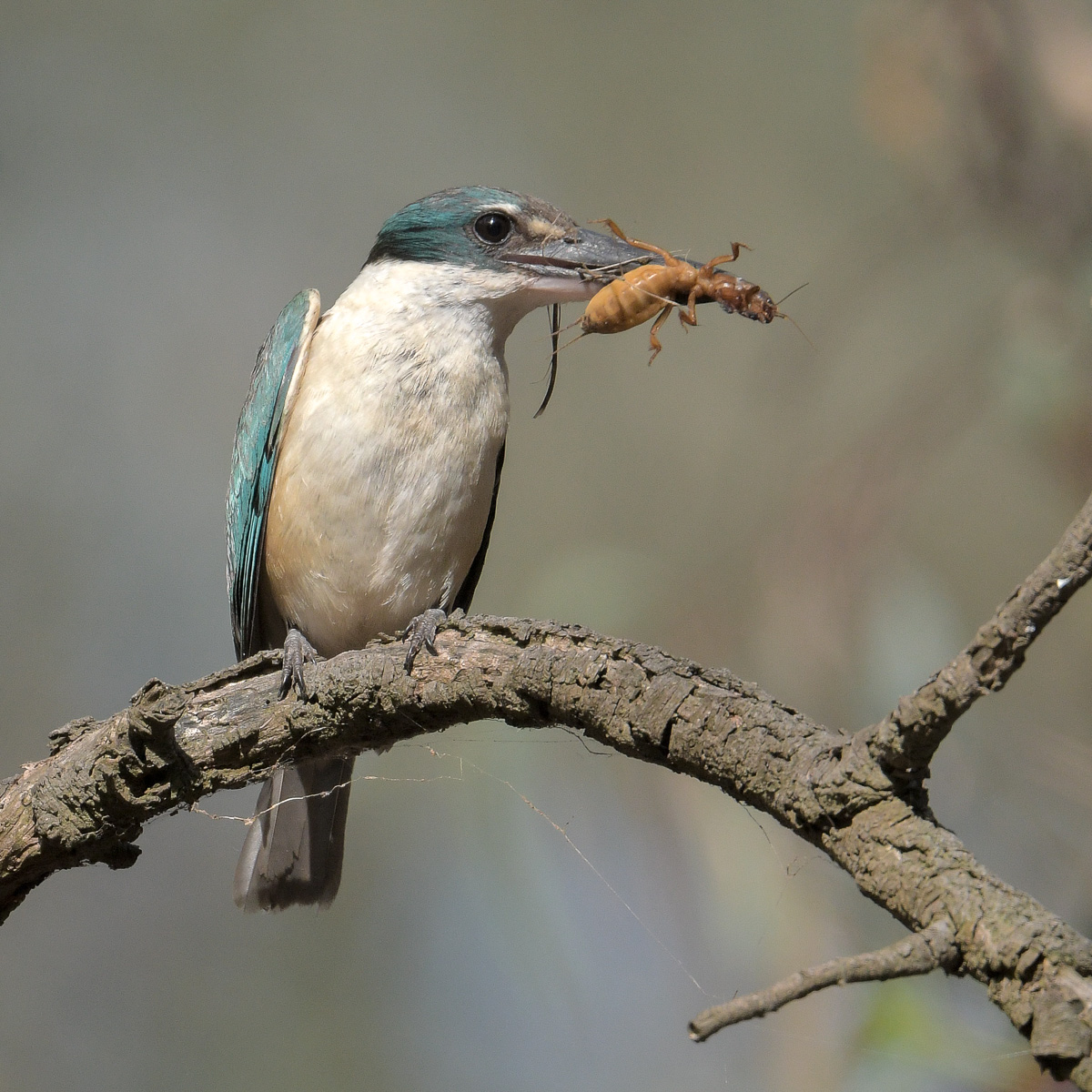
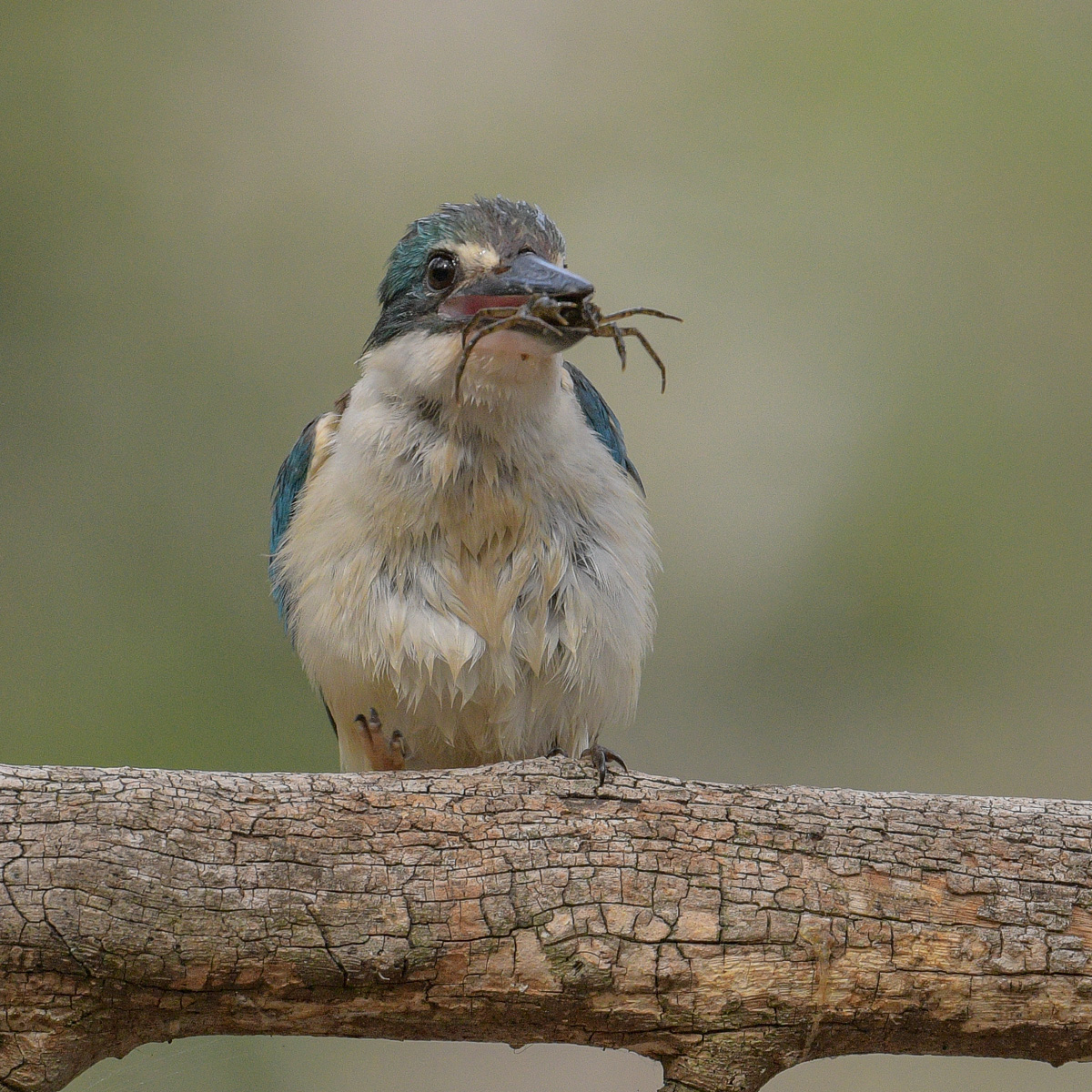
Despite the name King-Fisher, the Sacred variety seem to do very little, if any fishing. Over the 6 weeks or so of hatching and pre-flight, I only spotted a couple of tiny local river fish being brought in, and several other aquatic creatures such as frogs.
By the time the young were ready to be fed, the male had become so absorbed in his delivery job that he was by then, completly indifferent to our presence, and would do close flybys and land on nearby convenient branches. A few times he realised that as I was moving my foot around where I was standing that it had startled something to eat. The scary sight of a Kingfisher flying directly toward me caught me unprepared. He’d land within touching distance, pick up a treat, and then be on his way.
At first he would turn up about every 30 minutes or so with a snack for the sitting female, and on occassion she’d also take the opportunty to come out for a stretch and the male would take up sitting duties. After a time she’d return, sit close by and call, and it I was quick enough I might catch him on the exit from the hole. She, on the other hand didn’t give any warning of leaving and it was only luck if I even saw her emerge.
It’s imposible to tell when they started to hatch, and for some days he’d deliver food and she would have fed it to the young. After about a week or so, by my reckoning, she too was out full time and making regular feeding trips.
The time began became about one visit every 10 minutes. We began to wonder how many young were in there, and if they would not grow so fat that they couldn’t fly out, so much food was going in.
The eyesight of the bird was something I’ve never really thought about before, but it’s phenomenal. From a perch closeby, he could fly direct 80-120m to a tree, bush or to the ground and come back with something. The miss rate was very low indeed.
We still gave them as much distance as possible and didn’t move around in the area any more than necessary. He even become so relaxed that while we were enjoying a morning cuppa about 100m from the site, he would come and sit on a favourite branch over some ground cover and usually picked up something very close to the log we were sitting on. Once he hunted under the log near our feet.
Here’s a selection of menu items, and I’ve had to be very selective as there are dozens more. With all that food going in we were now wondering, what was likely to emerge, and when.
Enjoy
Click to advance to a full screen album.





 Birds as Poetry —— Just because I WANDER doesn't mean I'm LOST
What a wonderful series on this remarkable bird David, your patient waiting paid off with quite a smorgasbord of variety in their diet. Yes it does make you wonder how many and how large the youngsters will be on their inaugural emergence. The Azure Kingfisher is probably the only one, possibly also the Little, that is essentially river dependent for small fish, they even build their nest in a borough in the river bank, similar to the Pardalote. As you described for the Sacred, very little food is from the river. So many wonderful captures !
LikeLiked by 2 people
Hi Ashley, Glad you enjoyed. This area was flooded for several weeks, about 2 years back and much of the low story has not recovered so there are lots of bare patches that seem to suit a lot of the hunting this pair have been doing.
I think by the time the young finally fledged, that food ops were becoming a little scarce. Competiion from Mynahs and Wattlebirds probably didn’t help.
LikeLiked by 1 person
Wonderful that he took you into his confidence, David!
Giving you the opportunity for some amazing images!
Quite a varied menu being delivered!
A superb series of images! Great to view!
LikeLiked by 2 people
Hi Dave, its hard to know how much he tolerated and how much he allowed us to be around.
That he would regularly hunt close by might just have been because of easy food availability.
Nonetheless it did give us several weeks of picture opportunities. And then, how quickly they disperse.
LikeLike
It’s such a privilege to be tolerated by birds while being close to their nest. I usually avoid the places of nesting just in case I might be mistaken for a threat. Obviously you know your birds and they know you well. The photographic record of your observations is amazing. It’s great that only you two knew where the kingfishers established their family and hopefully this stays your secret. Thanks for sharing these fascinating captures.
LikeLiked by 2 people
Hi Adam, thanks for the comment. I sometimes have to be careful about what I write, not to give too much of a indication of over-familiarity with the birds.
We have had the good fortune to work with a small number of birds up close and personal. In every case, it has been the bird that made the move to land, sit, or feed near to us. In a forest where they had all the choice that was where they sat.
From the Kestrel that would land at my feet while I lay in the grass, to the one that would settle on the fence post next to me.
The Eastern Yellow Robin that would take a nap in the shrub next to the log I was sitting on, or the Brown Falcon that would purposely fly over the field to prop in a tree nearby.
Each has chosen to do that.
I don’t often talk of the Black Kite that woul chase me across a paddock, nor the other Brown Falcon that would fly around behind a tree and then approach from behind at top speed and in full cry, perhaps that would make a great interlude after I finish the Kingfisher Play.
You’ll also note that most times we don’t share until the nesting is over.
Hope that helps.
Enjoy
LikeLiked by 2 people
Lovely to read this chapter in the Kingfisher family story, and to see the images of all those meals being prepared and delivered. Wonderful photographs as always and such a privilege to be trusted by the birds to that extent. Thanks for sharing the experience David.
LikeLike