Kingfisher Nursery: Act I The Arrival

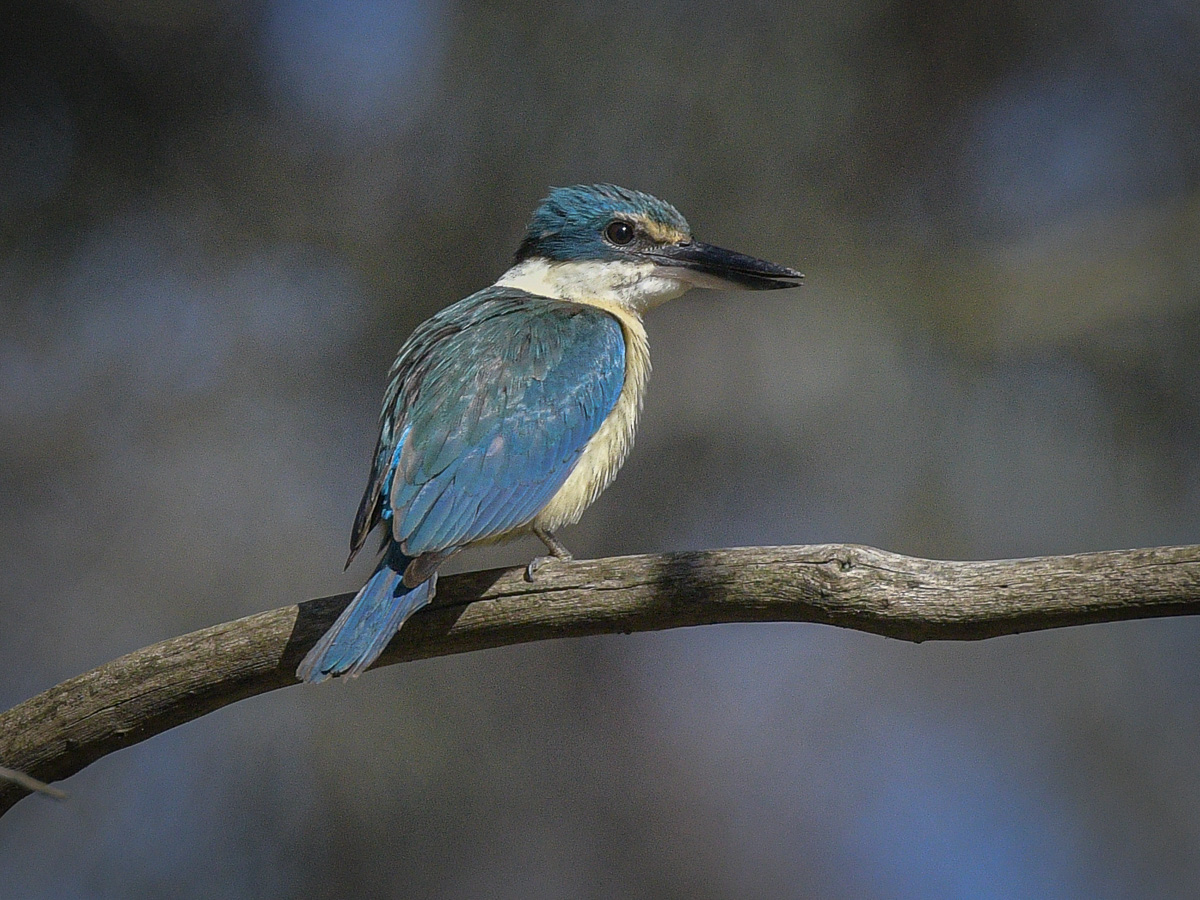
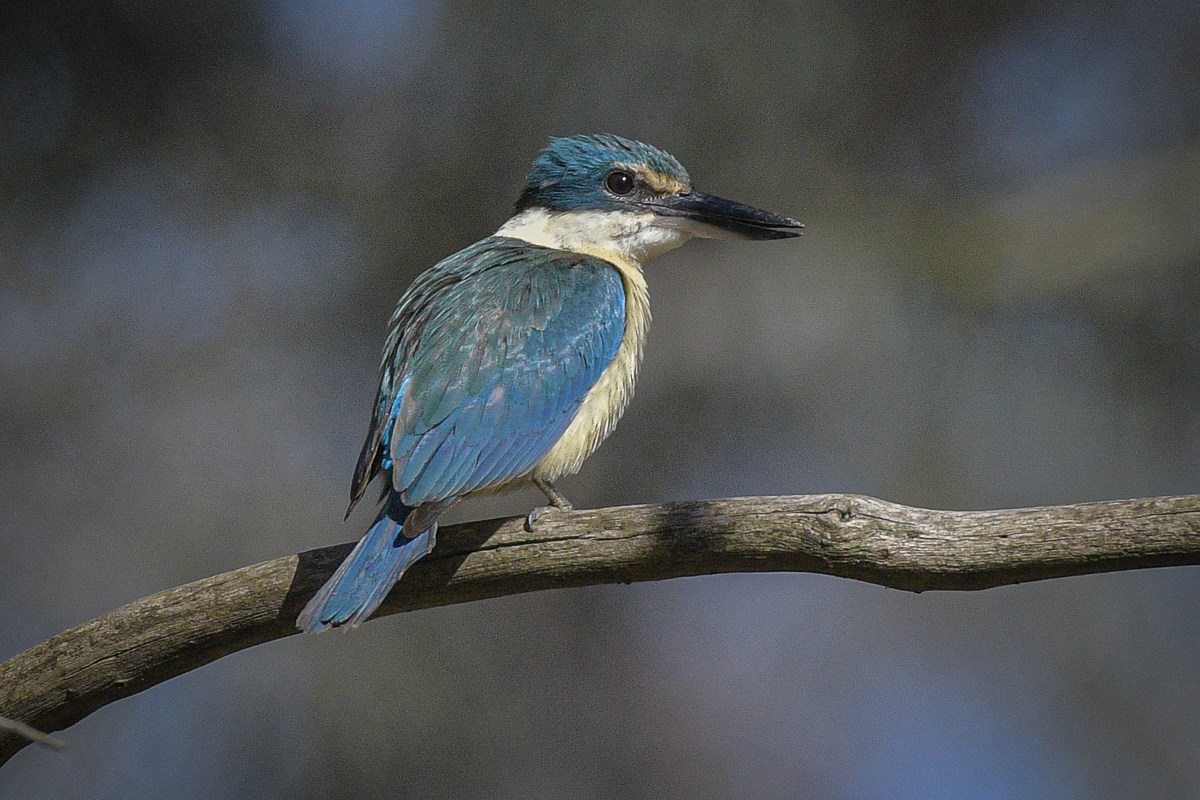
There is a small section of the river park near us that has seen Sacred Kingfishers regularly arriving each season to raise the next generation of their young.

On and off over about 10 years we’ve had the chance photograph them on occassions.
They tend to arrive around early October, and the forest begins to ring with their Pe, Pe, Pe, Pe calls. Helpful because if they can be heard, they must be in there somewhere.
On some years there may be 4 or 5 pairs at work along a couple of kilometre stretch of the park. The far side of the river is closed off to mere mortal access, so we might only get a glimpse of them if they set up on that side.

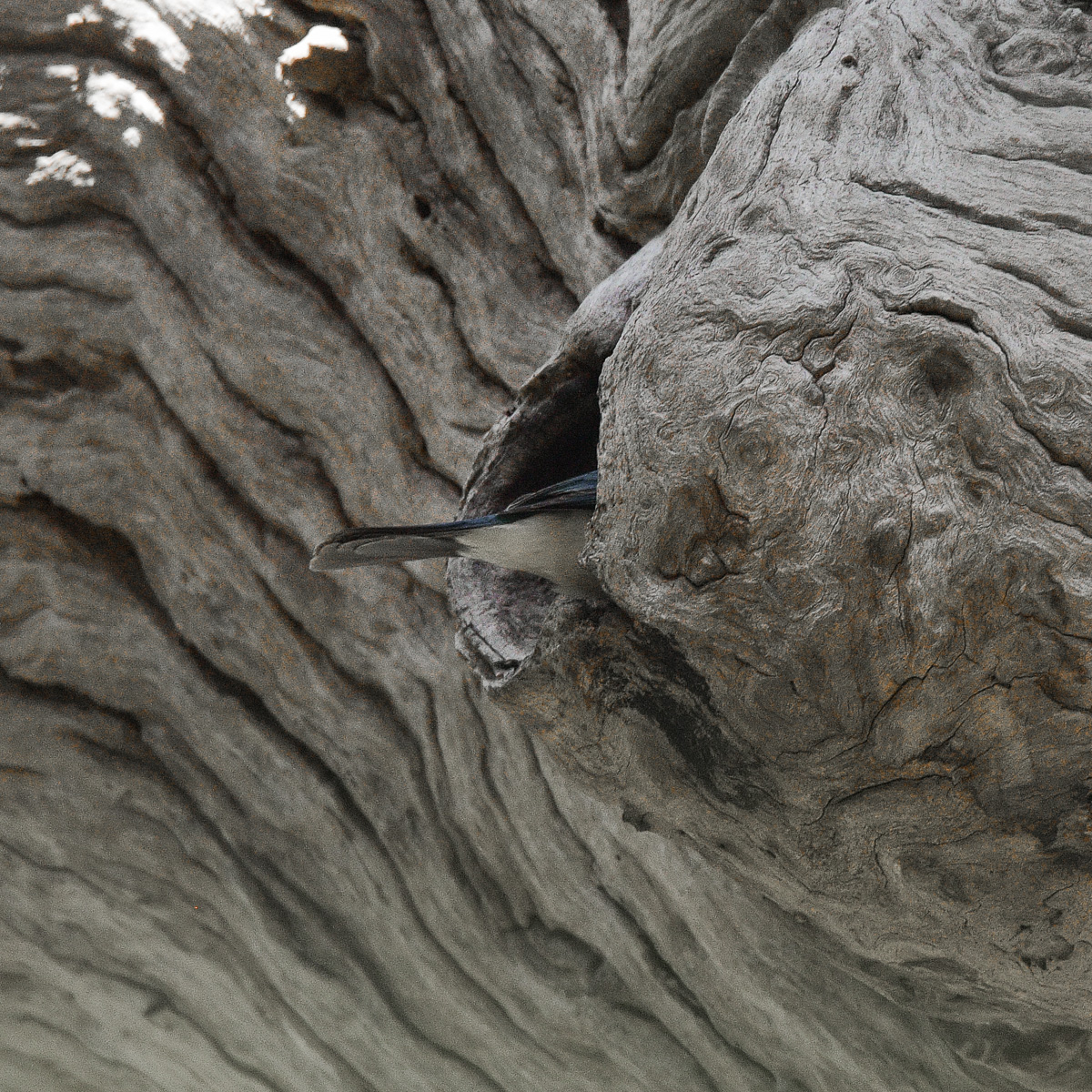
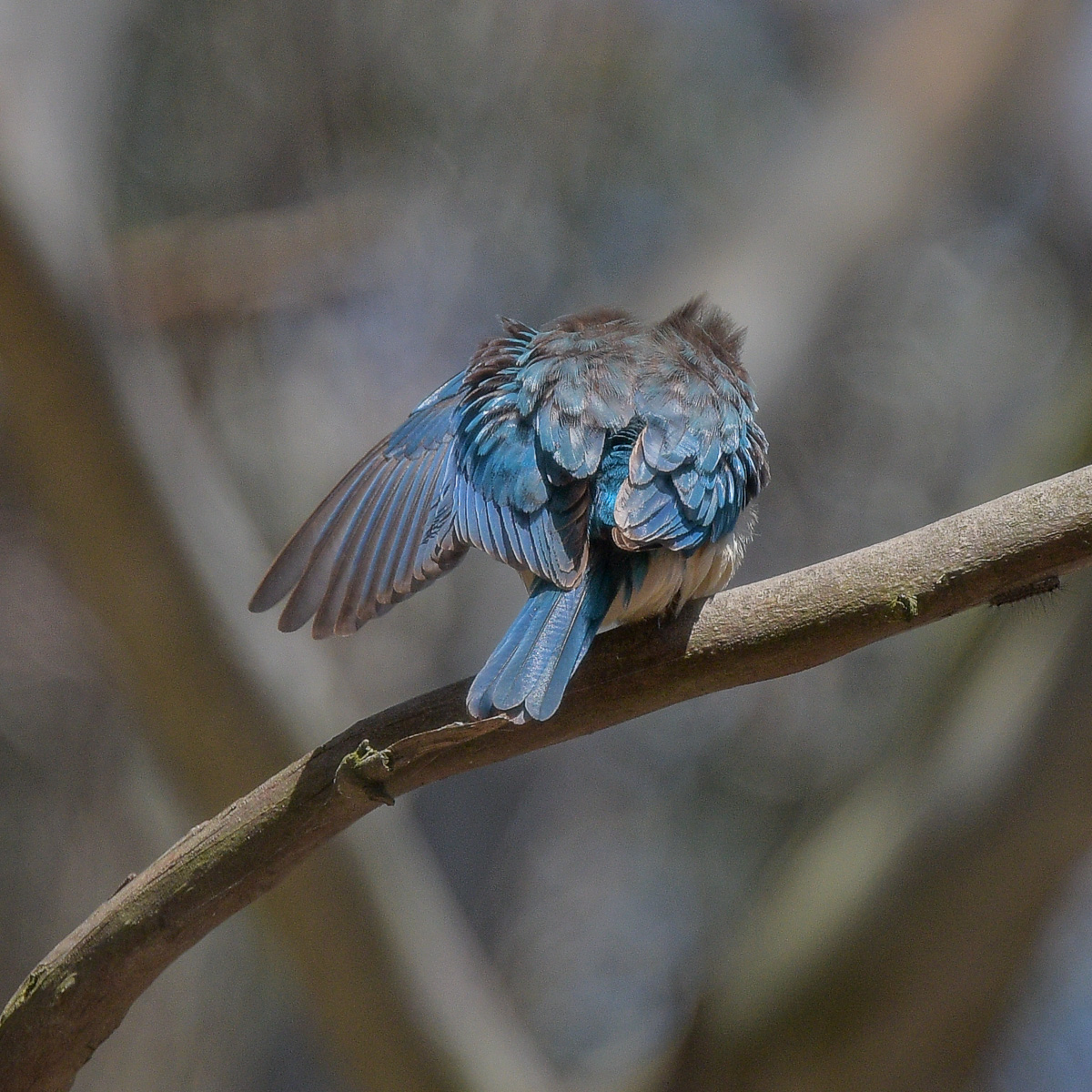
We began looking early in the month, and eventually disovered two possible territories. They soon busied themselves with feeding, and preening and searching for a nesting location. The ones that visit here don’t build into the river bank, but chose the trees. Some of the river gums are quite old and have good nesting opportunities.
For the early arrivals.
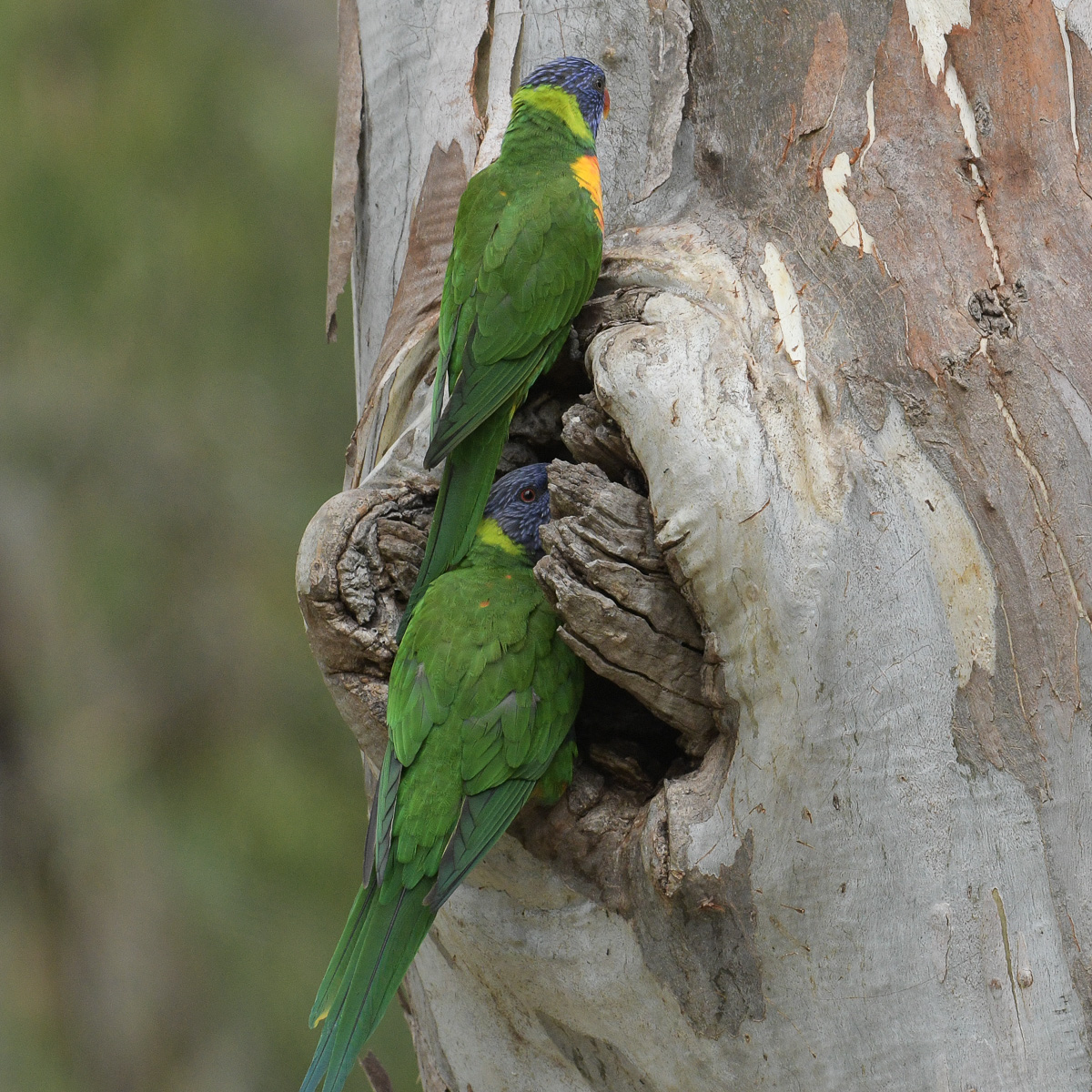
Unfortunately, this season, the Lorikeets, Mynahs and Red-rumped parrots had all claimed the best spots.

The Kingfishers will often create a new hole in a suitable tree to gain access to the open rotten area of the trees. But it’s hard work.

November ran on, and still they hadn’t settled, by mid-December we were beginning to think they might have missed the opportunity.

The pair were both still calling, and feeding, and wrestling with various hole inhabitants, and it was looking like there was little space left for the pair. Their relatives further down the river had already settled in and nesting was in progress.

The birds seemed to favour a number of the older trees, and did seem to have designs on one hole in particular, but the following day we’d find them elsewhere at work on another.

With the Pe, Pe, Pe, Pe still ringing across the forest, the curtain comes down on the first act.

Clicking on an image will open a Slide Show
Hobbys at the Carpark

This is a follow up to our Carpark Caper

Over the next few days we checked back to see how things were progressing.
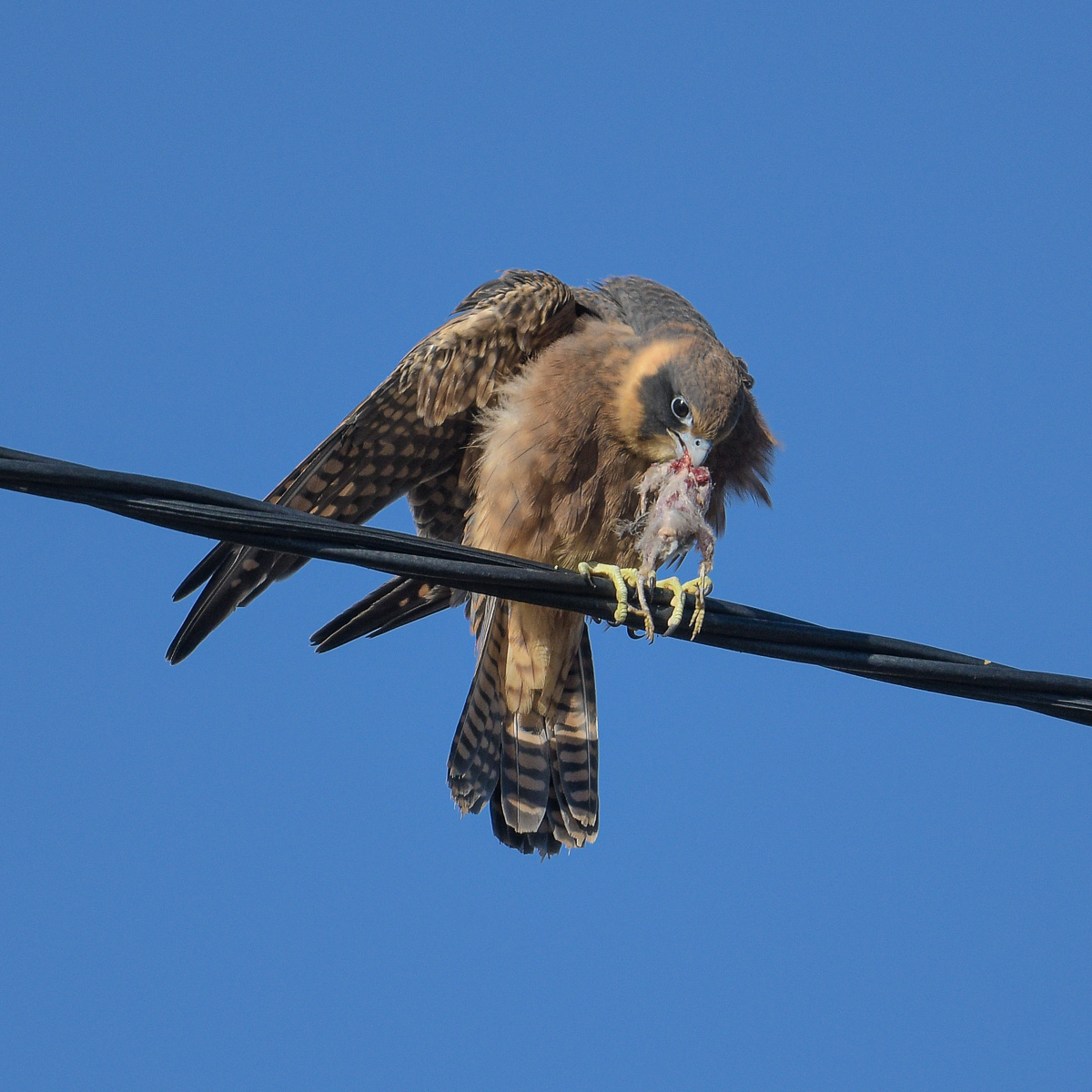
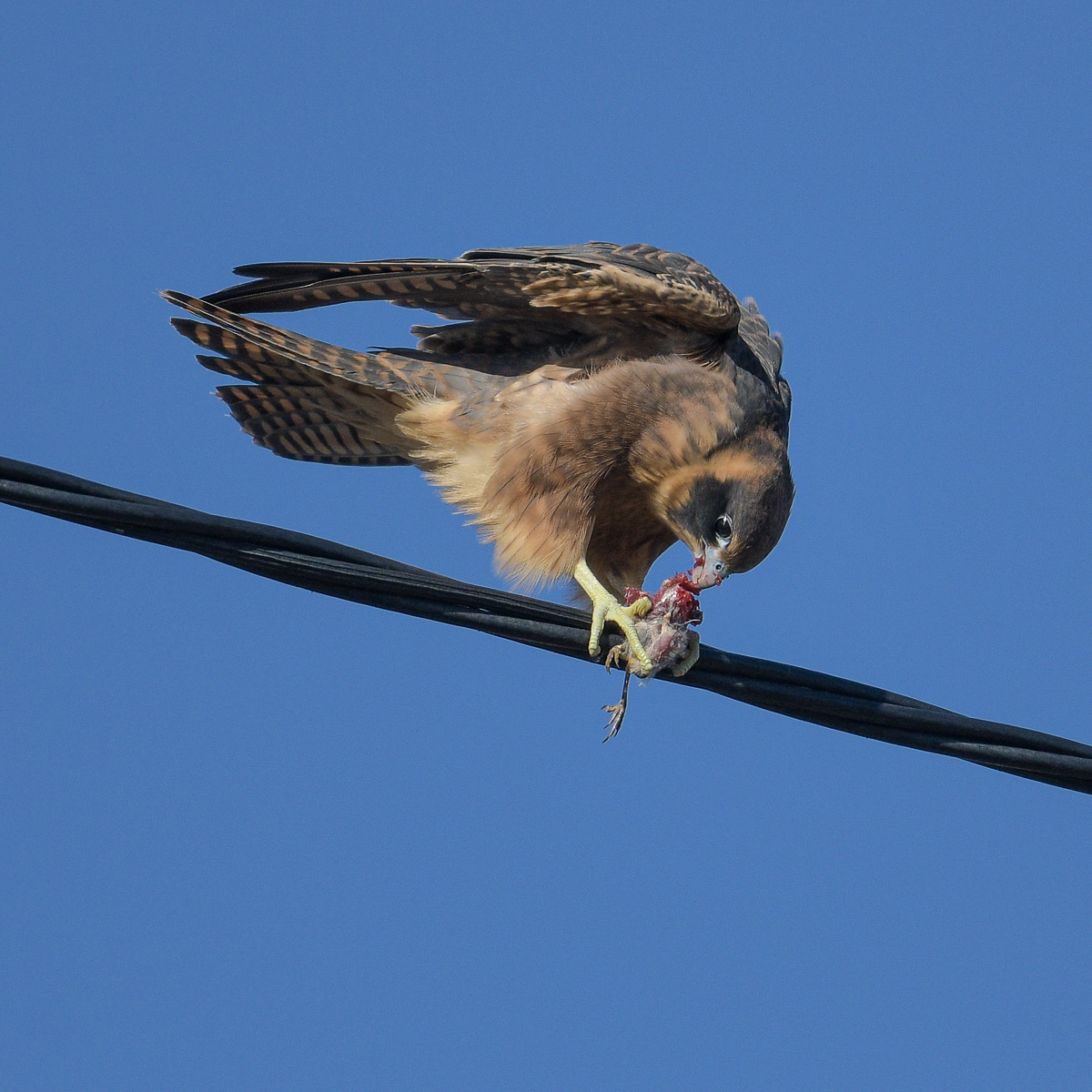
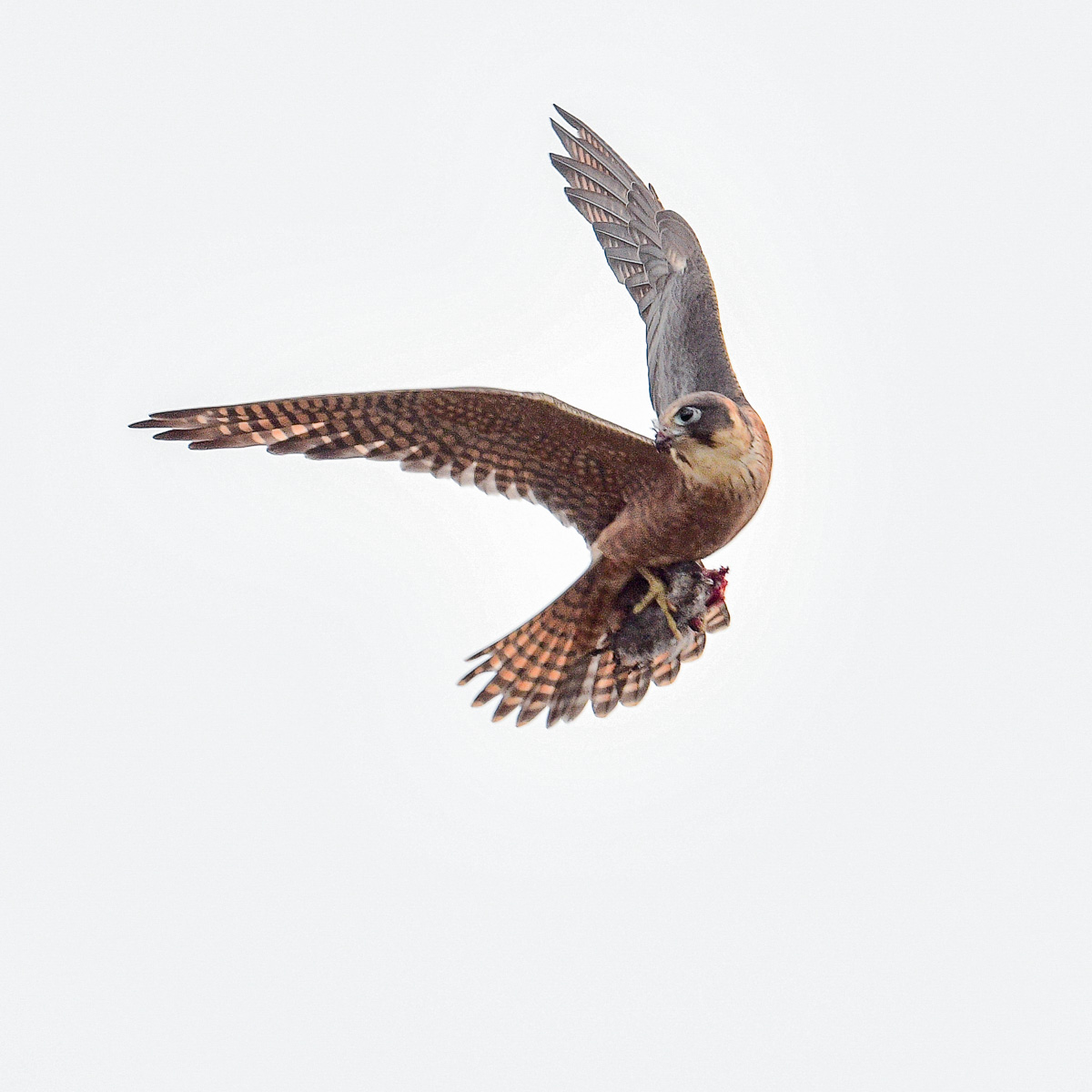
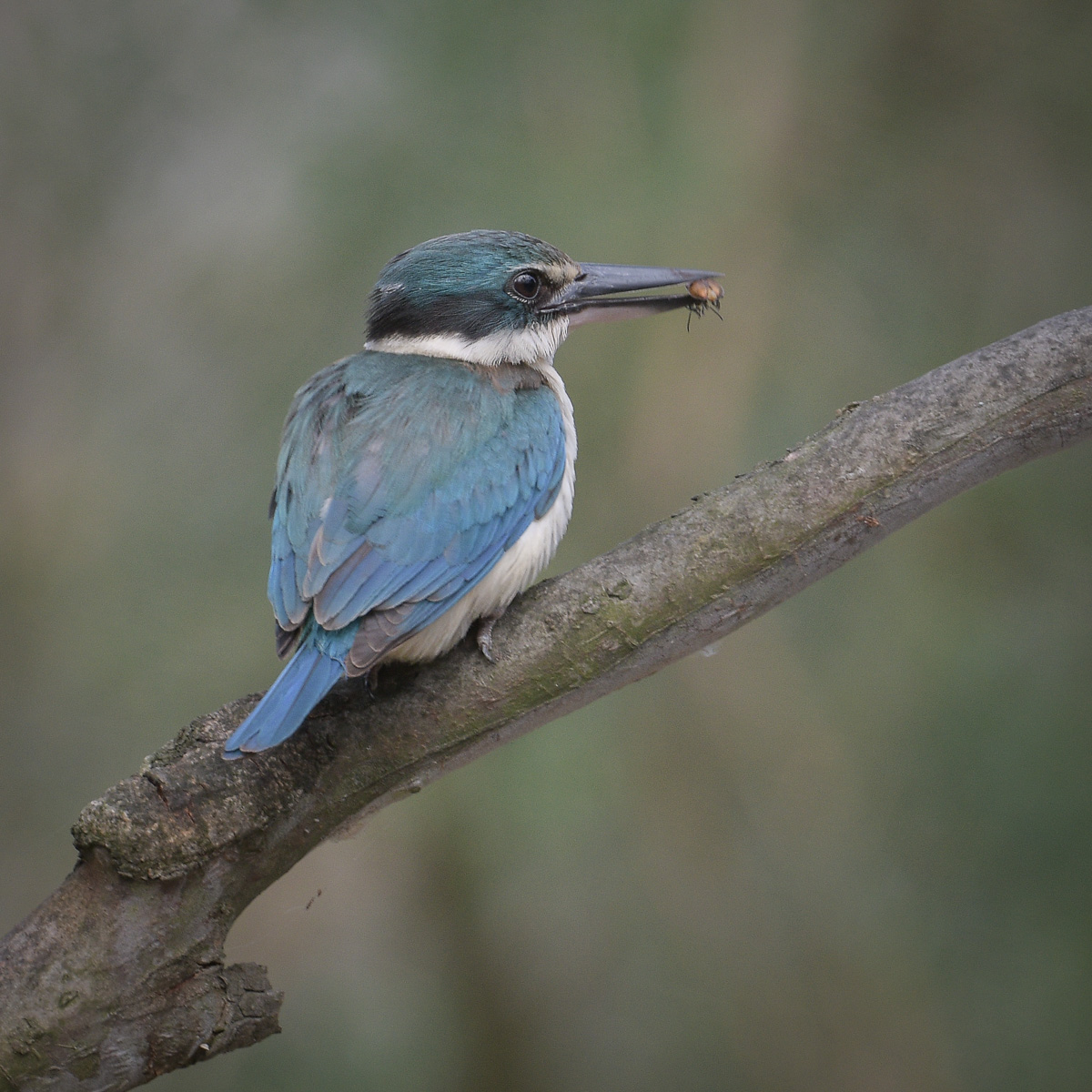
The female had flown in with a recent catch and prepared it for the young.
She then flew to another tree and made sure the young one recieved some nourishment by feeding it small pieces of the prey. She then passed it to the youngster and it took off to fly about with its prize.

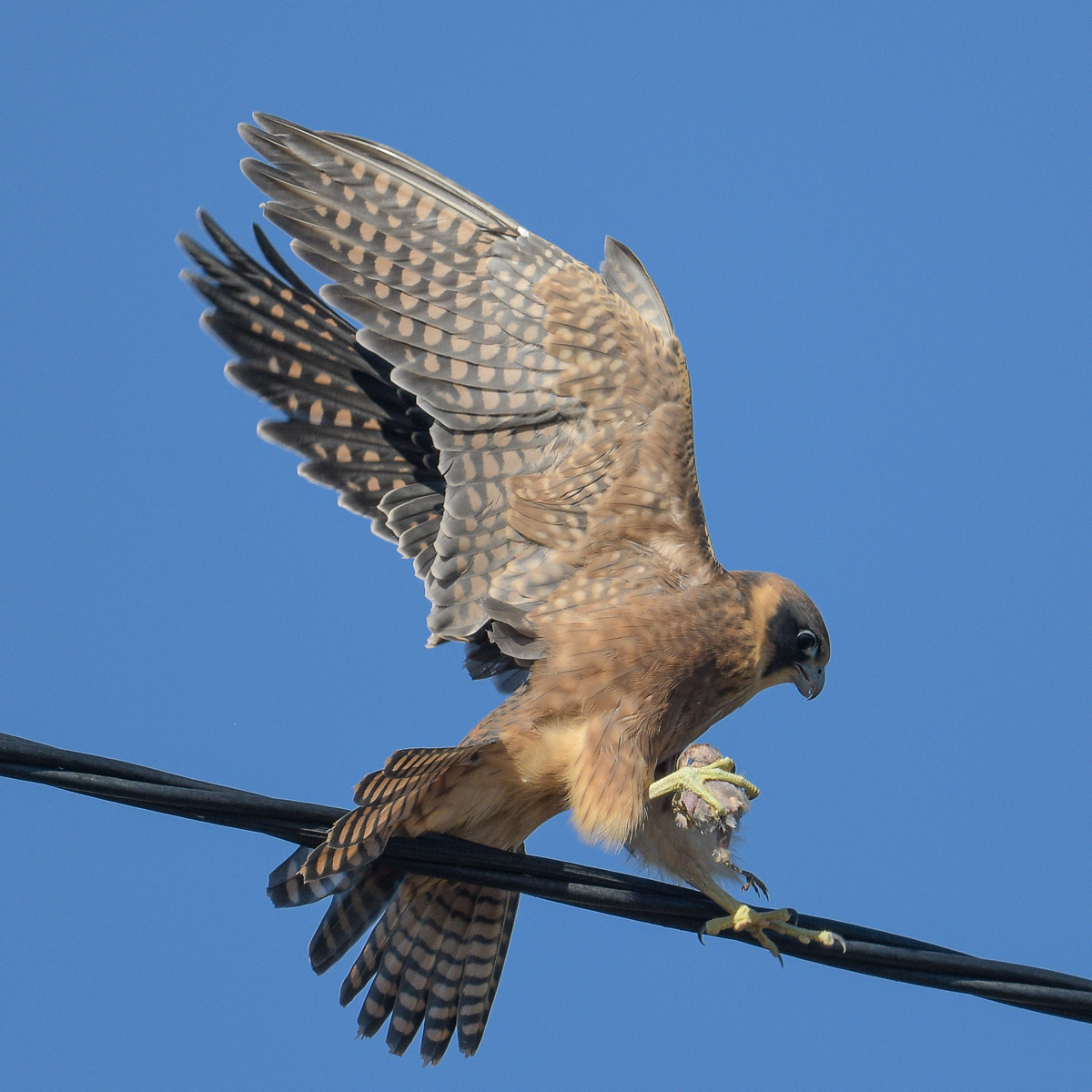
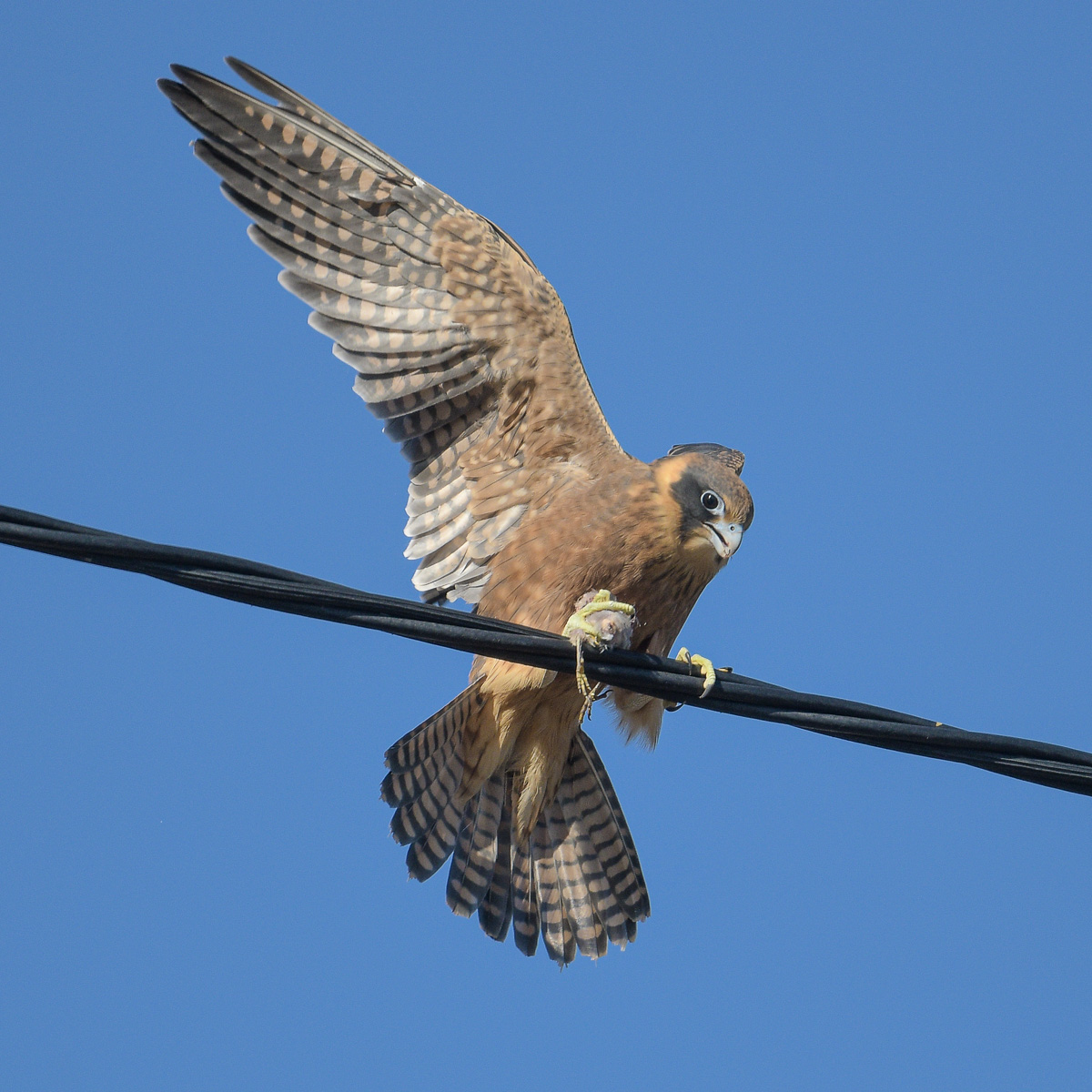
For some reason it decided, in the end, to land on one of the main powerlines that crisscross the carpark.

Landing with extra weight, on a swinging powerline proved to be a much more difficult task than the youngster anticipated and things quickly got out of hand.

But persistence paid off and after serveal slips, misses and fumbles it finally attached itself and its meal to the powerline.

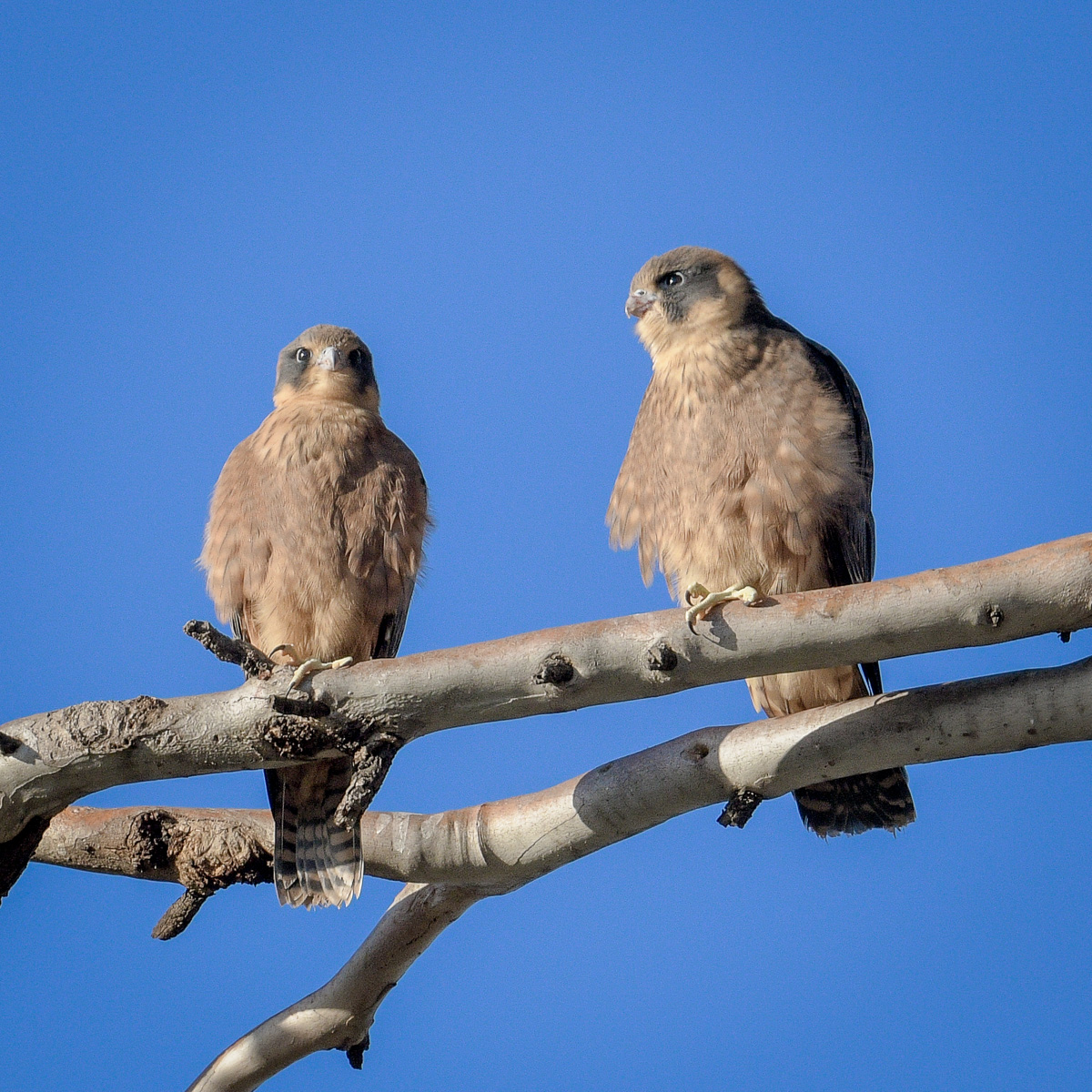
We conitinued to monitor them for a few more days, but by now they were well on the wing, and the carpark didn’t quite hold much attraction unless food was on the offing.
Like all young Hobbys they were keen to learn how to gain height and fly greater distances.
It was interestsing to watch them disappear out of ight on one side of the carpark, and then so quickly fly through to disappear on the other side.

We had a few other close encounters, but always too short, and far too fast.

Enjoy

The Great Christmas Carpark Caper 2024

Thanks to my Flickr buddy DaveSPN we’d been following a pair of Australian Hobbys that had decided to nest in a tree in the carpark at a local shopping centre. The tree chosen—and they had used it in previous years—is located at one of the entrances to the shopping centre as well as the bus-train interchange. Insert words, “constantly busy” here.

It would be fair to say, that not one in a thousand who used the area were even aware of the tree, let alone its inhabitants. Nesting Hobbys can be particularly noisy at feeding times and also the other birds cry out warnings when one or the other approaches. But I never saw anyone look up to take notice.
The challenge of course is to stand in the middle of a carpark with shoppers, buses, shopping carts and pedestrians constantly passsing by and to remain inconspicuous—Euphemism for “Impossible”.

The young fledged a couple of days before the Christmas break, and we devised a cunning scheme to make the most of the closed shops on the 25th of December. A check of the weather maps indicated it would be a clear morning, and the site of the tree meant early morning sunshine would be classic.

Game in play. We breakfasted really early, still dark, loaded up the cameras, and headed out, still dark, with just a hint of light starting to fill the eastern sky as we drove along. Looked good.
Next to no traffic on the road, and we quickly arrived at the carpark with the first rays of light coming over the horizon. Looked good.

It’s hard to image a carpark that less than 12 hours previously was full with frantic shoppers but now it was as they say, empty. Except, for a couple of vehicles, which I did not go to inspect.
Not my circus. Not my monkeys.

The young birds were out, and after some preening, playing, and investigating everything that moved, Mum arrived with some food and some good action shots were easy.
A lass in a car was leaving the carpark, and shouted “Merry Xmas- or something,” as she left, I waved.

And a guy who wanted to know, of course, what we were doing. He should ask me, wandering about on Christmas morning!!! But I declined to answer the usual, “Photographing Striated Fieldwrens”, realising that wouldn’t help, nor would “Australian Hobbys, in that tree”, so I settled for some general ramble, which in the end he declared, “so, you don’t to talk to me.’ and stormed off. I thought the young lass’s response was good so offered that to him as he left.

The Hobbys of course were completely unaware of all this and just kept begging for food, or trying out their flying, and landing skills.
No coffee shops opened, so we headed for home.
So pleased with the morning, that we decided to join in the Boxing Days sales caper, and went back the following morning for a few more hours. This time we were dodging traffic, but, the birds seemed oblivous.

Here’s a selection.
Clicking on a thumbnail should give you a full size image in a slide show.

Enjoy

Over-Ambitious?

We all love Rainbow Lorikeets. Big, Bold, Colourful. A circus in a small feathered package.
Except, when there is too, too many of them, and they become a pest.


We have a small area adjacent to a golf course and sandwiched between the course and the river. I suspect some of the undulating ground is from trailings dumped when they scraped the course. The river is not always contained in its banks, and in flood will fill up many of the lower laying areas of the forest.
There are quite a few resident River Red Gums, some many hundreds of years old, and a lot more younger trees that could have been planted after the golfcourse construction was complete. The younger trees have created quite a canopy as they reach to get their share of sunlight.

So there are quite a number of suitable nesting trees and the Rainbow Lorikeets have commandered the best and the second and third best sites.
Smaller parrots, the Purple-crowned and Red-rumps have had to find other nest opportunites. And also the visiting Sacred Kingfishers, but more of that on the next post.

EE and I were out looking, and listening for Sacred Kingfishers. It was getting late in the season, normally they would have a spot picked by late November and be nesting in early December. But time was running out as all the suitable holes and places where they could open up a new hole were taken.
Trying to find a nesting pair of Kingfishers in a dense forest is really the job for Sir Pecivale of grail fame, but then… we have EE.

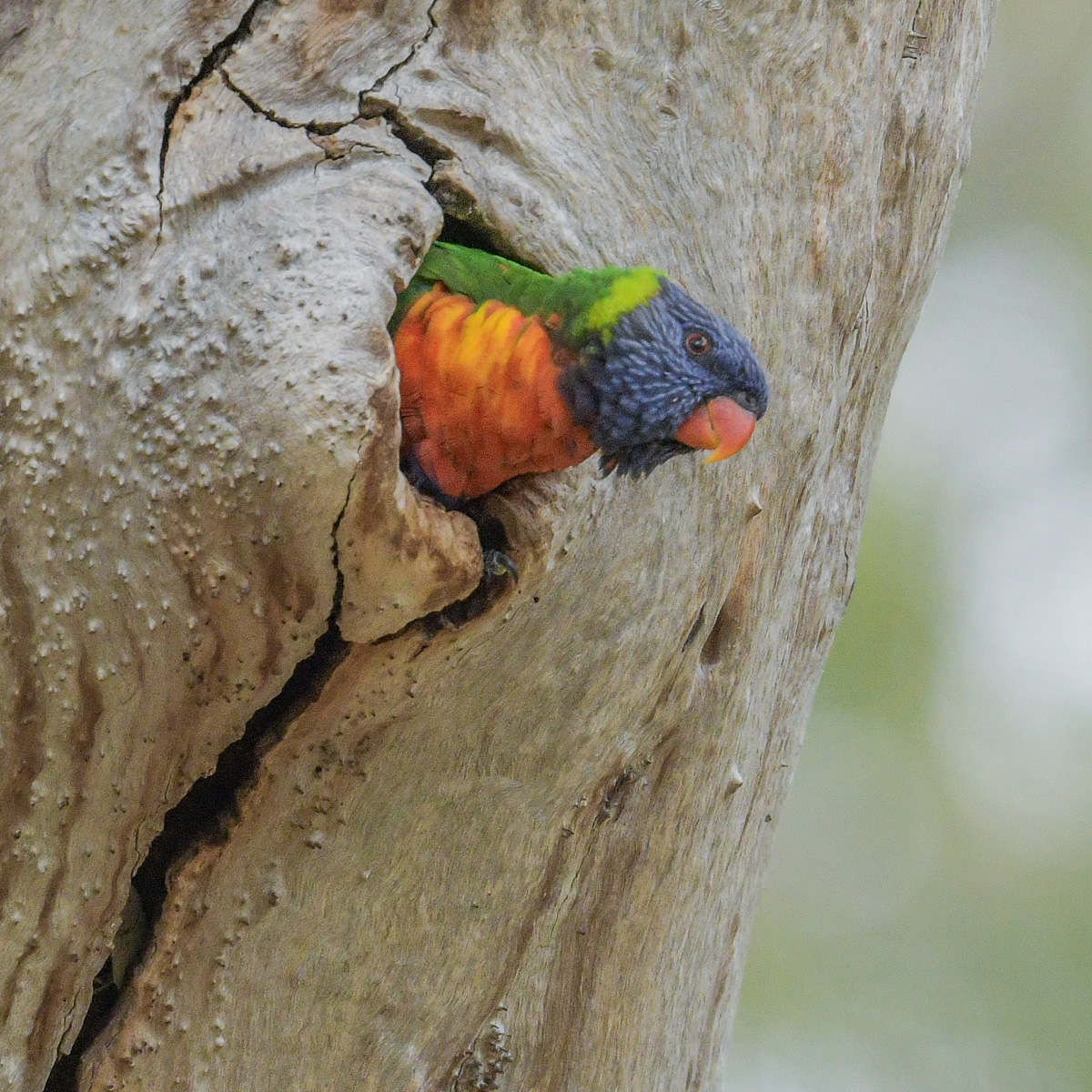
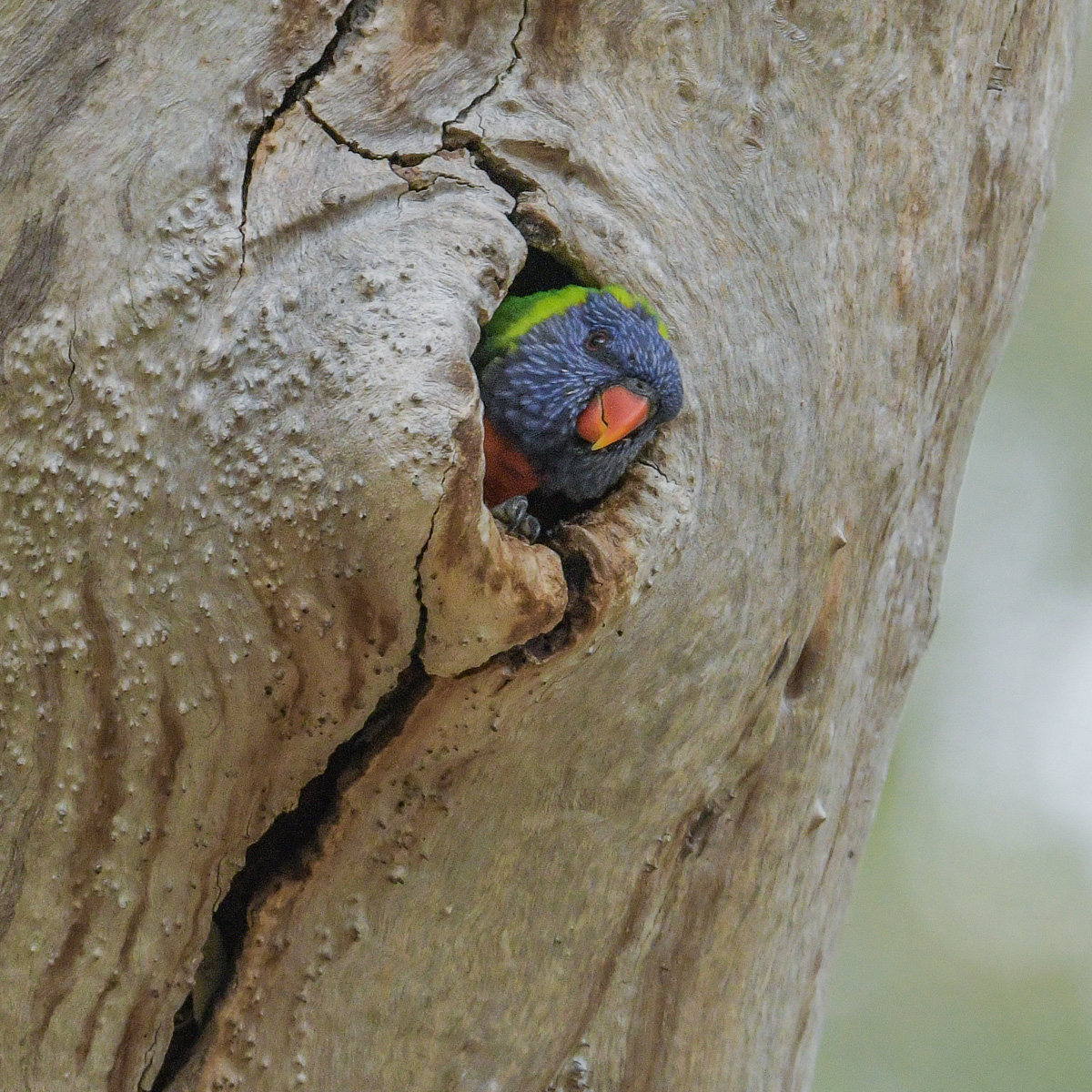
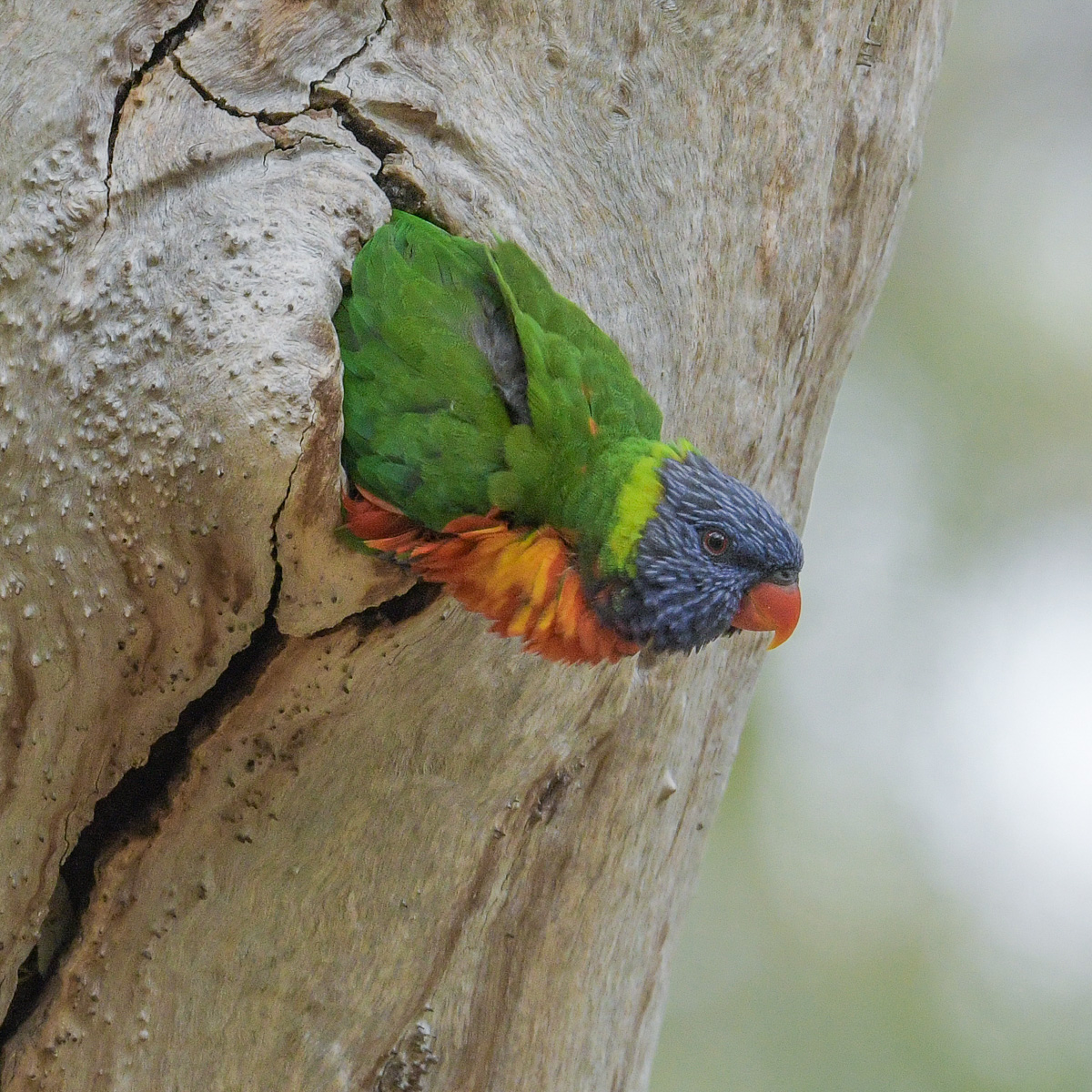
We were passing by a hole that was used in a previous year by the Kingfishers and not surprisingly, a Rainbow head popped out.
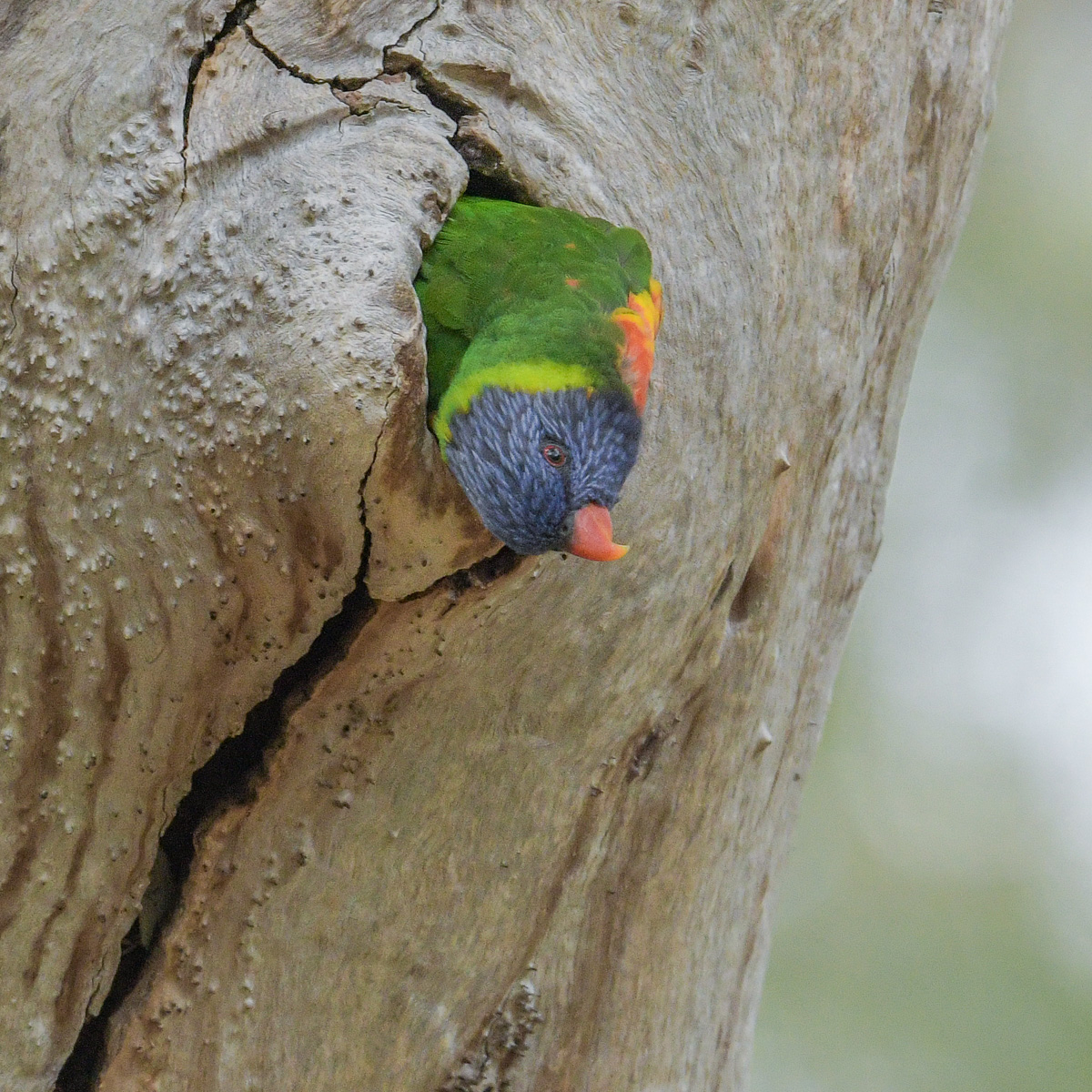
I now, rarely bother to even aim the camera at them, so went on a few steps. And again it swung its head out, and pulled it back, and repeated the action. Given they are so cheeky, I didn’t take much more notice. Like voting, I don’t do it, because it only encourages them.
Two or three more steps, and the bird repeated the process again.
And I realised.

It was having difficulty getting out of the tiny hole. It could get its wings out, but not its tummy and feet, or its feet, but the wing width wouldn’t fit.

The Kingfishers tend to excavate a hole with a small entrance compartment, and then turn the hole, in this case, to the right. Then, I’m guessing, build the nesting chamber behind the little plug near the front. So to get in they must enter, and then turn sharp right. Easy if you are as small as a Kingfisher… not so easy if… you’re a big fat Lorikeet.

I’m not sure if this one was entirely stuck, or just couldn’t get a purchase with its beak to leverage the wider bits out of the tiny hole. So it stuck its head out, and as much of its body as possible, and swung about trying to get a beak grip.

After a couple of minutes, I do have to add, I said, “Well it’s your own silly fault” and decided to move on. Then with a big effort and some extra leverage it managed to slip out.
When I returned later past the tree the pair where inspecting another, larger, and hopefully more suitable accomadation.
Enjoy

Click on an image to got to larger size slideshow.