On the blog here, sometime back I added a link to “Natural Newstead” a blog run by a great birdo, and naturalist, Geoff Park.
He reports the doings of the creatures he finds in the local area, and because it is such a diverse habitat his posts are always interesting and informative. Check it out.
Given that its about an hour and half from home, we’ve been trying to find a day to go up for a look. He located a nesting Kestrel sometime back, so really what more excuse did I need?
However some family events, the heat and other non birding things have narrowed down the window of opportunity so to speak.
With another family gig on the way at the end of this week it was now. Or much to late for the Kestrels.
Braving the heat is one thing, getting up really early is quite another, so we arrived up there about nine-ish.
Met the guys, at the Loddon River and spent some time with a Sacred Kingfisher at nest. (see their blog)
We made the run out to the Kestrels using a map and a photo of a tree. Now in the end we didn’t really need much help at all, we found two of the young sitting in the shade on the road as we drove down. Having good road sense, (thanks Mum), they quickly took to the wing. We stopped and walked back to sit in the grass and see what was happening. To begin with they very active in the early morning but as time went on it grew hotter and they grew tired, and so in the end Mum hunted, they sat in the trees in the shade. Clever Kestrels.
Lovely to see them and to hear their raucous calls for food.
For lunch we’d (I’d) planned for a pie at the local Newstead Bakery, but Geoff suggested instead a drive to Guildford for great pies.
And. He was right. Now at Guildford there are not to many shops or stores, or houses so it didn’t take us long to figure out the General Store was the action attraction.
Lentil and Vegetable and Red-beef Curry. We took one of each and shared halves, No telling how we’d have handled the division of food had Mr An Onymous been with us. Now its true that I’ve been known to drive a fair distance for a pie on occasions. See some of the other rambles on this site. But I have to say these were well worth the drive.
If you are in the area and pies are a must have staple food (and I cannot imagine why they wouldn’t be!!!!) Then Guildford does them elegantly. I’d even pick up a couple to take home and pop in the fridge for another day.
Now all that I’ve read on the Newstead Blog is just how it is. Plenty of birds, plenty of places to look and great people to help.
That may be part of what birding does for us.
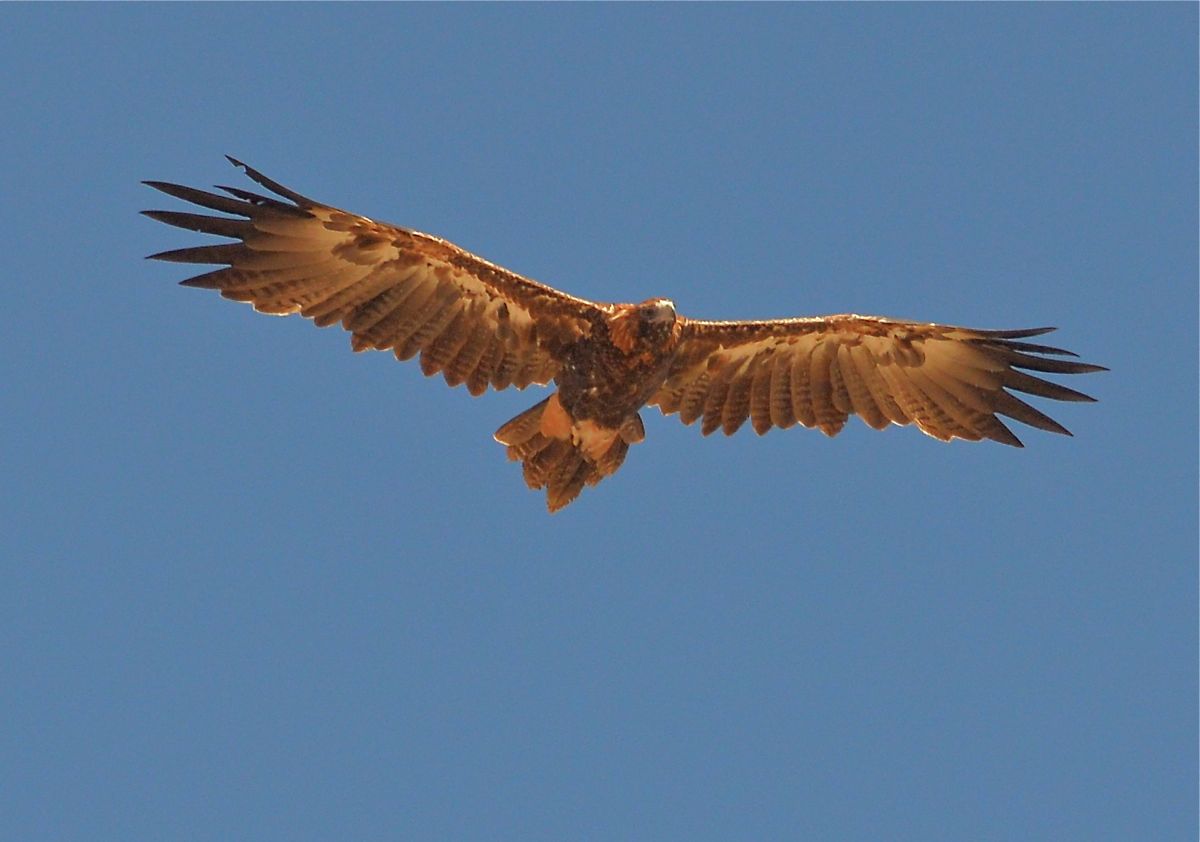
Juvenile Nankeen Kestrel, sheltering from the wind. Waiting for Mum to supply a meal.Said Mum with said food.Waiting in the shade, not flying about in the hot sunshine. Clever birdWedge-tailed Eagle. Low down, in a moderate tail wind. Cruising at about walking speed.
Ever since the disaster that befell poor Jill’s last nesting attempt, it has been hard for us to find either of the pair. This lovely pair of birds that had allowed us into their little lives and given us the opportunity to share their nesting, has become almost non existent. Inspite of sitting in the territory and checking all the likely spots, they have pretty much eluded us. We were beginning to think they were moving on, or had opted for not trying for another hatching this season.
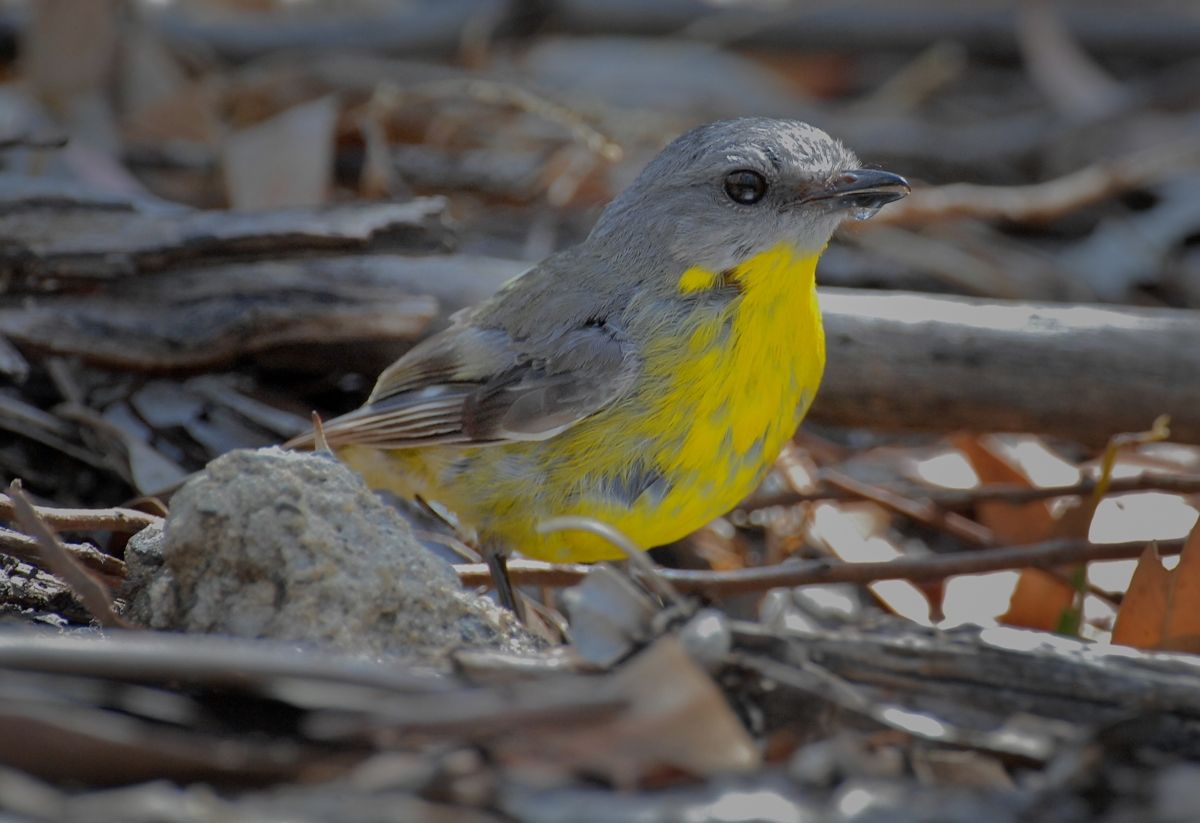
So to our surprise when we turned up with a bit of water to fill their water feature, that they both quickly popped by, and took advantage of the water. Both to drink and bathe.
More importantly she constantly called to him, and he responded with food. So it looks like she is readying herself for another attempt. No nest at this stage, but maybe in the next week or so if the weather doesn’t go too hot.
Dorothy got accepted into the family, by a fly past at about head height and just a hand’s breadth from her ear. Jack zoomed across the paddock and headed straight for her. It was something he planned as he didn’t deviate one bit. Even a Yellow Robin aiming for your head is a bit daunting.
Down the road a bit, a second pair are still in residence, and after abandoning her previous attempt, she is back at work collecting cobweb, so another nest might well be in the making.
First time we’d been met on the track for many a long week.”G,day”.
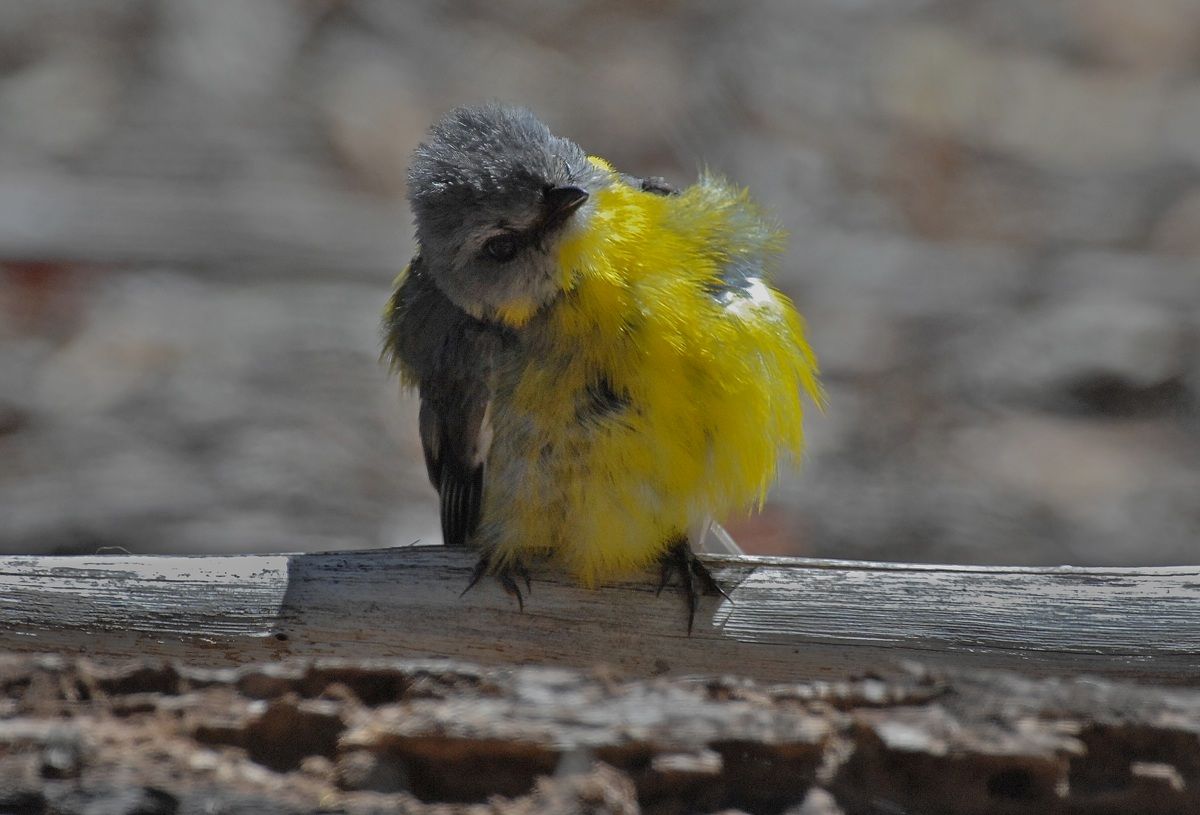
A nice tub on a hot day does wonders to the spirits.
MInd the feathers do take awhile to dry out. But perhaps that’s part of the enjoyment
Female begging for food. The wing waggles seem to get his attention.
After a nice grub, a wing stretch is always relieving.
After so much work, Jack takes a nap. Given he flew to about 3 metres from the camera position, an then just settled down, I’m pretty happy he’s accepted us.
Big stretch. TIme to get up and get going another mouth to feed. Jack preparing for the next shift.
It had been awhile since we’d made a pilgramige to the WTP, and Mr An Onymous had wanted an opportunity to try out the new lens. All 300mm of it.
So it seemed in view of the really hot days, an early morning and then somewhere nice for lunch and a coffee, preferably inside and with air-conditioning made a lot of sense.
We went down along the area east across Little River from the Bird Hide. The track takes a bit of a run along the narrow edge between land and sea, and usually has a 50metre section that is, well, rough. Its just a collection of rocks that the waves pound remorselessly. As such, ok with the Landcruiser and the high clearance, but nigh on impossible in the little car. However on this trip we discovered that the water rates had been making good use of themselves and the kind people at WTP had managed to get a surface over the short section and it is among the best parts of the roads down there. Excellent. Thanks to all as it save me heaps of time not having to double back to get around the former rough area.
We parked and waited. No Sea-eagles, but a pretty obliging Golden-headed Cisticola with its nesting activities kept us busy for quite awhile. We even parked on the new tarmac, and photographed waders as they worked among the rocks and sand. Nice one.
Down near the area called The Borrow Pits, we came across a couple of recently flown Black-shouldered Kites. Guess they’ve only been out a week or so, still have the beautiful cinnamon and ginger chest and head feathers. Mum and Dad are still providing food and it was interesting to watch a couple of food passes.
And on the way back some Whiskered Terns entertained us with their antics as they swept along the bunds catching the tiniest of insects.
And the big lens proved its worth with the shot of the day an Australian Hobby in brake, dive and turn mode with all the feathers out, and the tail spread at different angles as it made an amazing change of direction. My lens missed it completely. But. More power to him.
We’re off again to Goschen at the end of the month.
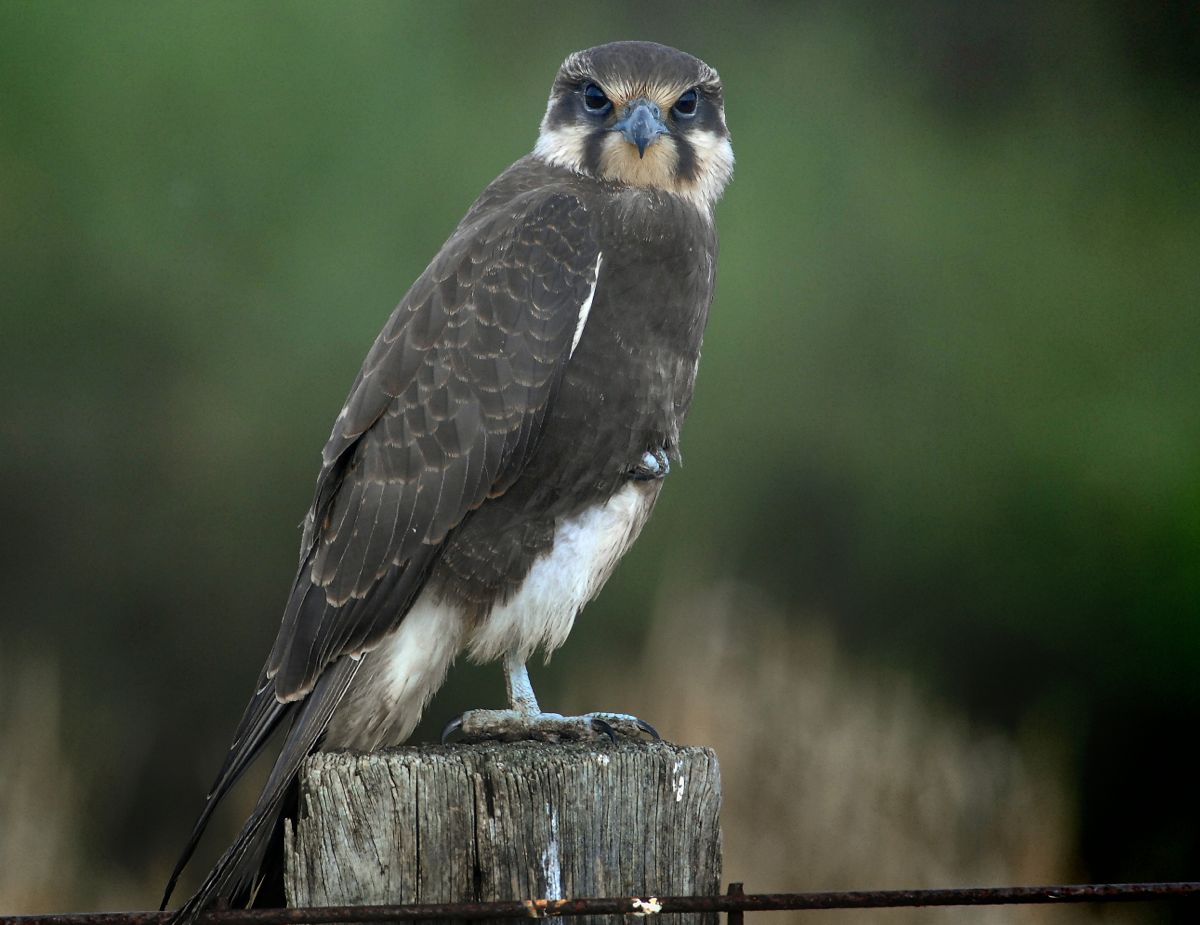
Brown Falcon at hunt in the early morning light.
Hobby at remarkable speed turn.
Golden-headed Cisticola with nesting materials
Two juvenile Black-shouldered Kites waiting for Mum to arrive with a mouse. They had just spotted her coming and began such a racket.
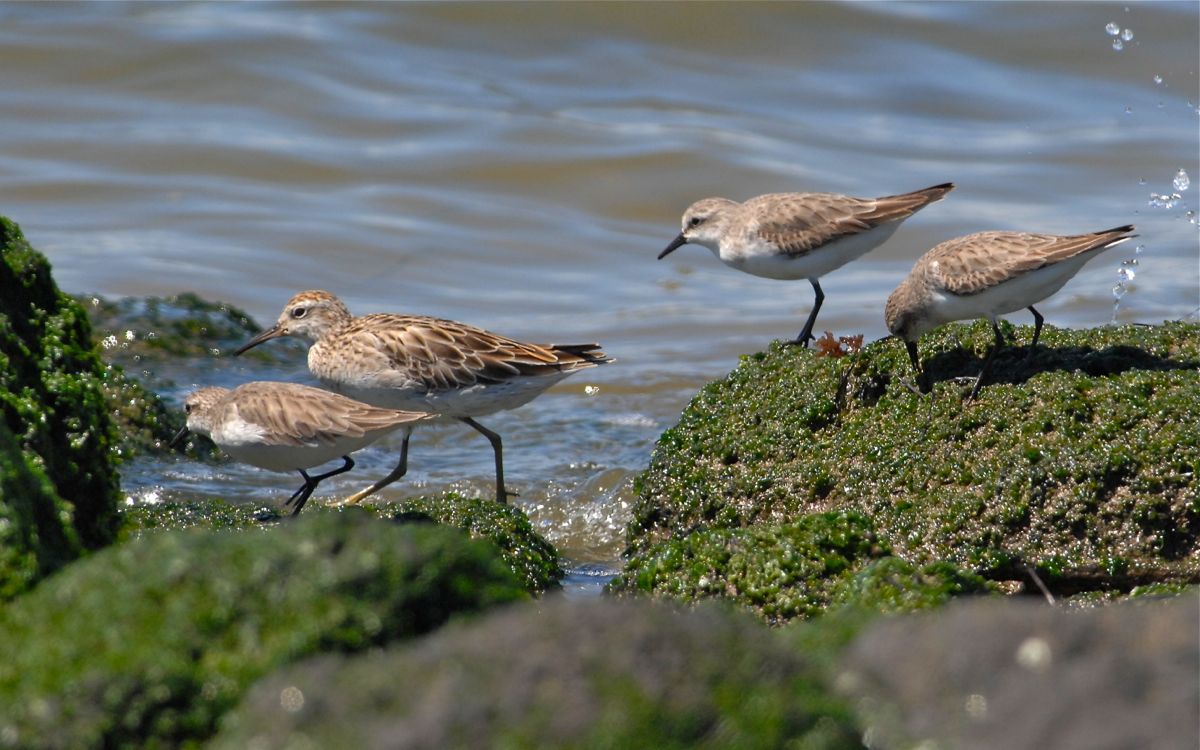
Red-necked Stint and Sharp-tailed Sandpipers at the ‘new’ water crossing at WTP
Jack and Jill continue to elude our attempts to locate them regularly. For what ever reasons they might show for a few minutes but then are gone. Do they have a new nest? Are they still in the same territory? Are they now simply out of season?
Given the extreme heat of the past few, and the coming days, we decided to provide them with a little water feature. There is no permanent water close to their territory, and although they probably get enough moisture from the little bugs they hunt, we thought a little extra help can’t be all that bad.
So we set up two small water feeders. Not deep enough to bathe, but plenty for drink and a quick splash. Because of the risk of foxes, and ‘roos and echidnas and other birds, its going to be a bit of a drama. And because we are ‘meddling’ with nature, we’ll probably get kicked out of the “Nature and nature only” club, but at least the little guys will have a bit of relief over the next few days.
The Willie Wagtails were the first to find the new addition, but I suspect the sound of ‘splashing’ is enough to alert other birds. The Superb Wrens passed by but didn’t stop.
Both Jack and Jill made visits during the early part of the morning and it already was hot. At least we now know they are still in residence.
Because of the heat, the female has her wings right away from her body.
The female pops by for a quick sip of water. The base is hidden under the stone and branch, so its still pretty much “bush”.
The male in the sunshine. Like many birds, he seems to be in somewhat of a trance in the sunshine, and he is leaning further and further over, like he’s mesmerised. They all seem to do it, so it must be good fun.
The Australian bush has once again shown its full fury, hot weather, wild winds and fire storms. Sometimes it is so easy to forget, just for a moment, the power that can be unleashed.
We wander about in the bush, little realising that in a short time fun can be turned to disaster.
Bravo to the all the firey’s chopper and plane pilots and organisers both on the line and in support roles who have placed their lives and risked so much to try to save people’s homes and livelyhoods from the devastation. Thank you to all those who have put themselves aside and sought to help with evacuation, support and a shoulder to lean on.
Meanwhile out in our little bit of the bush, the birds are hard at work regardless of the heat.
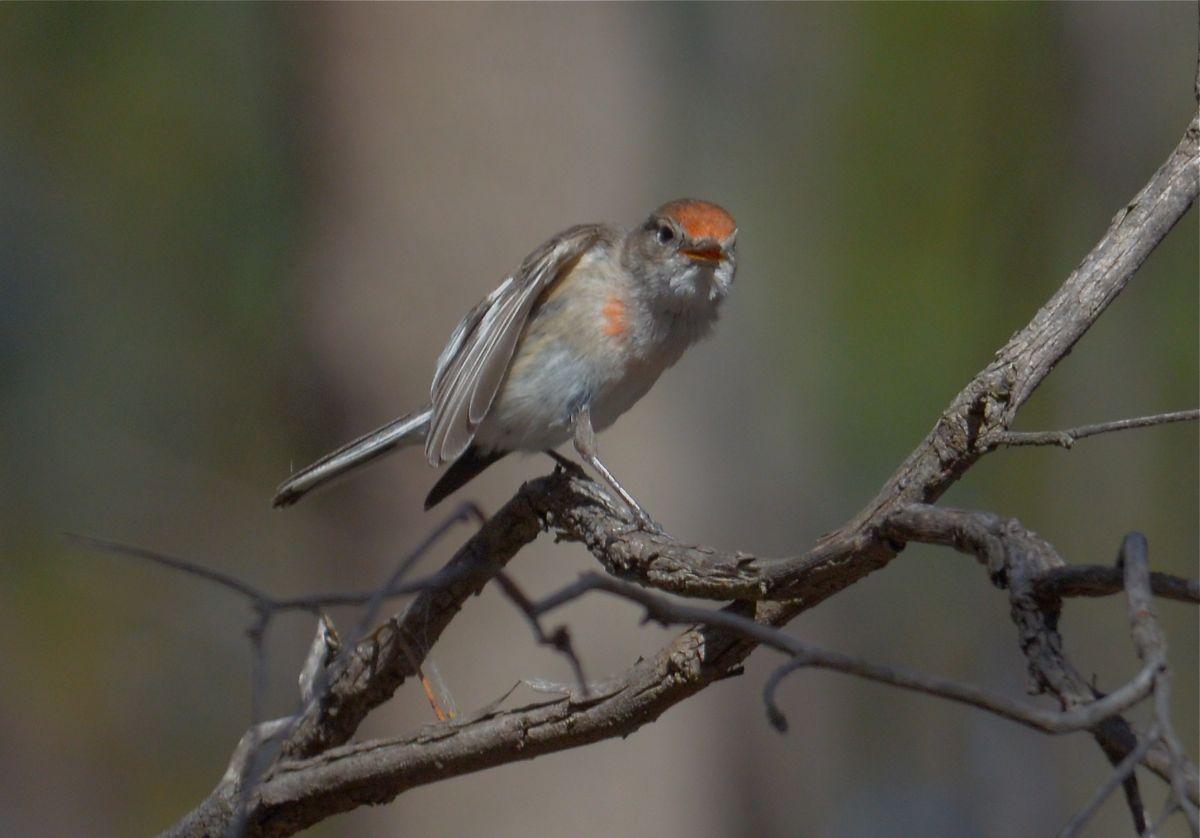
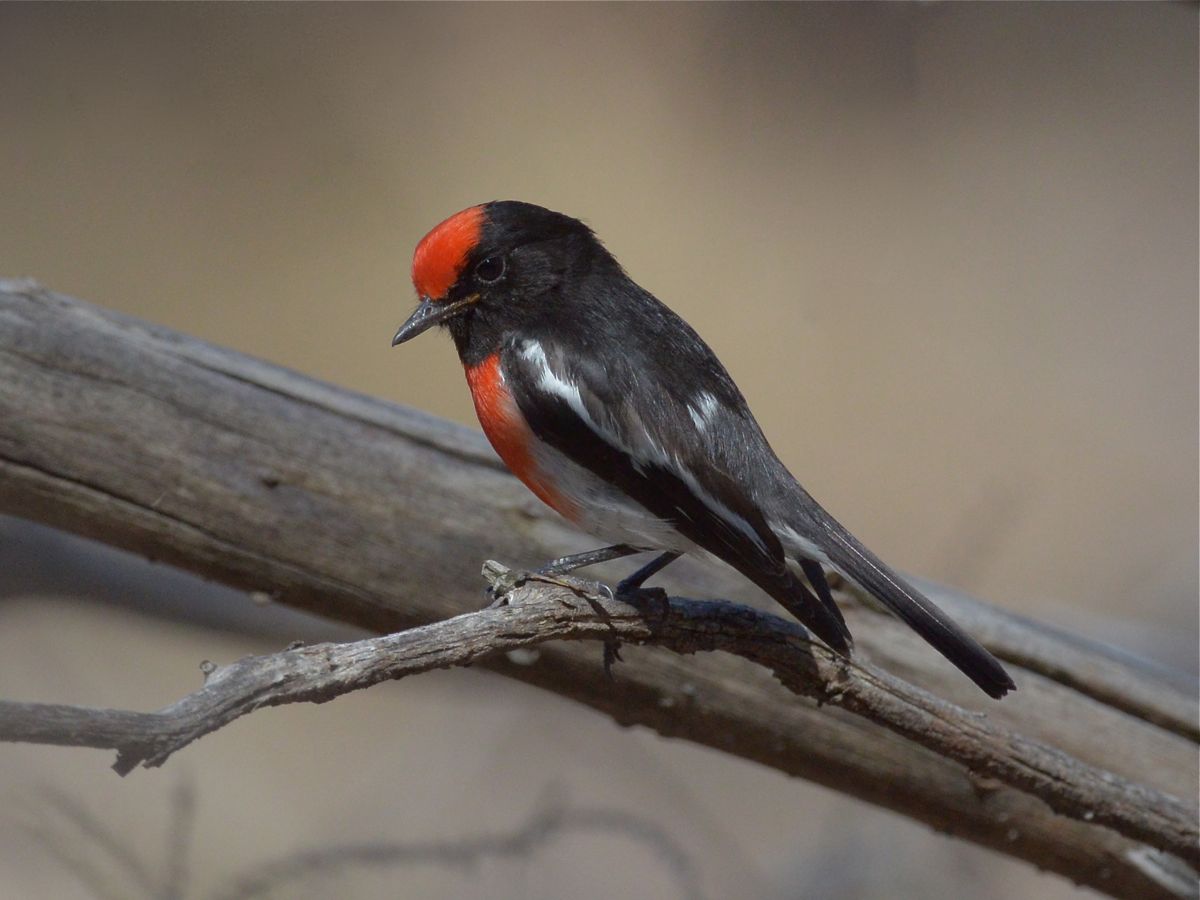
Two delightful little red-caps are now hunting on their own, they are travelling companions at the moment. Each a little prefect reproduction of Mum’s hard work.
A tiny reproduction of Mum. A young Red-capped Robin now looking after itself.I’ve got my own housekeeping to do now.Two Juvenile Red-capped Robins now fending for themselves.
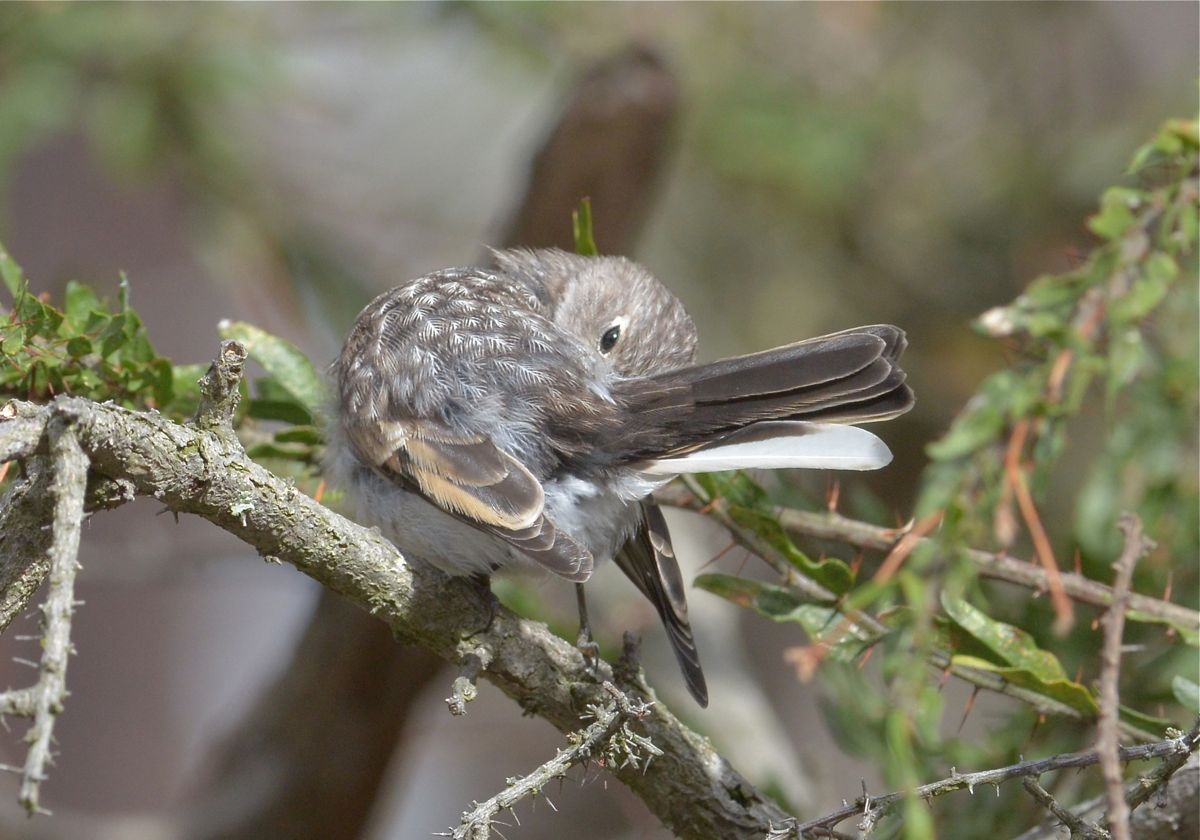
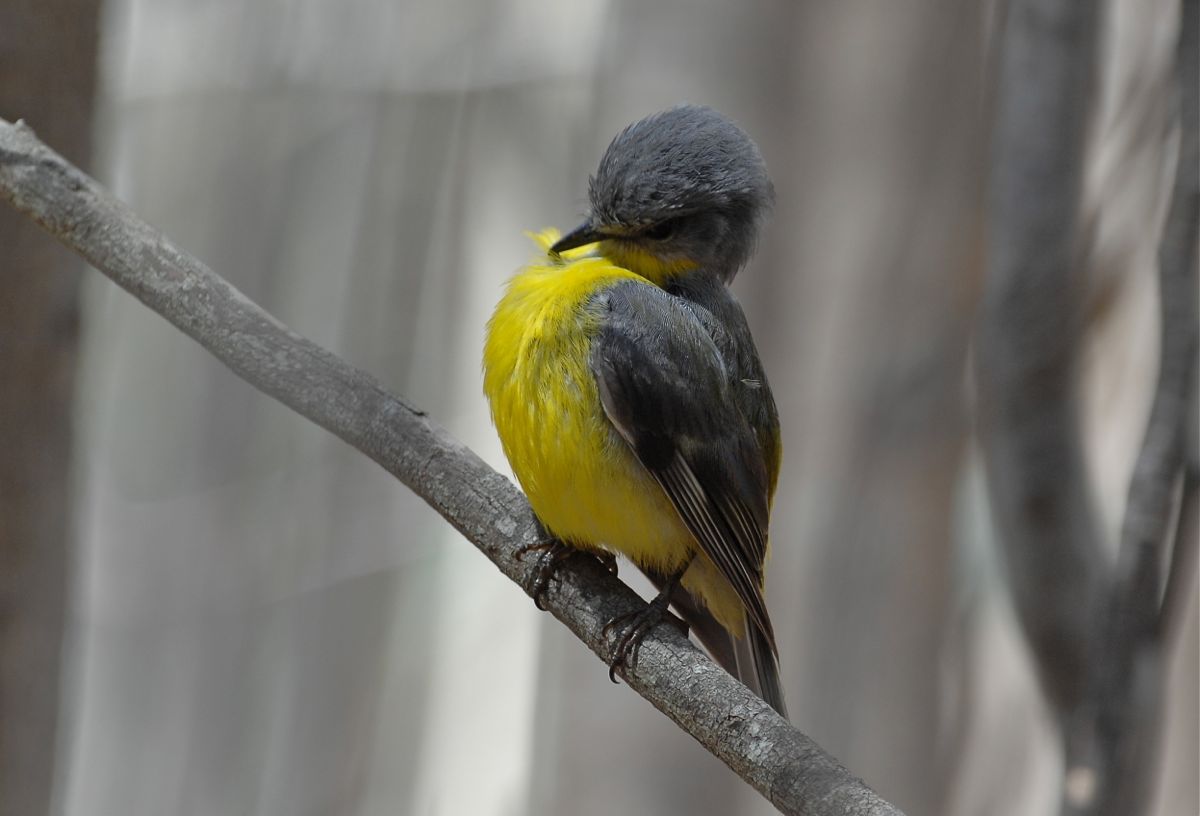
We relocated to where the Eastern Yellow Robins had been nesting to find both the male and the female out and about, hunting and much calling. The scratchy harsh call is one I’ve heard before when they’ve been working with young out of the nest, so was surprised to hear it from these birds as they had lost the nest about two weeks back. We are now, perhaps a bit overly, hopeful that somehow the young had hatched and she managed to rear them out of the nest. She has made no attempt to build a new nest, and has been very inconspicuous and he has been very furtive since then. So maybe, just maybe, out in the leaf litter, she has managed to bring them on. Be nice to think, but I suppose the pragmatist in me says, “no hope”.
If it wasn’t so hot I’d take a cuppa out and have a bit of a sit.
Edit 6 Feb 2013. As it has turned out. She did. At least one, (we’ve called it Nevis see posts above.) To date, it looks like only one survived, but every so often I see three flying, and can’t help but conclude she may have managed to get two. If I do see them together it will be a red letter day.
Female Eastern Yellow Robin being very vocal. Perhaps she does have a survivor from her nest disaster hidden in the undergrowth.
What a miserable hot day. Now I know why I like skiing.
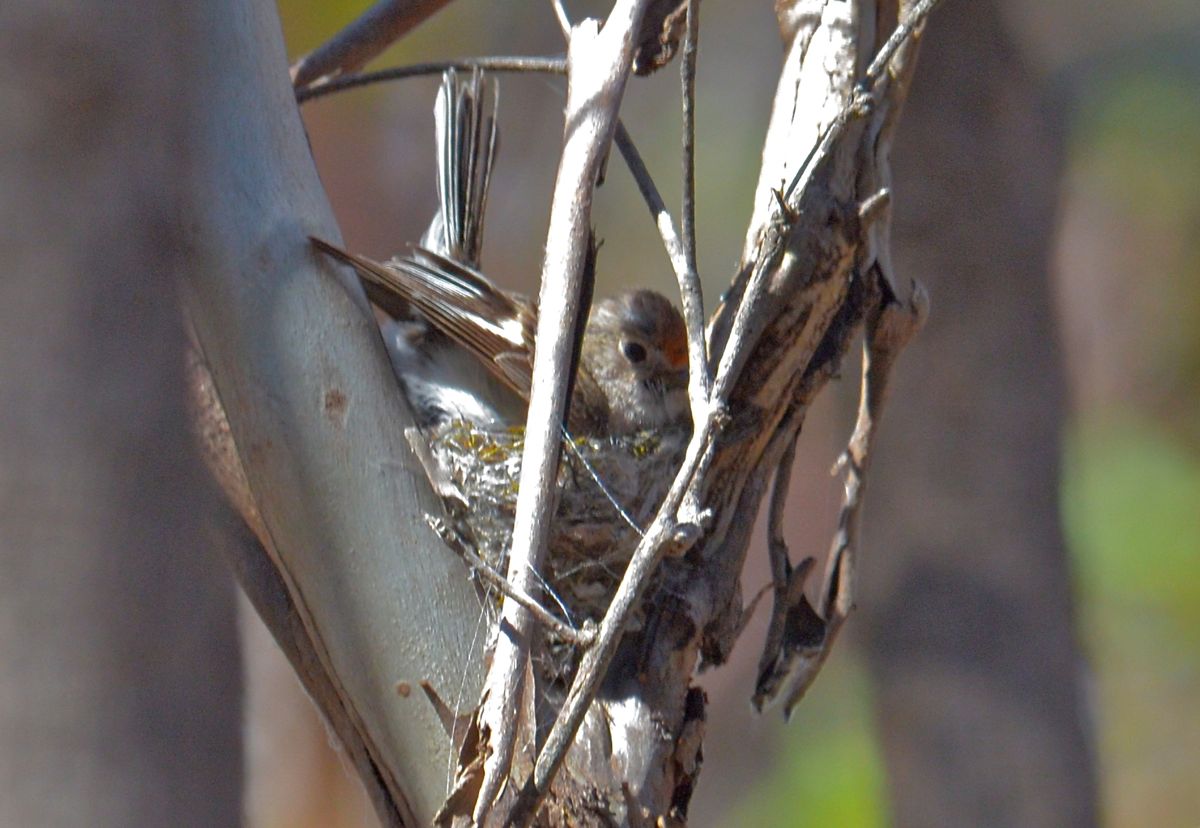
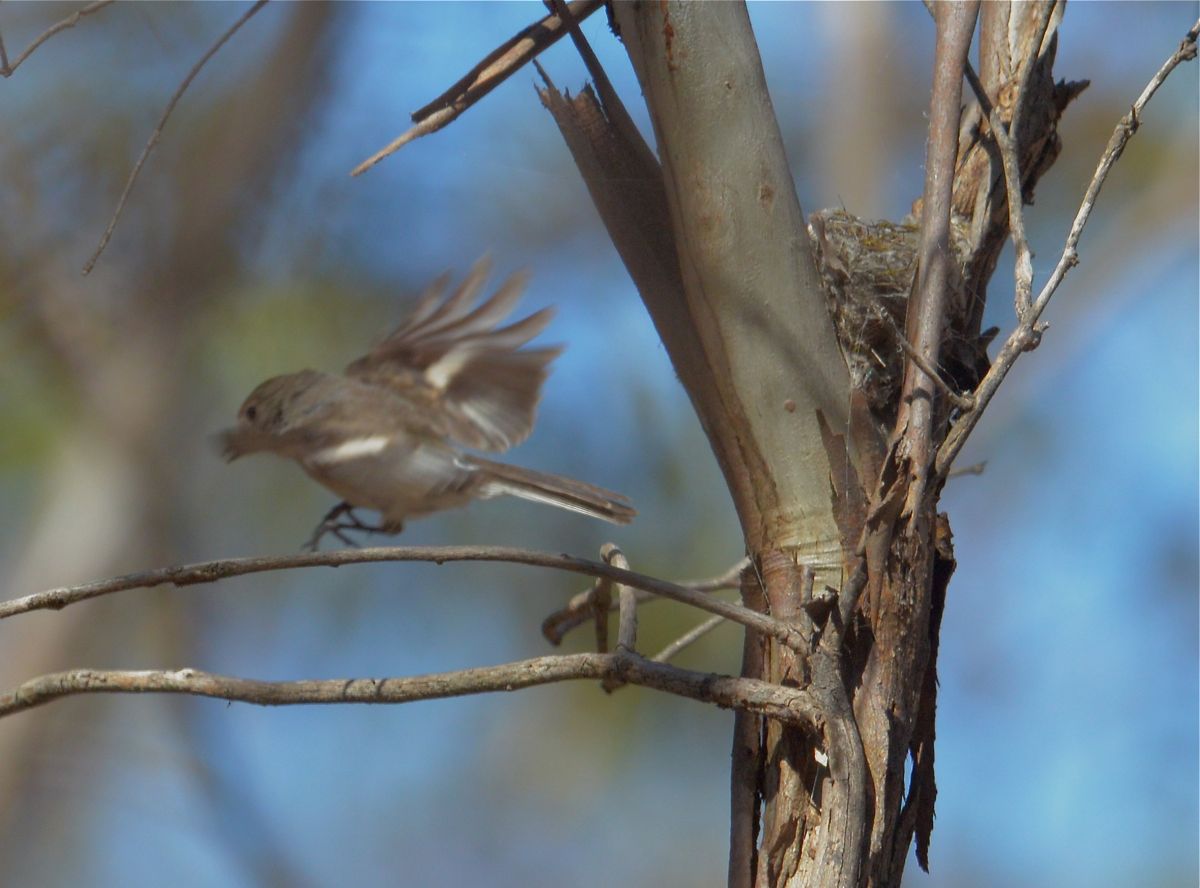
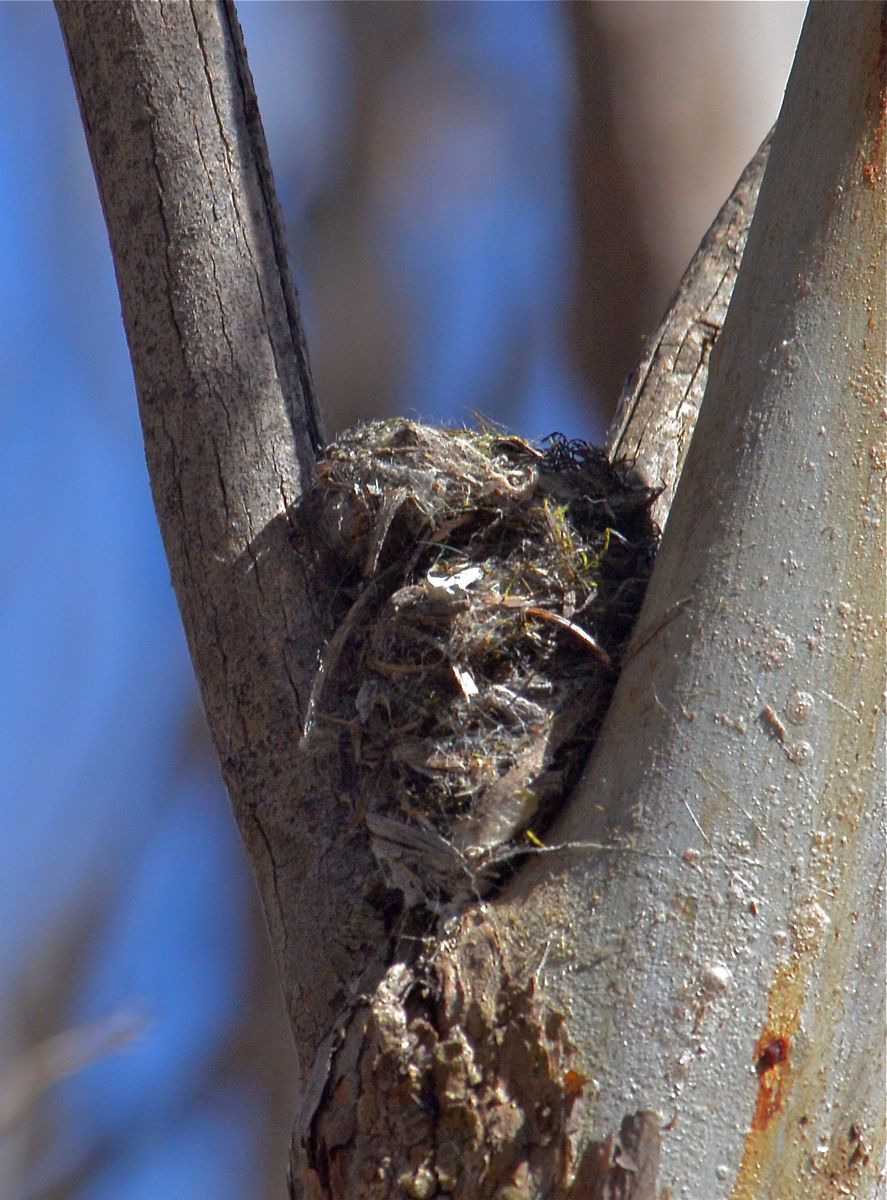
We dropped by Henny and Penny today, and confirmed that she was no longer sitting on her clutch. This would have been about day 14, so they were just about, or had just hatched. But we’d noticed she hadn’t been on the nest at all the previous day, so it was likely that something had gone amiss. Pity ’cause she is quite the dedicated little robin producer.
I like to know where the nests are so I can stay away. Sounds weird, but the last thing I want to do is stumble over the area where she is ‘secretly’ at work, as she’s likely to abandon the enterprise. So I waited, and eventually got a glimpse of her working at picking up spiderweb, and then flying across the clearing to a new tree and setting up a new house for another attempt. Can’t knock her enthusiasm.
Hopefully this one will be successful.
Penny preening between web collections. Her little orange chest feather is well shown.Adding the next level to the new nest.Now to buy some nice curtains, and pick up the widescreen tvThe abandoned nest. It is about large enough to fit a golfball and that’s would overfill it. Such a tiny nest.
That slow moving high stayed with us again today, and it seemed that an golden light evening would again be gifted to us.
We decided to go to the red-cap nurseries and see how things were progressing.
Lovely golden light was spilling through the trees, and we soon located a couple of males and their young.
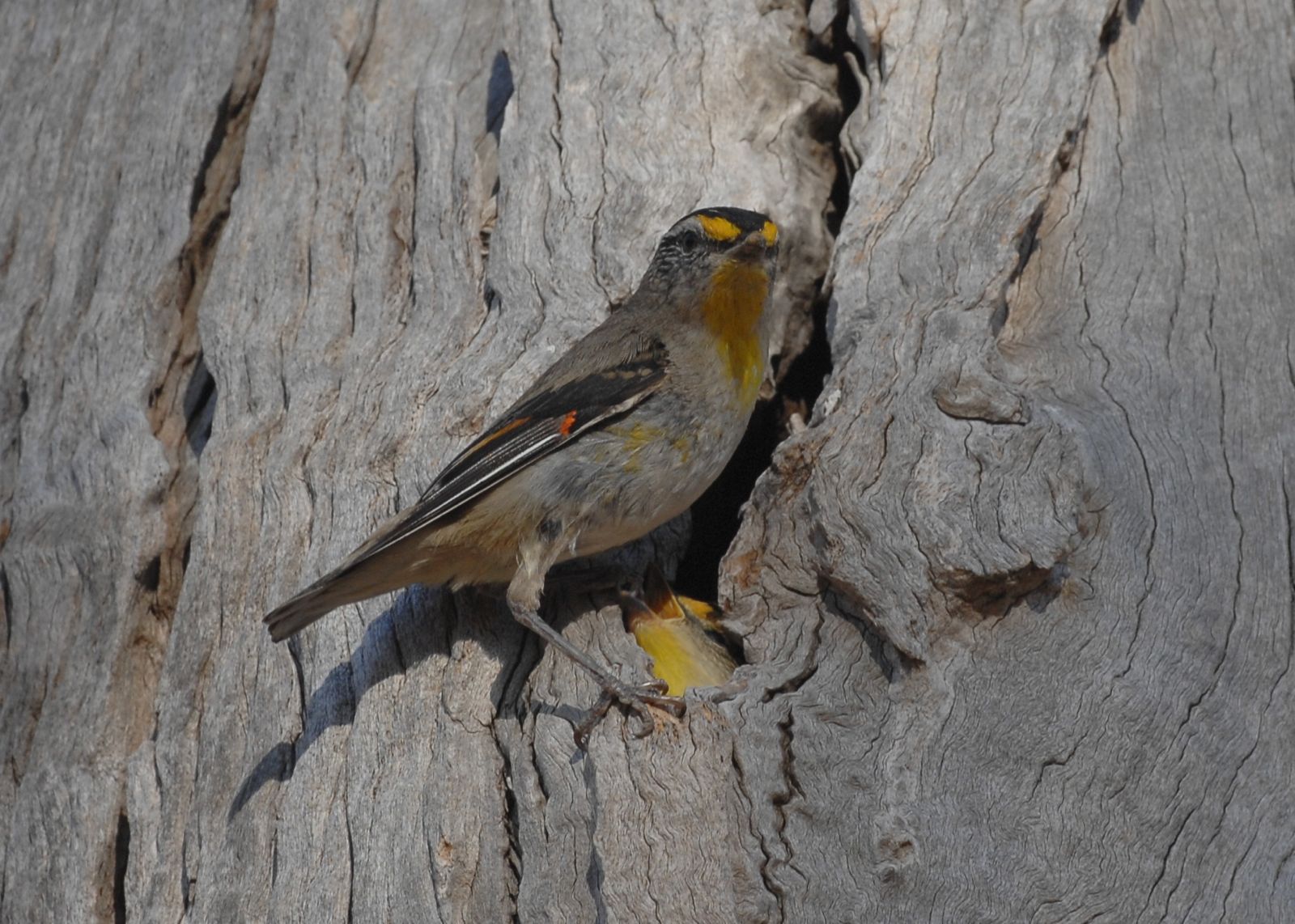
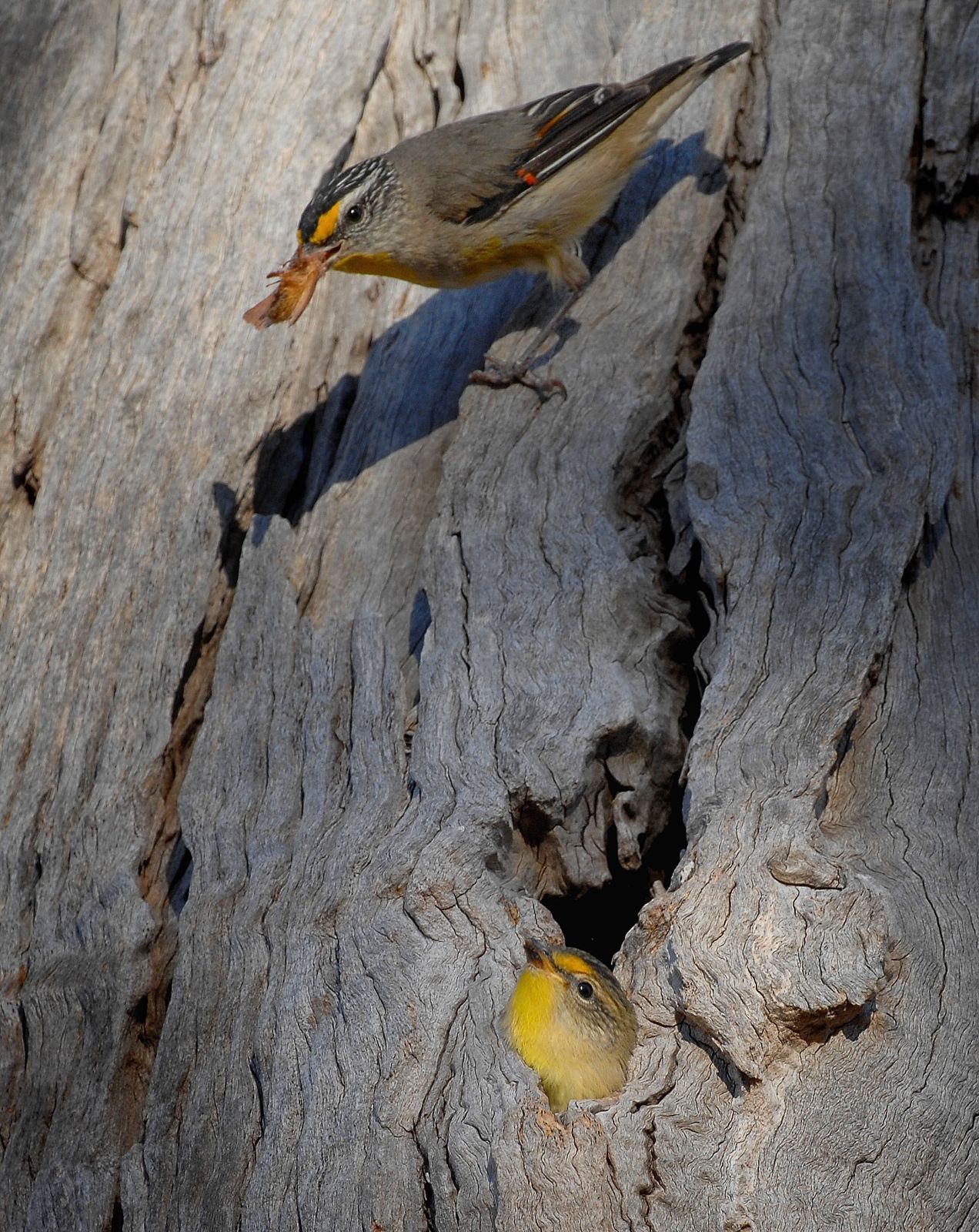
I set up the camera pointed at a Striated Pardalote hole as I expected them still to be feeding. I use a wireless remote and after setting up the camera move back about 50m to give the parents plenty of room.
This time things went a little differently, after providing a few quick meals the parents were not visible for 15-20 mins. And then one returned with a big bug, and a baby Pardalote stuck its head out of the small hole (read very tiny hole), and seemed to be begging, but the parent was having none of that, and the process repeated itself for quite awhile.
It dawned on me, that what they were trying to do was to encourage it to come out and fly. Except. The tiny hole it was pushing out was too tiny even for a tiny pardalote. And it could gets most its body out with a lot of squirming and pushing, but then. It got stuck. The little wings and legs couldn’t get out of the hole and it had to retreat, and try again.
Now I suspect that when you’re a baby pardalote, not a lot of brain power goes into this. So push harder. Nope, still can’t fit. Ok, push more. The concept of big/small/ up/down, in/out and relative size are not big issues in a tiny pardalotes tiny brain and it probably doesn’t get much help from the gene pool.
They are the tiniest of birds. Laying across my open palm they only cover about half way. So there is not a lot of room in there for problem solving. So its likely we’ll not see Pardalote On the Moon, anytime soon. But I suppose the upside of that is they don’t spend a lot of time making things to blow one-another up with either.
Ok, to solve the problem Mum brought in a nice big juicy worm and dangled it at the top of the ‘big”, (a bit bigger than very tiny). Still having decided that pushing harder would get the job done it continued to push out of the tiny tiny hole and get the worm. Mum retreated.
A big fat bug soon appeared in the place of the worm and a lot of Pardalote “plink plink plinking” and a second adult arrived and then an uncle or aunt. Then to everybody’s surprise the little bird pulled its head in, popped out of the ‘big’ hole and was free to fly after Mum with the big bug. The second bird followed in a few seconds and it too was on the wing.
Now I’d love to show you the pics of the flight to freedom, but unfortunately as often happens on very special events, the autofocus on the Nikon went out for a holiday to the Caribbean and all the shots were out of focus. All of them. Every one. The lot.
But when the small birds were gone the “Peril Sensitive” (Hitchhikers Guide to the Galaxy- Douglas Adams), kicked out, and the last shot of the parent on the tree on its own is ‘sharp’. Serves me right for forgetting to manual focus. My usual step when multi bursting from remote controls.
Then when the night, light, birds just couldn’t get any better, the White-fronted Treecreeper put in an appearance and we got great views, if not great photos of this lovely bird. She was again on her own. But my mate Ray will be happy to know she is just inside the shelter area.
Henny and Penny landed on the same stump, so I montaged them for a bit of fun. Enjoy
A nice feed and we’ll soon have you out of there. Thanks Mum.
Now if you fly out, I’ll give you such a nice reward.
I’ll just keep pushing, I’m bound to pop out eventually. I hope.This needs a bit of a discussion. Do try to pull your head in and pop it out of the “larger” hole above.Henny and Penny hunting of the same perch. A bit of montage in PhotoshopWhite-fronted Treecreeper in action in the last moments of sunlight.
The WordPress.com stats helper monkeys prepared a 2012 annual report for this blog.
Here’s an excerpt:
600 people reached the top of Mt. Everest in 2012. This blog got about 8,800 views in 2012. If every person who reached the top of Mt. Everest viewed this blog, it would have taken 15 years to get that many views.
As a photo instructor, one of the things that I always pass on to my landscape/cityscape -pictorial photographers is keep an eye on the weather chart and when we get a slow moving high on the synoptic chart with some light southerly winds, then expect to have clear skies and great light in the morning and the afternoon.
And today it all come together, and I remembered why it is so great to be a photographer and have your eyes wide open for what ever the golden light brings to your lens.
We took the chance for an evening trip down to the Backpaddock. As luck would have it, (about time some might say), we found two pairs of red-caps and their offspring. The males both are hard at work with the young who are developing quite an independence and at one stage were all feeding together. To the angst of the two males who have territorial honour to uphold. So while their young happily fed, flew and chirped about, the two males did branch dancing and name calling.
The late evening sun was just rolling through the trees, and deep shadows everywhere, but from time to time it was a magic moment.
Also saw but didn’t photograph, the elusive White-throated Treecreeper about 60 metres in from the Map Shelter, so Ray will be pleased. It was on is own it seems, which is not so good. We were hoping for another small family to take off.
We also found one old tree with at least three Striated Pardalotes nesting. Very noisy.
Young Red-capped Robin in the evening sunshine.
Male Red-capped Robin in supervisory duties
Juvenile Red-capped Robin, with dad in the background
Striated Pardalote at nest site. How does that big bird, get into that tiny hole?
Earlier in the year, Dorothy thought this photographing birds lark, might be a bit of fun and we started to look for a suitable camera. At first my choice would have been the Panasonic FZ150, as it filled most of the ‘must haves’. On looking about Nikon had released a super duper, little V1. This was light, interchangeable lenses and a larger sensor than the Panny.
It also had an adaptor that allowed it to enter the world of the big Nikon glass, and we thought that to be an advantage. But.
In spite of her best efforts to make it work, the frustration level was high. In the end we had to conclude that the little V1 was indeed super duper, but not a super duper bird photography camera. It would be great for travelling about the markets in SE Asia, boating along the waterways in merry old England. Snapping the kids at the backyard barby, using the clever face and animal recognition features to key in your dog’s birthday, so it would be recorded with each image (??) and the like. Maybe even a worthwhile real estate agent’s carry in camera. But for birds. Its for the birds.
Here are a few of the frustration points. (I know, I’ve heard them yelled out in the bush more than once)
1. Buttons and controls are too **@&&$& small. It’s true. Just try to do something in a hurry in the overcast dark forest and it becomes obvious.
2. Too many things are controlled by buttons that have multi multi multi functions. Nope she doesn’t stutter. Its true depending on which of the tiny buttons you are holding while you push another will depend on what is set or unset.
3. Too many real settings are hidden in menus. ISO and EV being two I can think of, but I do believe there are more.
4. Auto focus that has a mind of its own. Point it at the subject and it immediately is enamoured by something else in the scene, the background, the highlights, the waving branches, the big black truck. Anything but the subject. For an evaluative system it certainly is. But how about it evaluating what its pointed at? !! Now you’ve got to remember that birds sometimes perch on branches in trees, and trees have more than one branch. Which is where the V1 and its brothers and sisters over in the DSLR stable have a similar problem. Anything is more interesting than your subject, so the focus hunts and then avoids the subject. On this subject, I’ve said it before and I’ll say it again. The Nikon techs need to take the Canon techs to lunch and find out how a real auto-focus system works. OR Nikon should re-hire the team that did autofocus with the D2 and D200 series of cameras. At least they can grab a subject and hold on to it like a terrier. Rather than the namby pamby oh, I’ll just check out a few more things and if I like them better I’ll focus there system in the current stable.
5. Lenses are ok sharp. This is s non technical description of a lens that looks ok most of the time, but on closer examination of the image, 100%, (that’s not pixel peeping, it called checking focus), the image bears a strong resemblance to Mum’s old box brownie. (C’mon Nikon you can do better than that. No one is expecting 105mm micro Nikkor sharpness, but really it’s only a tiny chip. Or is it that the target audience for this wonder is unaware of what a ‘sharp’ image might look like. ) Don’t start me on Nikons Kit zoom lenses. Enough has been said.
6. Battery life is non-existent. We won’t venture out for a day without 3 fully charged batteries. And each of them will be flat within about 2 hours of being in the camera. This is a deal breaker.
7. “Oh, its too hot, I’ll just close down now- for an hour or two!!!!!” What? We photograph in the bush on hot days, 40 Celsius is not uncommon in a mid-summers day in Oz mate. What white coated technocrat dreamed up this one. Or is it only meant to be sold to people who photograph in 20 Celsius shopping malls? This was the final straw. I was watching a human being in total control, otherwise the V1 would have been sailing through the air to the other side of the forest.
Sooo after much angst. Well not really, but you read about that stuff in blogs all over, we decided – note the “We” in that sentence, very important for the next part of the post. We decided the Nikon V1 was staying home, and if it was really lucky it might just avoid a trip in the big green dumper.
Canon have a really interesting kit called SX50. It has a 50X times zoom up to 1200mm in the old 35mm way of looking at things. (Its all about Angle of View, but we don’t want to mess with the calculations here, so go with the marketing depts BS on this). Now Panasonic blasted out of the gate in about October with a FZ200. Only 600m of zoom but with an amazing F2.8 all the way. (the Canon does f 6.5 at the 1200mm spot. about 2 1/2 stops less light. Hmmm).
Rodger S of the Swallows in flight fame , “Swallows Are Us”, has been impressing with his images of Swallows in flight using the FZ150 and now the FZ200. See his Flickr set here. He also uses that super little Red-Dot sight, so there is no looking through the viewfinder trying to find the subject. It’s just point and shoot.
Da Dah!. One cha-ching later and we (remember “We” from the sentence above). were back in business, and back in the forest.
Ok, so its not perfect. At least I don’t think it is, as it doesn’t make cups of tea and put out the cat, but it does take sharp photos of birds. EASILY. And, it knows about focusing on the subject its pointed at. No discussions, no alternatives. Oh, the bird in the focus box. That’s it. Got it.
Thank you mr Panasonic.
Here are a few from the past few days. (C) Dorothy M J 2012.
They are all hand held. There is no additional software sharpening going on here. As out of the camera. She’s a photographer, not a computer guru.
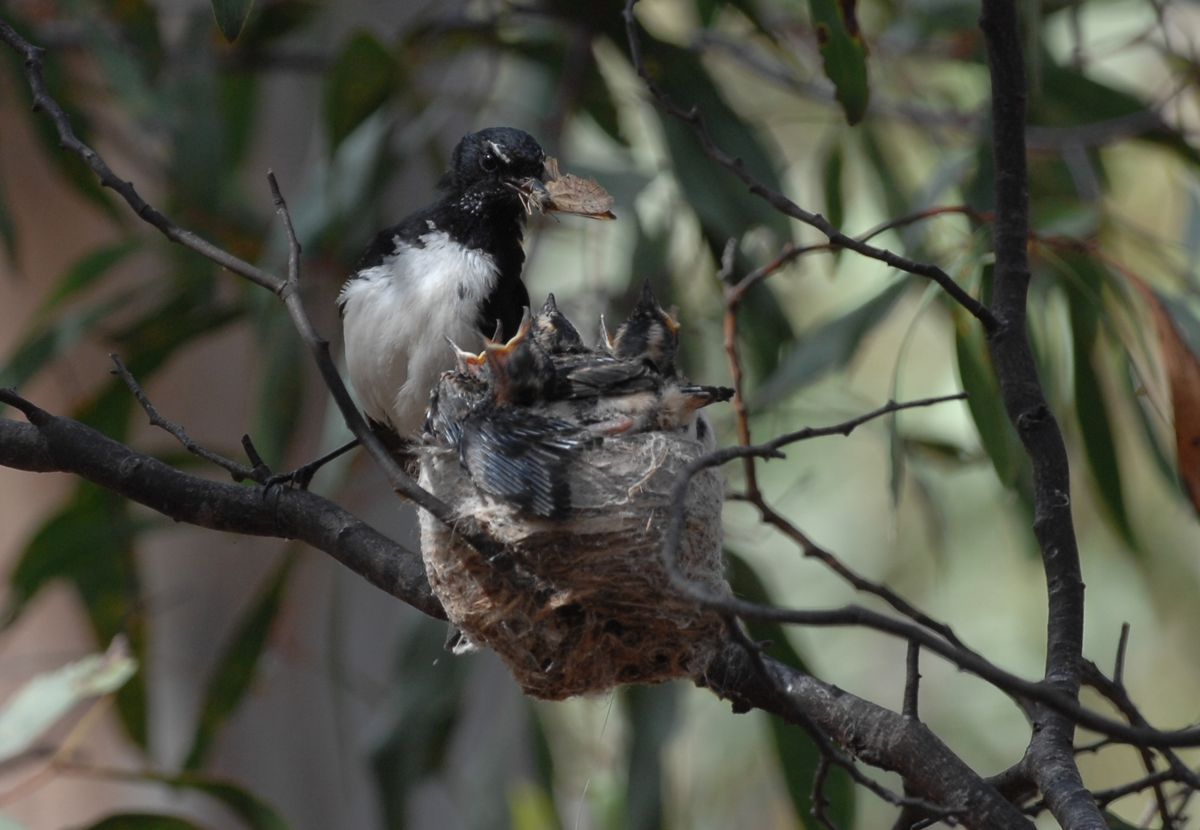
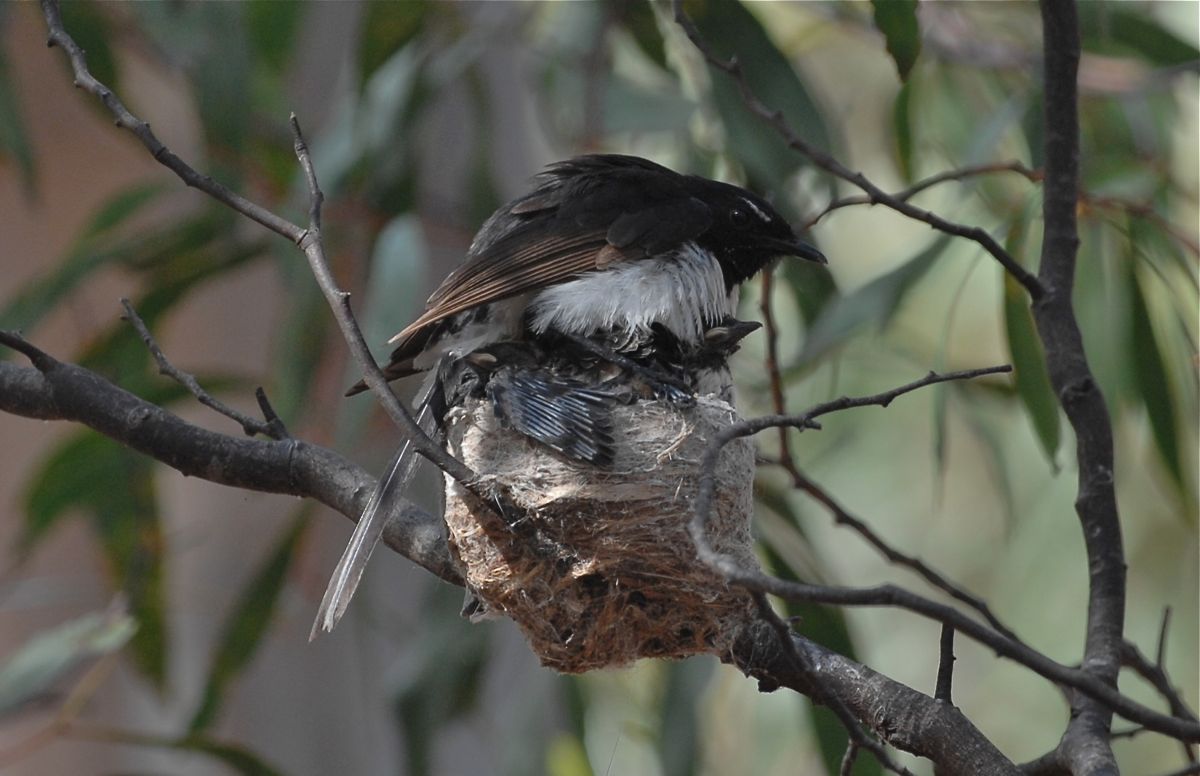
Wagtails chicks is impressive enlarged.
Go on click on the image to get a larger view. You know you want to.
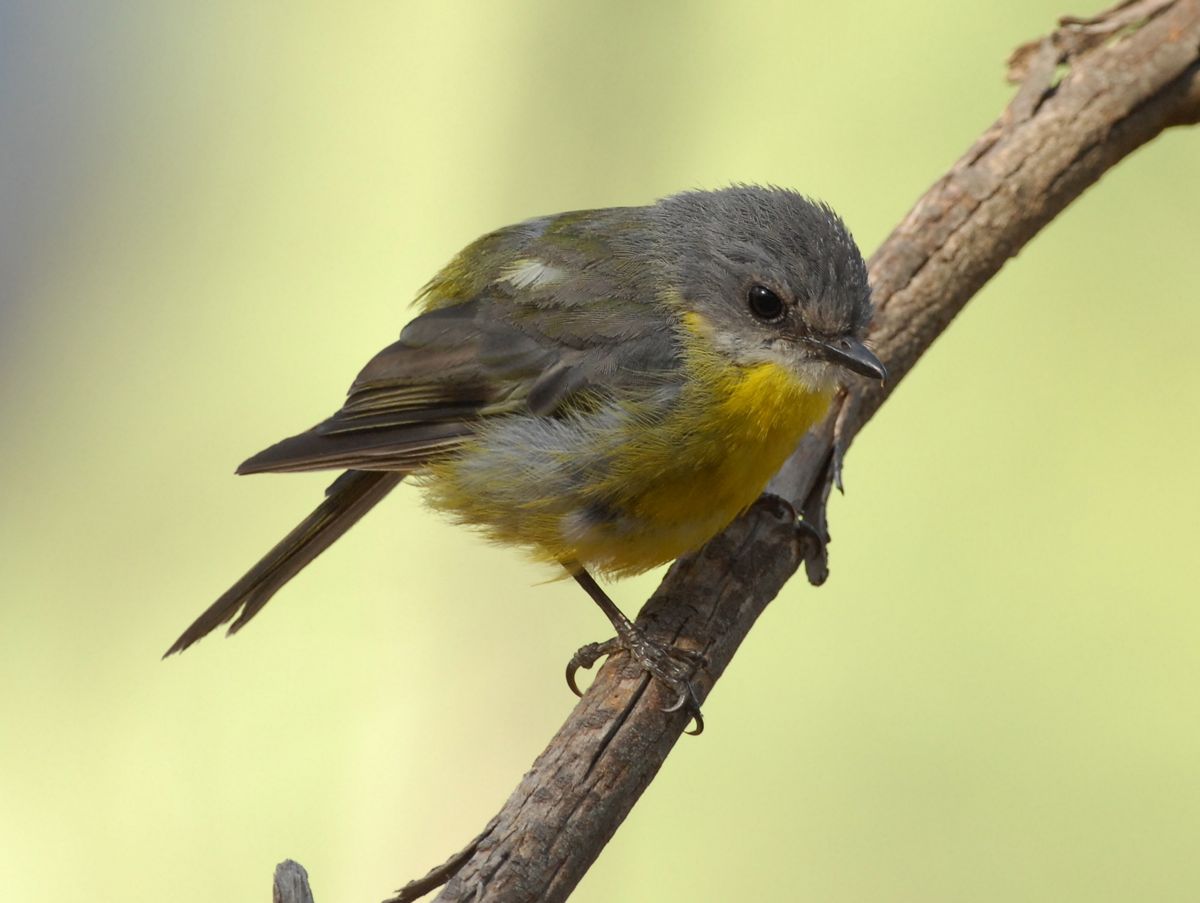
Eastern Yellow Robin male.Willie Wagtail Overcrowded Nest. Out of five young it looks like she got four on the wing.Eastern Yellow Robin and nest construction. Back lit so the camera has struggled a bit, but got the focus part right!Brown Falcon with it’s own pet Willie Wagtail. This has been cropped in a bit. ISO 400.
The high wind meant an awful day among the trees, so we declined to go out and robin hunt.
It did infact calm down after lunch and on the pretence of a cup of coffee ah? We first stopped of for coffee and a quick shop, and then on to the birds.
Going past the wagtail nest, it was obvious that nature had indeed taken its course and two of her young had flown from the nest, leaving three bewildered leftovers behind.
On the return journey we checked again and three had become two. So no doubt we’ll see an empty nest the next time round. Well done Mum!
On a sadder note, Jill lost her clutch. The high winds had bought down a large branch from a tree which had upended the nest tree in its wake. Not sign of any eggs, or young, and I suspect she only just hatched them yesterday to this morning.
It took me a little time to find the male, he was squabbling with the neighbours over territorial rights. And eventually we found Jill, none the worse for wear, and already being fed by Jack, and sitting in v shaped branches, checking out the view in the new housing estate. Hope she picks a more secure tree this time.
Meanwhile the pair next door, e.g. further up the forest, have started a new nesting programme, so their previous young must be well advanced. All a happening thing.
Five have become three. If we’d have meant to fly we’d have been given wings
A couple of hours later.
Where did eveybody go? Two late starters in the flying game look as though they are wondering what all the fuss is about.
I’ve a book that I really like to read when I’m stuck at home, its called “What the Robin Knows” by Jon Young. His basic premise is that by knowing the various calls and habits of birds (he uses Robins, because in the US he has a backyard full of them and beginners can easily identify them.). In reality its about what birds do when they are birds and how a bit of watching can help work out some of the absolutely incredible stuff they do and to ask useful questions about the stuff that just seems so incomprehensible.
That we spend a lot of time with Robins, is in this case a co-incidence, but the principles he outlines apply in many respects. If I’m working with some territorial robins, (think breeding time), I can work out from their behaviour if someone, or something is approaching the area, long before I hear or see said thing/person.
Which leads me to today’s ramble. Very hot day, so we left in the twilight of the morning to get a good start down the track to check on the couple of pairs of Robins inside the former Bandicoot Big Brother House.
It took awhile, and some wonderful distractions from a pair of Striated Pardalotes feeding their young, and a family of Tree Martins zooming in at breakneck speed to feed their young.
Henny had the two young out hunting on their own. He was just a supervisor, flitting down to offer advice, perfect technique and in general discuss the finer points of robining.
Just to add to the interest a second pair has also been able to get off two more, although they are still in the rufous grey and brown of younger birds, so there was plenty of entertainment.
Henny and Penny’s young are quite advanced now, I would suspect he will look after them for a week or two more, then chase them off as Penny gets down to the serious business of laying the next batch. She already has two nests on the go, but I would also suspect they are just decoys if I could find them that easily.
I’ve never seen the young after they get moved along. They must several kilometers or more, as they don’t seem to be in the Woodlands area. I guess it’s a gene pool thing.
Young Red-capped Robin getting the finer points of robining into practice.Henny overseeing his progeny. He offers appropriate chips and calls, as well as hands on practical experience.Young bird with an insect it caught, while Henny looks on. (Approvingly?)
Dad said to lift my wings up to scare up the bugs.
Oh dear, that didn’t seem to work.Visit from a younger bird from another pair. This one is still quite young and being fed by its dad.
Had a walk about with Richard and Andrew H, the other day. Not many photos, but we were each able to share bits of the park with one another, and the learning curve is good.
Down along one of the tracks, we’d been lucky enough to spot several pairs of Eastern Yellow Robins and I was keen to wander back over there with a bit of extra time and see if I could figure out what was really going on.
We started of with Jill and Jack, she is still sitting on the nest, and Jack is still the smart boy hunting about.
We had a quick look in some blackwood wattle saplings and out came a new (for us) Eastern Yellow Robin. It has a little white bib under its beak and did a bit of preening for the photograph.
We crossed another track and soon located a third pair who as it turns out have at least two young off the nest, and after quite a bit of patience and perseverance I managed to locate enough small movement to suggest a fledgling, and with a bit of moving about finally got a glimpse and a photo.
We’ve not worked with these birds before and it was evident they had no intention of letting us get to close to their pride and joy. Each appearance was through the thicket of blackwood saplings. and they lead us on a merry dance for quite awhile.
Down the track one of the wagtail pairs are now filling little mouths at a great rate. When it became evident to the female we where in the area she proceeded to push them down into the nest, an mission that is becoming increasingly difficult due to a) the small size of the nest, b) the size of her brood and c) the number of young she has in there and I think five in the reality.
A bit of a preen to look at my best for the photographPerhaps if I close my eyes really really really tight and can’t see you, you won’t be able to find me. Fledgling Eastern Yellow Robin that sat perfectly still for about 20 minutesNow who’d like a nice big butterfly for morning tea? Anyone?Crouch down, crouch down. Get in the nest, tuck your wings in. Stop peeking. Mother Wagtail squashing her brood back into the nest
Weather is always the big determining factor, and today was overcast, drizzle and high winds. Not great for birding, hopeless for photography and not much fun to be out and about in.
So rather than sit about playing with Flickr, I decided to clean up some of the gear and get ready for our trip to Goschen in January. (Actually its a family event thing, but I’m only seeing the birding part of it at the moment!).
I came across a Kenko TC1.4 that I’ver talked about before, but really haven’t used it since Mr An Onymous returned it after a borrow sometime back. About the same time I came across my old faithful, but now rarely used 80-400 VR Nikon Zoom. This is pretty old technology now, and if you believe everything you read no the net, about as sharp as my Mum’s old box camera. Which is sad really as by and large it does have some good optical qualities.
I’ve actually owned three of them! The first I destroyed in a very freaky accident, the second I traded in a fit of NAS (nikon acquire syndrome), for a nice 600mm f/5.6 manual focus lens. Now that was a lens. The third I traded over at Camera Exchange for a D300s, I had grown tired of. That lens is the subject of the current missive.
When I use it it doesn’t go near a tripod, won’t be seen on a monopod, and always has the lens mount clamp removed. I… wait for it. Hand hold it. Oh, the waves of agony that just rippled o’er the net.
Or I’ll prop it against something, like a tree, branch, car, sign or doorpost. Which brings us to the pics.
Given the light was pretty bad, and I felt in a playful mood, I wondered if the Kenko TC would fit and work on the 80-400 Surprise, it did, or as the old story of Cinderella is told, “It fid dit”. Out I went to try out the beastie.
Not much in the garden, check the opening sentence, day- miserable.
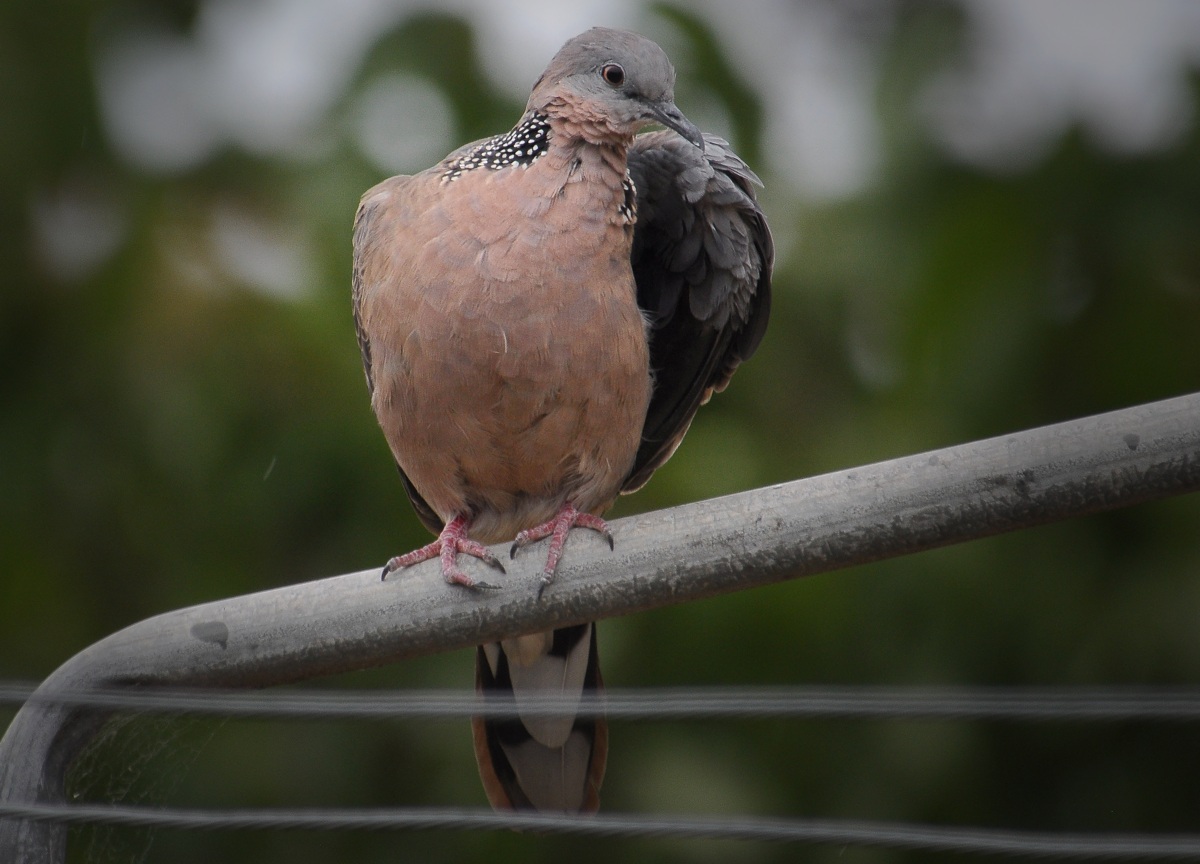
But after a little bit, a Spotted Turtle-Dove landed on the old Hills Hoist and I had something to photograph other then said hoist.
Now I didn’t expect much, but in fact its pretty sharp. Down side is the lens won’t talk to the camera properly via the Kenko’s poor translation skills, so the Aperture gets reported without the the 1.4 conversion Instead of F/8 minimum it reports f/5.6 And the EXIF data reports that too. Not sure it affects exposure or reports that incorrectly just assume it looks ok. (Thought, perhaps I could enter it as a manual lens in the lens data bank on the camera, and it might report correctly. Next rainy day.
Here’s the Turtle Dove, by the way, just in case your wondering, its… .Hand held. Not bad for really old VR technology held by a really old bloke.
Taken with a Nikon 80-400 VR zoom and a Kenko 1.4 Teleconverter
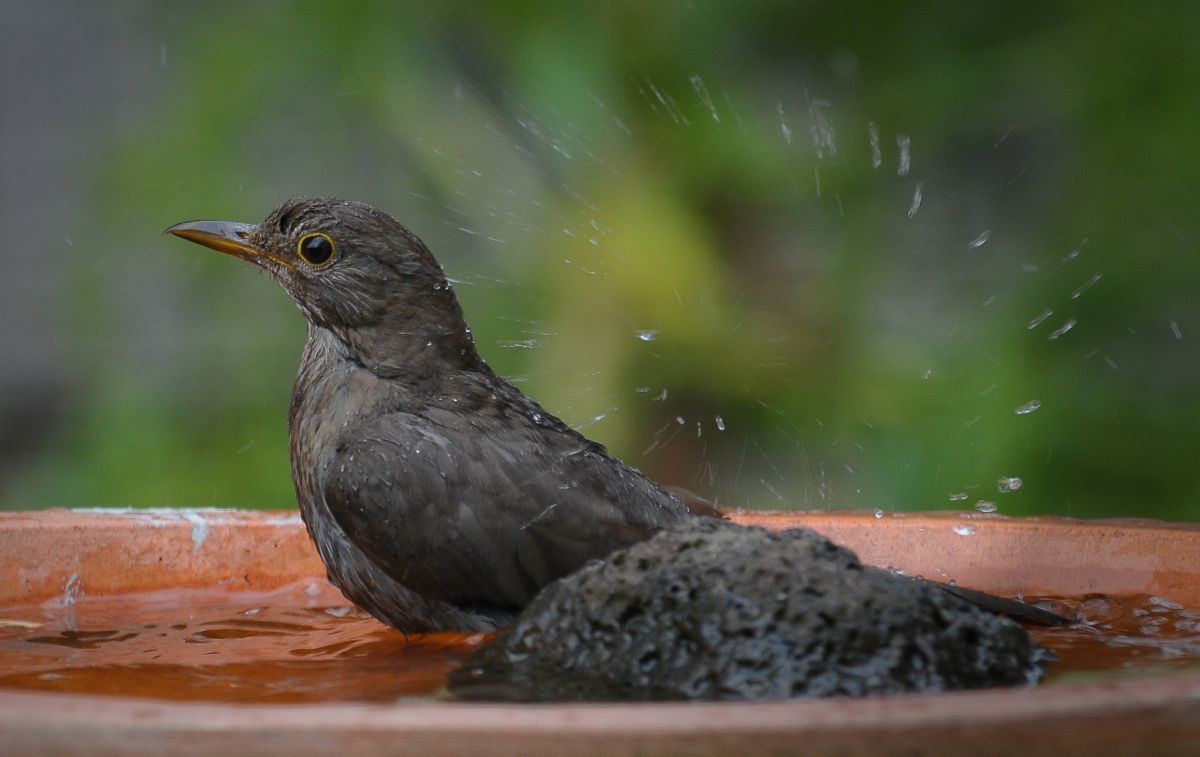
There was a splash from the birdbath, and the local Common Blackbirds were bringing the young ones in for a bathe.
I took off the Kenko for this next shot, so its the 80-40 behaving as it should.
Now the old bloke pushed the lens up against the door frame for these, as it was pretty obvious they would all happen in much the same area. Wow, got the shutter value up to 1/200th. Took a number, but this one attracted me as the little bather has flicked its wet wings up and then snapped them down, just as the shutter released. A lovely crown of water drops resulted. Thanks bird.
So the old lens comes back for yet another round of applause a bow, curtsey and its exit stage right.
Just as I tripped the shutter it dropped its wings and left this amazing explosion of water drops. Who’d have guessed.
















 Birds as Poetry —— Just because I WANDER doesn't mean I'm LOST