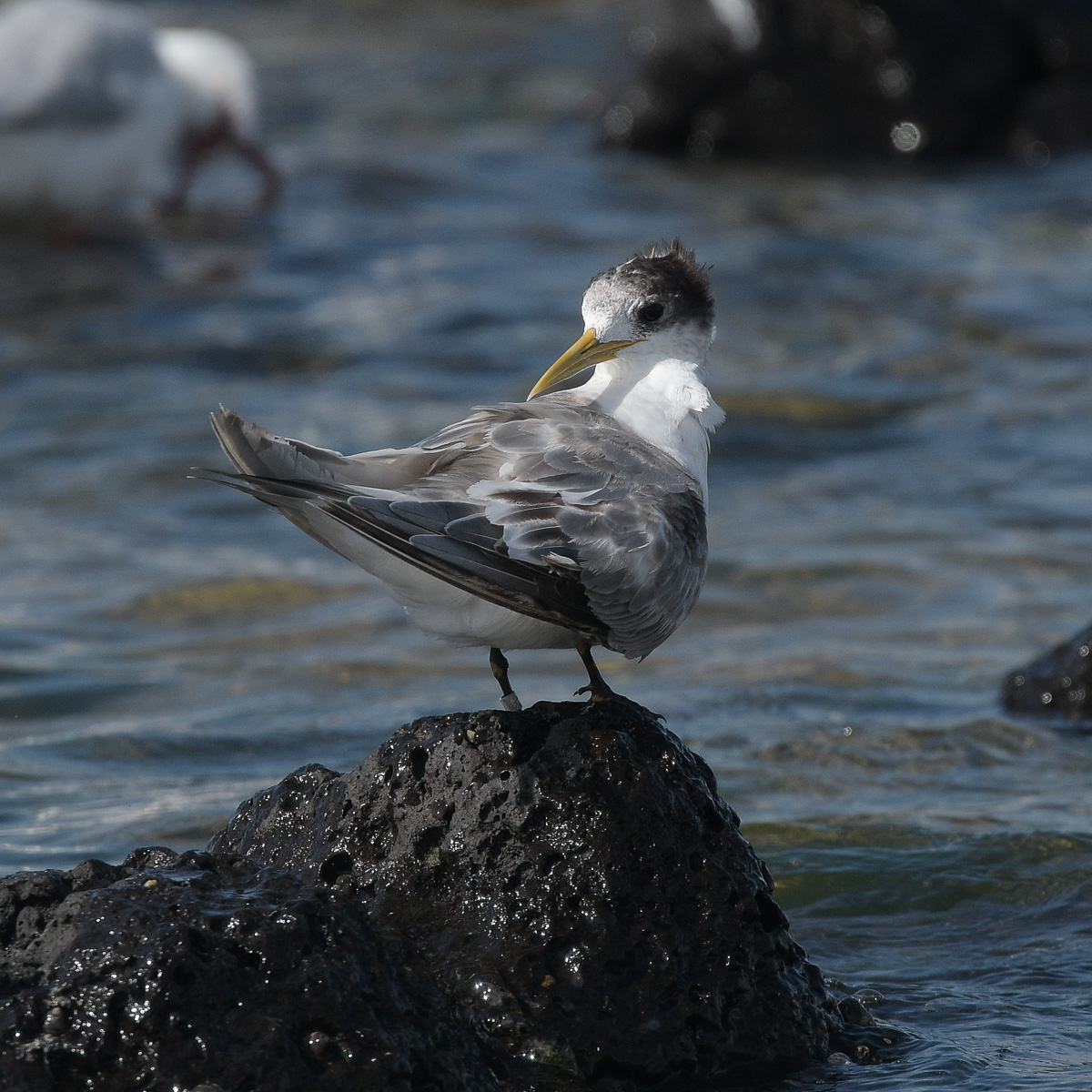
On a free day, with some good sunshine, a place I like to check out is on the end of a little point on Port Phillip Bay. Because of the formation of the area with a long tongue of basalt from ages past volcanic eruptions, there is a mudflat that extends out several hundred metres. On low tide the flats are well exposed and some of the rock edges allow the birds to rest out of the water.
A small colony of Greater Crested Terns are regulars, but recently over summer they have been away on nesting duties, as there is no suitable area nearby.
So it was good to walk out on the damp sand and sit on the rocks with the Terns and watch them preen and hunt and interact with their noisy, always crying young.
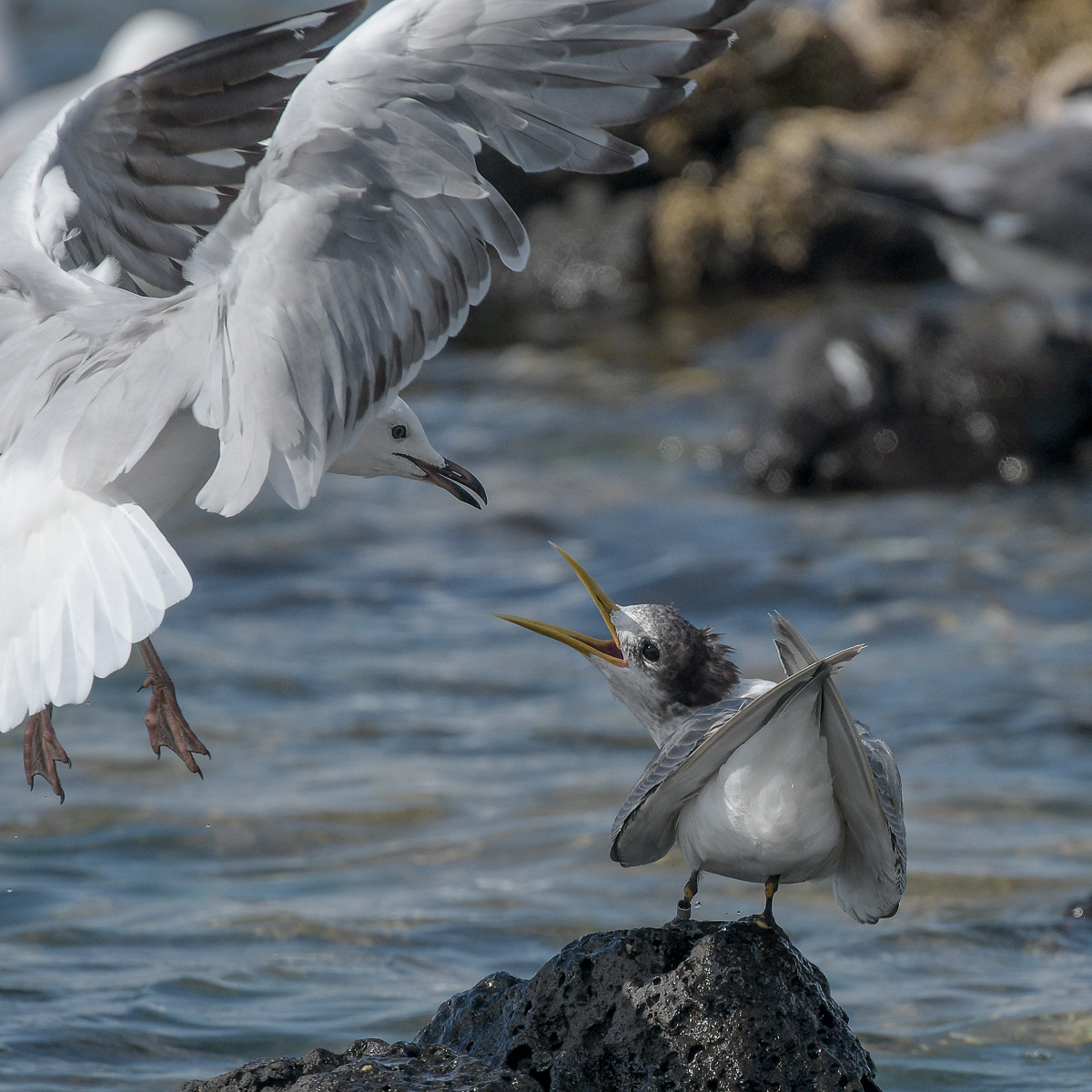
With so many gulls around any catch that was made was hotly pursued by the gulls. And at one point a frustrated Tern decided to attack the annoying gull.
And all too soon the tide began to flow in, and it was time to slosh back to the dry sand.
Enjoy
Click on a photo for a larger view in a slide show.
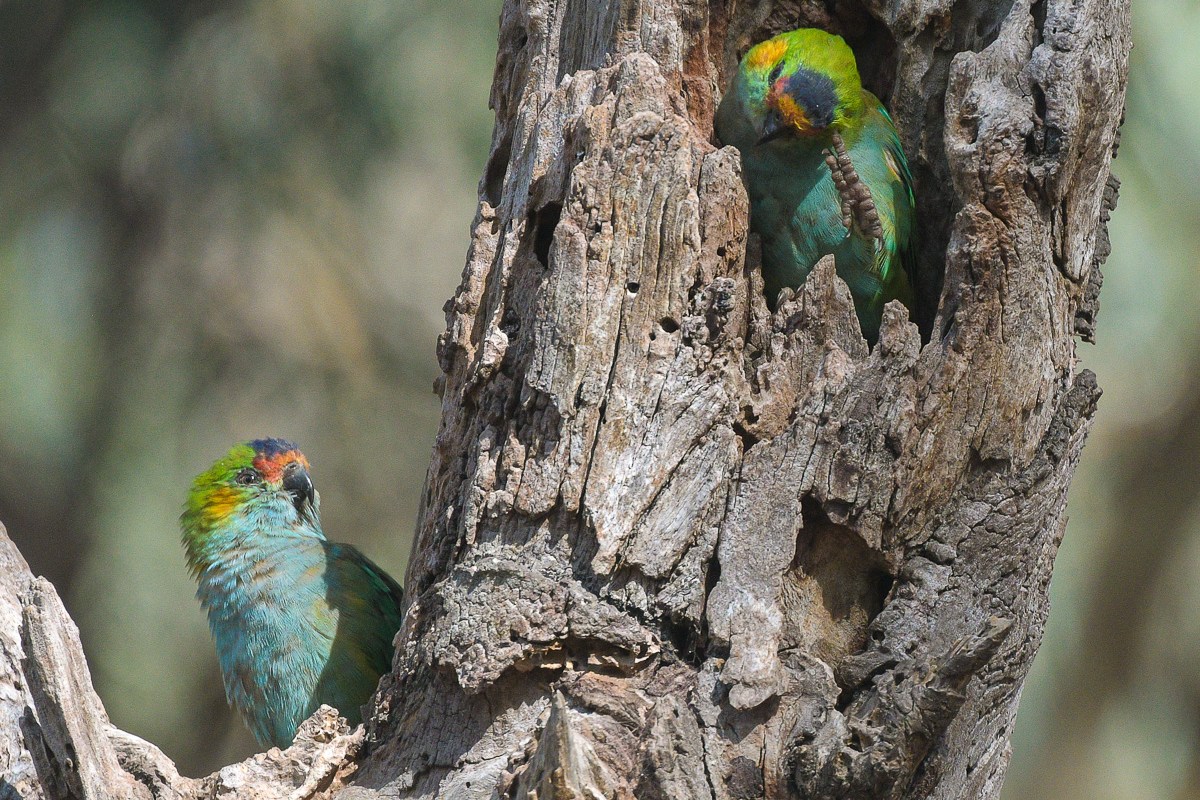
One of my fav little forest birds is the Purple-crowned Lorikeet.
Our local river edge forest is usually a pretty reliable spot to find them. They are a tiny lorikeet and spend their time among the higher branches and leaves so are often heard, but seldom seen for good views.
The older RIver Red Gums are great hosts as they provide not only a source of food, but also the older trees have great nesting holes. We have had over the years several pairs that have been domicile, and produced several clutches. The little birds are not as raucous as their Rainbow cousins and have quite a sedate and elegant nature that makes them a joy to watch, and to photograph.
Unfortunately since the great floods of a couple of years back, we’ve been unable to gain access to the nesting sites, as the river caused damage to the access track and the bridge area. PIty, as they don’t often fly over the river for a visit.
We were back down along the river the other day, and I did see a pair fly into an older broken limb close by, so went to investigate.
After a few minutes both came out of the hole and after a bit of discussion and preening, they took to wing and were gone. None the less, it was a few minutes of delight.
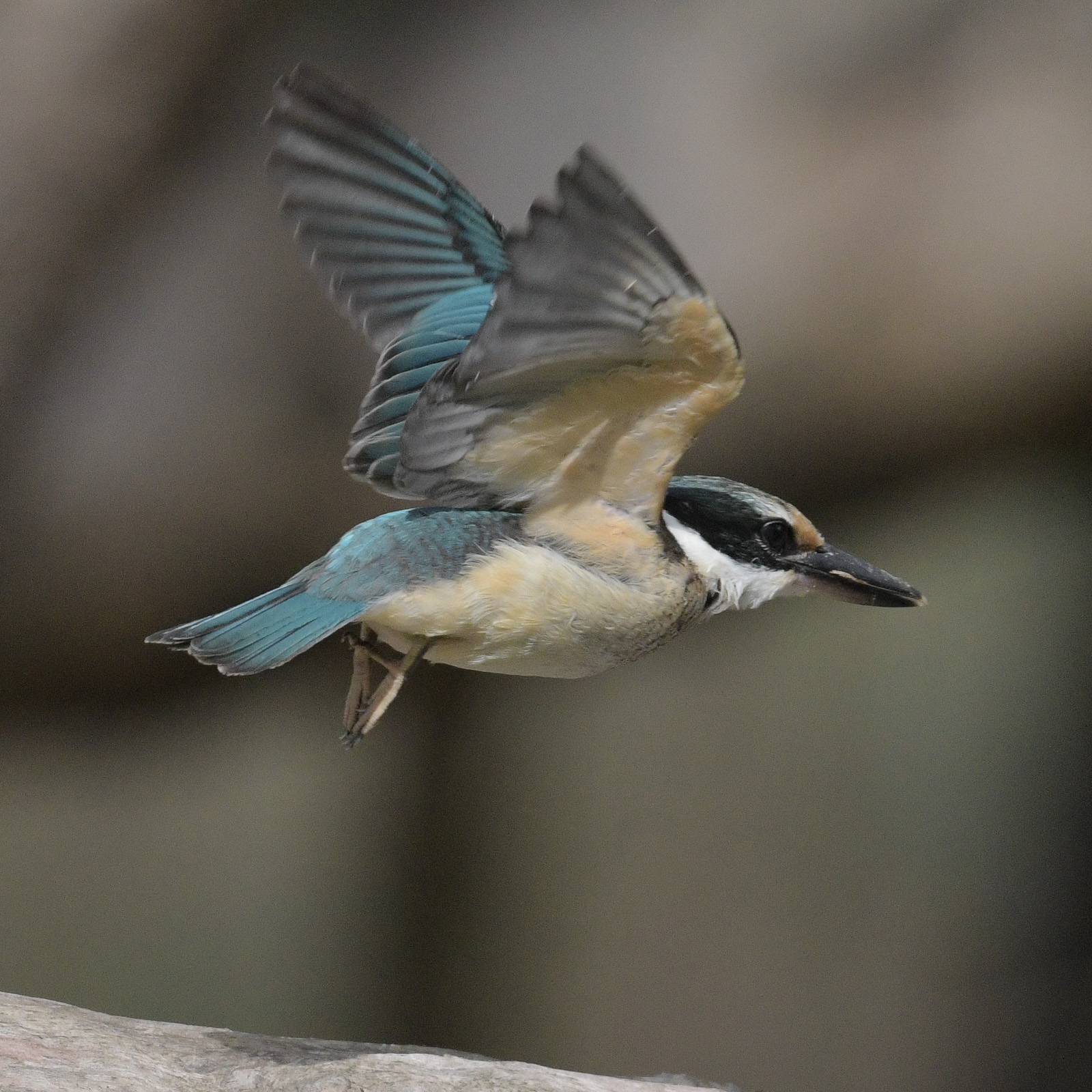
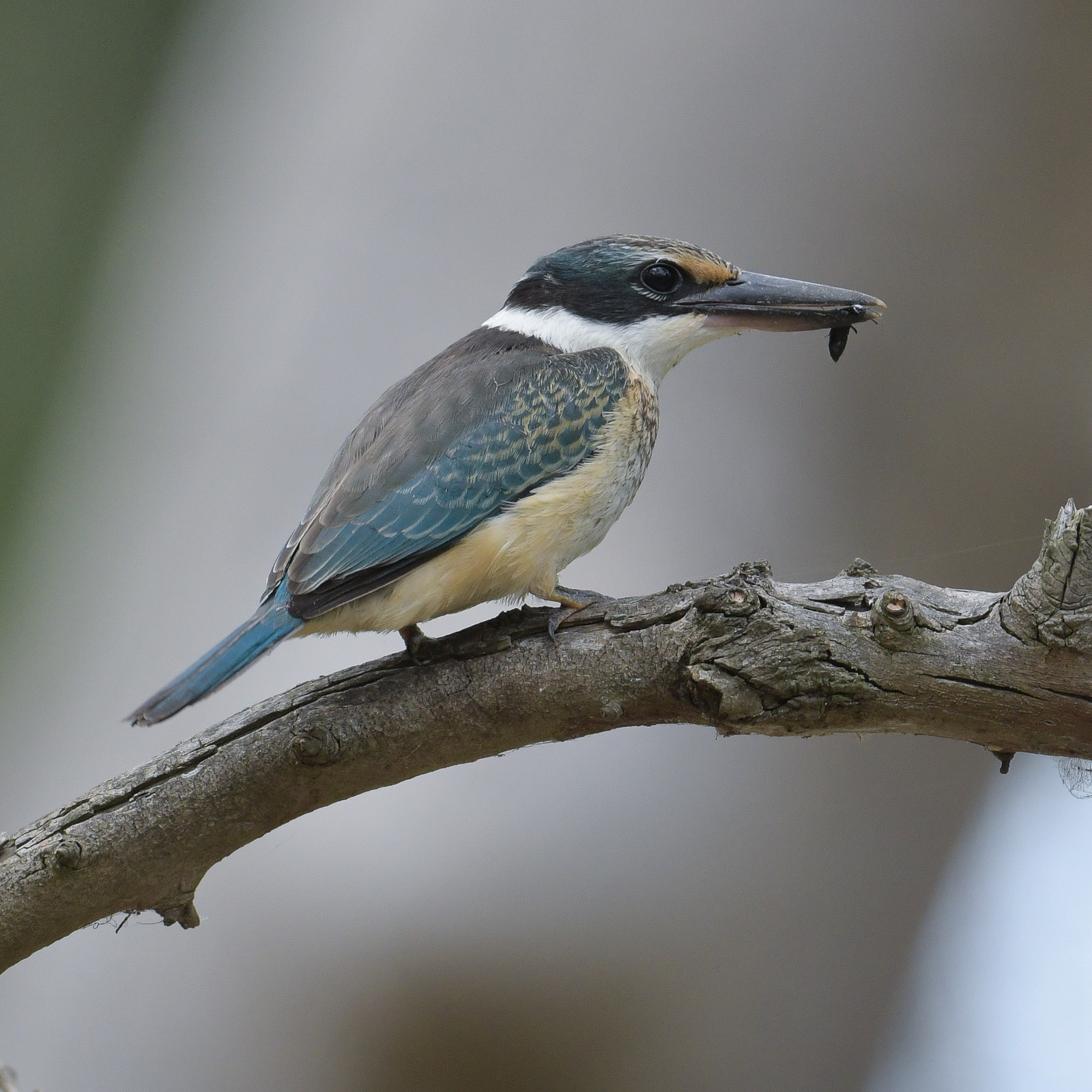
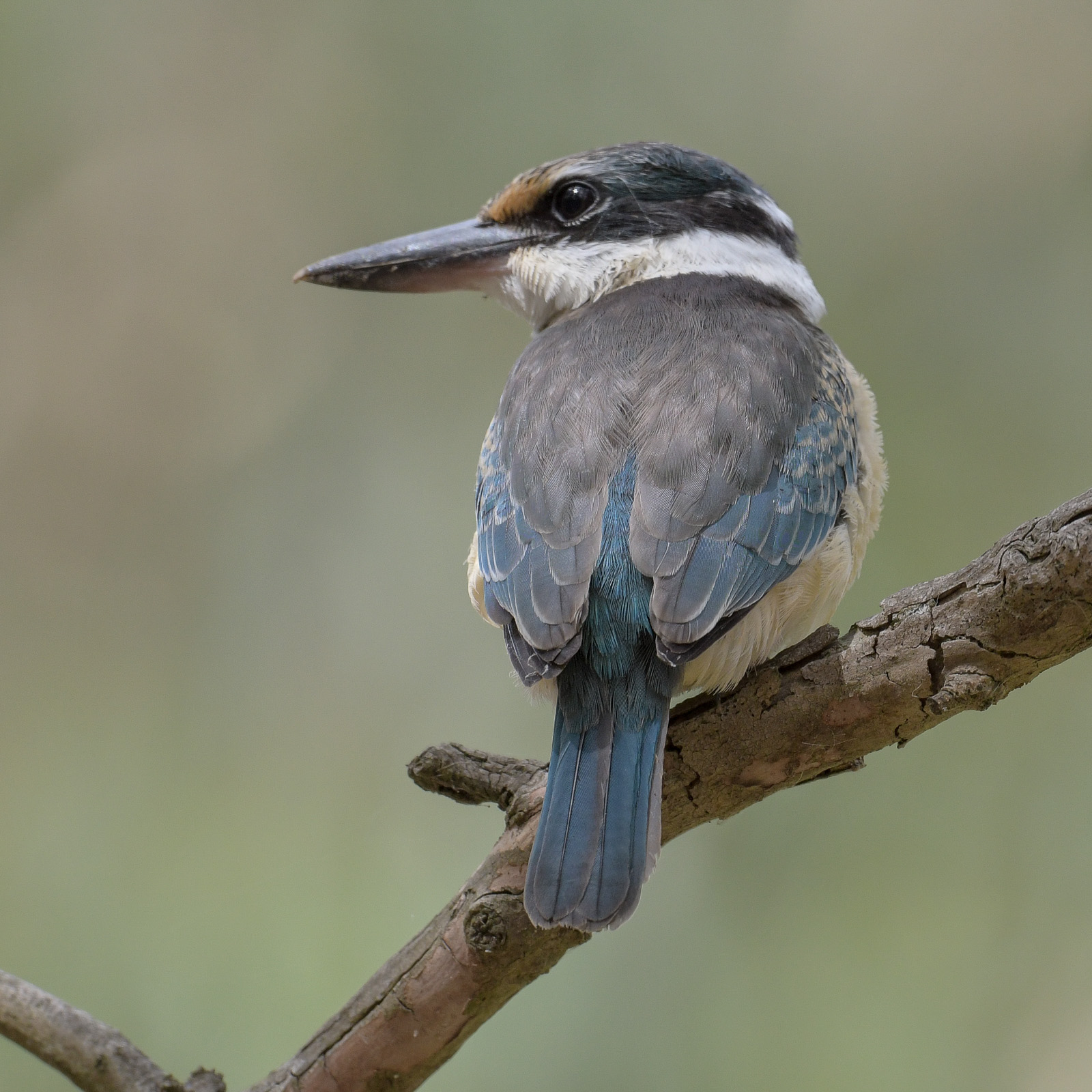
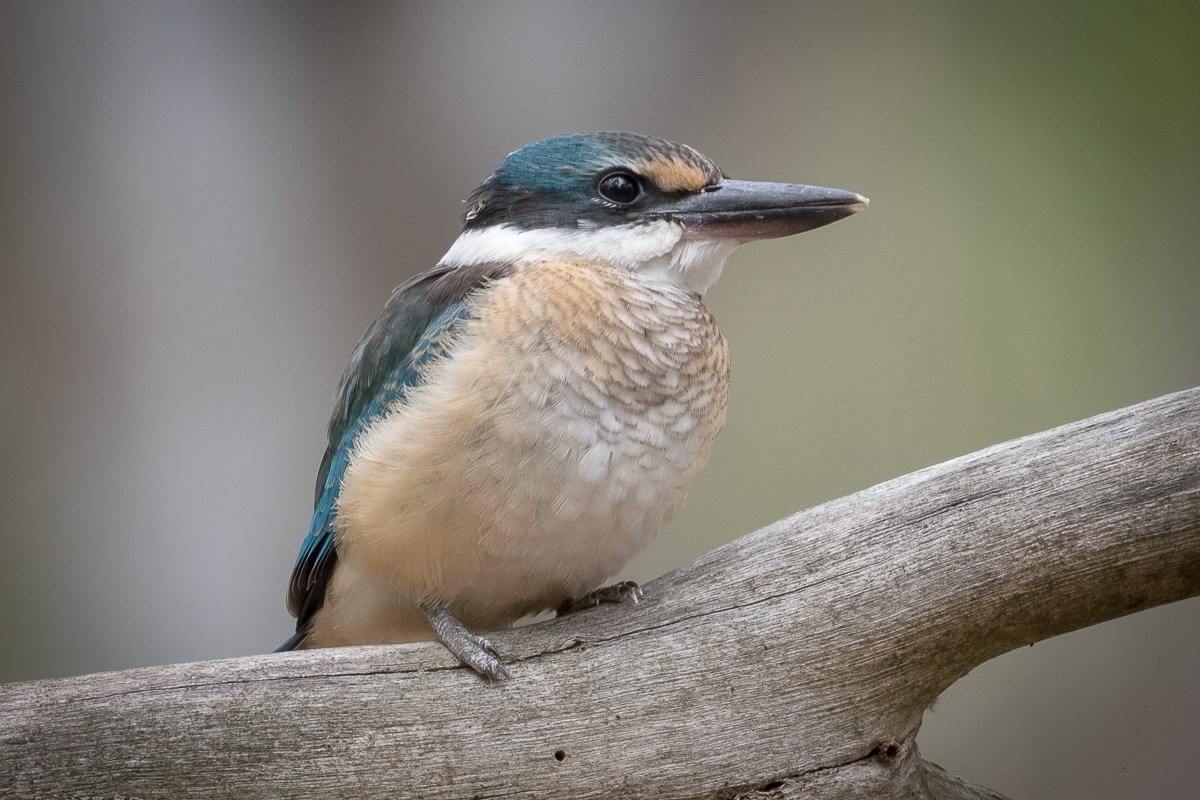
Seems for ever since I started this series, and now I’m going to share some of the more intimate portraits from the season.
It needs to said, again, that these birds were not under any stress from our presence, indicated often enough by their close approach, and sometimes complete indifference to our presence. No photo is worth stressing the birds and it’s something we are constantly aware of. If I approach a bird, it baulks and flys on, then that is a serious failure in their trust on my part.
Working with the young is just a little different as they emerge to fly and as we were in the area every other day, they just accepted ourpresence. I invited a friend down one day and while we were standing together, the birds were comfortable. But if he walked about on his own, they would quickly relocate. So much so that in the end, he commented to that effect.
Quite a number of the portraits were made with the bird resting quietly on a branch, and me standing still, waiting.
Not all birds react this way. But we believe the time put in working with just a few birds rather than trying to spot many in a day and build no connection, is worth it.
I’ve quoted from Jon Young before, but here it is again. … a San Bushman said, ” Every time I see and recognise an individual bird the thread stregthens. Eventually it will grow in to a string, then a cord, then a rope. This is what it means to be a Bushman. We make ropes with all aspects of creation” Jon Young, “What the Robin Knows” p.xxv
My challenge is to acquire an understanding of the bird’s perspective. Or at least an appreciation of that perspective.
Writing this up now—several months later—it made me think how quickly the time we spent with the clutch sped by. They are, no doubt, off for their winter layover further north. The adults to ponder a return season, and the young to set up families of their own.
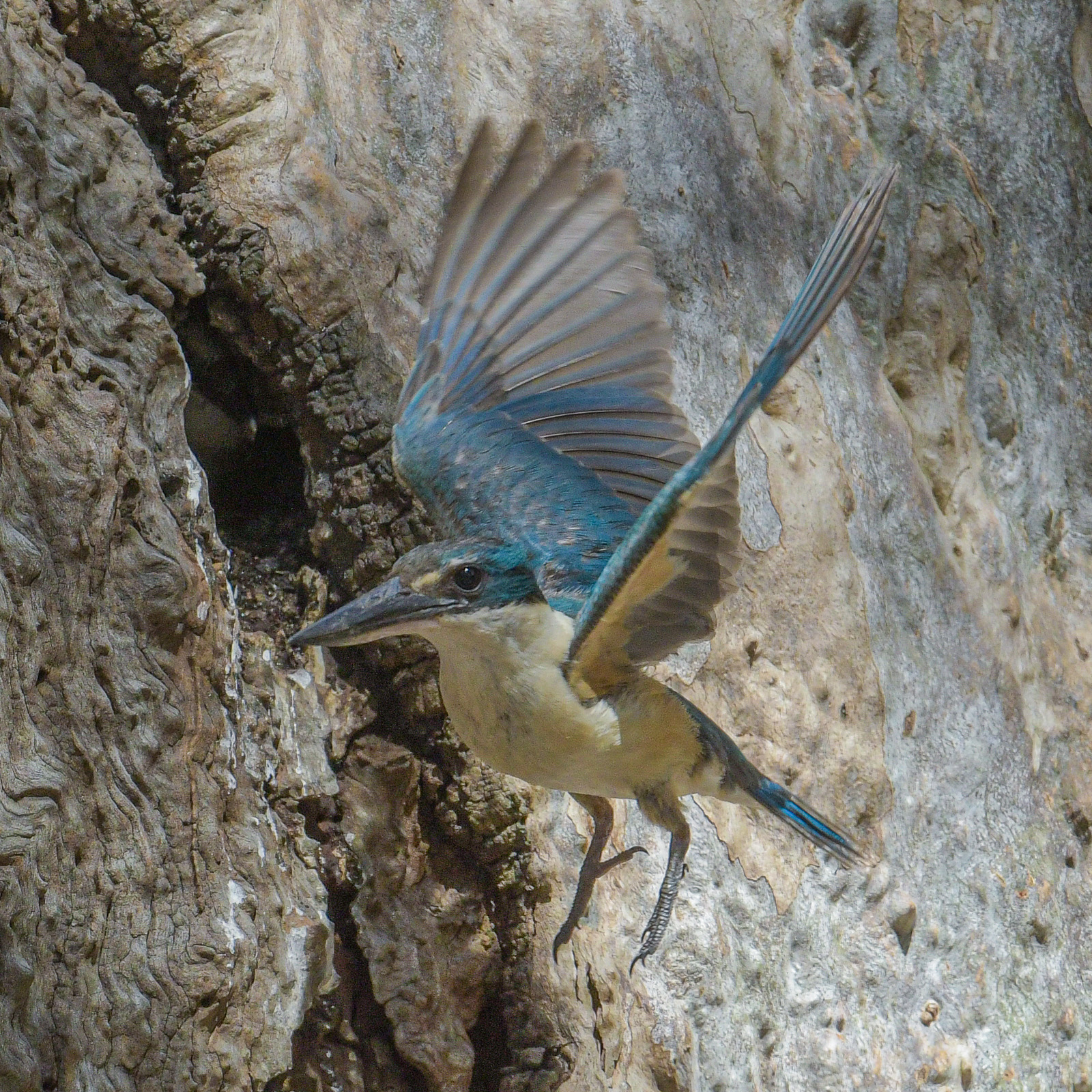
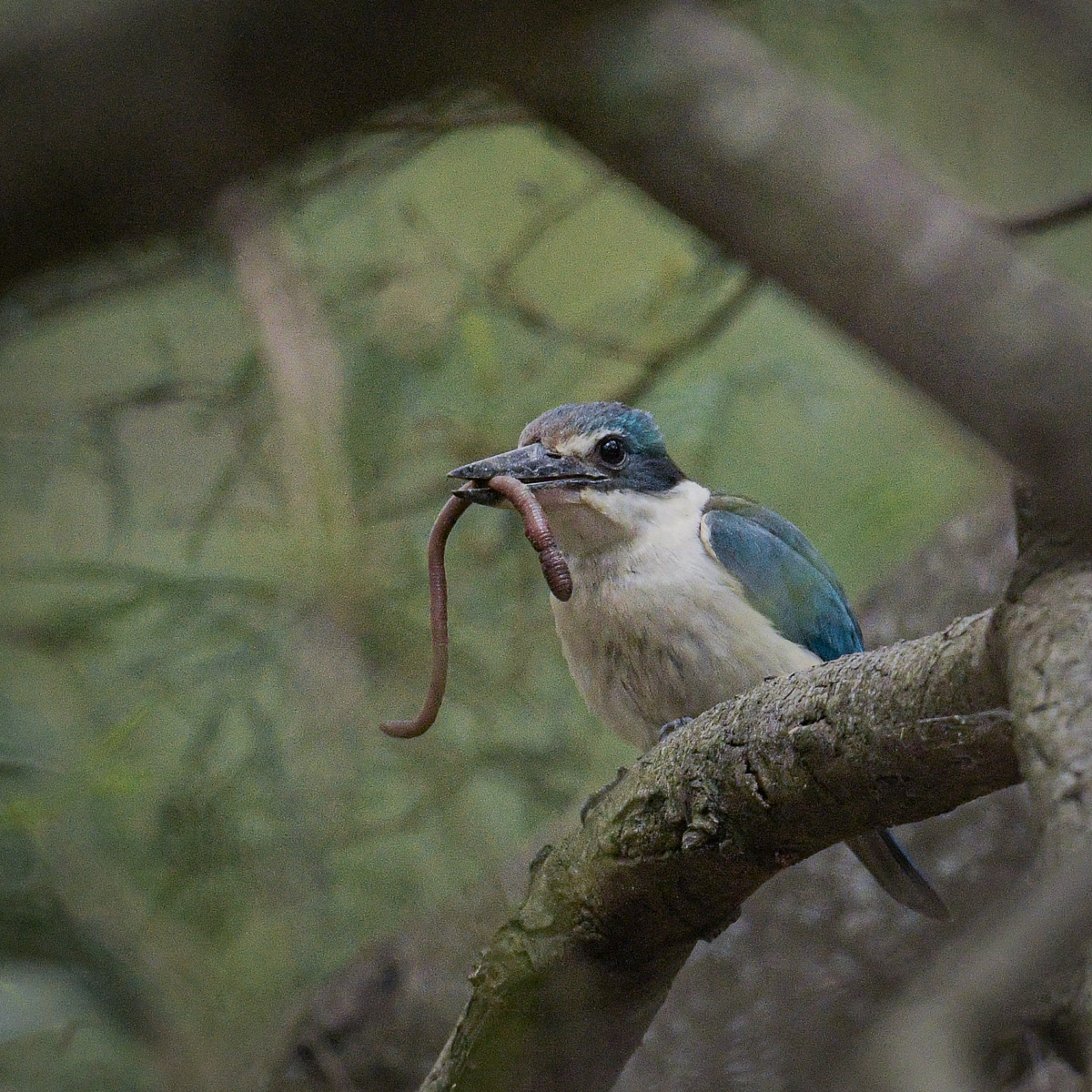
WIthin only a few days of being out on the wing, the young were beginning to learn hunting skills, and quickly became confident at the drop and grab technique. Dad now began to have time to look after the other skills that no doubt a young Kingfisher must master.
About 150m along the river from their territory a pair of Collared Sparrowhawks had begun a late nesting, normally they would have their young out and about well before the end of the year, but it wasn’t until mid-January, just about the time of the young Kingfishers training weeks that the two young Sparrowhawks fledged. So it was not unusual to hear the crys coming through the forest as they learned to swing out over the trees and chase one another through the understory.
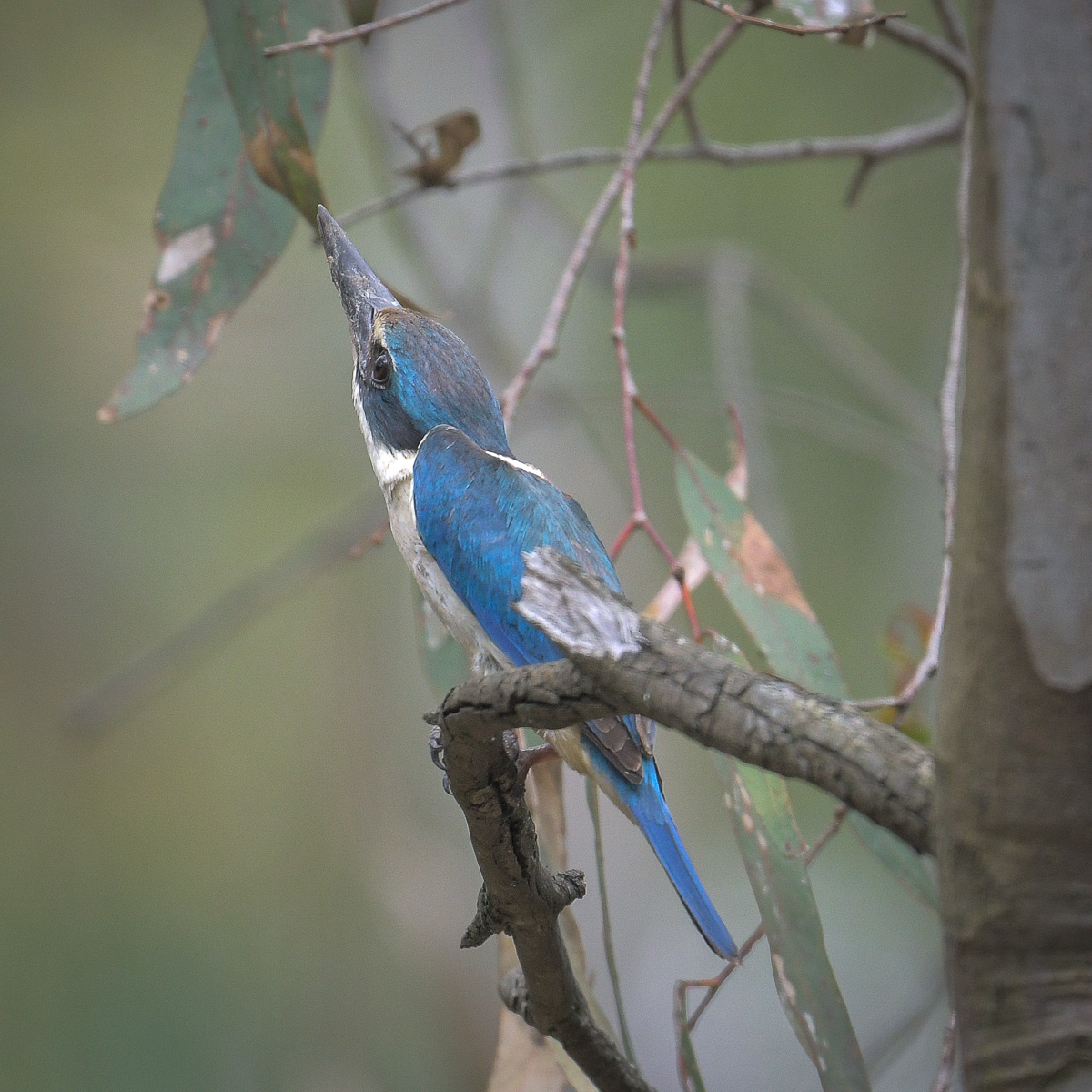
On several occasions one wandered over the Kingfisher location. Dad would sit in on a branch in an open area and call very loudly and make lots of wing and tail flourishes. I concluded it was as much a warning for his young to take cover or at least be aware of the danger, as it perhaps was to attract the Sparrowhawk’s attention. Depending on the threat level, sometimes he would land on a branch under some leaves, and make himself very thin, and point his beak skyward, almost vertically. He could hold that pose for several minutes until the danger had flown off further along the river.
I only saw one of the young adopt the same pose, but as they were so spread out most of the time, it was impossible to locate them all at one time.
By the end of three weeks, the young were pretty much independent, and became harder to find. Eventually we had to conclude they had moved away from the nursery area and our time with them was over for the season.
I have one more post to make next week, mostly portraits, as we had lots of opportunities of the young landing close or hunting and sitting nearby to eat.
Enjoy.
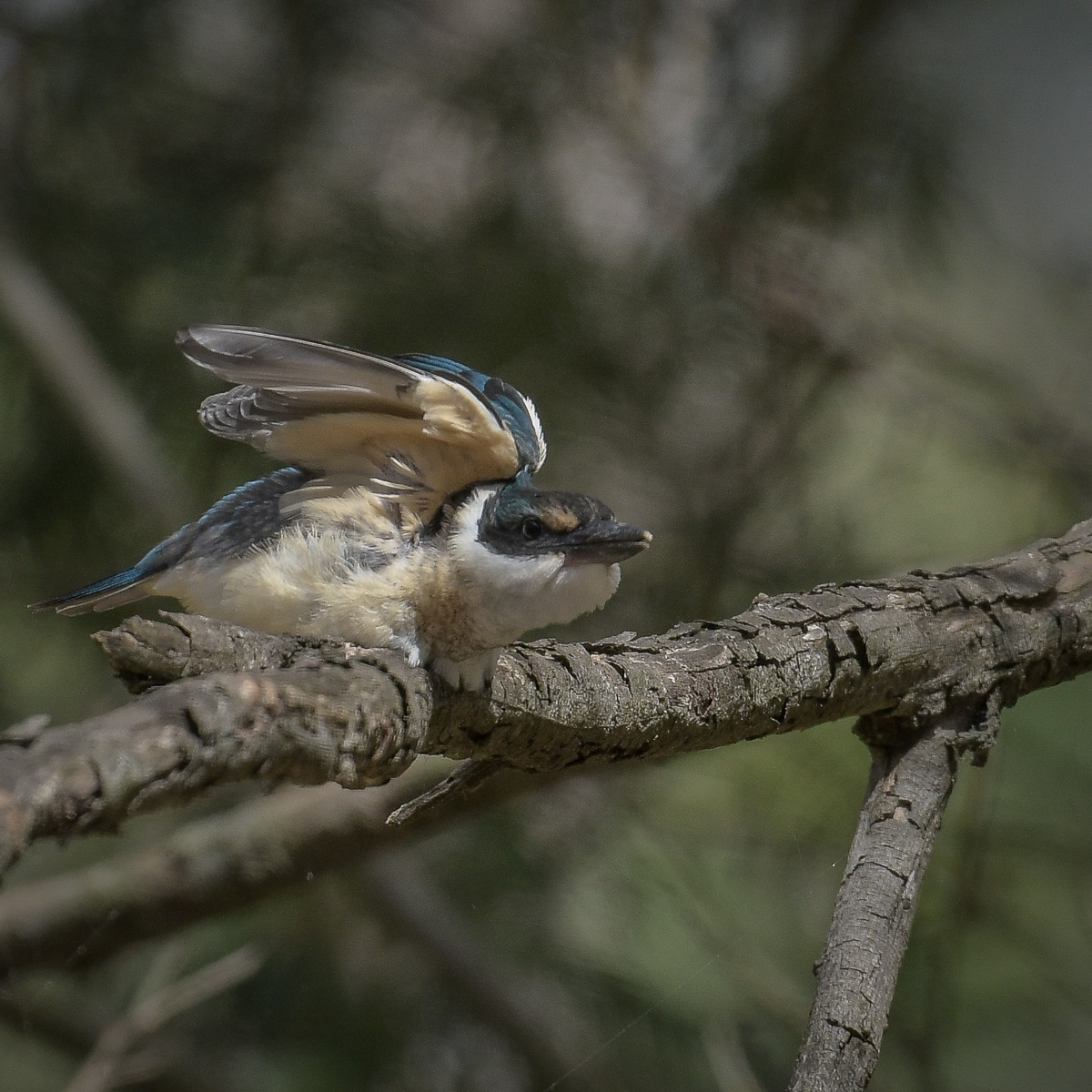
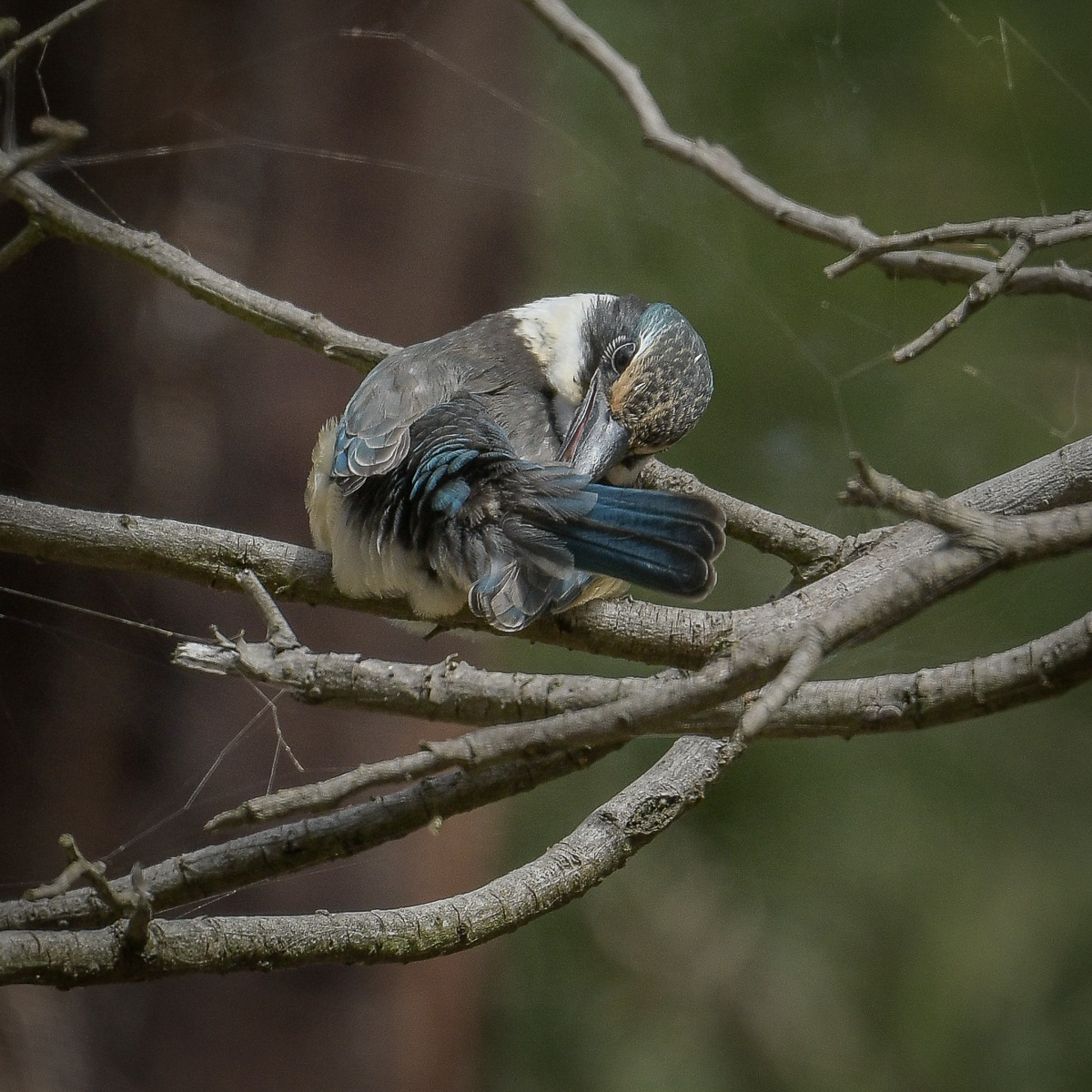
A worm a day. Patiently WaitingTime for a Stretchand a PreenTai Chi Wing ArchGotta look after the cute little tailDad comes into checkWarning Danger approachingLots of tail flicking and callingSitting very thin and stilJust like Dad, but in the openNow, next time, find some cover!!
The first few days after the first flight, we had little success in locating more than one young bird. It would always be high up among the leaves, and unless we followed the feeding male, it was hard to even locate the small one.
But it quickly developed strong flying skills and even started to poke around among the old bark searching for a snack.
One morning it was hard to keep up with the male, first he was on one side of the track, then, on the other. And it soon became clear, that there was two young. Which made sense given the amount of food that had gone into the nest.
They were hardly ever together so it was difficult to notice any distinguishing markings. But at least now the two seemed to be in the same area, so it was possible to keep track of them.
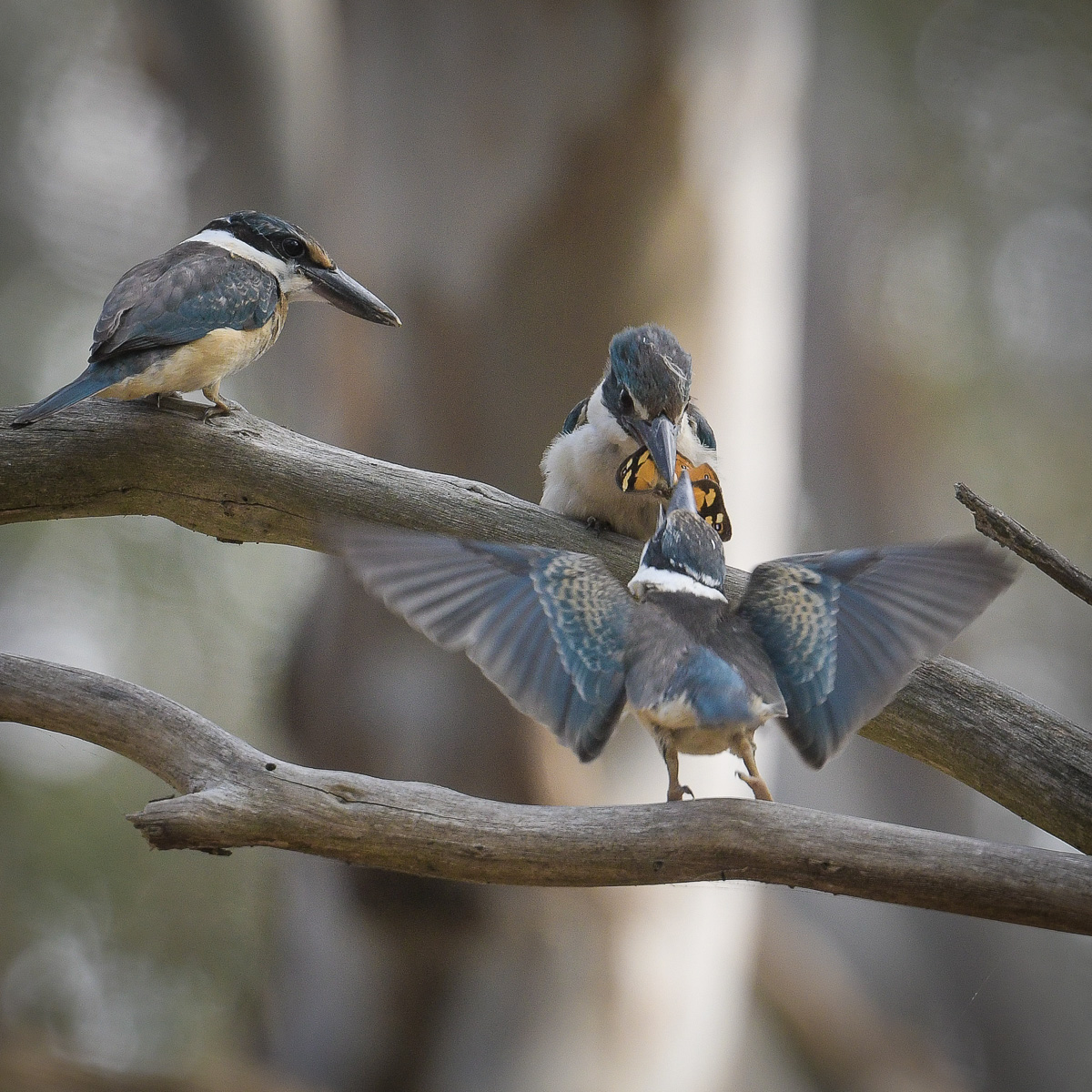
We were just about to take a morning break and moved to an old log for a cuppa, when on a branch just over the log a young Kingfisher landed. As we had just left two somewhere behind us, we suddenly realised. There were Three! And as seems to be usual with birds with three in a clutch, two seemed close together, the third one much more an independent individual.
The young have a peculiar call, which is pretty much constant, and kind of hoarse buzzing, and the adult seemed to utter the same sort of call from time to time. Which did help to find them, now, among the scrub and tall trees.
Feeding went on apace, but the young were no slouch either and were soon making forays to help themselves.
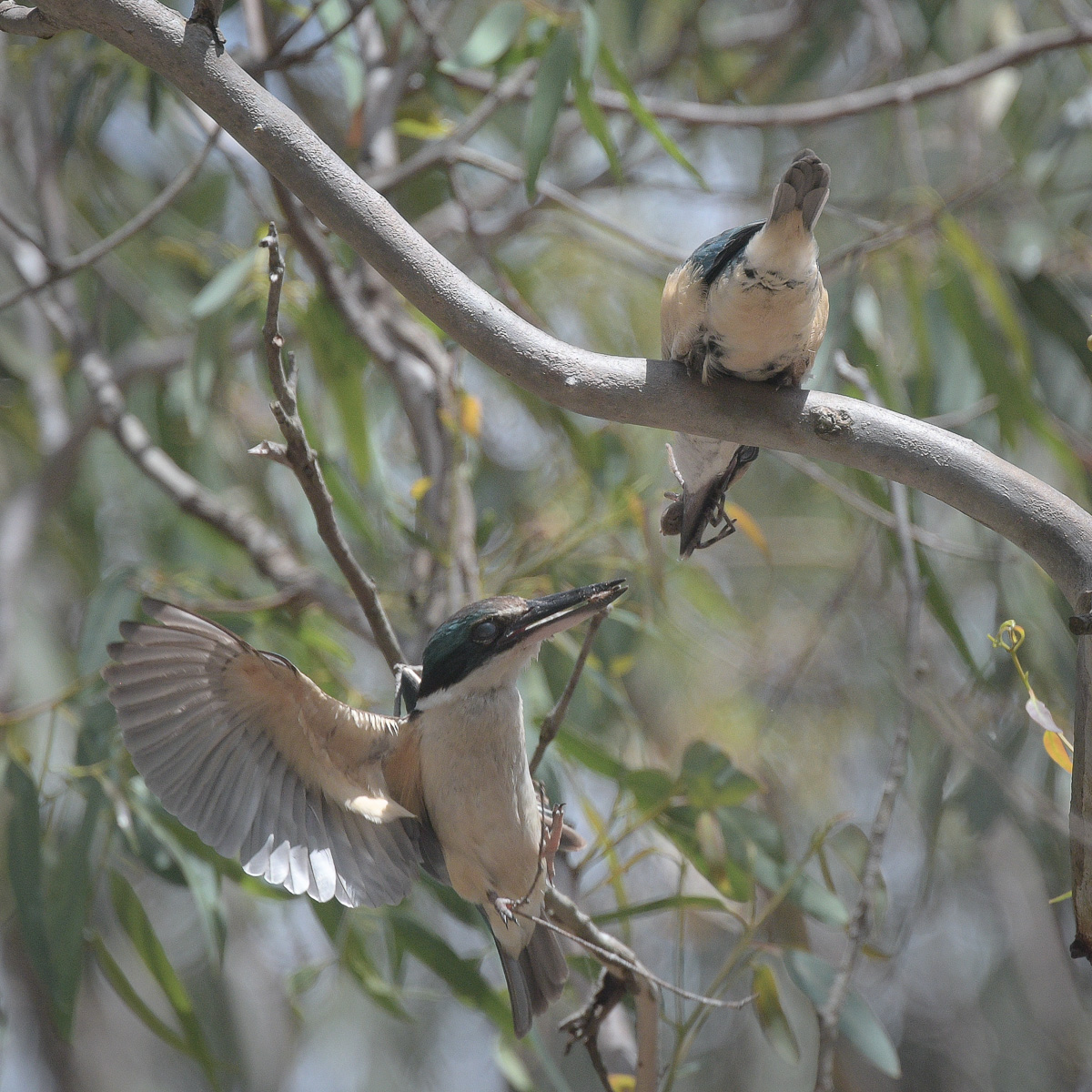
One of the most interesting things was the markings began to change. The wing feathers are burnished with a rich bronze edge that seemed to become more pronounced as the days went on. Two of them had elegant white-eyelashes below the eye, while the other didn’t. Perhaps is a id feature for the sex of the young, but I really don’t know.
Here’s a look at the week’s work. Next will be the last post, as they began to work very much on their own, with Dad only offering supervisory advice from time to time.
Enjoy
The only time I saw the two adults together with the young





















 Birds as Poetry —— Just because I WANDER doesn't mean I'm LOST