
We arrived one morning to find some splashes of white on the outside of the nest.
A good sign.
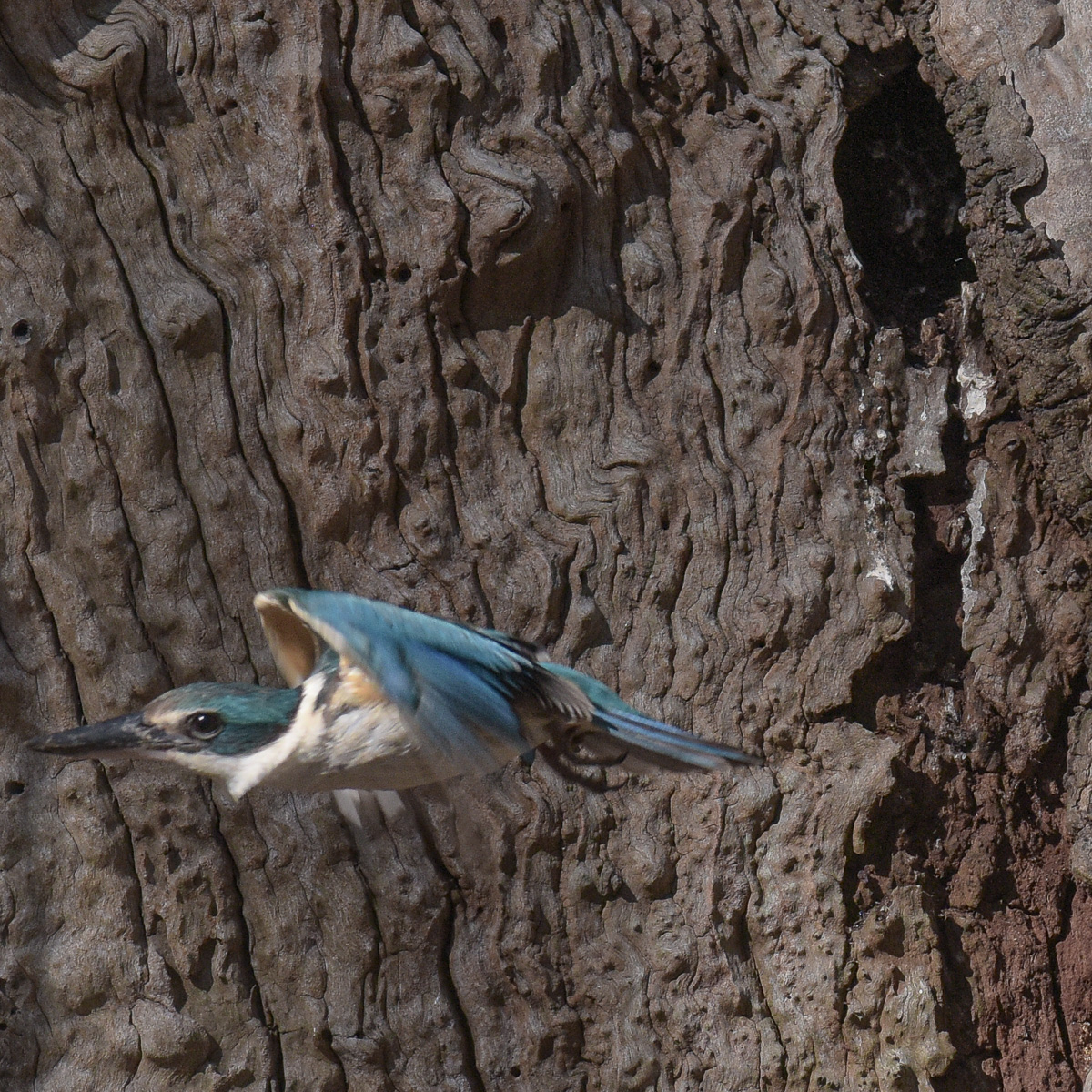
Once the young begin to move about, they back down the hole and eject out of the nest. Nice to have a clean home.
But getting a glimpse of the young was much more difficult.
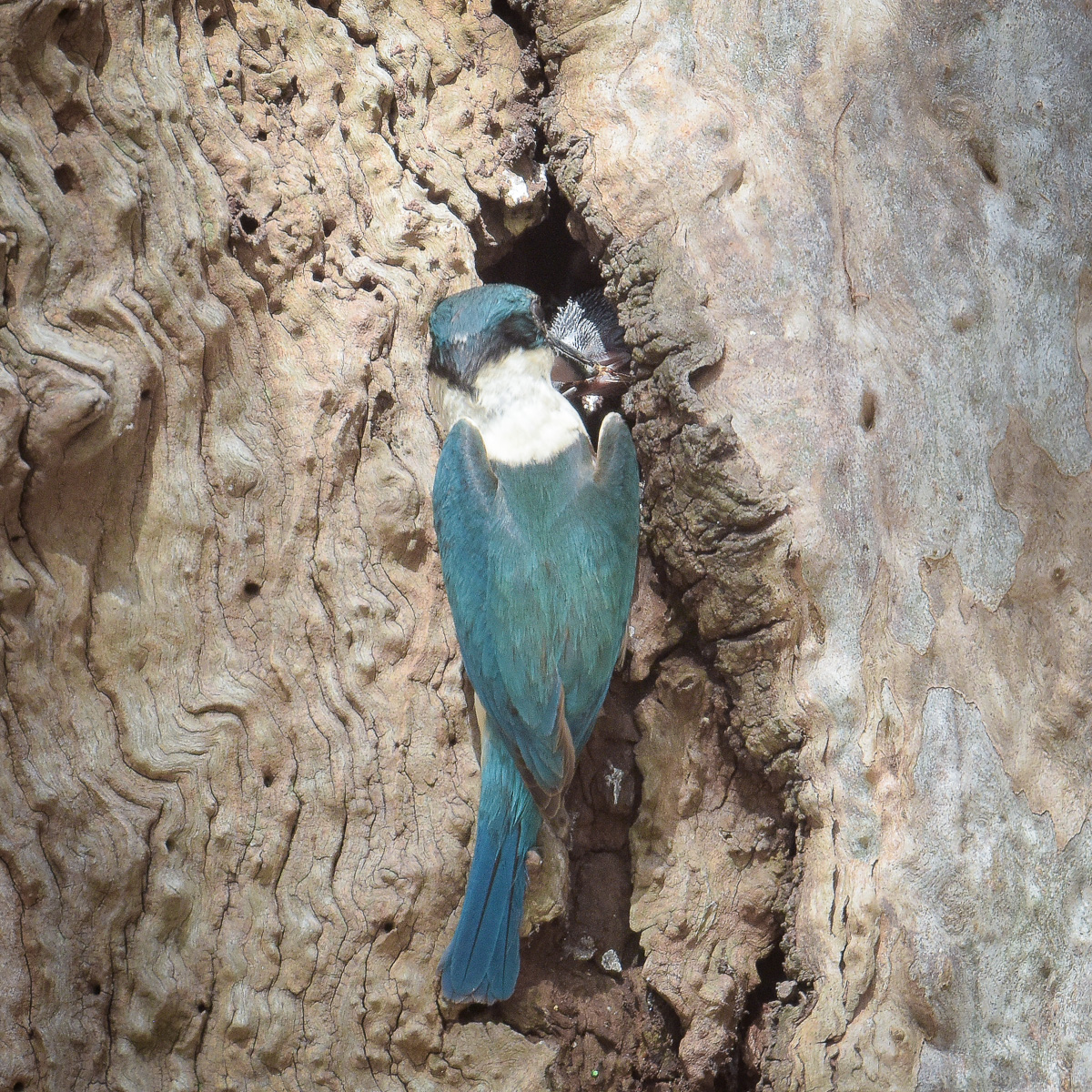
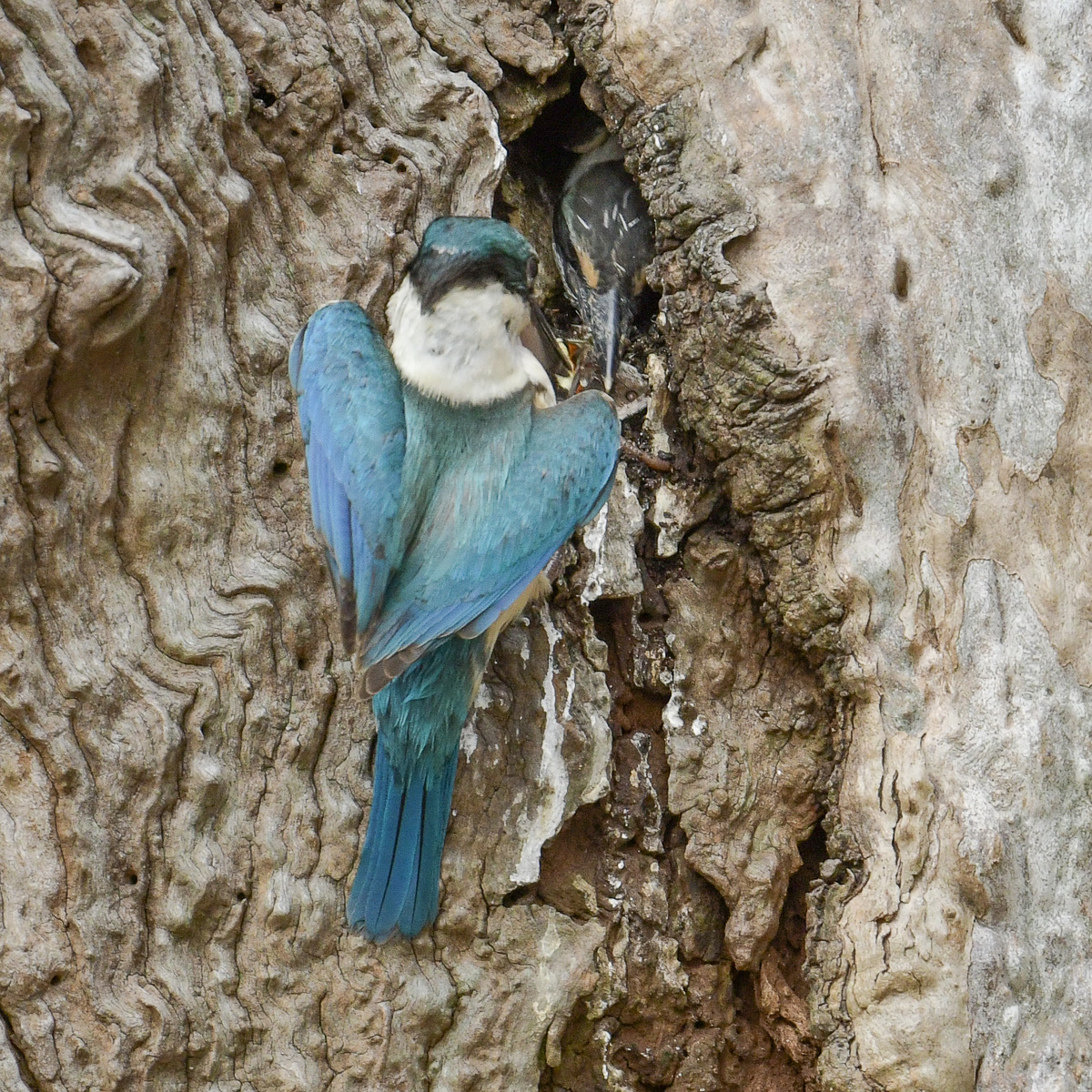
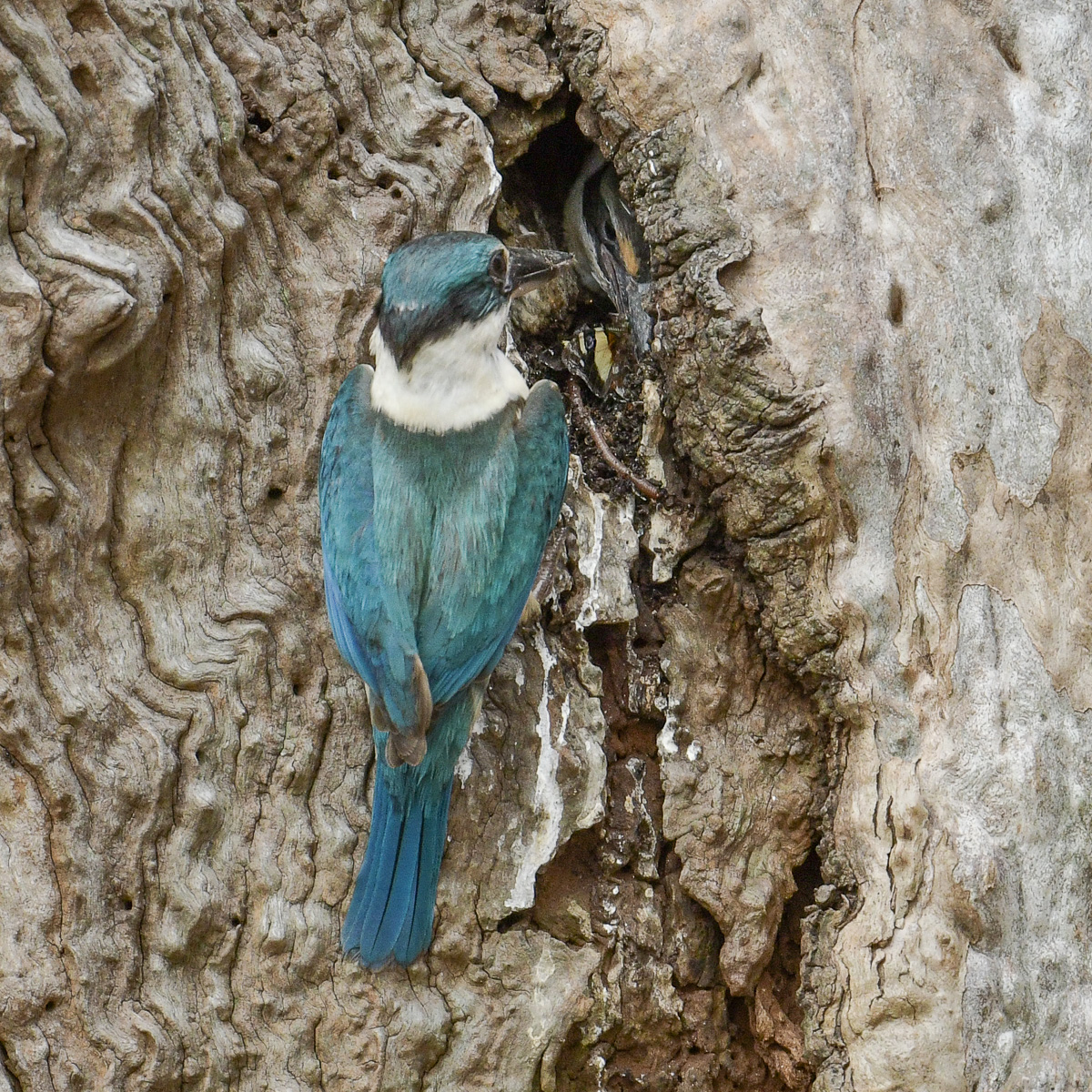
Over the next week or so we were able to get to see one poking its head around the corner to accept a meal. But most times the wing position of the adult hid them from view, and the head only came out far enough to grab the meal and then very quickly retreat.
Also the weather didn’t help us a lot, as it was mostly overcast to porridge sorts of days. Add that to the thick canopy cover, and camera settings became less than ideal.
The parents were now in high food finding and delivery mode, so every few minutes a new offering would arrive. Out would pop a tiny beak, and the food was gone.
Looking at the results on screen later, it was interesting to see how over the days the feather changes began to take effect. First they were rather grey with some white, then little streaks of white down began to disappear, and some facial colouring of buff orange and grey were noticable.
We managed to return about every second morning. So were in high spirits one morning as we arrived.
There were no adults about, so we waited.
After about 20 minutes there was no sign anywhere near the nest.
So, 45 minutes, and then an hour and still no adults.
Had they lost the clutch to a disaster over the past couple of days?
Or
Had they flown the young, and if so where were they, and how many?
We widened our search down the forest.
Here are some glimpses.
Enjoy



 Birds as Poetry —— Just because I WANDER doesn't mean I'm LOST