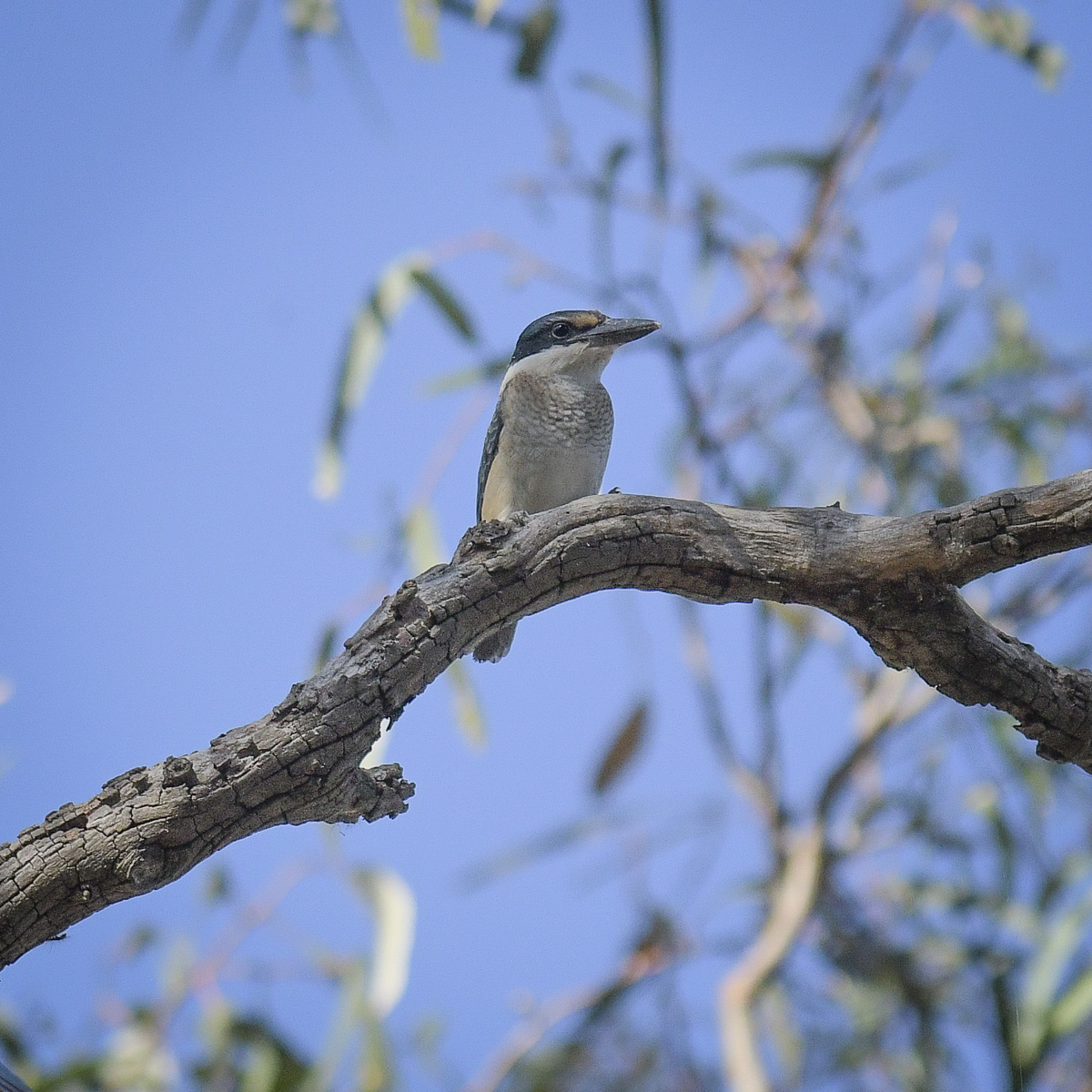
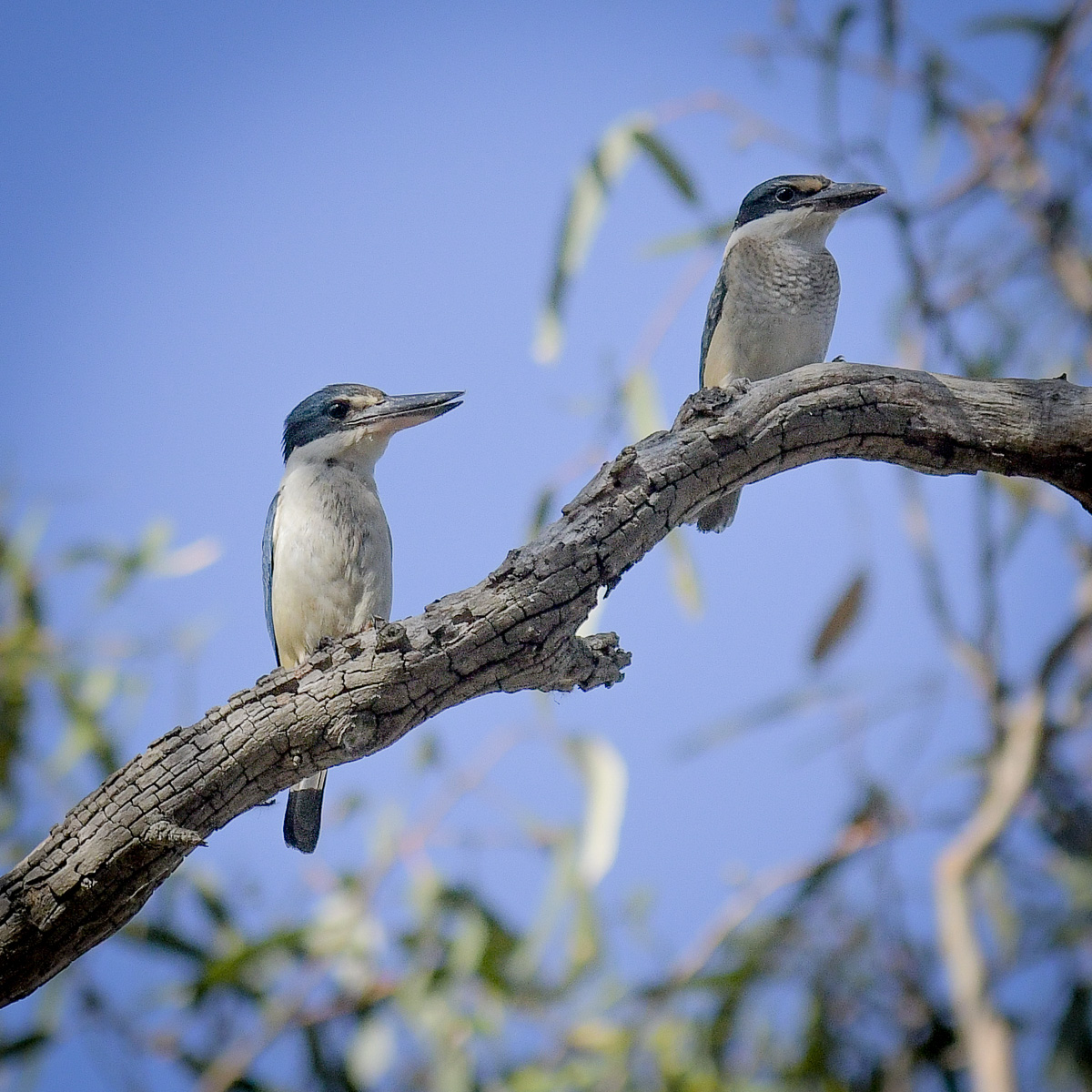
We arrived one morning and scanned about the nest. No adult flying in, but that could have been normal. So. We waited. Time, did go by. About an hour infact before we both acknowledged that they were no longer tending the nest. A quick look around the nearby trees, did not find any sign of young, nor of either adult. We crossed over the small depression that acted as a water overflow in flood, and looked further down the forest. Finally, a flash of blue in one of the tallest of the River Red Gums. And, way, way, way up high was a smaller golden and blue bird. They had managed to get at least one off. Much too high for good photos, so we went back to waiting.
The time between feeds stretched out to from 20 to 30 minutes. There was no need for the little bird to fly down, and so, it didn’t.
The long wait between food could have been explained if there was at least one other young one somewhere, but look as we might. To no avail.
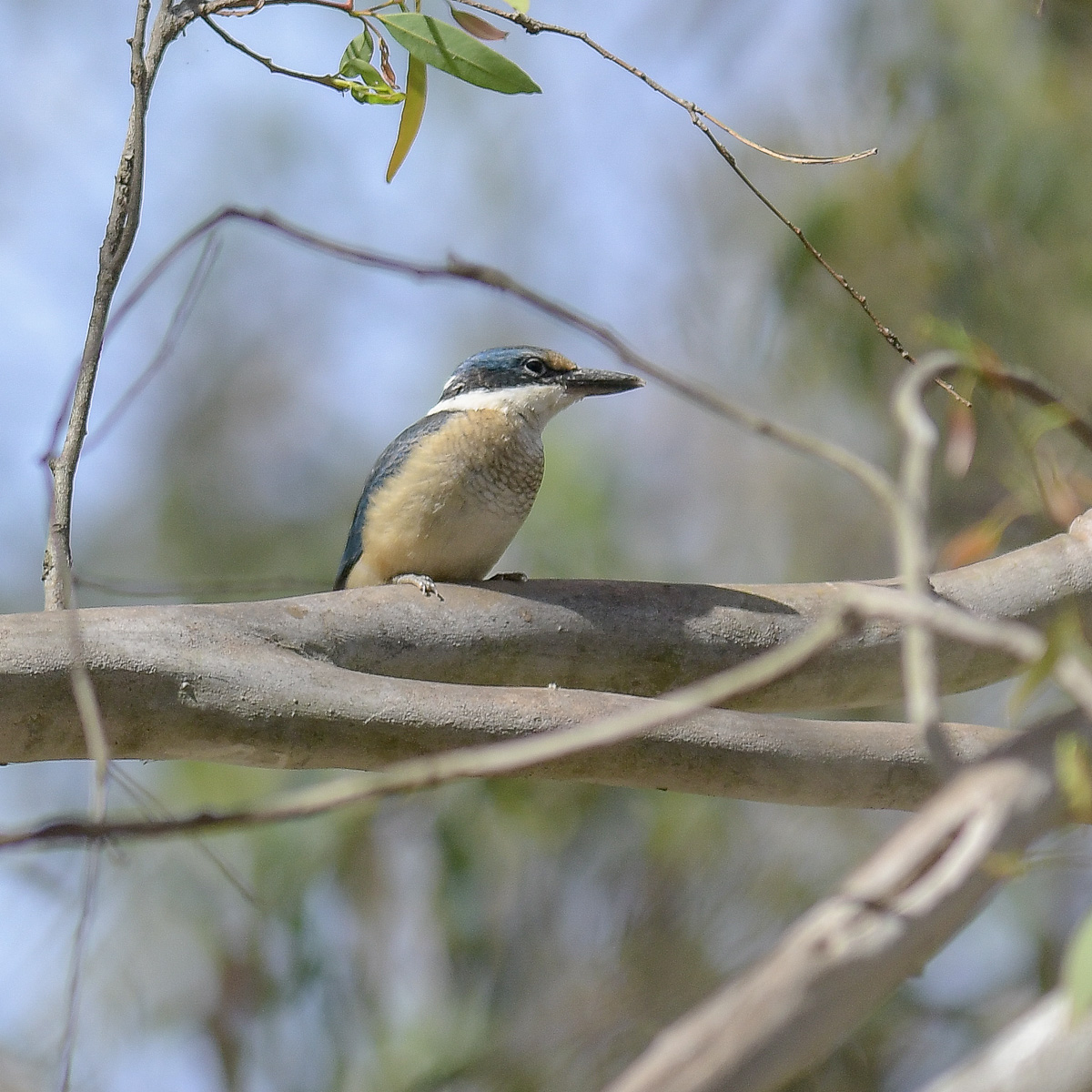
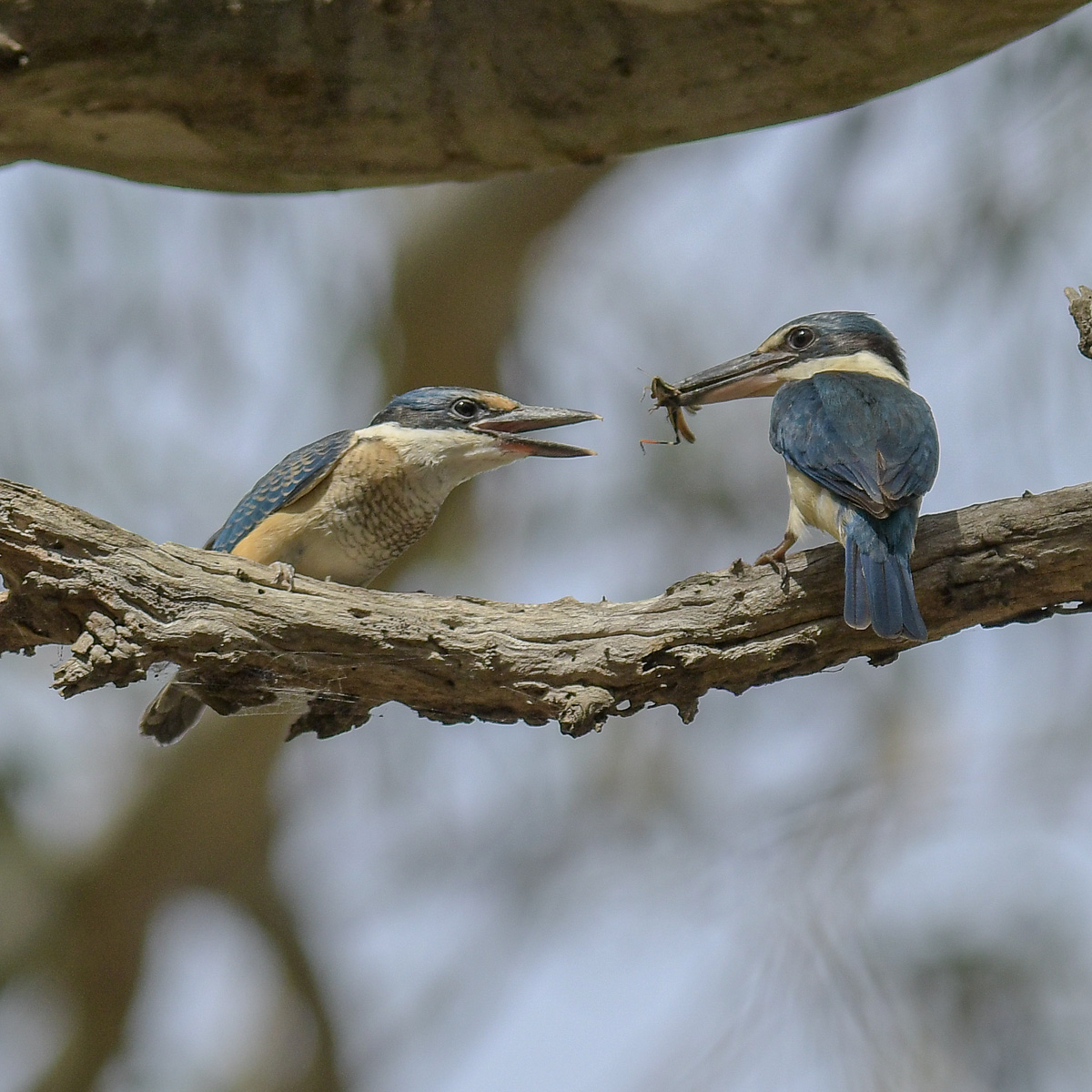
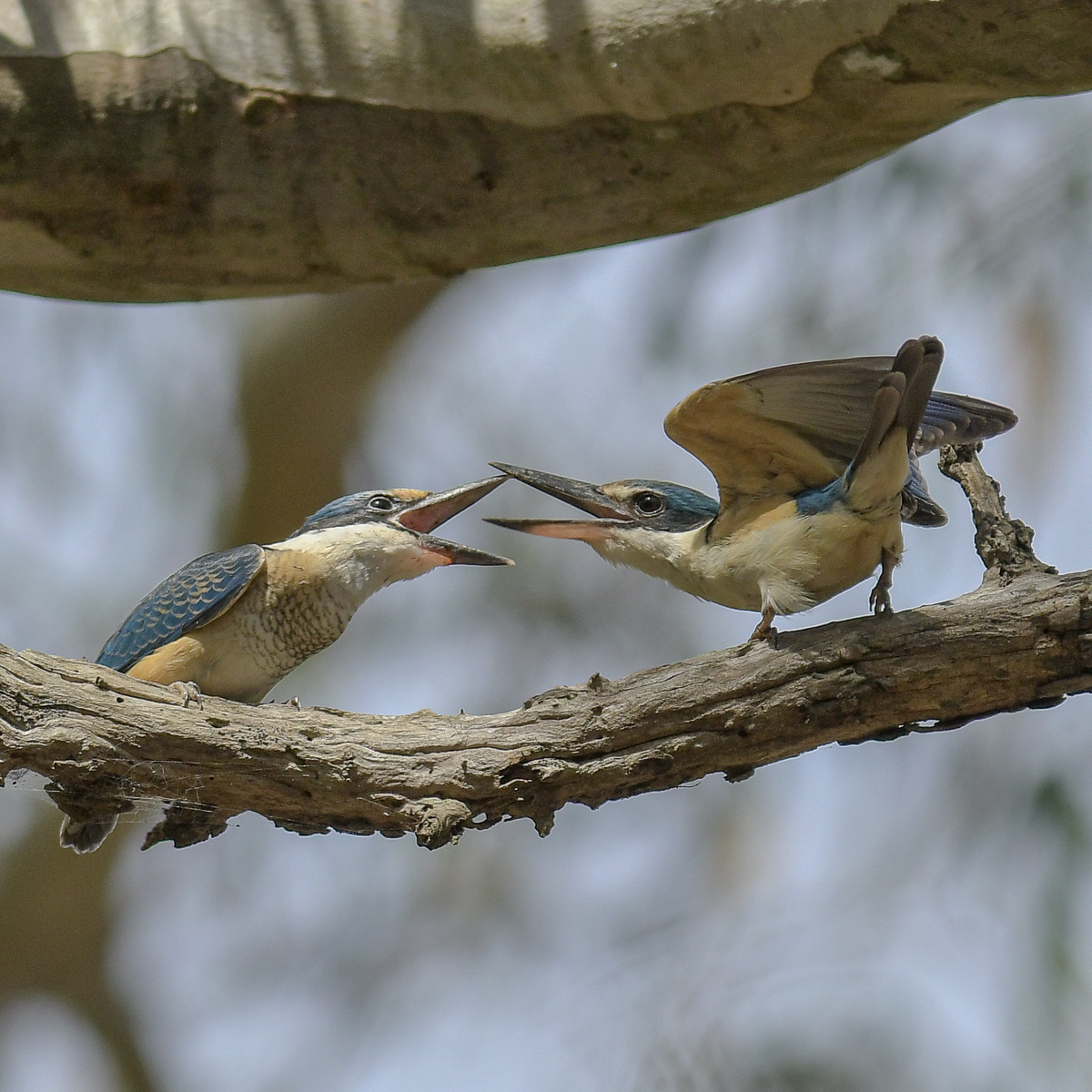
A call from one of the adults and the little one zipped out of the tree and across to where the food was waiting. Then suitably stocked up, it flew further down the forest, and we followed. This time is was a little above head height and we held back to see if it would be fed.
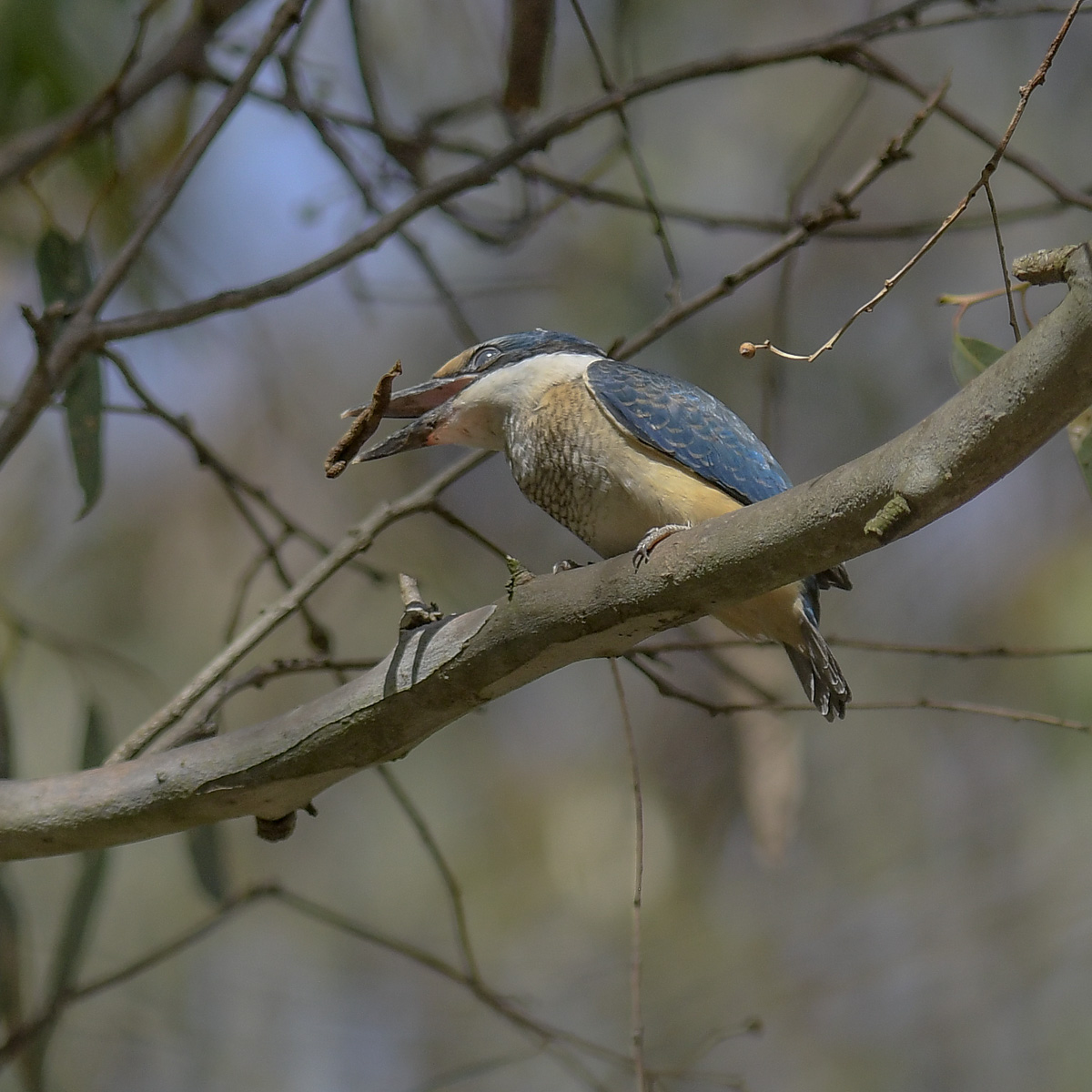
It amused itself by preening and trying to manipulate a stick it had broken from the branch. Eventually Dad returned with a morsel and things seemed to be going well.
We left, still wondering after all those food supplies that went into the nest, if there might not be more than one. A solution didn’t seem to be forth coming.
Here is a selection from several days on the wing.
Enjoy
Oh there you are. Way up there.Food delivery is a very quiick polished operationThe young one flew to where the adult was waiting See my cute little tail. Incoming food. Successful transferIn depth discussion, no doubt about what was on the upcoming menu.
We arrived one morning to find some splashes of white on the outside of the nest. A good sign. Once the young begin to move about, they back down the hole and eject out of the nest. Nice to have a clean home. But getting a glimpse of the young was much more difficult.
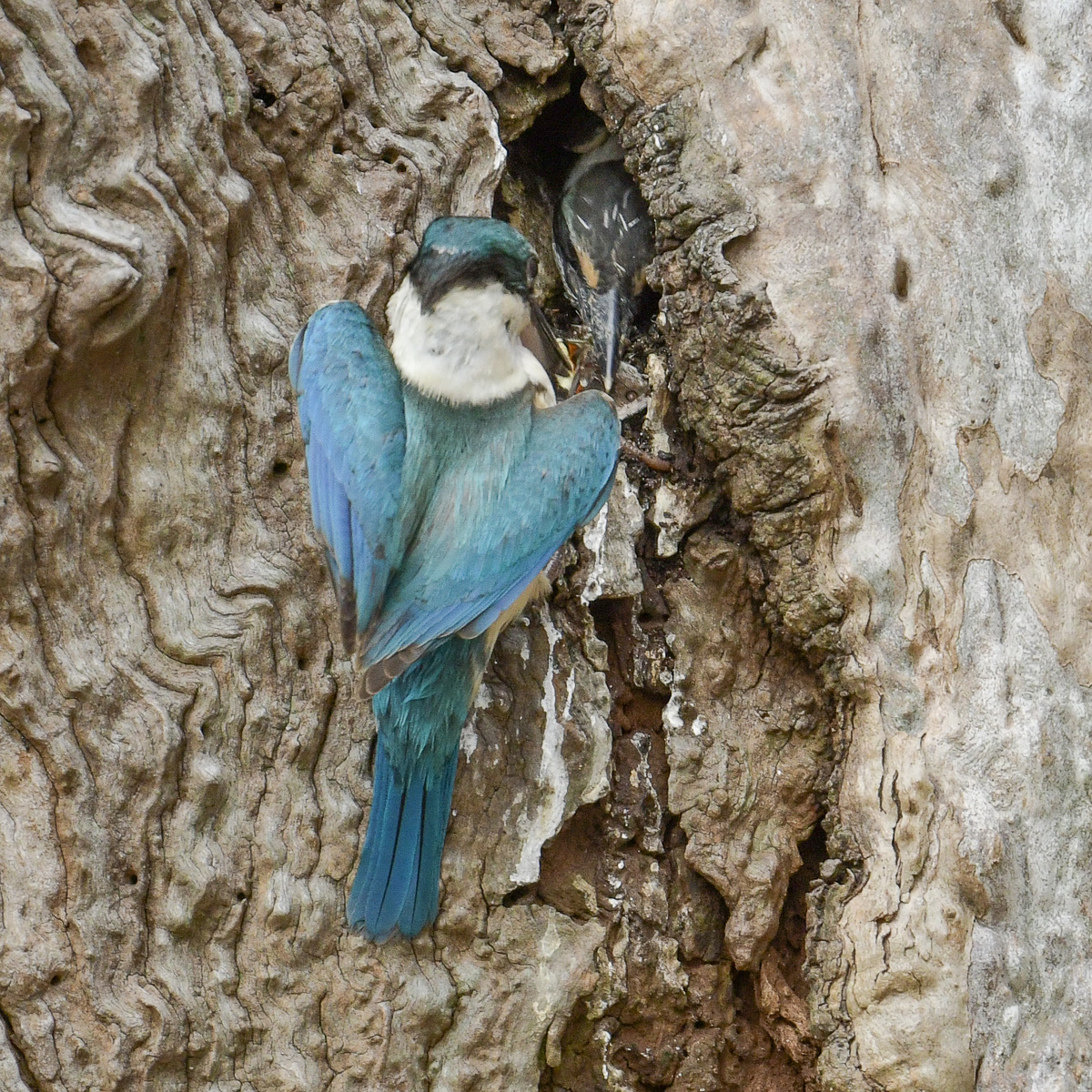
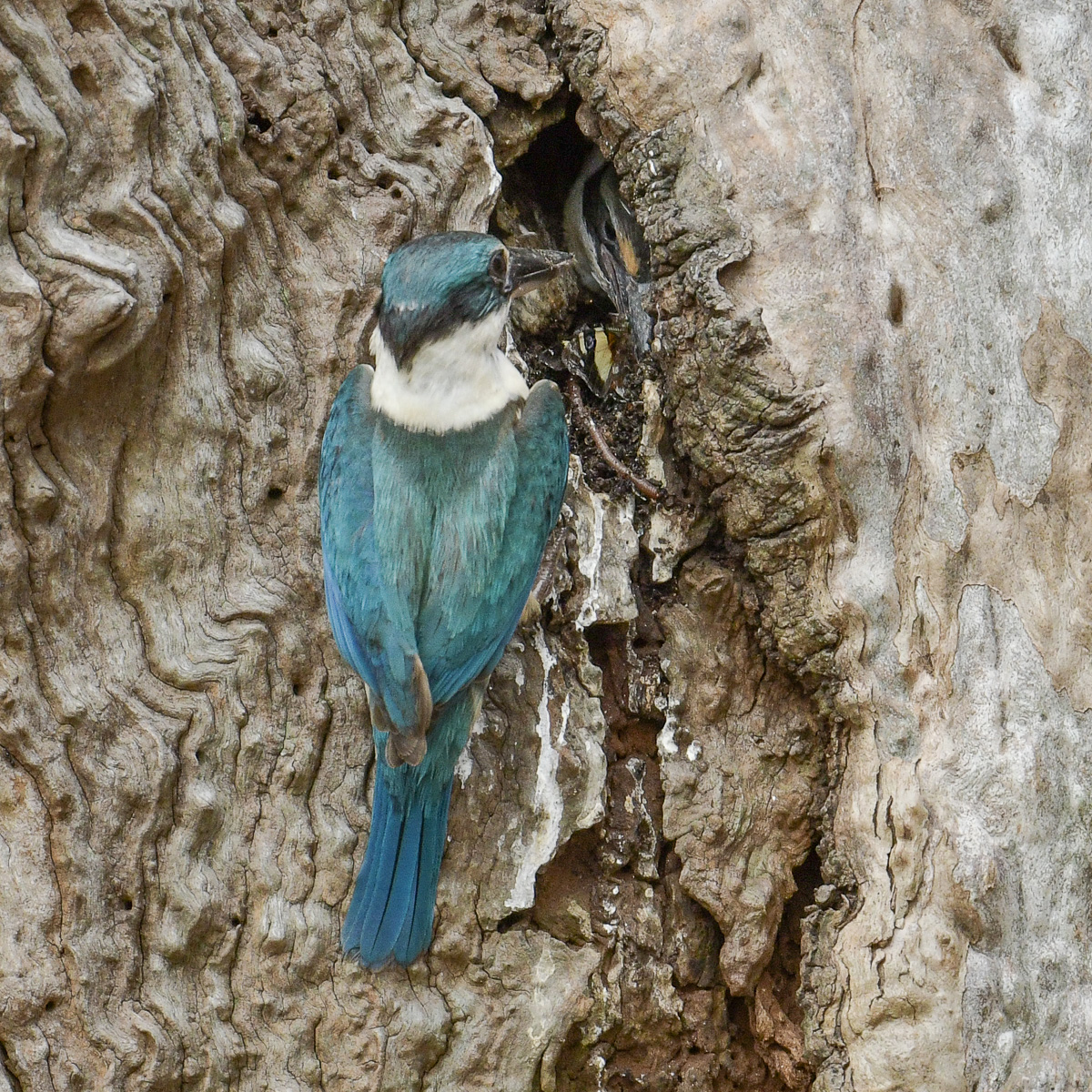
Over the next week or so we were able to get to see one poking its head around the corner to accept a meal. But most times the wing position of the adult hid them from view, and the head only came out far enough to grab the meal and then very quickly retreat.
Also the weather didn’t help us a lot, as it was mostly overcast to porridge sorts of days. Add that to the thick canopy cover, and camera settings became less than ideal.
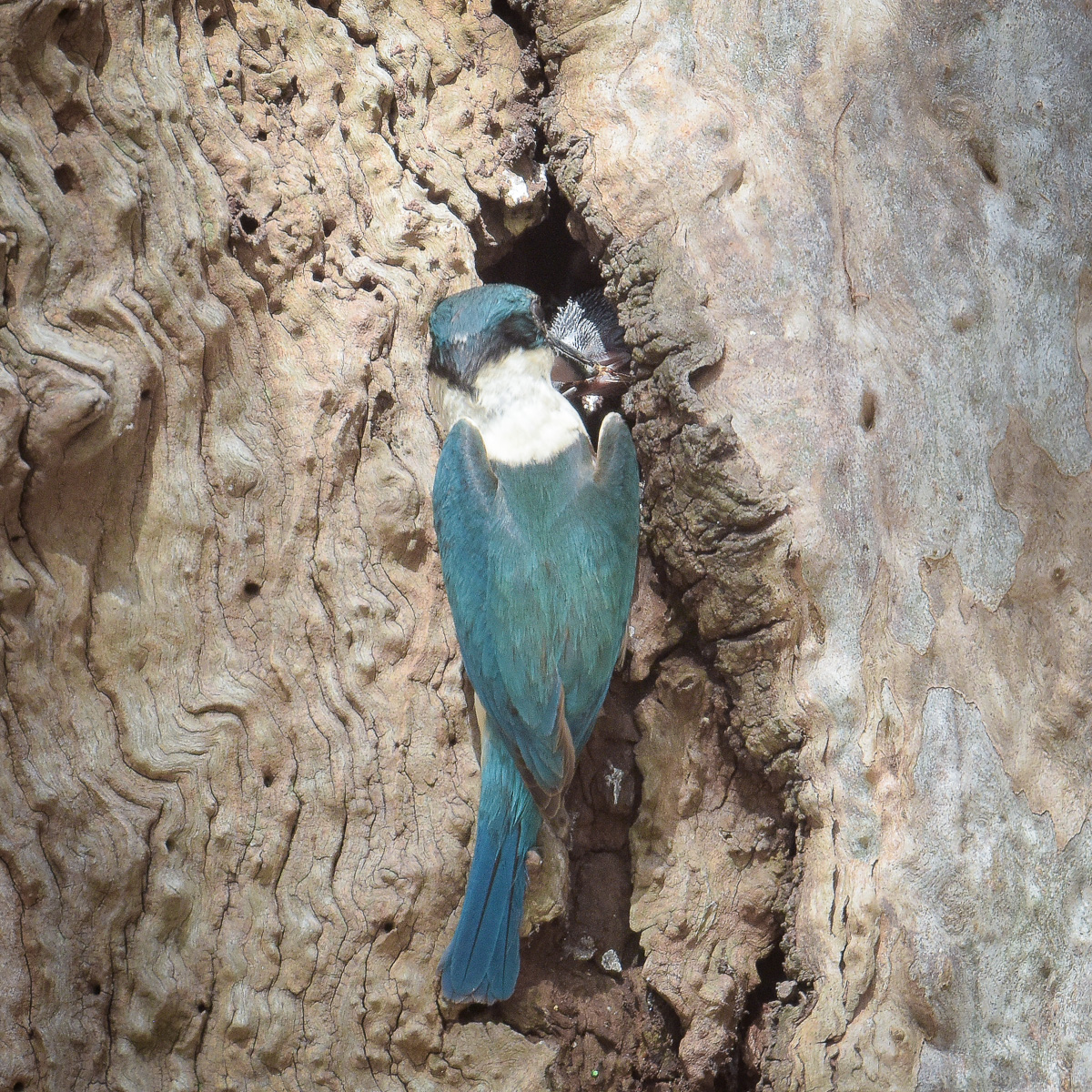
The parents were now in high food finding and delivery mode, so every few minutes a new offering would arrive. Out would pop a tiny beak, and the food was gone.
Looking at the results on screen later, it was interesting to see how over the days the feather changes began to take effect. First they were rather grey with some white, then little streaks of white down began to disappear, and some facial colouring of buff orange and grey were noticable.
We managed to return about every second morning. So were in high spirits one morning as we arrived. There were no adults about, so we waited. After about 20 minutes there was no sign anywhere near the nest. So, 45 minutes, and then an hour and still no adults. Had they lost the clutch to a disaster over the past couple of days? Or Had they flown the young, and if so where were they, and how many?
We widened our search down the forest.
Here are some glimpses. Enjoy
White-wash at the nestLittle grey head showingSome eyebrow orange begining to showThe young one takes a frog insideReally filling out nowButterfly breakfast
It takes a little over three weeks for the eggs to hatch and another 24-27 days for the little birds to grow ready to leave the nest for the first-and-last time. When they do emerge, they are mini versions of the adults. And quickly pick up skills to feed themselves.
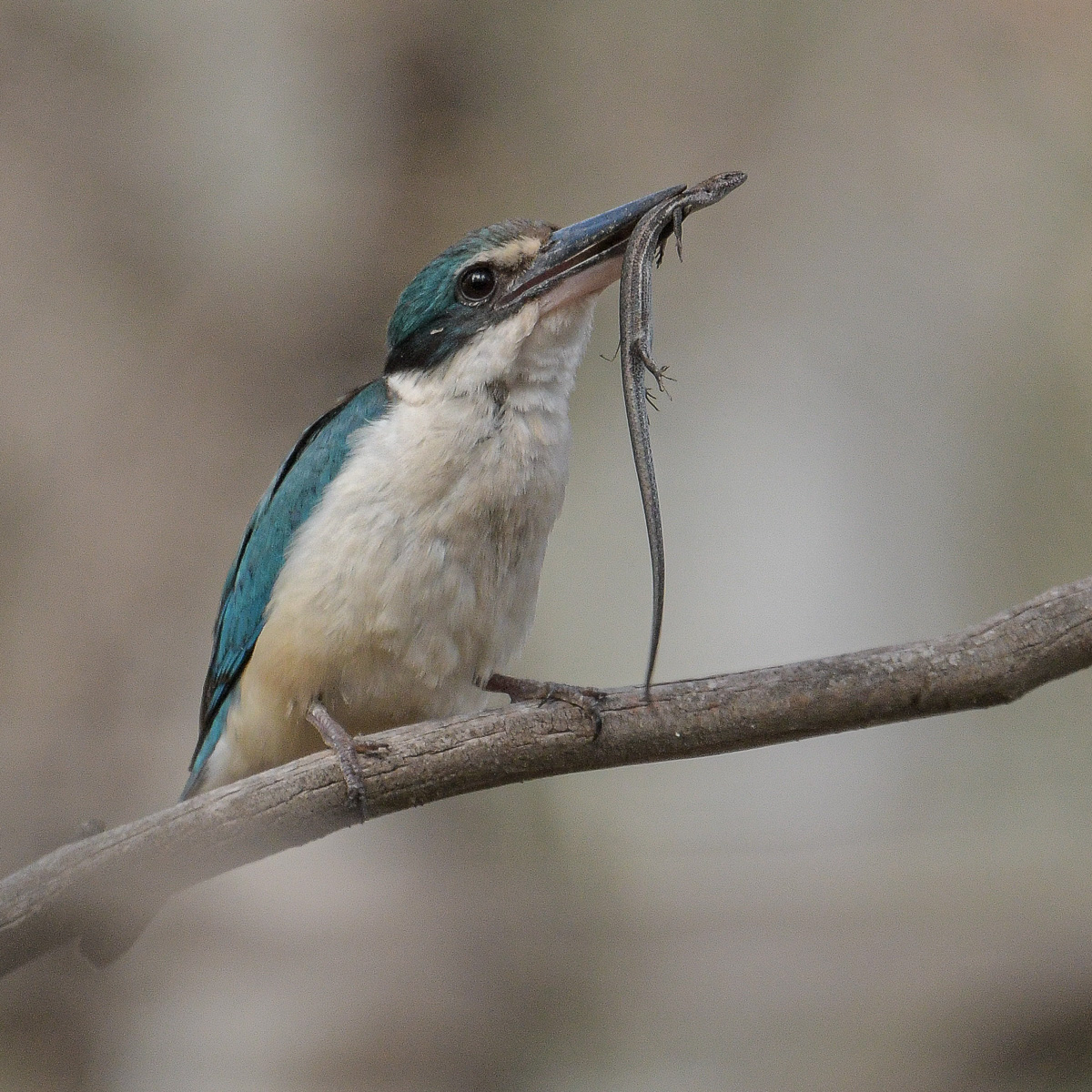
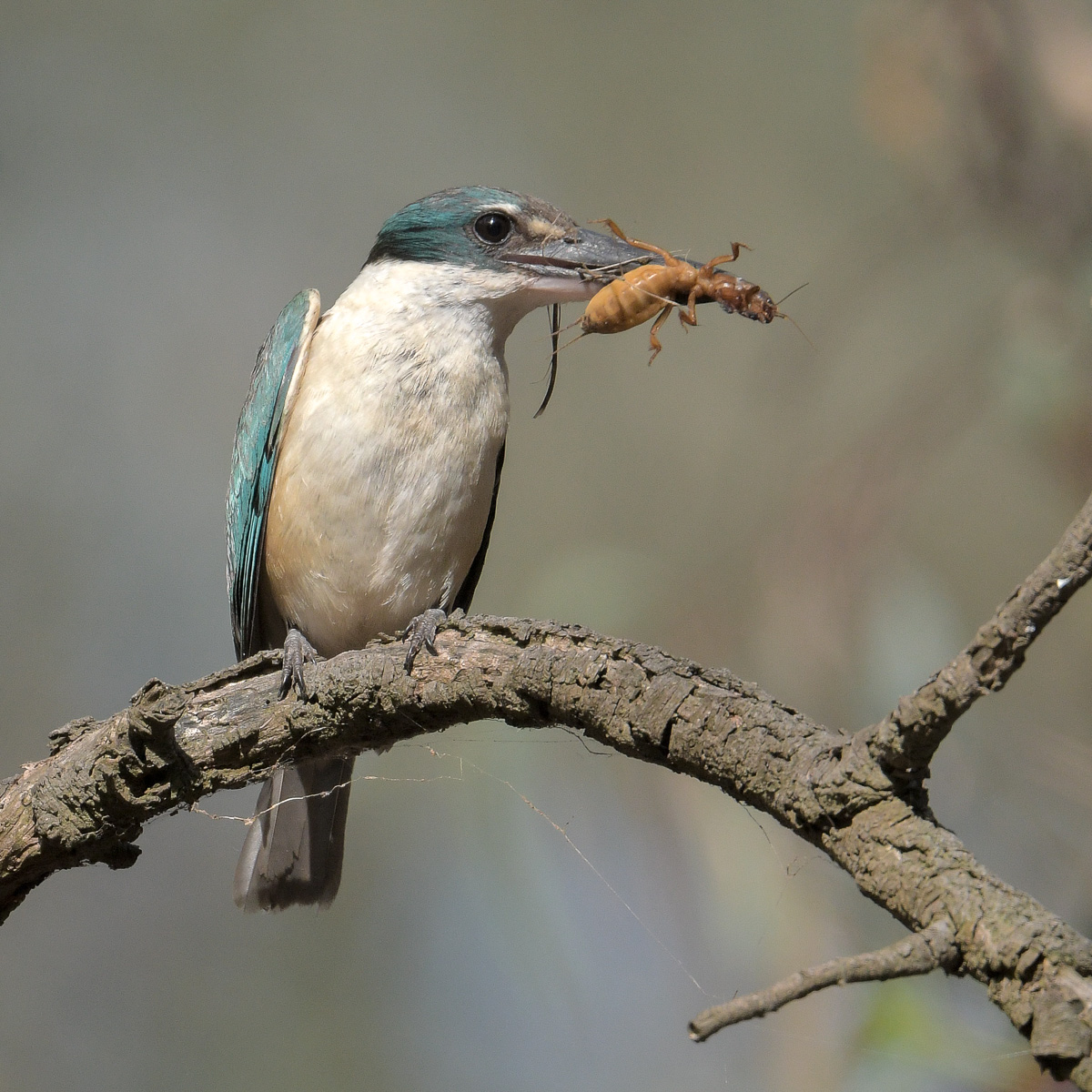
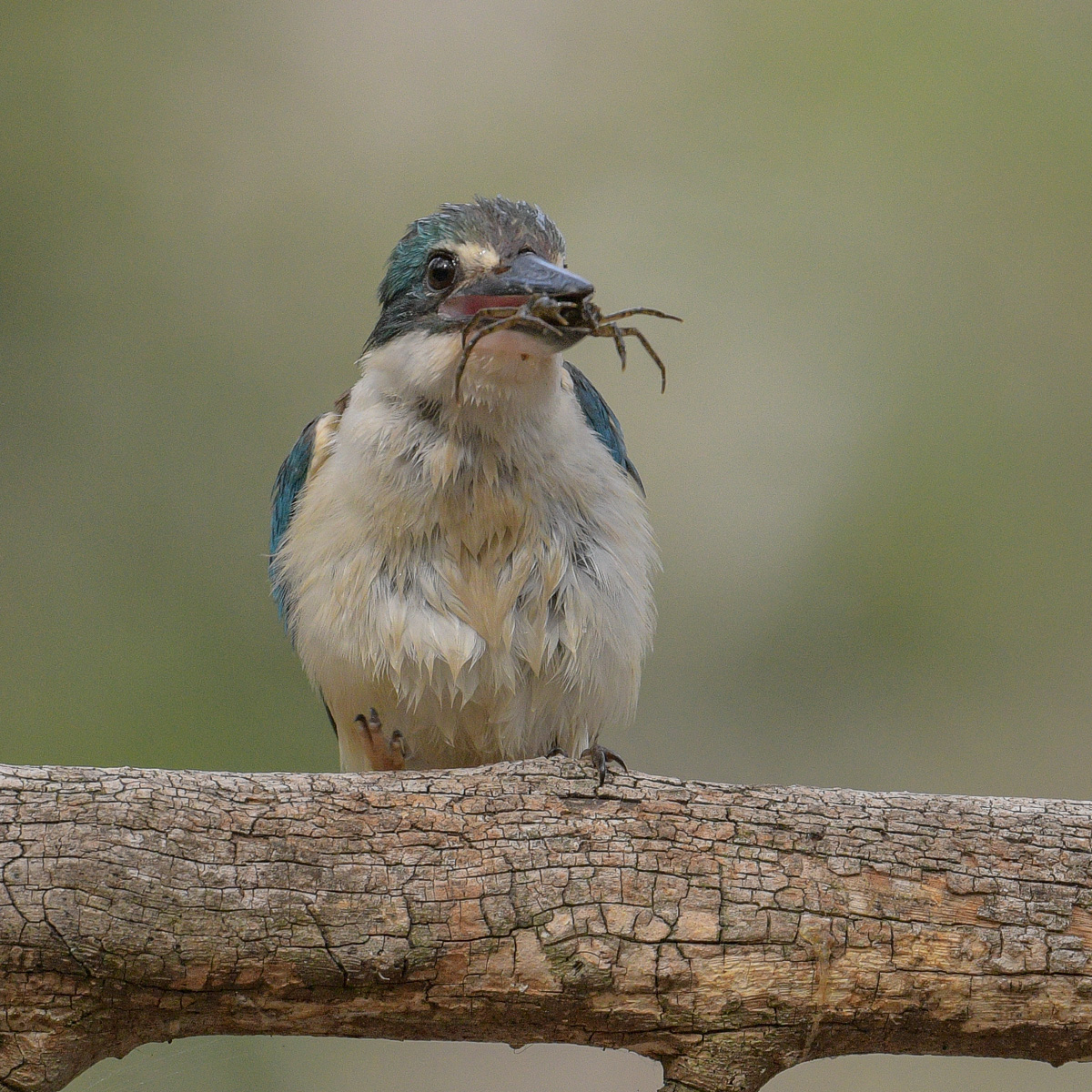
Despite the name King-Fisher, the Sacred variety seem to do very little, if any fishing. Over the 6 weeks or so of hatching and pre-flight, I only spotted a couple of tiny local river fish being brought in, and several other aquatic creatures such as frogs.
By the time the young were ready to be fed, the male had become so absorbed in his delivery job that he was by then, completly indifferent to our presence, and would do close flybys and land on nearby convenient branches. A few times he realised that as I was moving my foot around where I was standing that it had startled something to eat. The scary sight of a Kingfisher flying directly toward me caught me unprepared. He’d land within touching distance, pick up a treat, and then be on his way.
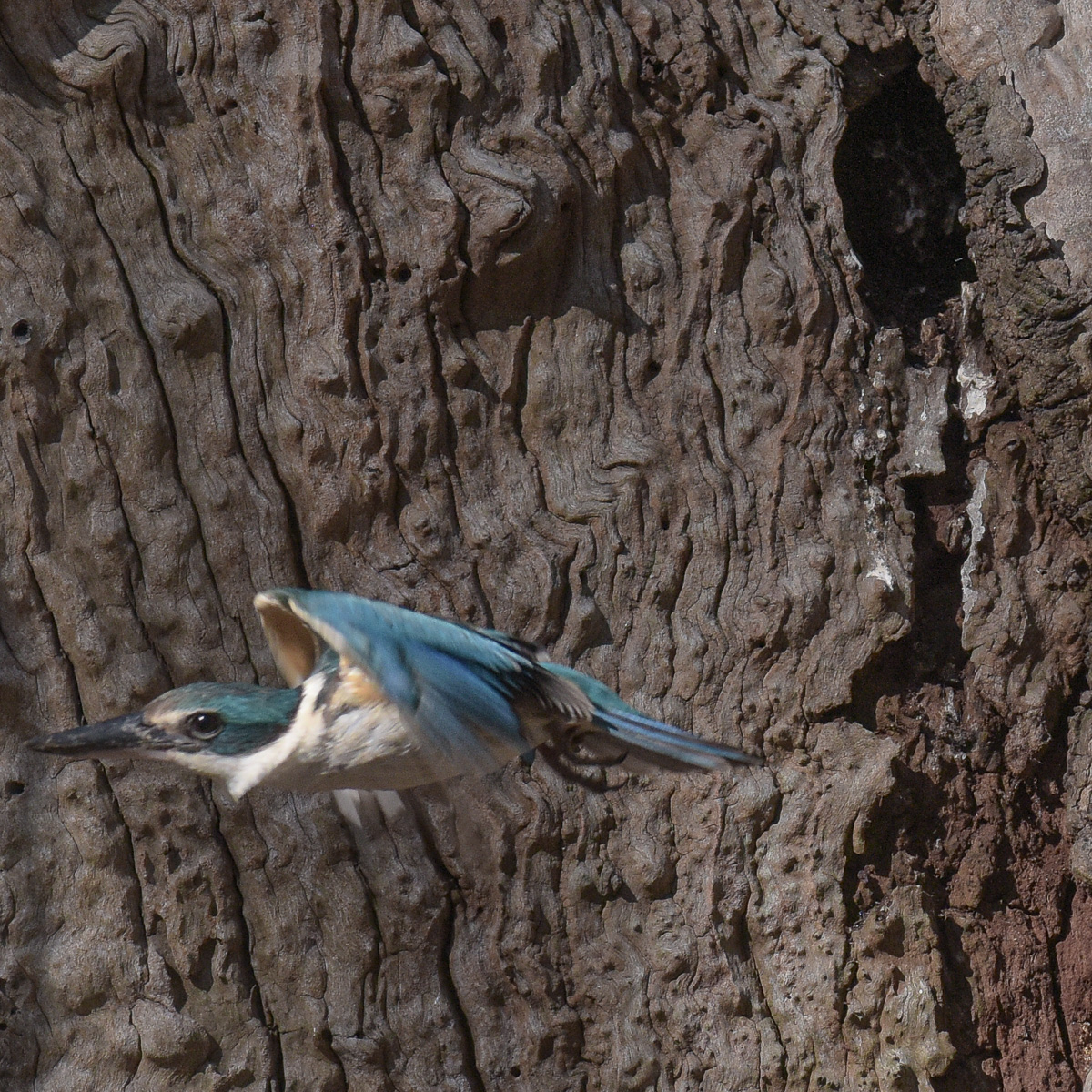
At first he would turn up about every 30 minutes or so with a snack for the sitting female, and on occassion she’d also take the opportunty to come out for a stretch and the male would take up sitting duties. After a time she’d return, sit close by and call, and it I was quick enough I might catch him on the exit from the hole. She, on the other hand didn’t give any warning of leaving and it was only luck if I even saw her emerge.
It’s imposible to tell when they started to hatch, and for some days he’d deliver food and she would have fed it to the young. After about a week or so, by my reckoning, she too was out full time and making regular feeding trips. The time began became about one visit every 10 minutes. We began to wonder how many young were in there, and if they would not grow so fat that they couldn’t fly out, so much food was going in.
The eyesight of the bird was something I’ve never really thought about before, but it’s phenomenal. From a perch closeby, he could fly direct 80-120m to a tree, bush or to the ground and come back with something. The miss rate was very low indeed.
We still gave them as much distance as possible and didn’t move around in the area any more than necessary. He even become so relaxed that while we were enjoying a morning cuppa about 100m from the site, he would come and sit on a favourite branch over some ground cover and usually picked up something very close to the log we were sitting on. Once he hunted under the log near our feet.
Here’s a selection of menu items, and I’ve had to be very selective as there are dozens more. With all that food going in we were now wondering, what was likely to emerge, and when.
EE and I took an early morning trip down the the Kingfisher area. Mostly I guess to see if they were still around or had they moved on. Some “Pe, Pe, Pe, Pe” came from the forest just off the track, so we ventured in to at least catch a glimpse of one of them. Then a longer, “Skracrrch” call. Now, the books will say this is a call that the birds use on returning to a nest, and they do. But, it is also a pair contact call I think, as It’s often used by a pair away from the nest.
The area we were walking into has some very tall, old Red River Gums, so, perhaps, they had found a spare opening after all.
Another call about 50-60m in front of me, and a flash of blue. Ah ha. there you are. The area is quite undualting with little water courses. I think most if it was formed when the nearby golfcourse was built and all the unused earth was dumped along the river bank. It also might have been designed as a levee to keep any flood water from reaching the golfcourse. But—water being what it is found ways to bypass that when the river came over the banks.
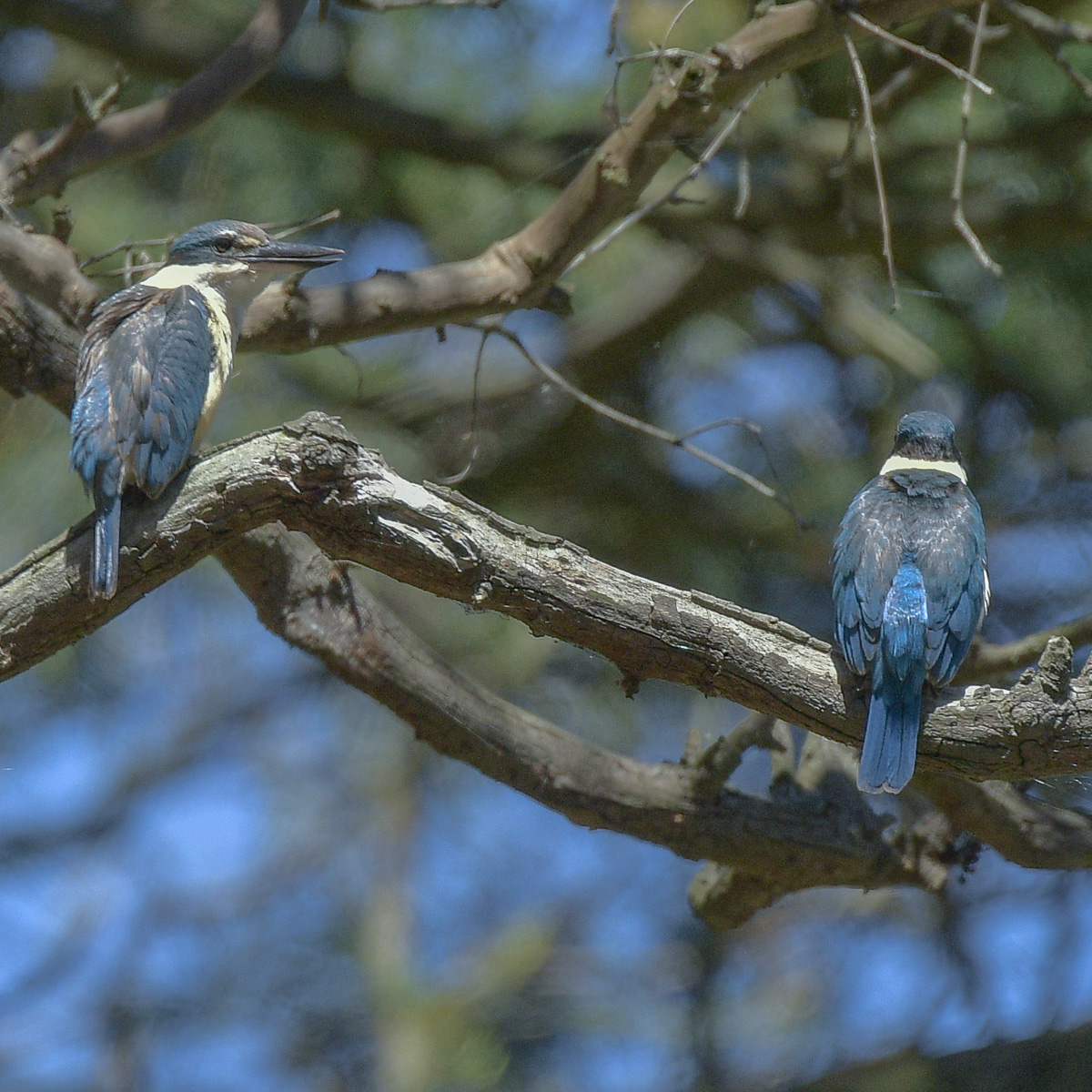
There are quite a few wallaby tracks through the undergrowth, and I was looking for a way to get across one of the water courses, and swung round past a large old stump, when a flash of blue went right past my knee. EE, calmly said,” Did you see that?” We pondered where it had come from, and couldn’t decide if it had come from the grass in front of the stump, or had the bird flown around the stump. The second bird then landed on a branch nearby, and the penny, if that is the way it works, dropped.
There is a nest somewhere near here.
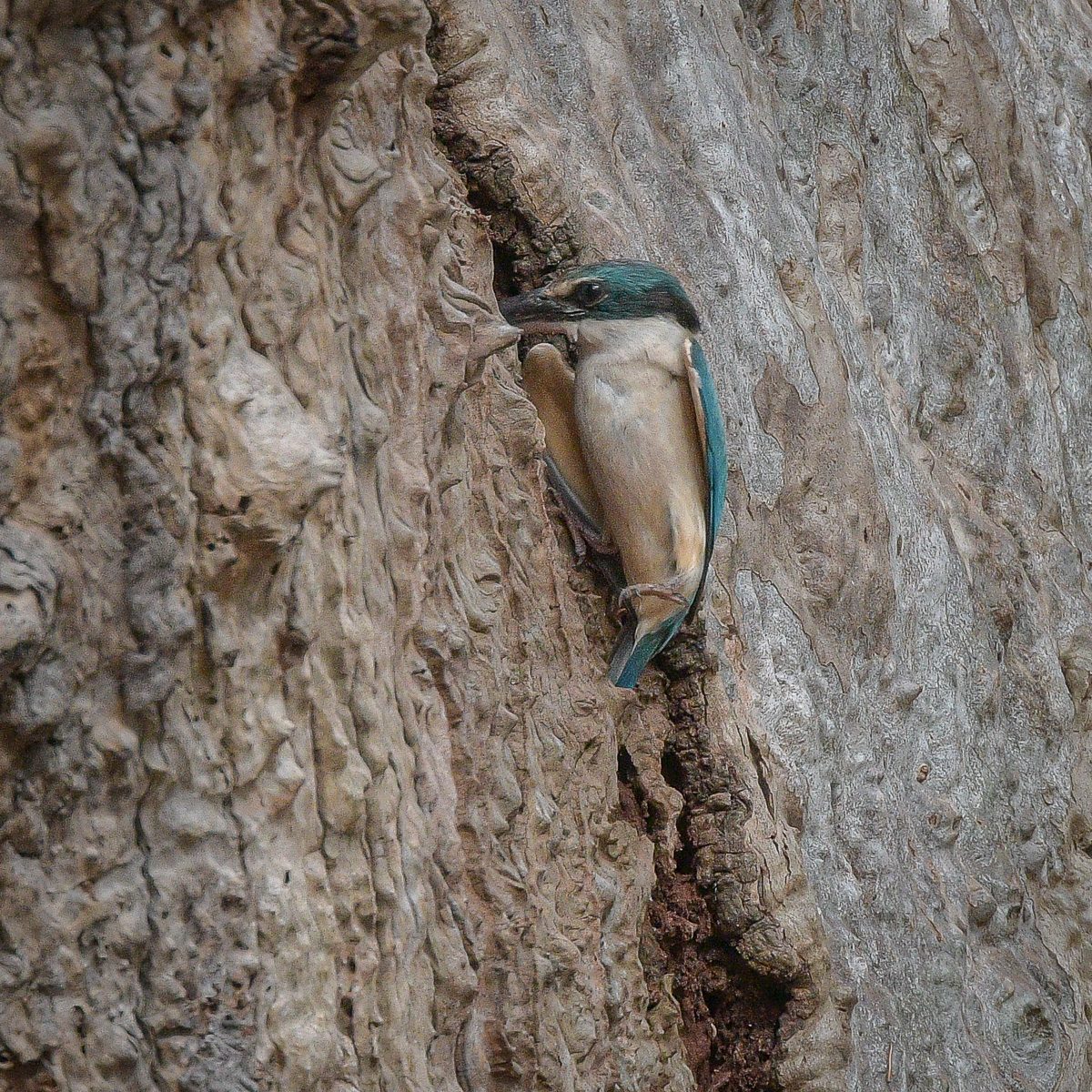
We retreated down the water course and up to higher ground about 30metres away. Time to sit and see what happens. The second bird sat. After about 15 minutes, with much “Skraccrch”ing calls, the first one returned and sat on a horizontal branch about 5 metres from the old stump. Then, dropped down, landed on the side of the stump, and with a little bit of wriggling, slipped into a hole in a join in the stump.
Found you.
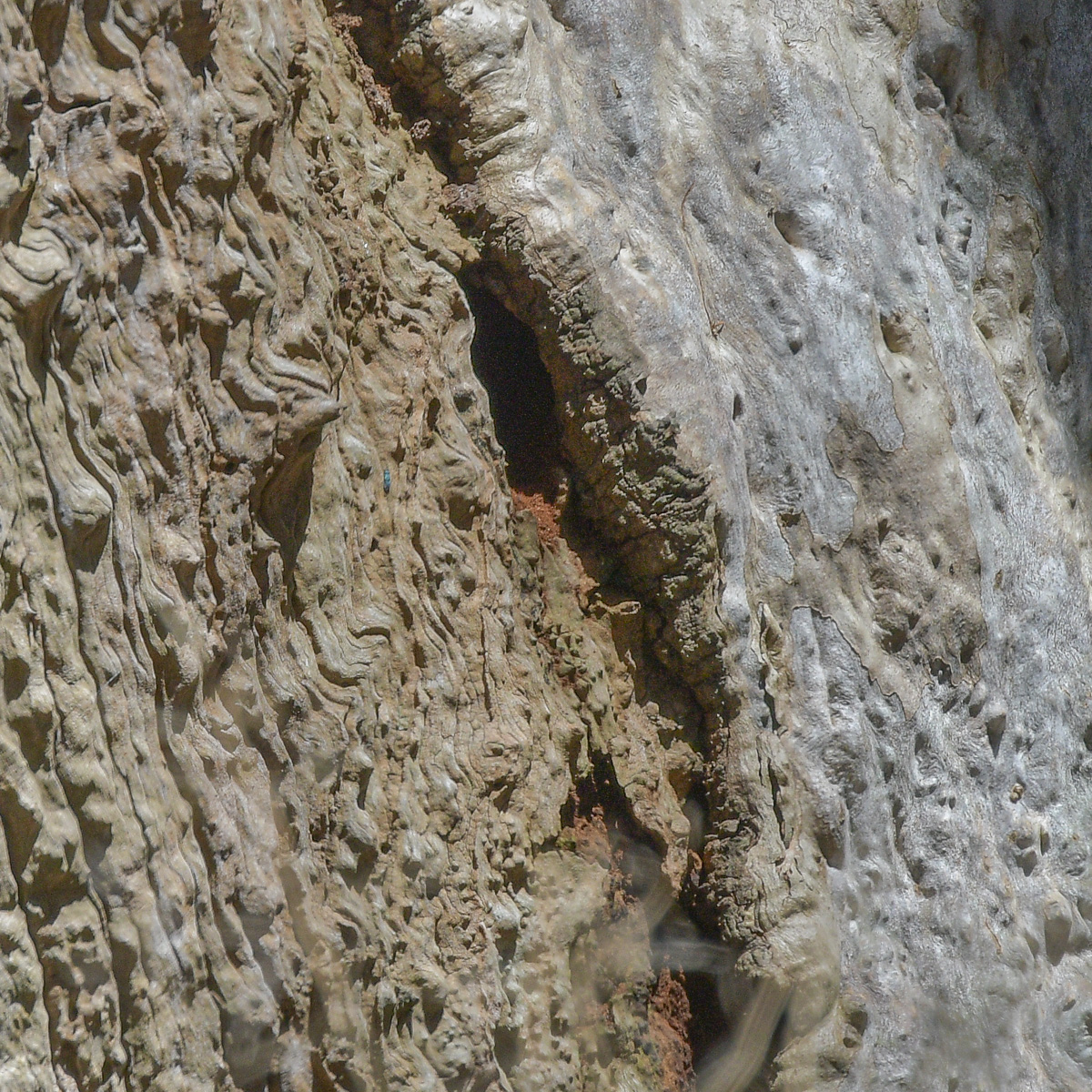
The stump is very old. It has at least three growth scars. The oldest is overgrown with what would have been a new growth many years ago, and now is dead. The “new” growth had attempted to heal over the oldest wood and now it formed a line that over the years, had begun to rot. Somehow or other the birds had either opened up a tiny crack, or just as likely had burrowed to get into the older rotten wood inside, which no doubt had deteriorated into a respectable chamber for their operations. How they would know it was hollow is also a mystery.
The overlap meant they had to squeeze under the ‘new’ growth to access the hole, (they would over the course begin to open up the hole and make the entrance a lot easier.) It seems a feature of Sacred Kingfisher holes that they make an opening and then it turns to the right so that the entrance has a ‘plug’ that prevents anyone, human or otherwise, peeking in.
Nature has a way of not giving up, and out of the second growth, a third new growth on the far side of the stump had sent out some branches and leaves.
We waited.
After some time, the second bird—no doubt the male—took off, and within a few minutes had returned and deposited some food inside the hole. Looking Good.
Time to survey the possible photo sites. There was a large prickly bush some 15-20m from the nest, and would protect it from view from anyone passing on the nearby track, and between the bush and the nest were several small trees with horizontal branches that they seemed to use as staging spots to enter the nest.
We have huge respect for the privacy and security of a nest site, so were not comfortable working between the bush and nest, so it had to be either one side, or the other of the bush. I did have visions of carrying down the tripod, and radio contol, setting it up moving back away from the area, but the best shot posibilities seemed to be when the birds came and landed before entering. And that meant being able to change as they moved about. So we settled for the bush.
We sat and watched for another hour or so, and gained a good understanding of their movements, and were well prepared for a return visit.
Besides, just nearby out of sight was a large log on the ground that would be a good spot to rest for a cuppa.
Enjoy
This branch was proving popularSitting tummy down on the branchThe nest site. The overlaid second growth is noticable as is some remains of their excavation work at the bottom of the holeHe’s back with a catchThe nest hole needs a bit of twisting to get inWaiting for the audience to clear the area.
















 Birds as Poetry —— Just because I WANDER doesn't mean I'm LOST