Saturday Evening Post: Being There

Sometimes photographing birds is a bit of a hit or miss opportunity.

Methinks I’ve written on that subject a few times before.
We have over the past few weeks, on occasions, spotted a Spotted Harrier. It is most likely one that was in our area about 3 years ago. It has a distinctive ‘notch’ out of one wing.
Spotted Harriers master huge territories. So it’s not unusual to go for sometime without sighting them.
Several years ago, a pair was in residence behind the Avalon Airport and were among a number of birds, Falcons, Black-shouldered Kites and Kestrels that worked the surrounding paddocks. Dr Hollands in his revised book on Australian Raptors has both good information and photos from the time.

Currently this bird seems to be working over many of the paddocks that stretch along the western side of Port Phillip. We’ve been able to find it in places as much as 20km apart (It’s distinctive wing notch is helpful in id)

The other morning as we were settling in to look at a new pair of Kites that also have recently turned up. Off in the distance, an large shape flicked and dived across the field. It was a very windy morning, and we’d already had qualms about being out in a forested area in case one of the trees should tumble or shed a large branch.
We thought at first by the colouring it was a Brown Falcon, but then as it worked along a fence line, the unmistakeable shape, led to EE calling, “Spotted Harrier” Too far for photos, but simply amazing to watch the huge wings carry the bird at speed against the prevailing wind.

We then ventured along a track through the trees away from IamGrey, and way across the paddock through the gaps in the treeline, we saw it heading in our general direction. Too many trees, too much undergrowth, it was going to be hard to get it cutting across the field. And now with the wind behind, the speed had ramped up too.
Suddenly it was through the first line of the trees, out across the paddock around some bushes, that lifting, falling, sliding flight giving it full view of anything on the ground.
Then it turned back toward our area, and like a magician with a rabbit in a hat, it disappeared.

“It had to have gone down into the grass”, was the cry.

How do you sneak up on a Spotted Harrier? Not a lot of books, or websites or social media posts overflowing with good answers to that question. (I wonder why?)

Abandoning our somewhat inactive Kites, we ‘crept’ through the treeline, realising as soon as we saw the bird, it would be gone.
But, as they say.
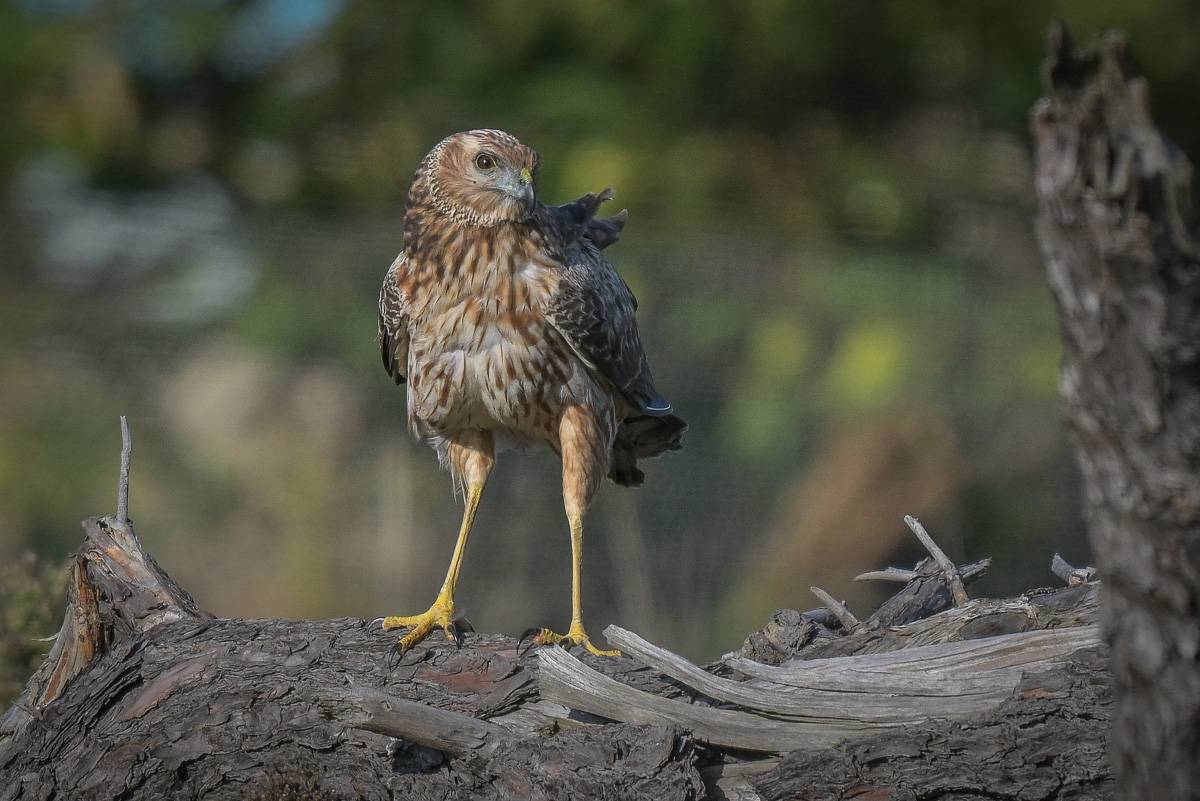
We spotted it, on a old downed tree. A murder of rather annoyed and raucous Ravens, must have caused it to stop for safety sake.
We edged past another downed tree, and had a clearer view. No point in trying to ‘get closer’ as a fence was in the way.
Still, the bird, to its credit, stood its ground. The sunlight cascaded across the scene and behind the old tree, it was safe from Ravens, humans and the strong wind.

It sat for around 5 minutes or so. To the hardly breathing photographers, it seemed more like 5 hours.
Then those big wings, lifted, and as I’d put the camera down because my arms were aching, I could only watch as it sailed back into the breeze, across the paddock and was gone.

Enjoy
Saturday Night Post: So Near…yet…So Far

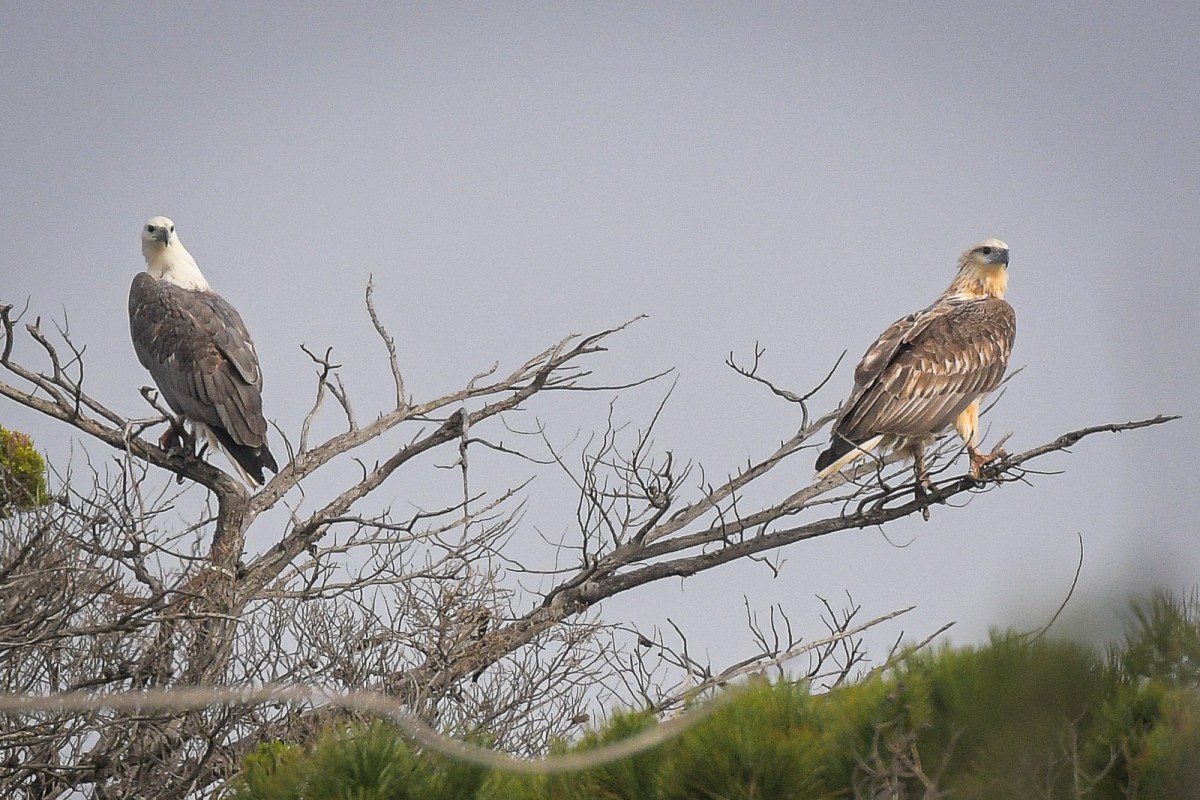
Over the past few weeks, an adult White-bellied Sea-eagle has occasionally been patrolling along the beach area on the top end of Port Phillip along the western shores.
Almost always with a young bird tagging along. There is a good chance, as chances go, that this is the pair that we saw preparing to nest in the Western Treatment Plant last year.

There are a number of Umbrella Pines that surround the old (first) homestead of the Chirnsides. The old trees must provide a wonderful view over the surrounding bay and beaches.

We had been working our way along the beach, on what was a particularly quiet day on the water. Only a handful of ducks and a few swans, with some cormorants snoozing away on the old pier and rocks.

We turned a corner on the bay, and there was the unmissable shape of a Sea-eagle in one of the pines.

So the challenge.
Do we work along the beach, out of sight of the birds, to get to a spot where if they flew—and flew in our direction—we’d have some close views.
Or.
Do we work our way inland through the trees to get a closer, and clearer view.

And then with a turn of wing, the bird launched and slipped through the trees further away from the beach.

With absolute precise timing, every bird—cormorant, duck, oystercatcher and the like, took to wing in a flurry of feathers and the loud sound of wings beating the air. The swans.—they continued as if nothing had happened.

Our challenge was now doubled at least.
The beach option seemed the most likely, I’m sure being able to ‘sneak up’ on a Sea-eagle, would be as difficult as approaching a Swamp Harrier, so we decided to see if we could get line-of-sight further along the beach.

As it happened both birds were sitting on an old dead pine, and we managed a clear view. But it was a case of so near. Yet. So far.

We were about to continue on along the beach, when, both birds took to wing, and were gone from view. We discovered a few minutes later that some photographer friends, had been near the tree and had moved to get a closer look.

So near…

Saturday Evening Post: Attached

I know I said there would be an Exposed Part 02. But not this post.

Had the good fortune the other evening to venture into the wilds of Melbourne’s night life to attend the opening of a photo-exhibition.

This was a range of work from first year students at a photo college. Lots of interesting views of how the world is perceived through ‘new’ eyes. Armed with the catalogue it was interesting to look at the eclectic mixture of images and to see how each photographer’s style was noticeable once I’d seen several from their work on display.

And how they were each dealing with the ‘Language of Images”. Like learning a new language, the grammar, if you will, of the visual vocabulary is not always a simple process. Some grasp it easily, while others are more interested in the feel or the mood of the moment.

It reminded me of the way we explored things when very young. The open pots and pans cupboard in the kitchen made for many a happy hour, both experimenting with the items, and the noises they made as they were clanked and banged together.

Yet after a time, as we grew older, they became, well, boring.

As photographers we can bring that sort of viewing into our pictures. Photographing only what appeals to our habit of casual seeing. Photographing things we thought should be photographed as we’d seen such pictures in magazines or posters.

Dissatisfied with the results, these days we turn to yet another tweak of the sliders, or download the 2,507th “Preset” from some hawker of such things on the internet. This one guaranteed to ” Give an unique style with just a few clicks”, and “save time and effort” ((And of course save the necessary step of getting it right in the first place ))

And yet, as someone once told me, “A photograph succeeds for one reason. It was well seen.” (John Harris in conversation)

This morning in my email, I received from Heron Dance Art Studio, a quote that has had me thinking most of the day, and it seemed helpful in pondering the “Art of Seeing’.

Here tis

The sound of the waters is audible to every ear, but there is other music in these hills, by no means audible to all. To hear even a few notes of it you must first live here for a long time, and you must know the speech of hills and rivers. … Then you may hear it –- a vast pulsing harmony –- its score inscribed on a thousand hills, its notes the lives and deaths of plants and animals, its rhythms spanning the seconds and the centuries.
– Aldo Leopold, Sand Country Almanac

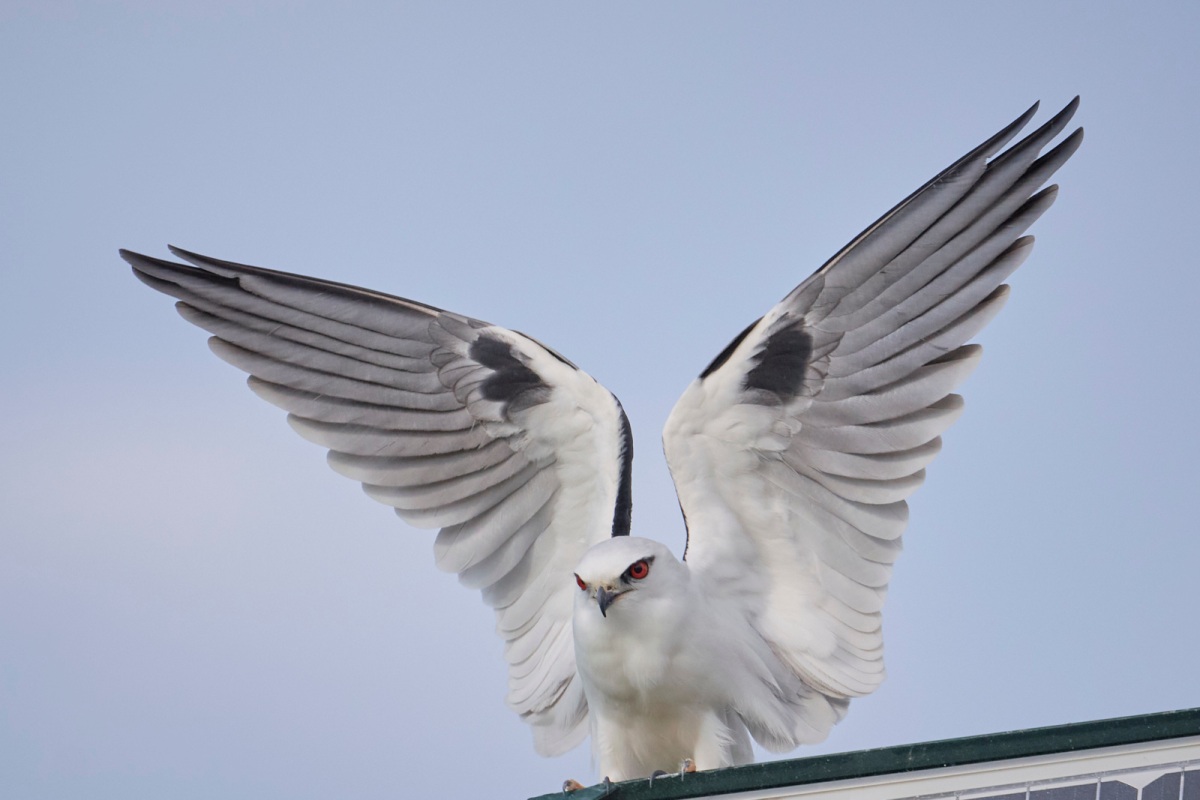
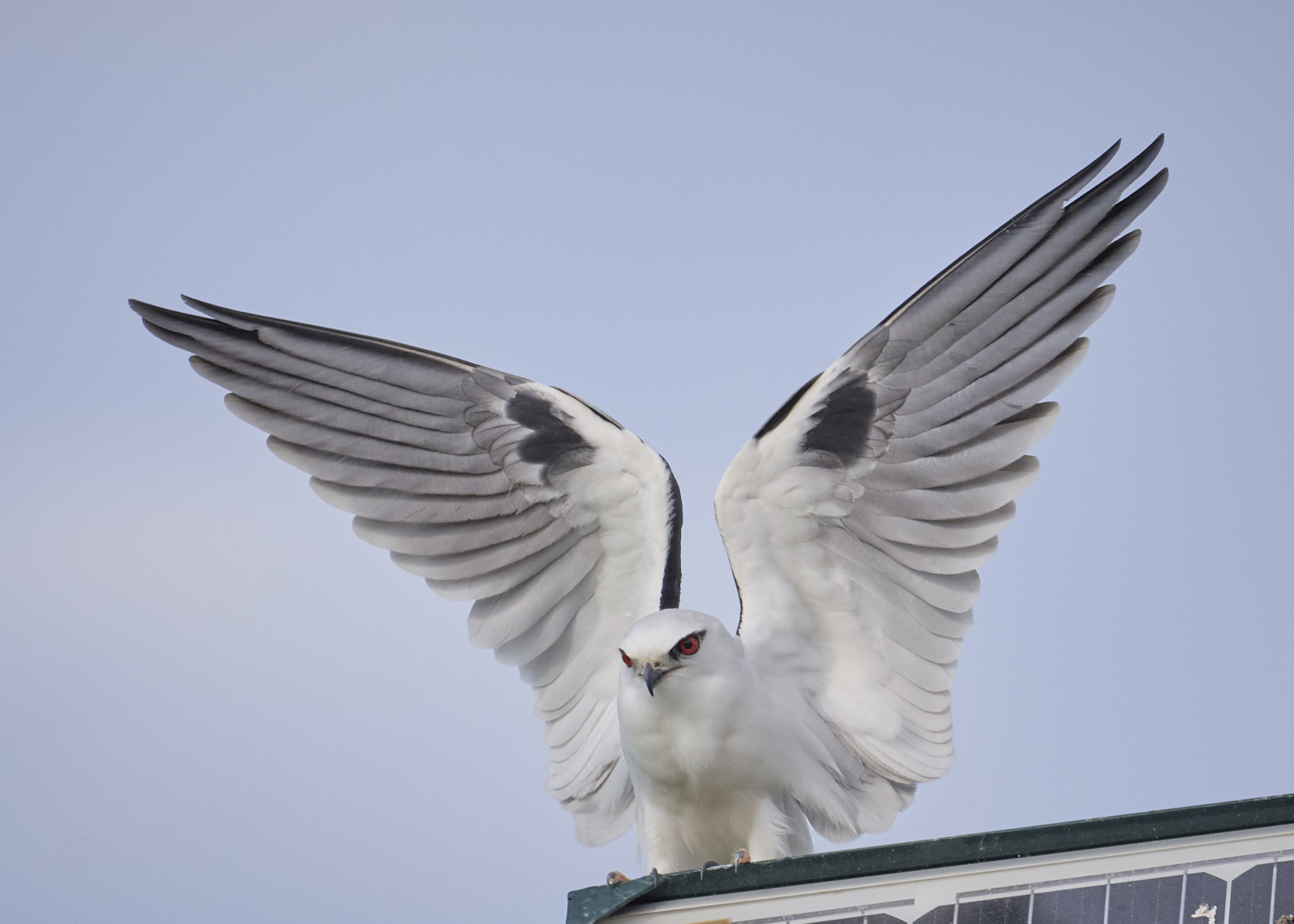
We have been a little spoilt and grateful of late as we have several territories of Black-shouldered Kites to work in. One pair are mere juveniles, still finding their way. One is a long term bonded pair, readying perhaps to nest when the conditions are right. Several others are, I suspect, just wintering over because the food sources are plentiful.

This one has claimed a roadside solar panel set as its perching preference.

Enjoy, and keep Seeing. There is so much to see. 🙂

Saturday Evening Post: Exposed (Part #01)

Sounds ominous doesn’t it. (Part #01). What started off as a quick small post, rapidly grew to be a treatise, and despite the best editing efforts, it still seemed to loom somewhere between “Romeo and Juliet” and “War and Peace”.

Easy squeezy. We’ll have a couple of them.

Ever since the days when Nicéphore Niépce made the first photograph, back in 1826, (and as it turns there is all sorts of disputes about who, when, where, but—Nicéphore is still my man!) exposure has been a hot topic for photographers.
Poor old Nicéphore had to expose his image for about 8 Hours. (no record that I can find tells of the f/stop used). Here is an interesting link to view the result.
I guess the one thing he didn’t have trouble with was getting shadow detail, as the sun moved over the buildings the shadows were bathed in sunlight at some point. How easy is that.
It should also be noted, and I’m sure it’s obvious, Nicéphore did not make bird inflight his first experiment. 🙂

Since then the conversations have always been, “So what exposure settings do you use?” In the forlorn hope of finding just the right way to make every exposure perfect.

A couple of emails from a blog I follow, by Tony Whitehead from New Zealand touched on the subject in some detail, so I’l not clutter up the web by repeating it.

See here for How Crucial is it to get Correct Exposure
And Maximising Dynamic Range for Backlit Subjects

For those that follow the “Expose to the Right” ETTR model, Tony’s explanations are about as succinct as you can get.

The concept of ETTR was first brought to light (pun intended) by Thomas Knoll, (he of the creator of Photoshop and Camera Raw decoder), and Michael Reichmann (the creator/owner of Luminous Landscapers website) while they were on a photo-tour of Iceland in 2003 Interested? See here.
The concept as Tony outlines is that about half of the exposure detail is in the brightest stop on the righthand side of the histogram —Please bear in mind that when Thomas and Michael built this model, most digital cameras had at best about a 5 stop dynamic range.

Fast forward to the present, and we find people making images that seem almost to the point of overexposed and then sliding sliders in the White, and Highlight ares of their chosen software package to bring back the details in those white areas of the subject. In my case, the bird.

And now that AI is being built into products such as Topaz Photo AI and DXO Photolab and their PureRaw, and more recently from Gentleman Coders, Nitro. the need for ‘correct exposure’ is going to become a very “Fuzzy” (computer speak there), term.

The one thing that does, however need to be remembered is no matter how clever the software, no matter how many sliders, or layers are used, nor how the exposure was determined, the one constant in all this,

Is,
How much light was falling on the subject at the time of the exposure.
As Engineer Scotty, says to Captain Kirk of the Enterprise, in the TV series, “Starwars”, “Ye cannae change the laws of physics Jim!”

Which seems like a good time to move on to the photo of the week. 🙂

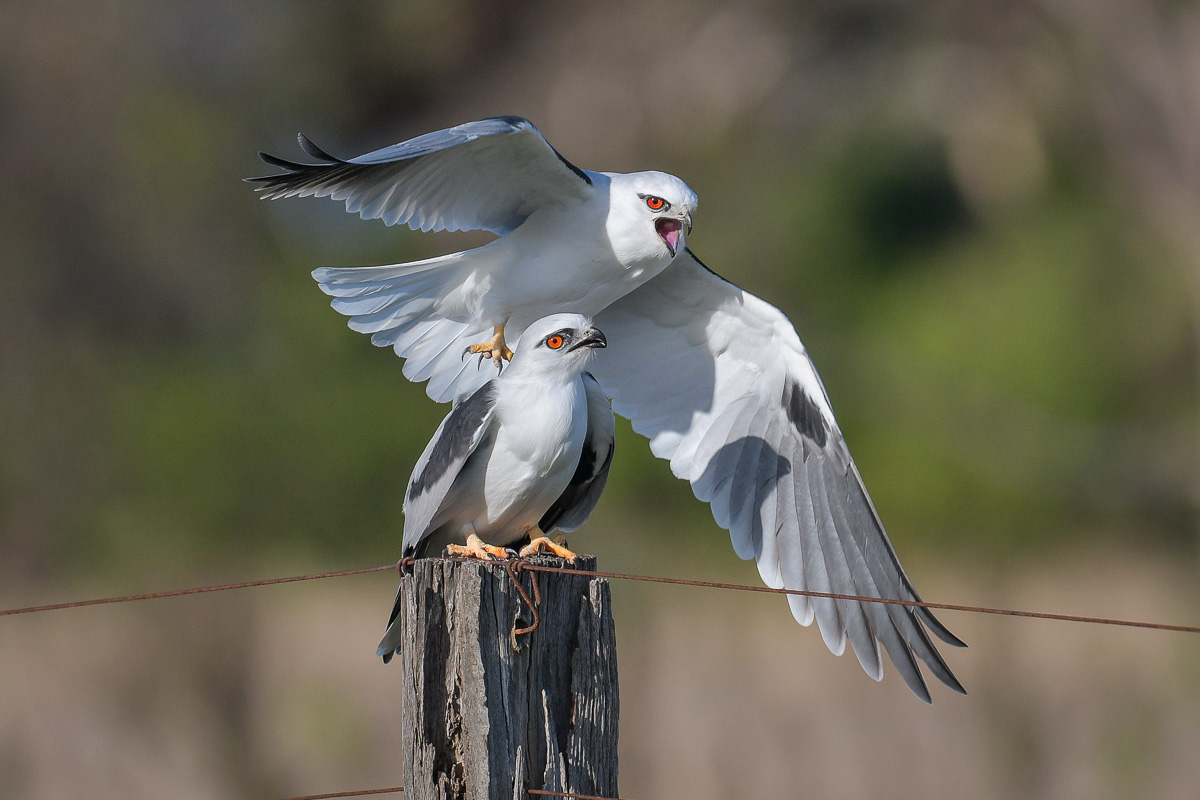
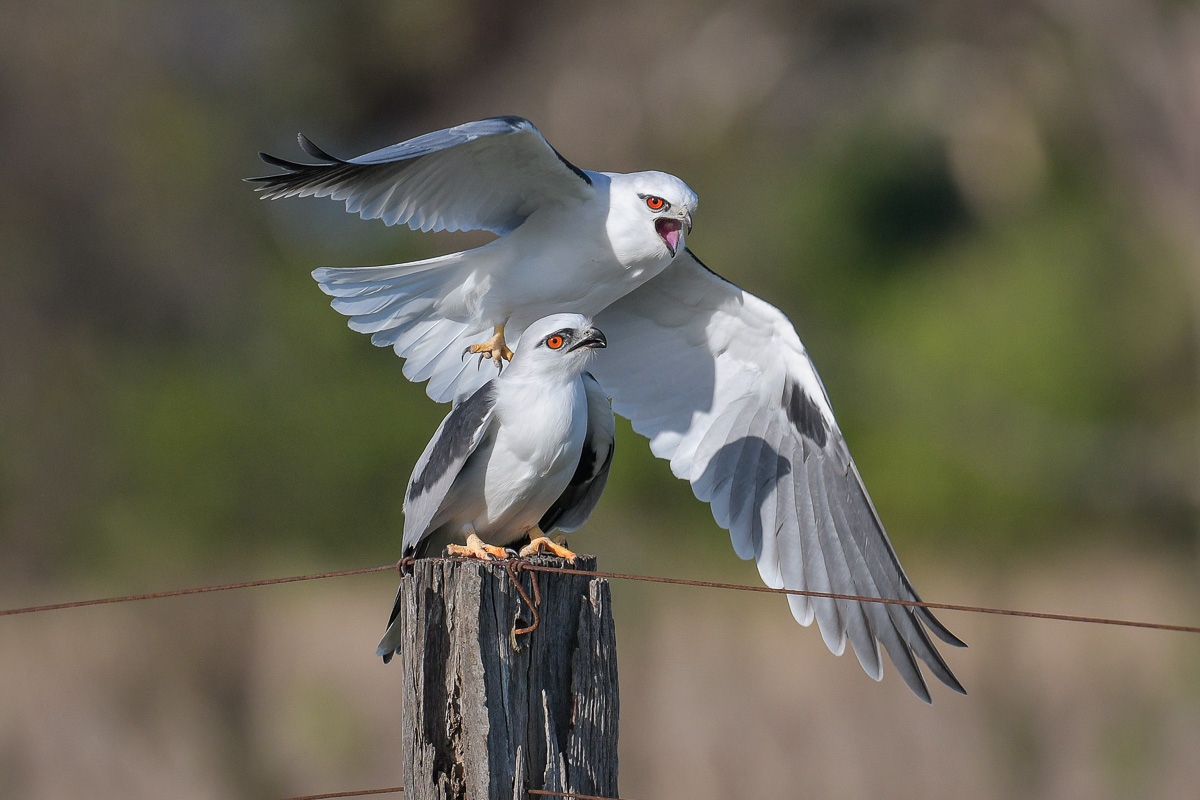
This pair are back together again. He had been waiting patiently for about 6 weeks or more, as she had disappeared from the paddock. I was almost convinced she had moved on to a new territory as normally she only takes a few weeks break after the young fledge. He had resolutely stayed.

When I saw this happening, I initially thought she had encouraged him to mate, but she didn’t react—note her tail tucked securely against the fence post
So I think, he might have been hoping she would move off the post, and he could pick up any scraps that were left over from her previous meal. She had caught and consumed a rat (ratus ratus). A much larger meal than the usual mouse and at one point I though she might choke getting it down.
She didn’t accept his proposal, nor did she lift off to give him access to the post.
Marital bliss in Black-shouldered Kite land.

1/3000th of a second, f/6.7 at ISO 400. Nicéphore would be impressed

Enjoy…… I wonder what part #02 will be?

Saturday Evening Post: Sitting Pretty

“Life,” said Helen Keller, “is either a daring adventure, or it is nothing.”

Picasso is reported to have said, when asked if he knew what his painting would look like before he even put paint on the canvas, replied, “No, of course not. If I knew, then I wouldn’t bother doing it.”

David DuChemin, recently wrote, “You don’t have to photograph bears, or climb mountains, or hang out of helicopters. You don’t have to go, “On on an adventure”, to make great photographs. But, I think, making great photographs should be an adventure.”

Winnie the Pooh says, “Going on an Expotition?” said Pooh eagerly. “I don’t think I’ve ever been on one of those. Where are we going to on this Expotition?” and

Sing Ho! for the life of a Bear!
I don't much mind if it rains or snows

Tis a known fact this blog does not do, ‘Tips and Tricks’, ‘How-to tutorials’, attention grabbing product reviews, nor influencer opinions for more hits and ‘followers’.

We just do photography, and the enjoyment of both birds and the act of photographing them.
The journey is never-ending and nor would I, and I’m guessing, you, want it to be.
If you’re battling with shutter or aperture priority, or should I use manual (wait for next week’s blog) or what is Auto ISO, or does EV really do anything, then join in with the rest of us. We all struggle with Light, with Composition, with Camera Settings and with finding the right bird—or subject— just to show I’m not biased :-).

Did you ever walk out and say, “Oh, Wow, this light is so nice!” It takes more than appreciation to be able to understand what you like about it. The angle, the intensity, the direction, the overall quality, and how it might add, or not to the subject.
I might lament on the days when the sky is porridge and the exposure drops by 5 stops to normal days, and the grey birds become lost in the grey surrounds, but, by looking, experimenting and exploring, there may be a mood to capture.

A word that has come up recently to be a catchall for those varying elements is “Amplify”. The mood, the choices we make for camera, angle and framing all bring their own special character to our photos.

We don’t want people to view the end result, and think about what ISO, Shutter, Aperture, Focal length, or camera brand we used. Nor to spend time interpreting the way the light works, the emphasis on texture, or tone, or shape, or any of the other language of light principles.
Nor do we want them pondering the hours spent in the Digital Darkroom enhancing the pixel values.
Hopefully, they see the result and connect with the subject.

I love Kestrels. Of all the raptors, Kestrels are my heart-tugging favourite. They seem to have such ‘sweet faces’ compared to other raptors. We are photographers of the open paddocks and plains. We rarely venture these days into the amazing rich forests, to explore and search among the myriad bushes, ferns and overhanging branches.
And
Because of that, we see many of the great birds of the wide open areas. Kestrels, Kites, Harriers, Eagles, Goshawks, and occasionally on the beach areas, Sea-eagles.

But of all of them, my heart is set on Kestrels.
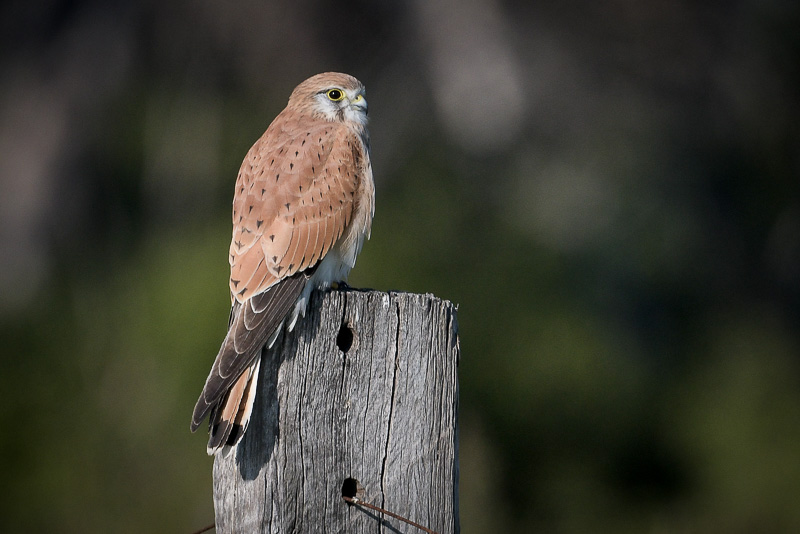
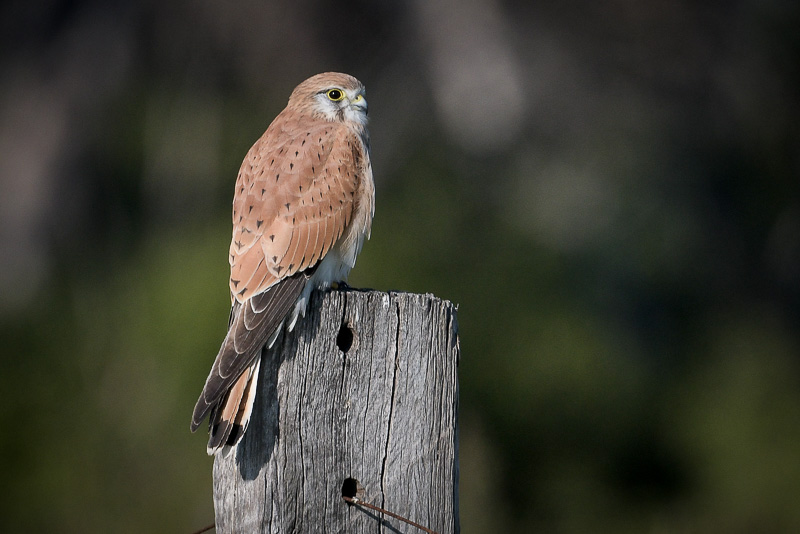
So it was a great delight to drive down a farm paddock track, and find this lass sitting enjoying the morning sunshine. She was in no hurry to leave and nor was I. Lost were the technicalities of photography. Found was the enjoyment of experiencing a small moment in this bird’s life.

Enjoy