Saturday Evening Post: High Key

A couple of my (now diminishing) group of working photographers was sitting round a table the other day, as we occasionally do. Discussions rarely move away from something photographic, as you’d expect.
One question that always comes up. “Whatchaworknon”? It used to be the catch-cry many years ago, but sadly, I think, we have pretty much accepted status quo, and just work away at what we are familiar with. The cool part of the “What” is ideas often cross-pollinate, or someone has been trying out this or that technique and their insights perhaps help problem solve.

Anyway, as it turned out, the big topic of the day was High Key portraits and Food photography -or product photography, in general.

High Key gives that ‘breathless ‘ feel of bright, light and energetic. It is at one level, a particularly challenging mode. The whites have to stay white, the mid-tones need to go to the lighter end, the shadows need to have a lovely pliable mellowness to them, bordering on the translucent. Or as someone once said, “Diaphanous” Bet that sent you to Uncle google.

And. It’s all about the light, and for us studio/product photographers with a grand studio, plenty of available light (as in every light available) it can be wonderful to work against one of those curved, endless horizon Cyclorama walls, or (cheaper) white fabric or backdrop.
I used to know a photographer who specialised in promo work for vehicle manufacturers. He converted an old warehouse into a huge Cyc wall so that even a prime-mover could fit in through the roller door, directly on to the set.
As an aside, he had to repaint the floor after each shoot to remove the tire tracks.:-)

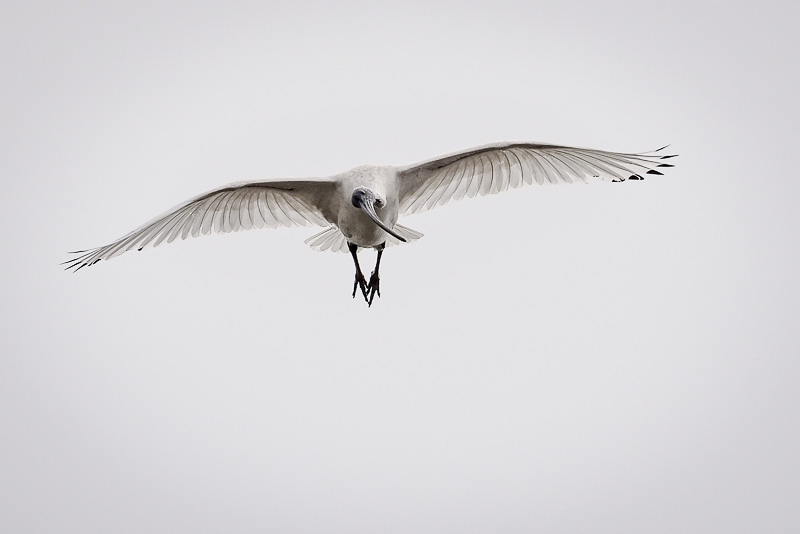
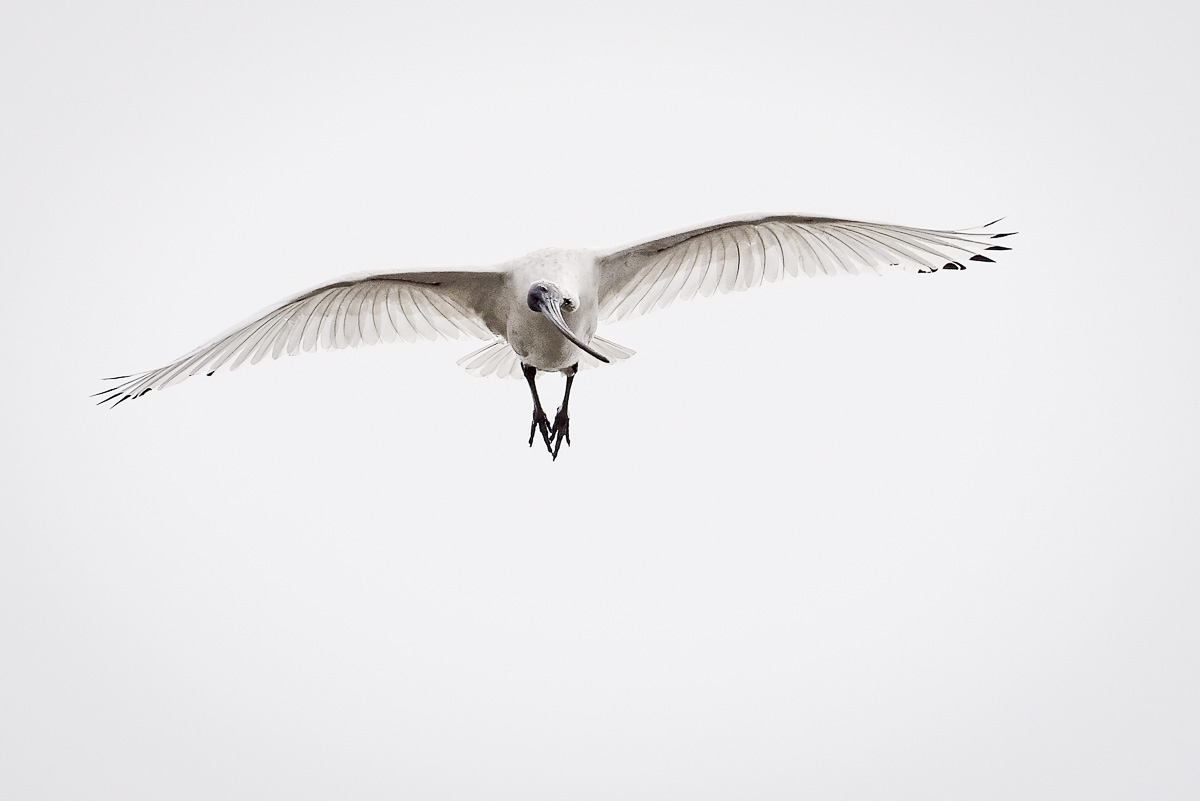
But, for birds, well, we get it for free. Just ask anyone who’s been out lately in the foggy overcast atmospherics, that we euphemistically call, ‘weather’. Now the challenge is white bird on white backdrop. Hard to get the right exposure, and even harder to keep just enough form, shape and texture detail to prevent the feathers disappearing into the backdrop.
Easier to sit around a table, with a coffee at Gerry’s and talk about highkey.

I love Ibis. I know they get a bad rap from the press. But as a young kid roaming the irrigation channels of the river country, Ibis were everywhere, and never seemed to be a problem in the town. Perhaps the human condition of disposing of everything unwanted has been the real cause and not the bird’s need to find a meal.

This one swept into a small pondage where we were looking for Grebes.
It’s hard to explain the whiffling motion as they work out the suitable landing spot.

This one really wanted to get the best view of the pond.

Enjoy.
Saturday Evening Post: Growing Together

On a fine sunny morning, we made a trip out to see how the Happy Couple from my last post were progressing.

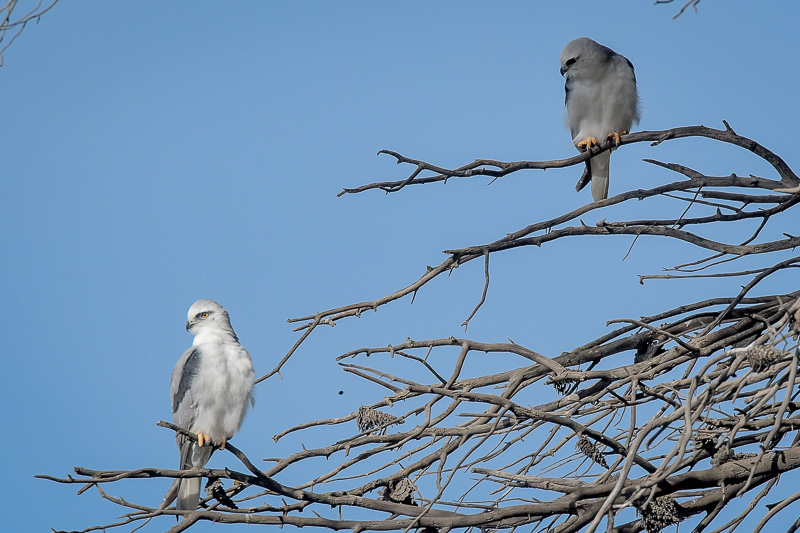
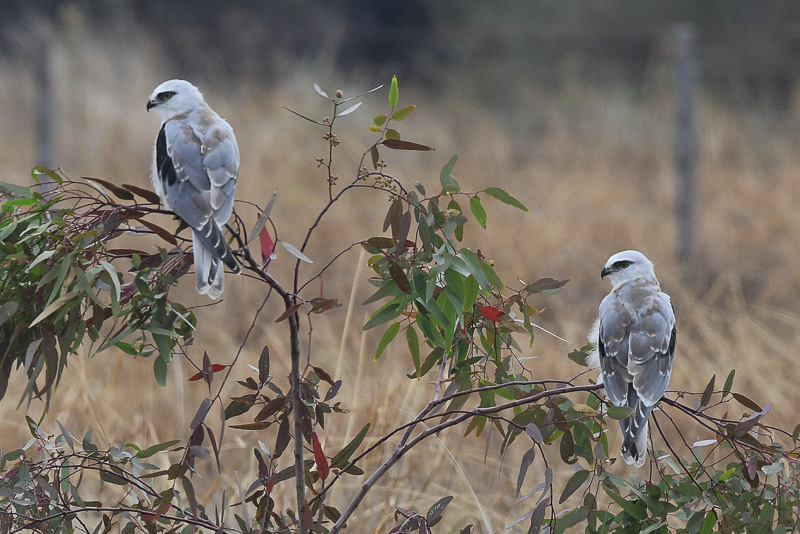
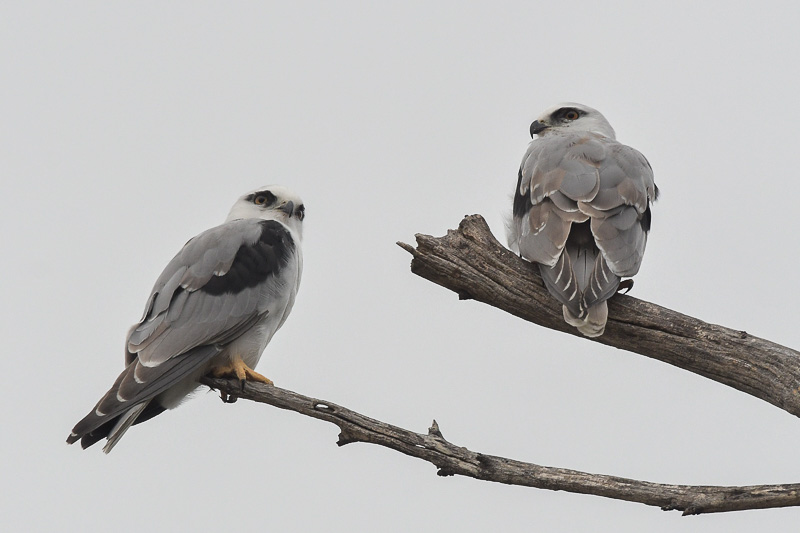
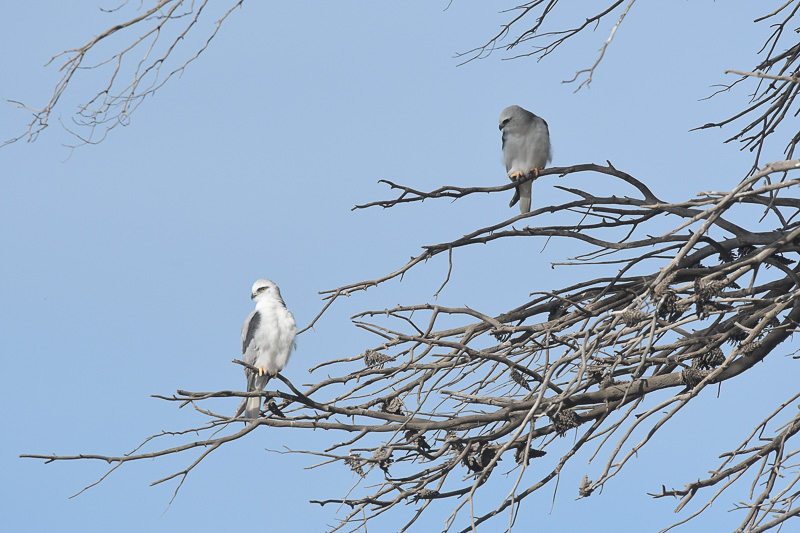
They were both on a roost tree and preening in the sunshine.
It was a great opportunity to see some slight differences in their colouring.
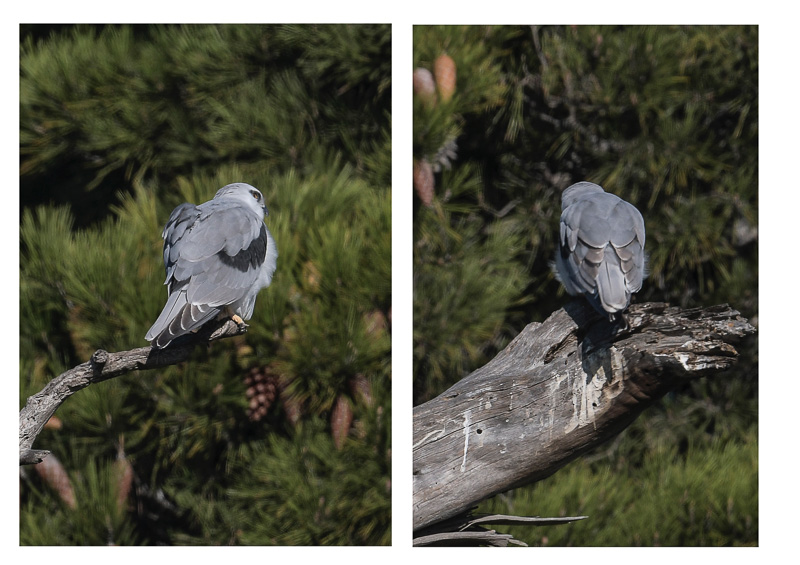
The male (?) seems to now have lost his former brown tan colours. Both of them still have a shade of brown for the eye colouring.

We’ve been guessing about how old they might be, but at best they were from the January clutches, so we are looking at birds around 5-6 months old at best.
She (?) still carries some tinges of juvenile colour in her wing feathers, and that can be seen in the diptych below.
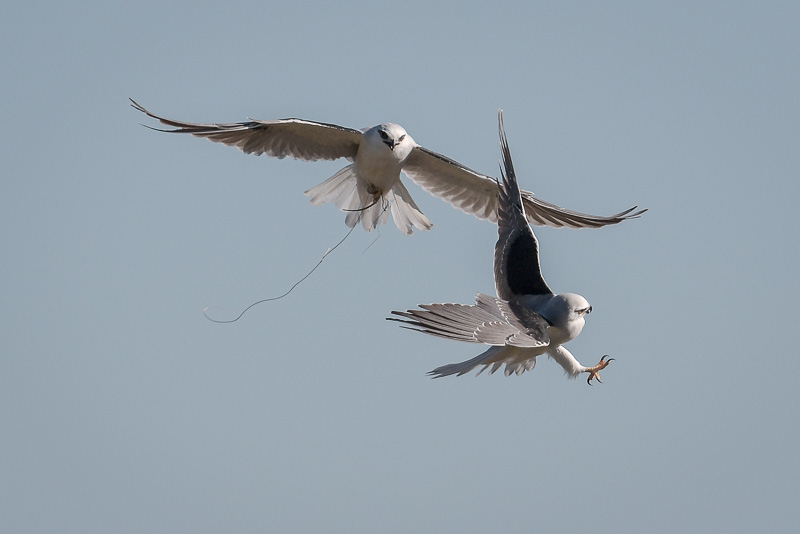
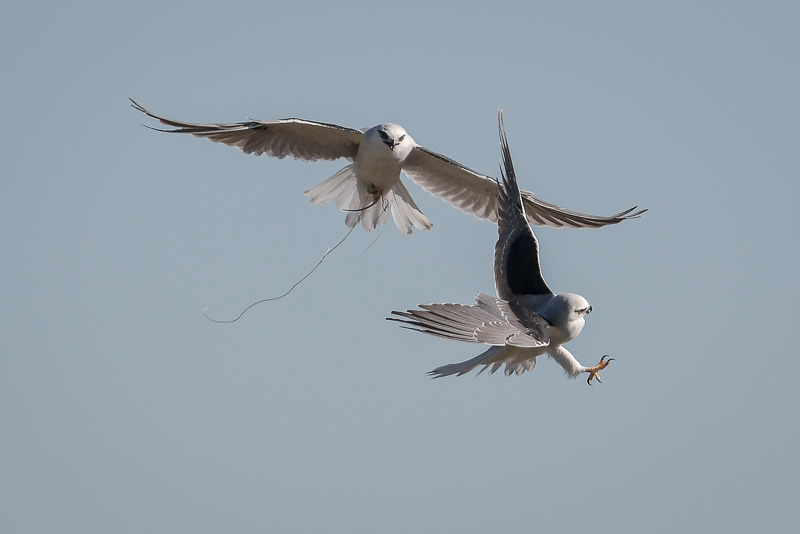
They both seem to hunt together, and there is occasionally a bit of an aerial battle with talons up, and lots of hoarse calling. But they both return to perch and seem to be at ease wth one another.

Until. And this is where anthropomorphology takes over for a little.
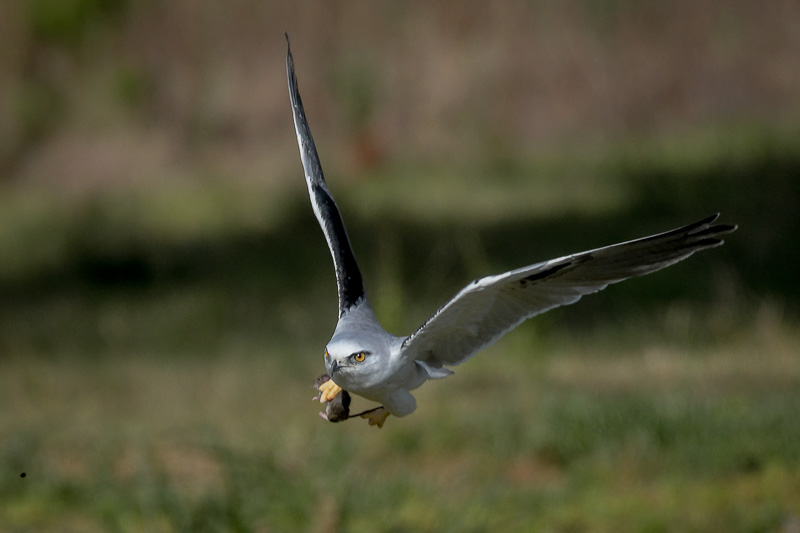
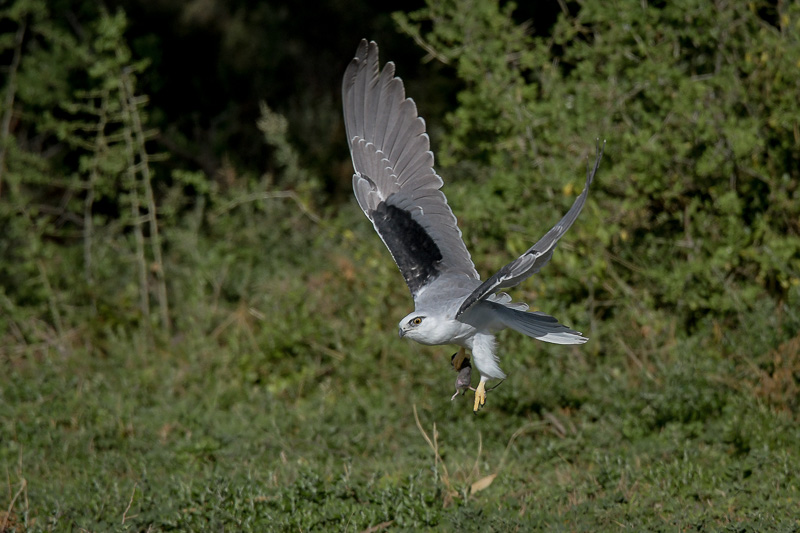
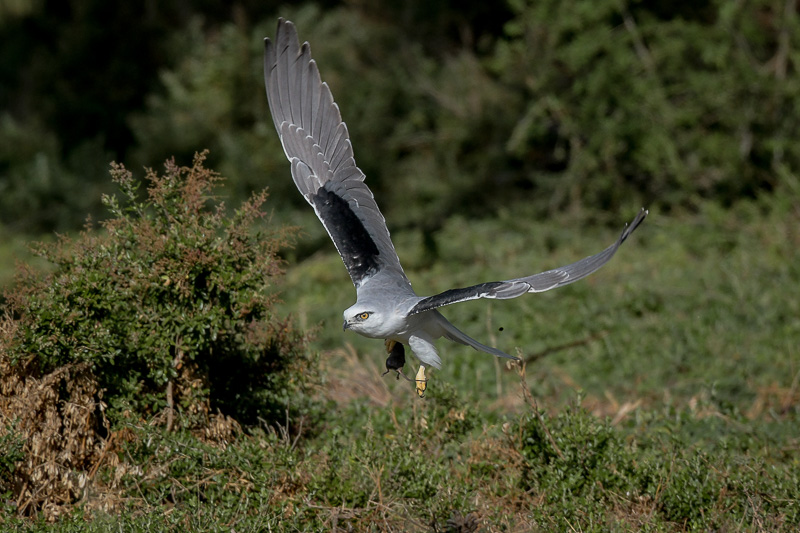
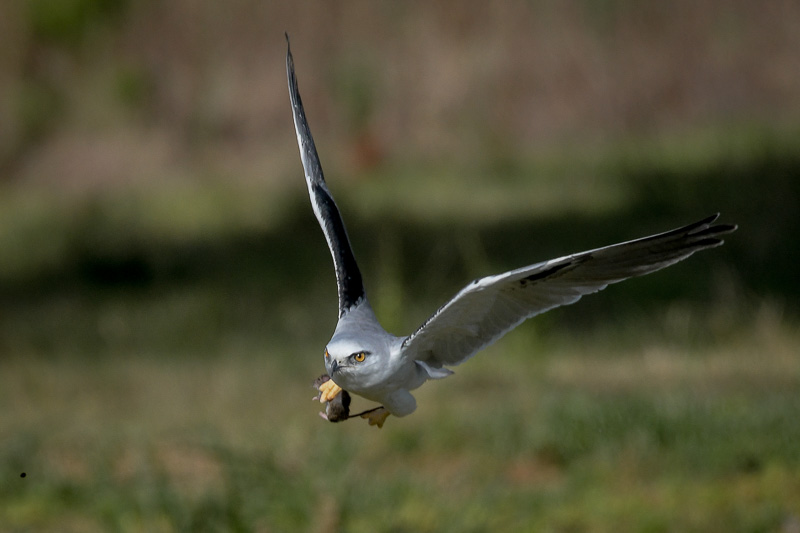
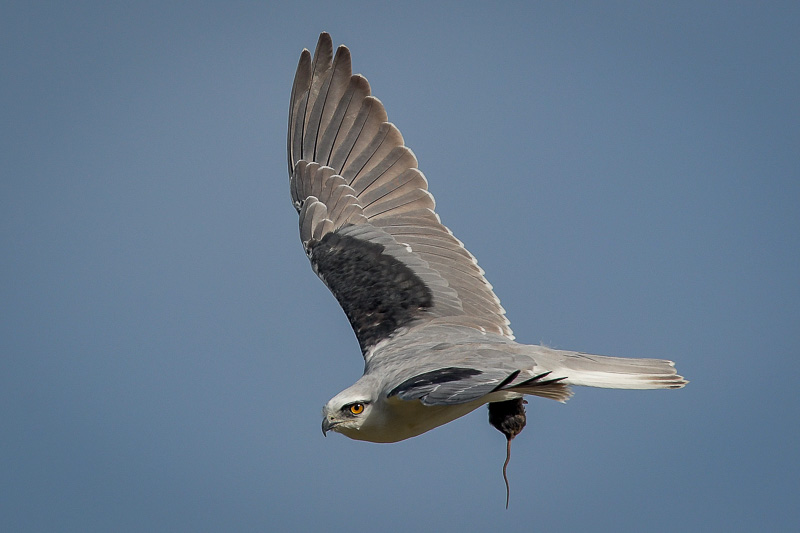
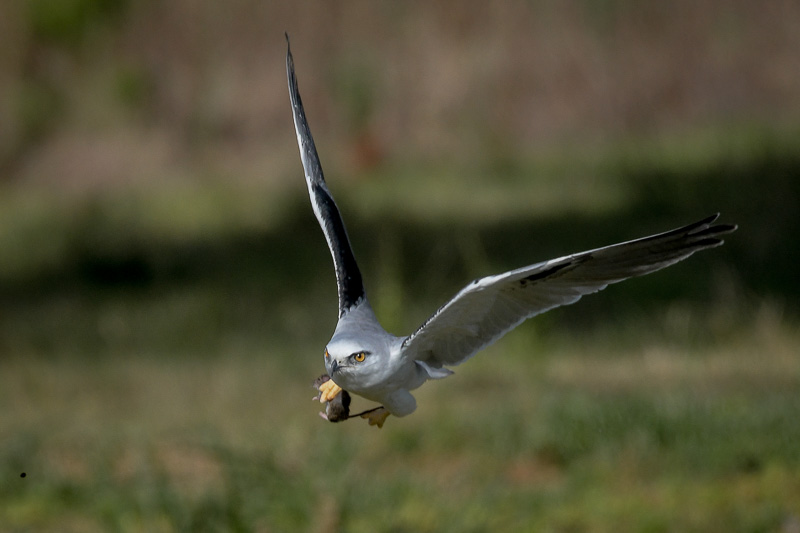
He caught a mouse, and was seemingly intent on bringing it to enjoy his meal.
She on the other hand, made a decision that the mouse was in fact for her and a heated chase began across the paddock.

Two conclusions were possible. She might be far enough advanced to want him to begin to feed her for a possible clutch, (even if its not going to happen, she might have the idea, that he should be feeding) He, for his part is still a young bird and the gene pool has yet to release the necessary action needed for him to understand that for the relationship, he needs to provide for her while she sits eggs.

Either way. He had no intention of giving up the mouse and in the end ducked into a very thick tree where she decided not to follow. He didn’t come out again with the mouse, so no doubt polished it off at his leisure.

No doubt there are other Black-shouldered Kite explanations that could account for all this. In the meantime we’ll sit and enjoy their antics.

One of many passes she made to get him to release the mouse. For his part he just stopped in mid-air and she shot past.

Saturday Evening Post: The Happy Couple

As you know, we’ve been following a young pair of Black-shouldered Kites for the past few weeks.

Earlier this year, a number of pairs nested in the same genera area, about the same time. Probably more like a three to four week span.
One pair in what we shall call the ‘home territory’ were in the later shift, and managed to raise and fly two young. At about the same time, the birds from the surrounding areas, moved into the home territory to feed and train their young. With four set of parents and their various offspring the paddocks had as many as 16 birds in the air hunting. Fortunately the mice seemed to have had their own population explosion and there was plenty of food to go round.

But as time went on, as things go with Kites, the young began to disperse and the adults moved on for a well deserved rest. In the end, the home territory male was still in residence, and two young kites that we concluded must be the young from his recent clutch.

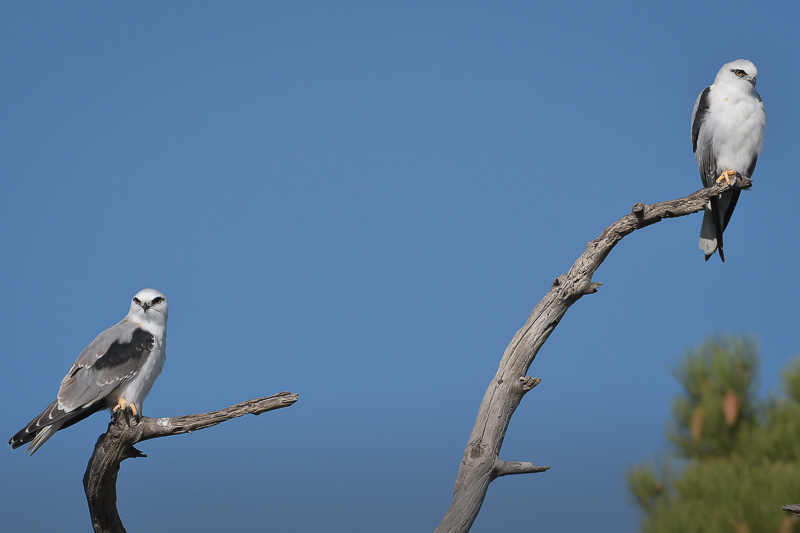
Young siblings are happy to sit and hunt together and this couple seemed to be happy with their company. As the days went on, and the young orange feathers began to fade away, it became clear this pair were not moving on at all. And perhaps slowly it became even clearer that they were not siblings, but a young pair. No doubt with all the birds in the feeding frenzy, this pair had made an interesting selection.
Too early yet to know if they will stay and nest, but they certainly seem to have established several roost trees as their own.

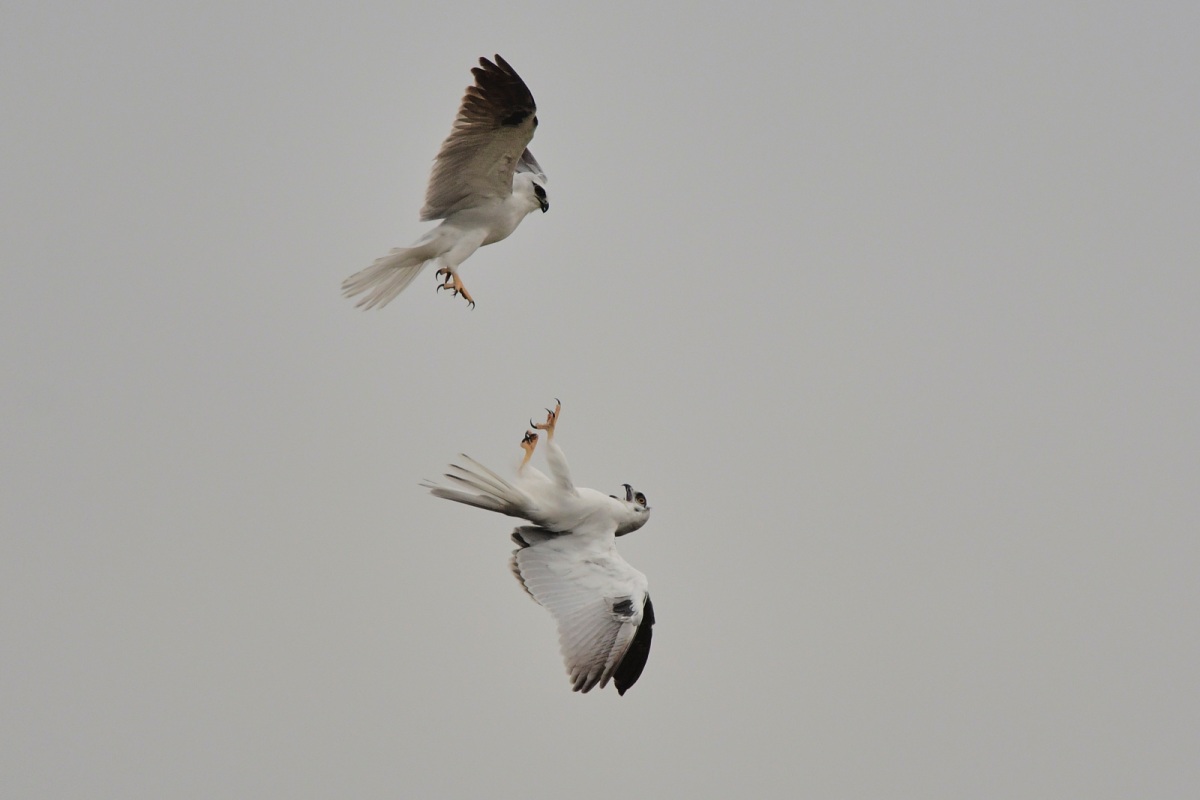
Pair bonding with Kites is both a high activity and loud process. We found them practicing the techniques they will need for food exchange should they settle on a clutch. It looks pretty aggressive and serious, but they each seemed to know the part they have to play.
And a little later I found them sitting together on the nearby track, hunting crickets on the ground.

Hopefully there will be more to share of this story.

Enjoy

Quite relaxed together as they hunt crickets in the grass.

Wednesday Wanderings: A Hunting We Will Go

If you’ve been following along a blog or two just recently you’ll know we have a young pair of Black-shouldered Kites that have mated up.

It’s been interesting to watch as they move from being young independent teenagers to a pair. Not yet ready for breeding, but none-the-less a couple.
They have several roosting locations and we found them on one the other morning. They had been cleaning and the usual chirping going on between them. They were both scanning the blanket weed and grasses below the tree carefully. The male made a half-hearted dash out over the field, but returned empty.
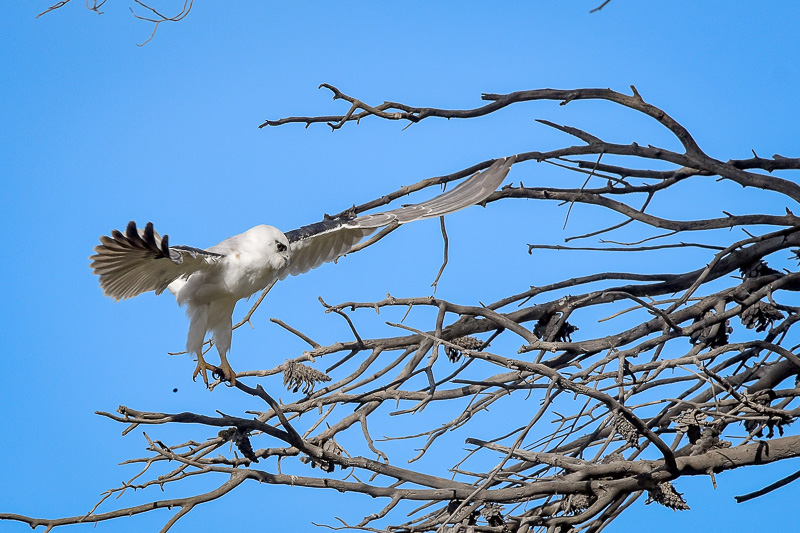
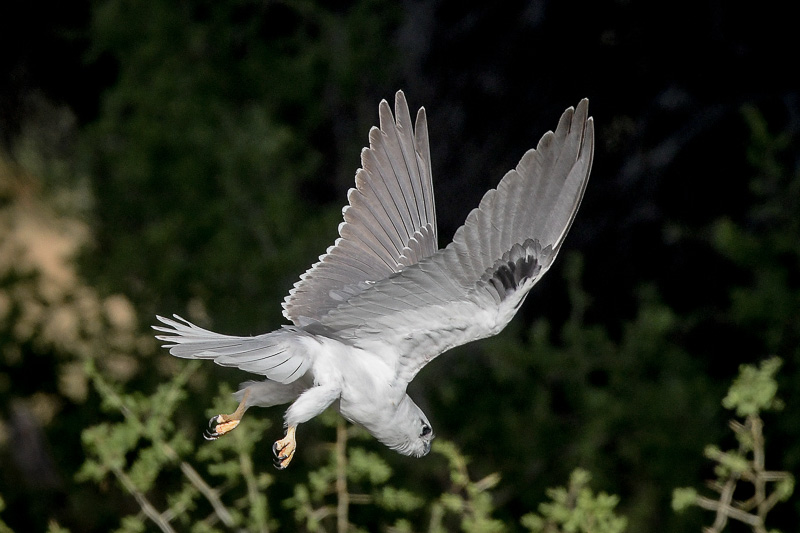
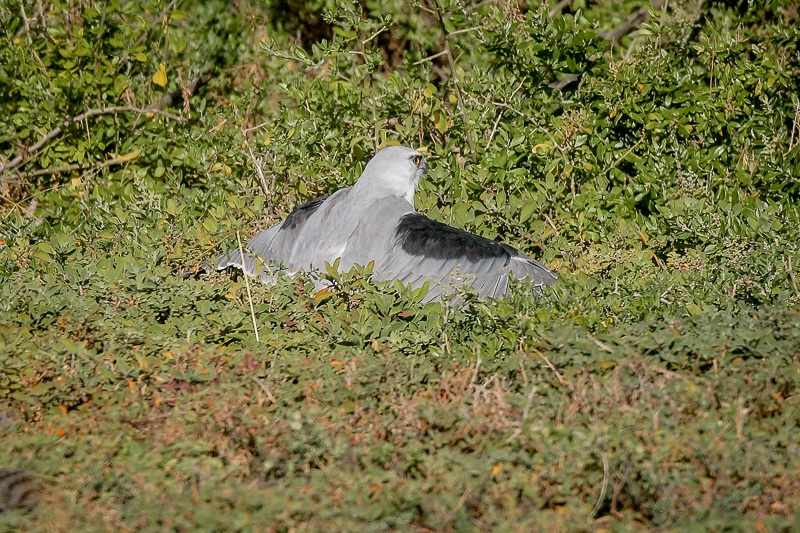
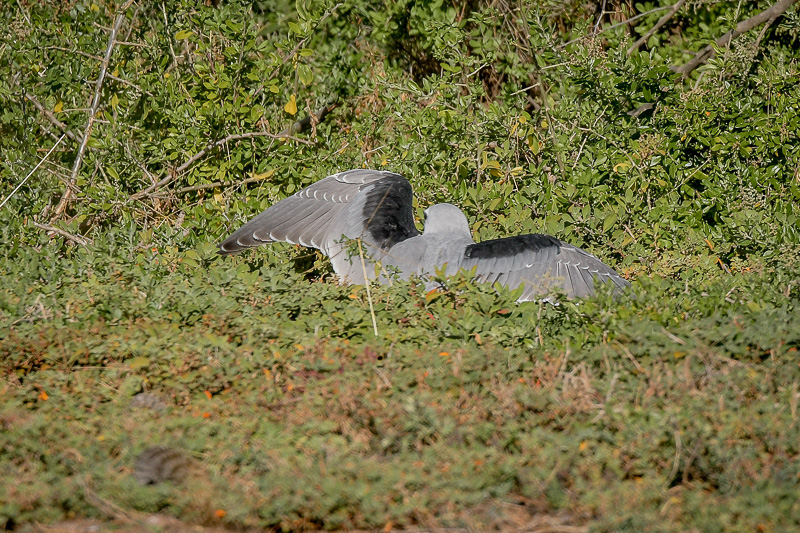
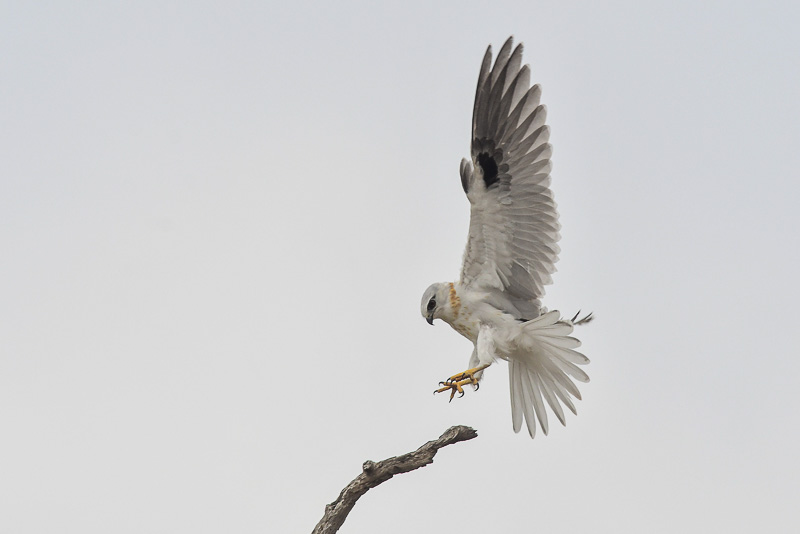
The female took an intense interest in the patch just in front of me, and then wings out she rose from the perch and dropped straight down into the grass to mantle over a catch, then turn and fly back to her perch, mouse breakfast attached.

Enjoy

Here’s how the action occurred.

Saturday Evening Post: A Magic Place

I was first introduced to the Western Treatment Plant by a birder who had been visiting the area for many years. He delighted in showing people the best of the area, and his enthusiasm was infectious.

On one trip, we were sitting on the rocks in the grass overlooking Ryan’s Swamp. It was at the time carrying a good depth of water. As we sat eating lunch, we chatted about the history of people bird watching in the area. One character, Fred Smith, had been visiting the plant for many years and in those early years, he would catch a train to Werribee Railway Station and then ride his bike down to the plant. In those early years, access to the bird-watching area was through the town of Cocoroc.

He then said two profound things that have stuck with over the years. As we sat in the early autumn sunshine, with Kites and Falcons keeping us entertained with their aerial skills, he said, “This is a Magic Place.” A little later he continued, “It is a great privilege to be able to have access here.”

Times have changed, transportation has become easier and now the ‘Farm’ is running the risk of over-familiarisation. Where once it was possible to see maybe 5 visitors in a day, now, the numbers approach 50 or more when a ”special” bird is in residence.

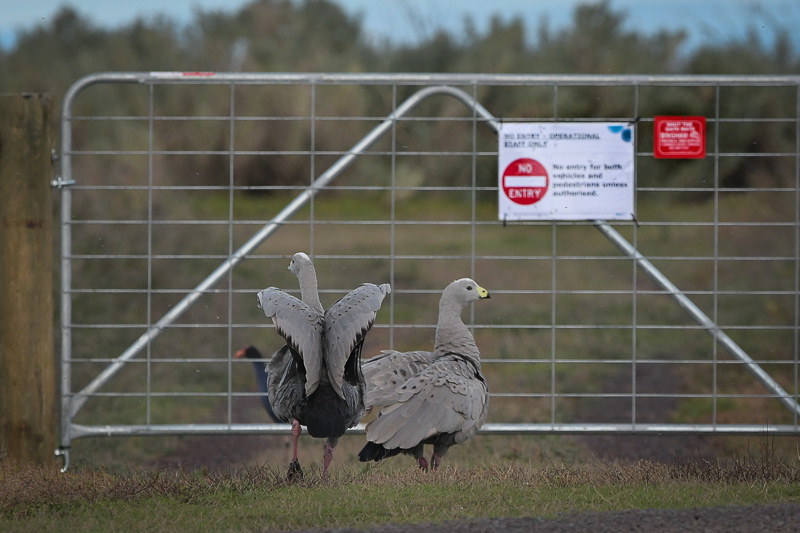
At present an international wanderer is causing excitement on social media, and the area where it is currently over-staying is in danger of becoming a traffic jam. And the environmental pressure around the pond had resulted in Melbourne Water closing a lot of small side roads with gates and signs and to issue, a fairly strong worded edict to birdwatchers, photographers and general visitors.
Here is part of that document.

Incidents include:

  • walking off tracks and roads and entering vegetated areas and margins of ponds for photograph opportunities
  • inappropriate driving on site including riding in the back of a ute tray whilst in motion
  • entering restricted areas on foot and by vehicle that are off limits to permit holders 
  • riding bicycles on the birdwatching route.

To protect yourself and the health and safety of these species, please:

  • stick to the tracks designated in the WTP Birdwatching Route Map
  • stay near your vehicle at all times – you are not permitted to walk more than 30 metres from your vehicle
  • abide by the prescribed speed limit of 30kmh or as designated by signage
  • follow instructions on all signage
  • DO NOT ENTER areas are strictly no-go zones – you are not permitted to enter
  • ROAD CLOSED sign means the area is closed both to foot traffic as well as vehicles
  • No bicycles are allowed on site – cars only

It seems that we no longer adhere to ‘a privilege’ to be there. The view of the bird, and the ultimate photograph are more important.
And overcrowding to get that social media ‘hit’ is not limited to birding. Places like Venice are charging tourists to enter. In Japan they have erected a large barrier to prevent people stopping in the middle of the road for that ‘perfect’ picture of Mt Fuji. And there are many others.

It reminds me of International Photography Exhibitions during the 1970-80s. There was a division for “Nature Photography” and -the hand of man- was not to be seen in the photo. As competition for these events was high, much ingenuity was used to obtain the prize winning picture.
For quite a few years photos, (and this is in the days of filum) were made of nesting birds by finding a nest, setting up the camera rig, and flash units, close to the nest, and then chopping off any branches that might obscure the ‘perfect shot’. One I know of used a motorised camera with a 250 shot back, and a motion release. He’d set it up, retire to the local motel for the day, and then on the following morning go and collect his gear and prize winner. Leaving the bird nest now totally exposed to predators and the weather.
Another series that did the rounds for awhile was pictures of Sacred Kingfishers in nest. This was achieved by digging a trench next to the nest and then scraping away the earth to reveal the young in the nest being fed. Again, driving away leaving the nest exposed. Spotted Pardalotes nest in holes in the ground, the entrance very well camouflaged. But it was nothing to clear it all way to get a shot of the bird emerging or entering the nest space.. And walking away leaving the nest unprotected. Fortunately in the end we were able to have such practices banned.
However the pictures still did the rounds.
Bowels, Robins and Flycatchers of Australia, has a number of photo plates where the pruning around the nest is quite obvious.

BIrdLife Australia has a code of practice for photographers. I hope for the sake of both the privilege to visit the area and the Magic of the Place, that notice is taken.
It would be sad to loose access to such a special place.

That’s all very well. But. How are we going to get in?

Wednesday Wanderings: Good News Story

Very early this year, about five families of Black-shouldered Kites fledged their young over about a three week period. The mice seemed also to have had a little population explosion of their own in one of the near-by fields and the families moved in to both train their young and feed them. Some of the more advanced young were quite capable of hunting on their own, but it didn’t stop them trying to score a meal from a harassed father as he flew in with a mouse for one of his young.
For a week or so there would as many as 16 Kites all airborne or sitting on fence posts consuming a meal.

But, as it works out, as the young grew stronger and the free feeding ceased and no doubt the mice went on a well deserved holiday, the young Kites began to disperse. The adults that had flown in to supervise, also moved back to their own territory. The female of the home pair also took off, not unusual to see that happen as she needs to build up her strength after 8 weeks or more of sitting on eggs and young. The male continued to stay around and watch over the territory.

Two young juvenile Kites continued to roost together down at one end of the paddock, and as they both had a fair cover of juvenile colouring for several weeks we concluded they were from a clutch and hadn’t yet felt the need to move on.

However as time went on, and the juvenile feathers began to fade and the body language changed, it became clear what we were looking at was in fact a new pair. No doubt they had met up during the paddock mouse madness days, and well, like nature taking its course they became a couple. Now that their juvenile has mostly faded, and their eye colour is still a rich brown, it’s probably to early to conclude they are going to nest anytime in the future.
But it is rather charming to see them sitting happily together. Ahh, those teen-age years.

Enjoy