One of my favourite places at the Point Cook(e) Coastal Park is a walk to a little piece of land jutting out into the bay. It’s more a sandy promentary as its sands have, over the years, been blown up to cover the underlying finger of basalt that juts into the bay. On the Park Vics map it is called “Point Cooke”. The name just confuse the matter even more.
The landmark was so named by Captain Hobson, (he of Hobson’s Bay), commander of the good ship, “H M Rattlesnake”. Hey I’m not making this up!! The ship’s mate was one John M Cooke and as there were no bays left to be named perhaps, Johnno got the Point.
On a low, low tide, called a Spring Tide—so I’m told, the little finger of basalt is exposed for about 100m or so into the bay. Not only the rocks, but the whole sand shelf is exposed and it’s possible to walk out to the edge of the shelf. On a good day, the birds accumulate here to rest on the rocks, paddle in the pools or just loaf on the warm sand.
Photographically speaking, afternoon light is best as it’s possible to walk, or wade out in the water and have fine front light over the birds as they sit about. Early morning is good, but it’s not possible to get too far out with the birds as the water is deeper on the northen side. But the early light adds its own charm.
So here is a small collection from the morning’s work.
Enjoy
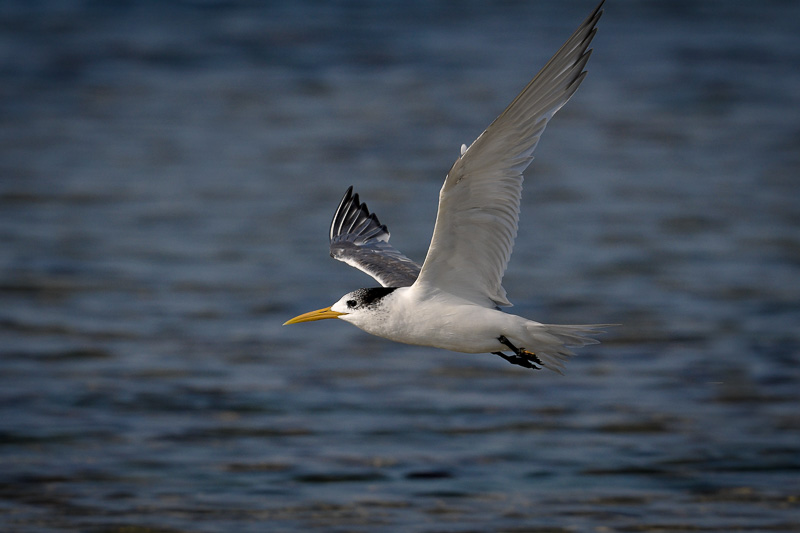
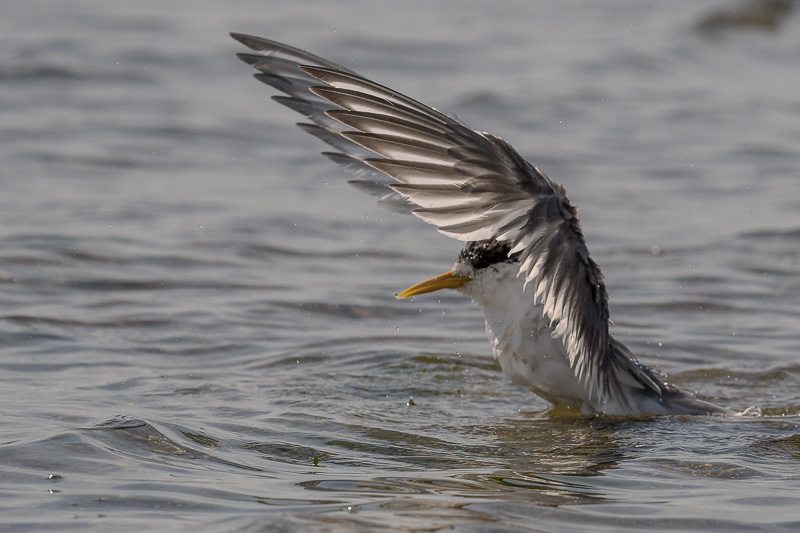
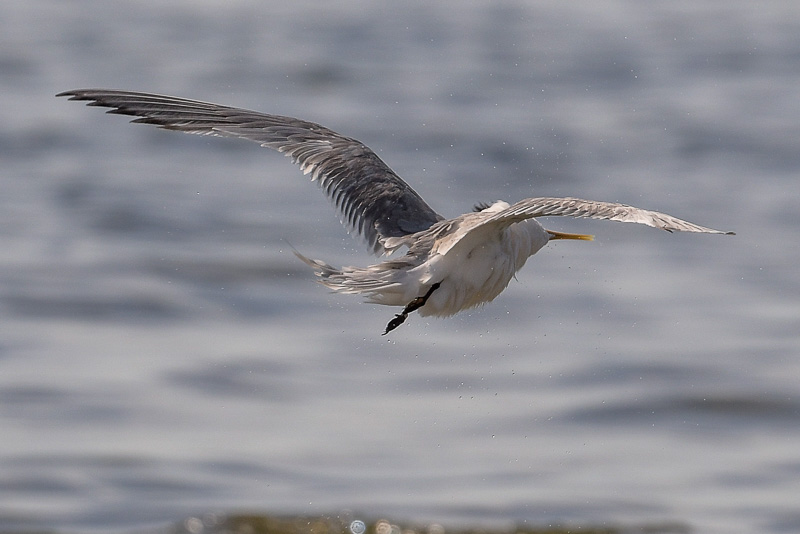
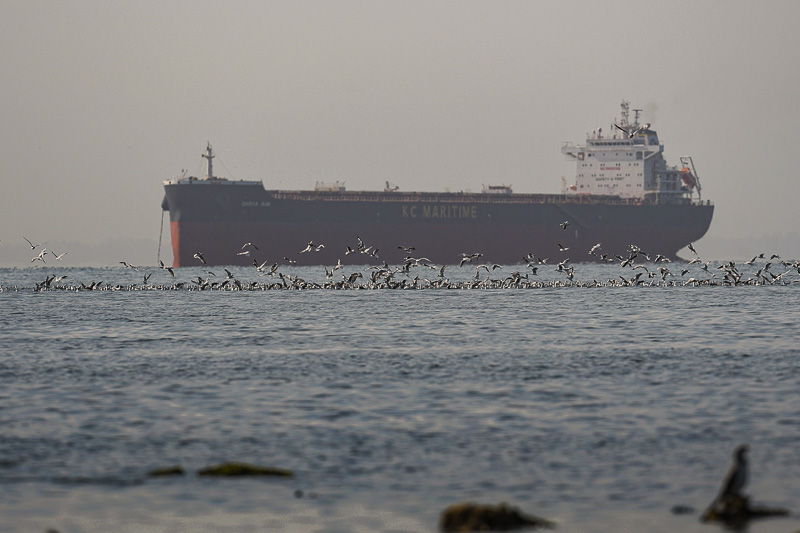
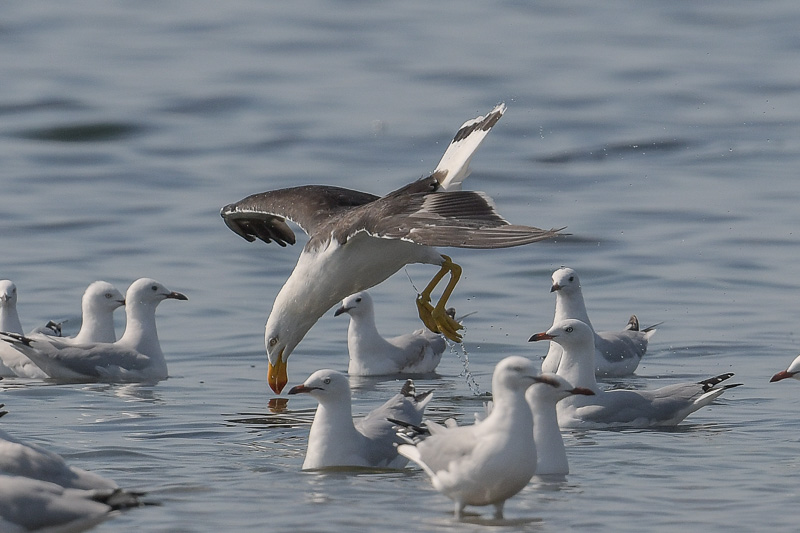
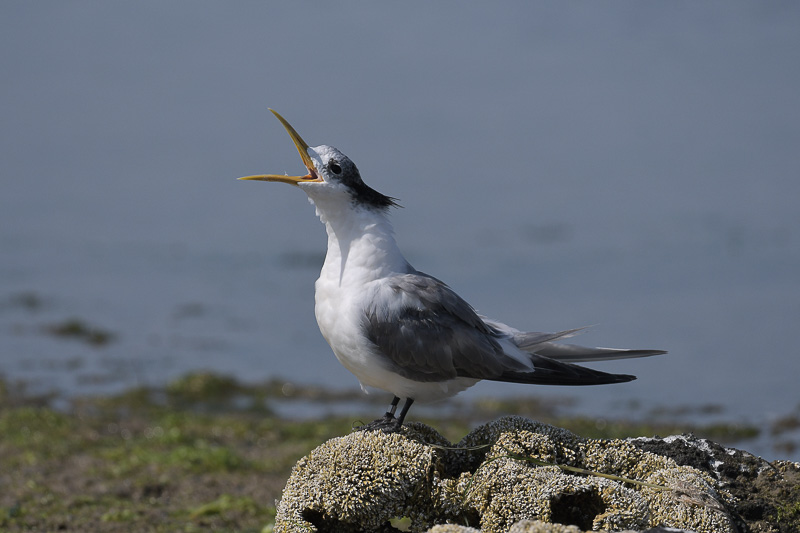
White-faced Heron on final appraochLots of Greater Crested Terns stopping by to rest on the rocks or sandWhiie I was busy with the terns, this Pelican wafted in silently and I turned around to realise how close it had landed.Greater Crested Terns really make the most of the shallow water for a bathAnd spin dry to remove the water.Shoals of fish further out kept the Silver Gulls and Cormorants busyThe Pacific Gull joined the Silver Gulls and showed off its own special technique of grabbing the small preyCoughing up a fish ballPied Oystercatchers usually announce their progress along the beach in flight. This couple arrived silently.
Had a couple of comments and an enquiry about an off-handed remark I made on St Ansel and the “Zone System” last post.
So for the Non-tech heads—Click away now. Nothing to see here!
If you’re still reading, the majority of the blog is a tad (ok a great big bulge) Tongue in Cheek.
The Zone System, and pre-visualistation (What last weeks blog was about) were the brainchild(ren) of Ansel Adams and Fred Archer. Historical issue, they were photographing in the 1930s using mostly large format cameras, exposing one sheet of filum at a time. Due a range of limitations in technology at the time, the filums cannot be compared to today’s clever chemisty and technological advancements, nor can they begin to be compared to whatever clever senor you have in your sparkling new Mirrorless camera. (What. Don’t tell me you’re back in the days of wooden wagon wheels with one of them oldfashioned, outdated DSLRs (Taylor Swift wouldn’t been seen out with one of them))
Adams and Archer worked with scientists from Kodak who had explored the amount of light reflected from most average scenes. (You know it was what was printed on the box or leaflet with each roll of film) Kodak Scientists had figured out the average scene reflected around 12-13% brightness or more correctly incident illumination . And designed their exposure recommendations accordingly. St Ansel (et al.) wanted the number to be closer to 18% and after some discussions Kodak introduced into their product line the truly amazing “Neutral Test Card” with its equally infamous Publication “R-27” leaflet. Which orginally—then didn’t—and then did again—included a paragrah that the reading from the exposure meter needed to be increased by 1/2stop from the meter reading. (Of course who reads instructions? and that maybe is why a certain copywriter took the paragraph out sometime in the late 1960-70s, and why it was reinserted after the ‘error’ was discovered.)
St Ansel (et al.) needed the extra one half stop or so exposure to comply with their: Maxim of the Day 1. Always expose for the shadows and let the highlights be corrected in development. (As an aside if you’ve ever seen an St. Ansel original negative its a very thin low contrast thing.)
2 Previsualise how the range of tones will print. So they could work out what was going to be printable or not, they Pre-visualised those brightness values into 11 “Zones” Oh, welcome back skim reader.
Zone 0 would be as black as old boots and contain no detail, Zone X would be white as driven snow and contain no detail. In the middle Zone 5 would contain……. Mid-tones. And midtone err sorry, Zone 5 was 18% reflectance. Insert Small ding ding bell to large clang of claxton.
What does all this have to do with Digital Photography. Memo: Absolutely Nuthin!
Current Maxim from Michael Richman for Luminous Landscapes and Thomas Knoll—He, the author of the orginal Photoshop 1. Expose to the right. (ETTR) Or another way to say Expose for the Highlights and correct Shadows with the clever sliders which have replaced mixing up your own special developer brew. These days we call them “Presets” and who doesn’t have a harddrive full of them and never used?
2. Be careful what you point the “Spot” meter in camera at to be sure it’s going to be Zone 5. Or you could point it at say a Zone 3 value and adjust the exposure accordingly. But…really. Read the Memo.
If you point it at say the black feathers on a Black-shouleder Kite, and make no adjustments, the shot is going to be “Over Exposed” as the meter will try to expose to make the black—mid grey. if the Kite stays still long enough and you point it at the White chest feathers, and make no adjustments, the end result is gong to be…… wait for it…… Yes. Correct. Underexposed. Because the meter will try to expose to make the white—mid grey.
St. Ansel, exposed one sheet of film at a time and made notes on the development required. We shoot a burst of 50 shots and hope we can find the right slider to correct it.
As an aside, my fav Black and White Monochrome software is Nik Software’s Nik Silver Efex It has in its repertoire a little thumbnail and a tiny Zone system. Click on a ‘zone value’ and it gives Zebra stripes to those values in the photo. Yellow/Orange down the 1 and 2 end and a curious choice of Red to Black in the uppers. I’ve put some examples at the end of the blog.
So shoot often, shoot regularly, shoot with thought and don’t be bogged down with a system that for the vast majority of photographers (specialist landscapers, you won’t have read this far anyway). We all get caught—some over or underexposed shots. But, we learn from that, and hopefully next time we are better prepared.
St. Ansel and Fred did the photography community a great service in helping to figure out the tonal values of a scene. Michael and Lord Thomas, gave us some freedom to experiement to get the best out of our digital chips, and no doubt have helped engineers train their product better.
So there you have it the 7 mega-zillionth explantation of St. Ansel’s system, Or you could just read his “The Negative ” book, and cut out the middle man.
Keep takin’ pictures. We do.
Here are three images from the SFx software. Best to click on the images full size to see the colours. I made some corrections to the lower zones in the third one of them and you can see the change in the little tiny (next to useless) “Curves” view.
Here is Zone 8 in Red ZebrasZone 10 Black Zebras and Zone 1 in YellowI moved Zone 1 in the curves and you can see the changes.
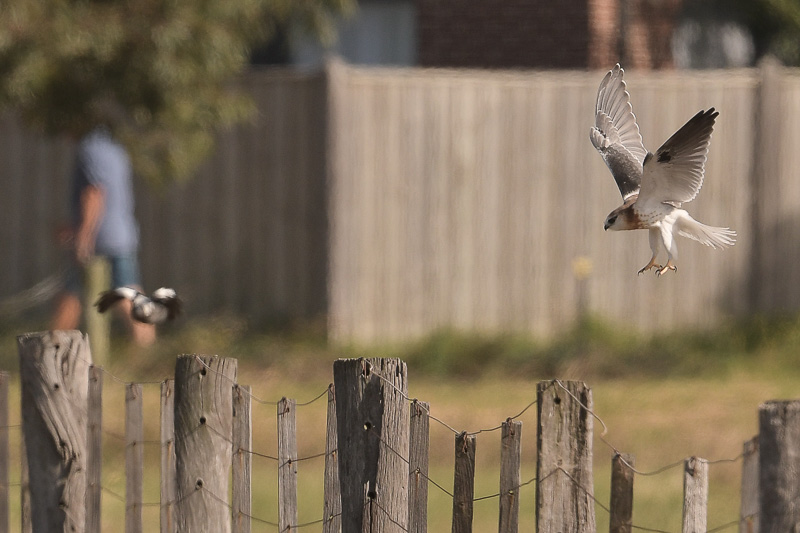
We’ve had two young Black-shouldered Kites fledge just recently. They are still learning the Black-shouldered Kite Play Book and being fed by the male.
However they have developed all the skills to successfully hunt for mice and spend quite a bit of time over the paddocks, holding a position hovering, learning to parachute down with wings held high, and how to drop the legs as they enter the grasses. Just at this stage they weren’t quite mastering the take-away food skill.
This young one had been out in the paddock polishing up its hovering skills, and little wings get a bit tired and it decided to take a break by landing on the fence-line.
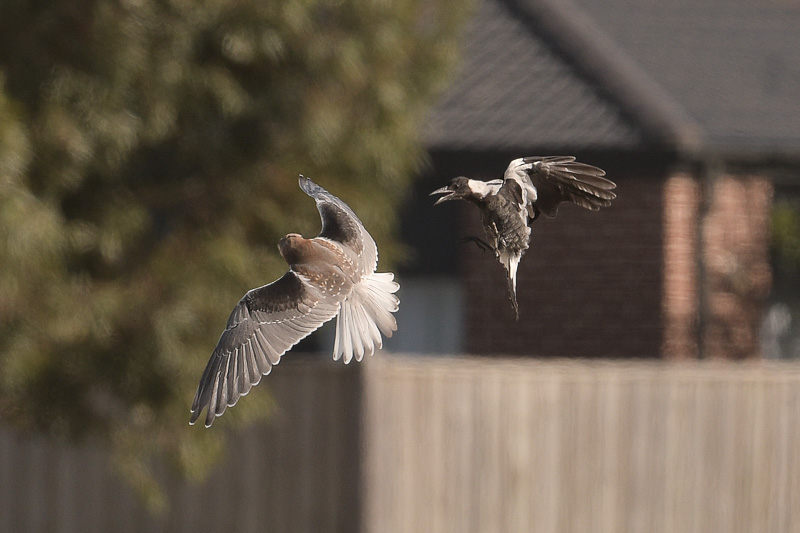
Time to turn to page 122 in the Play Book and learn that you don’t land in a Australian Magpie territory, where they too are schooling up their young in the fine arts of finding their own food and territory defence against all comers.
The little Kite was so intent on finding a fine, safe, secure post to rest on that it didn’t at first note the stealth-hunter rising from the grass in full cry.
In the end it crossed the road and rested on the neutral territory of the gate.
Apologies again. I didn’t press the button to Post. 🙂
There is a long standing photo adage, “Previsualise (always with a ‘z’) the photo”. Promolagated by St Ansel (Adams). His point had little to do with the content of the picture and all to do with making sure the exposure was set correctly to cover the gradient range of the “Zone System” But more of that on another occassion.
The term seems to have wandered its way into the vocabularly of creative photographers, as in “I pre-visualised the way this picture would look, feel, express what I thought, etc etc. blah. “
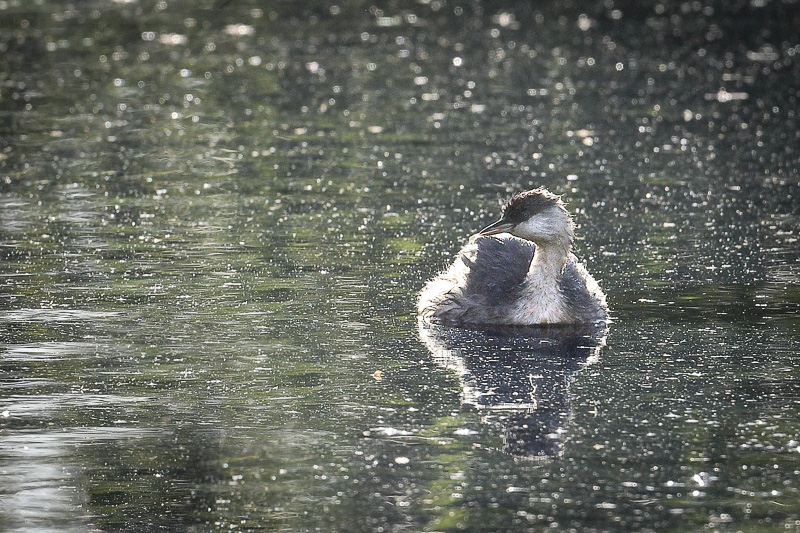
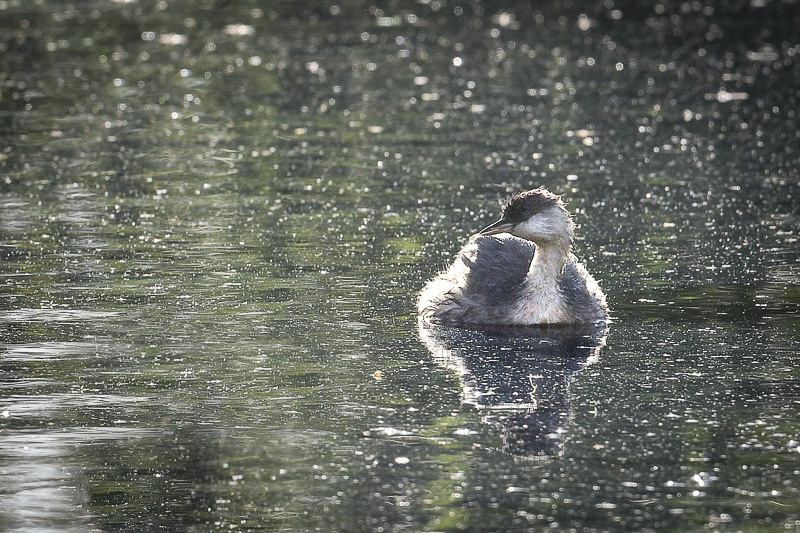
Sometimes tis true, just by the sheer magic of a moment. I knew when I saw this little Hoary-headed Grebe that it would look great against the be-jewelled backdrop of the early morning light on the water. That amazing rim-light running around the edges of the bird was just too good to ignore.
But also I knew that the little Grebe would be terribly dark and underexposed. Perhaps two shots and merge then in Layers in Photoshop was one response. In the end, I opted to make the exposure for the middle densities and hope that Lightroom would handle the highlights and a bit of work with a brush might bring out some of the detail of the ‘underexposed’ Grebe. That’s why the puruists will tell you, ‘We Shot raw!!” Gives us so much flexibiltiy in post-processing. For the record.
We were at the Western Treatment Plant and the weather had clouded over. Best to head for home was the vote from both EE and Mr An Onymous. As we were at the southern end of the plant we decided (well I had the steering wheel) to take the longer, not so well used, track around the Austin Road extention.
This track circuits the far eastern side of the plant and has a long treeline running next to the fence, and can be on occassions worthwhile. Most times however its just a drive between the treeline and the open paddocks. Which is why many don’t make that trip and the track is mostly used by the farm folk and whatever livestock is in the area.
I missed the Black-shouldered Kite sitting on the old gate rail, but decided to stop just in case it was in the area.
We’d only just got out of said IamGrey and were looking about when an ominous black shape headed toward us across the field, pursued by an equally intent Black-shouldered Kite. Camera up, frames released, and then it was obvious we had found a Black Falcon with a Kite in hot pursuit. This is pretty unusual as normally the Falcon would have no qualms about relieving the little Kite of any prey it might have caught. Perhaps the pair had a nest in one of the nearby trees and they were in no mood for the Falcon to give them grief.
Black Falcons are not resident at the WTP, they tend to come in over the summer and we might only have one or two sightings each season. The Falcon is much faster than the Kite and more like its Peregrine and Hobby cousins than to the Browns.
It swept across the paddock with the Kite stooping on it several times, no contact, but enough to move the bigger bird on. It turned behind the treeline and was gone. The Kite returned to rest on the old gate post.
When admiring a painting Don’t examine the paint When meeting an artist Don’t ask to look at the brush
Deng Ming-Tao 365 Tao Meditations
“Oh, you must have a good camera?,” is a question that often comes up when someone looks at a selection of our bird pictures. No one on an operating table ask the surgeon what brand of scalpel they are using.
The apocryphal story is told of a conversation at a photographic exhibtion in New York of Henri Cartier-Bresson’s work. A visitor, a Texan oil millionare, asked HCB, “Well, what camera do you use?” HCB replied, “A Leica.” The visitor turned to his son, who was standing nearby, and said, “Well son, we gotta get you one of them Leekas so you can take great photos too,” and walked off.
The essence of a great meal is not to be found by asking the Chef, what kind of Knife or Saucepan they use, but rather in appreciating the artist’s genius for assembling all the right elements for an outstanding meal.
Often we might look at a photograph, examine the tech specs of ISO, Time, Aperture, Lens and Camera type, and miss the beauty that the photo expresses.
The same comes from watching birds at work. It’s easy to be caught away by the physics, or biology, the math, or any one of a number of scientific outlooks. So willing to define the birds actions that we fail to comprehend the whole.
Just to watch this Egret as it moved slowly from spot to spot along the pond, made taking the photo seem like a secondary action. The real beauty was in enjoying the sheer elegance of this creature and its ability to apply just the right science to delicately land barely rippling the water.
It was like being at one with the bird and and its skills.
I had written him a quick text, which I had for want of better sent it to his mobile as always, suggesting as the weather looked to improving a trip might be exciting, So I sent it to him just “On Spec” marked as follows: “Mr An Onymous, fancy a trip to WTP tomorrow early” And an answer came directed, just as I expected. Sent from his smartphone, “I’ll be there by sun up”
Apologies to the Good Banjo
“So,” as Banjo also wrote, “We went”
A quick stop for coffee from Gerry at the Highway Lounge and off to the Treatment Plant we journeyed. Hardly a “Vision Splendid” of bird life extended, but better than sitting in a “dingy little office”.
The weather was performing as expected and we dropped EE of at the first pond to pursue some Cape Barrren Geese, the first we’d seen in the T -Section area for quite awhile.
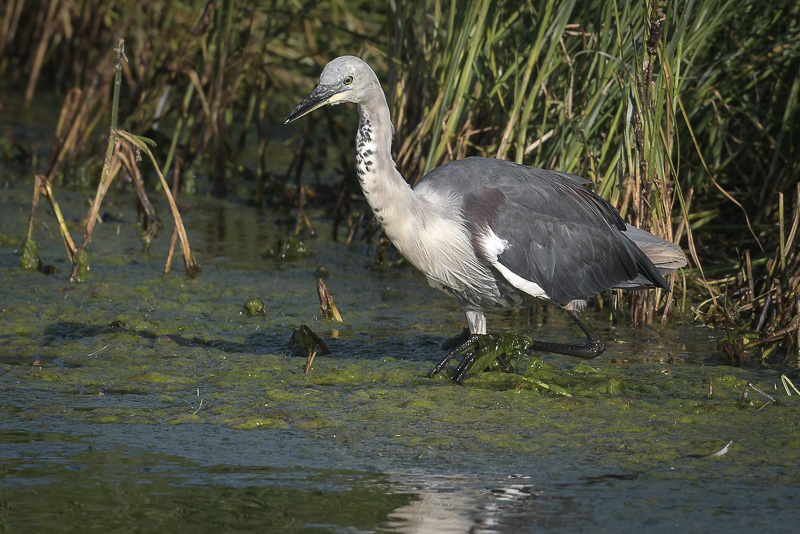
Mr An Onymous and I went up to the next pond and as we were trying to figure out our first move, a White-necked Heron stepped out of the pond-side reed bed and began to hunt.
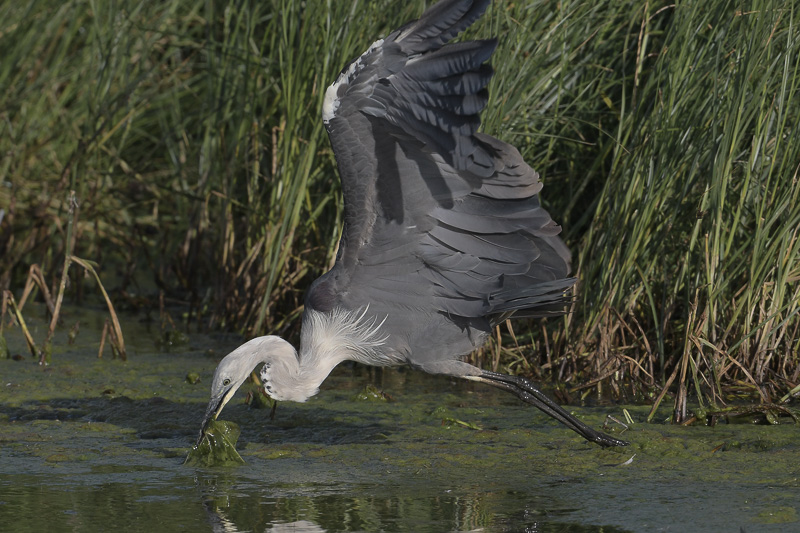
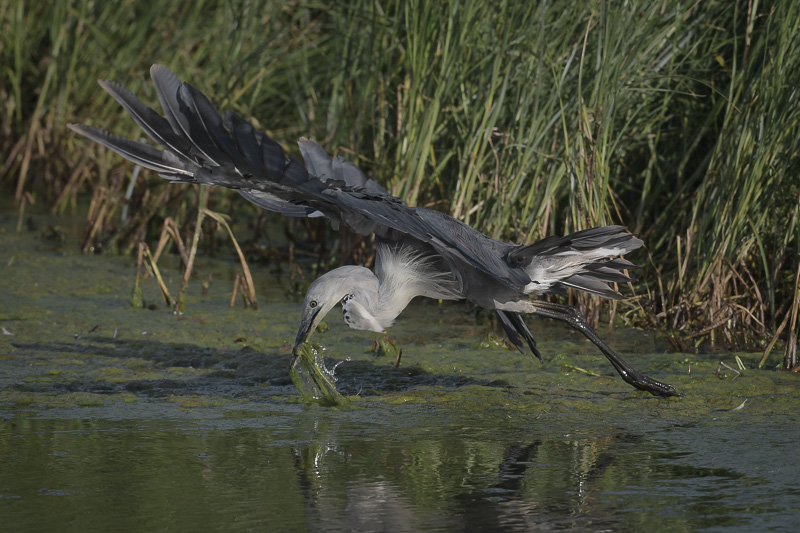
And as the Banjo continued, “For a Photographer’s life has pleasures that the townsfolk seldom know,” We stood as patiently as the Heron and watched it watching the water. And it didn’t take too long for the glacial moves of the Heron to suddenly become full of life and action as it pursed its prey.
Then it leaned forward and needing just a little extra reach extended its wings and jumped. Another of Prof. Will’s Growling Grass Frogs had met its end.
Sometimes I think I should leave the “Training Wheels” on and wear a big digital “L Plate”
Aplogies for somehow posting this early. It was only in production and I must have missed the Save button and hit the Post button. Slap on wrist. Before I could figure what I’d done, the digital world had gone into overdrive and posted to everybody. I figured most would go, “Oh, its not’s Saturday Night’ and ignore it, but the few mail and notes I got suggested some really do click on and read the blog. A grateful thanks both to those who ignored it, and those who thought I’d been on the “silly beans”—again. Tis true, I’ve been trying to solve the ongoing issue of Anonymous comments and down the page here, you’ll find WordPress’s solution to the problem. Hope it helps.
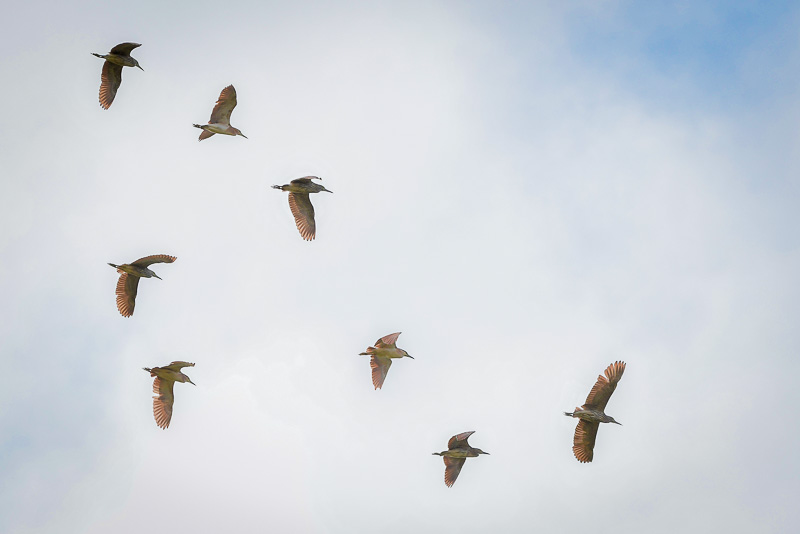
Sometimes, just seeing one Nankeen Night Heron is a bonus. But to have a flock winging overhead does bring a new style of goosebumps.
At one of the entrance roads into the Werribee Mansion precint, there are a number of large Cyprus Pines. These would have no doubt been planted way back when the Chirnside family was estabishing the mansion area and its gardens. The big pines are wonderously deep and shady, and over the years, (about 9 that I know of) Nankeen Night Herons have roosted in the pines, and more specifically one pine during daylight. It’s always a bit of fun to walk in past the tree and see how many unusual ‘bumps’ are lurking among the branches. And knowing that you’ll never spot as many as EE. Often, its possible to see rather large white splashes on the ground or to spot a few rich orange/tan feathers laying about.
As we walked past, a number of the birds had moved into some nearby trees, and for some reason, decided to all take to the air. I think we counted 15 but I could only get some in the frame.
About as exciting as it gets
For those who’ve been commenting Anonymously
The past few weeks, it seems that WordPress has been making commenting and logging on with a valid name even tougher than usual.
So after a few commenters had written either on the blog or emailed me, I decided to take it up with WP staff. Long story, very short. We are going to change the log in requirments for comment. It won’t hurt, and some are already doing it that way anyway.
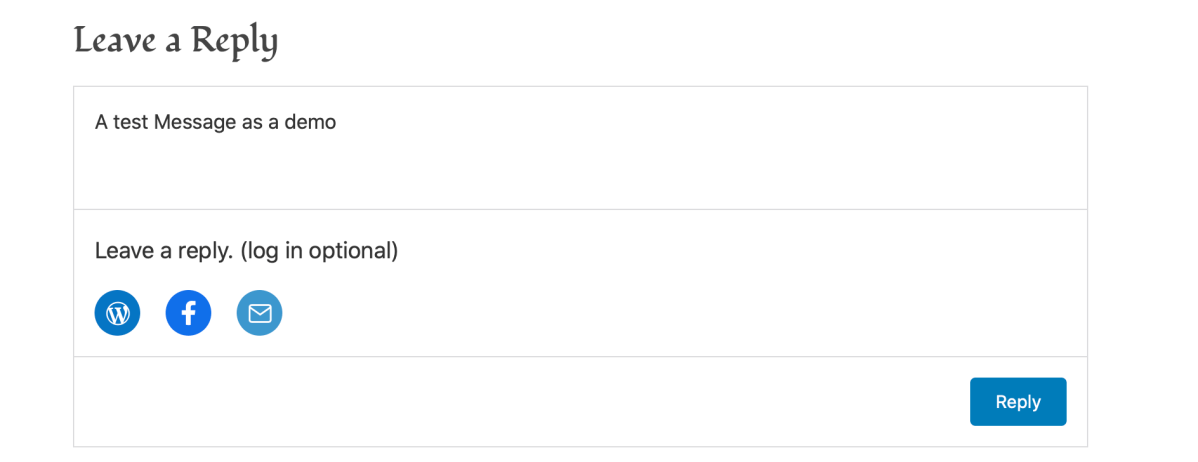
So. When you comment you’ll now get a dropdown box with three options to log in. For the truly dedicated WordPress there is an icon and you can click that to log in. Or you could, if you have a Facebook account click and use your FB log in. I don’t recommend that, as I’m not a fan of Facebook, and who knows what happens to your data and how they track you— Insert Paranoia Music here. Or you could take the third option, personal preferred method. Click on the little Envelope icon and you’ll be asked for a name you want to use and a valid email. (I think the email is used by their clever Askimet spam rejecting software, so if you cheat, like I do sometimes and enter and obscure but not valid address, it might reject. Just sayin’ Here’s what it should look like.
So just to be sure. You need to log in, use an email, to be able to post a comment. Anonymous, is not available. Mr Anonymous will be happy.

















 Birds as Poetry —— Just because I WANDER doesn't mean I'm LOST