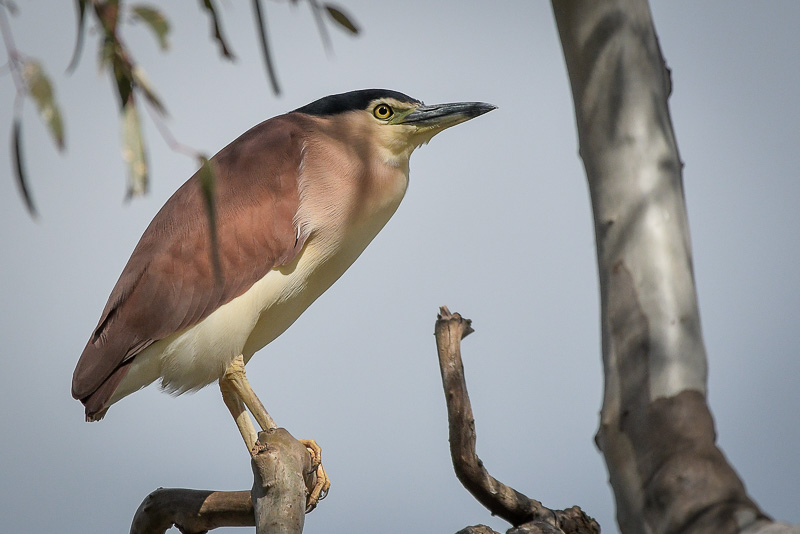
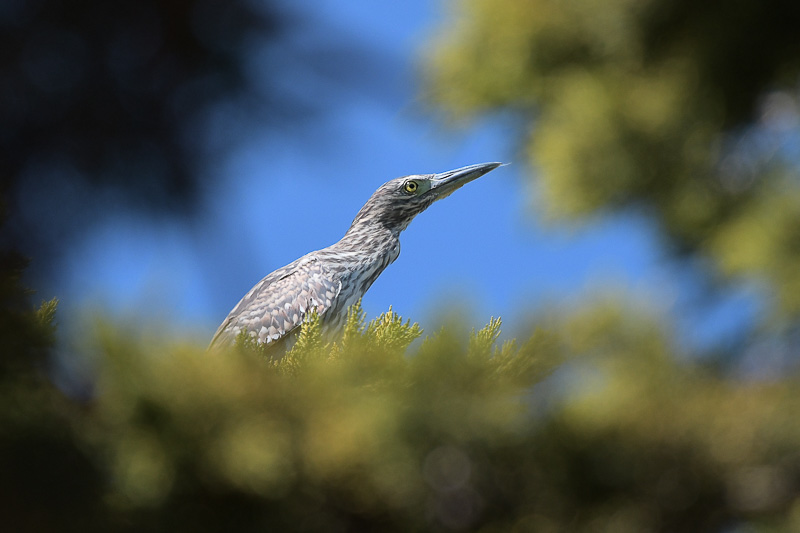
One bird we seldom see out and about is the Nankeen Night Heron. For a number of years, a small colony roosted in a large pine tree on an access track into the Werribee River Park. Then for some reason, they disappeared for about four years.
Recently we’ve been noticing those lovely rich apricot-tan coloured feathers sprinkled along the track, so it’s always worthwhile checking. Almost all the time, they are high up, and surrounded by as many branches as possible and good looks, let along good photos are pretty difficult.
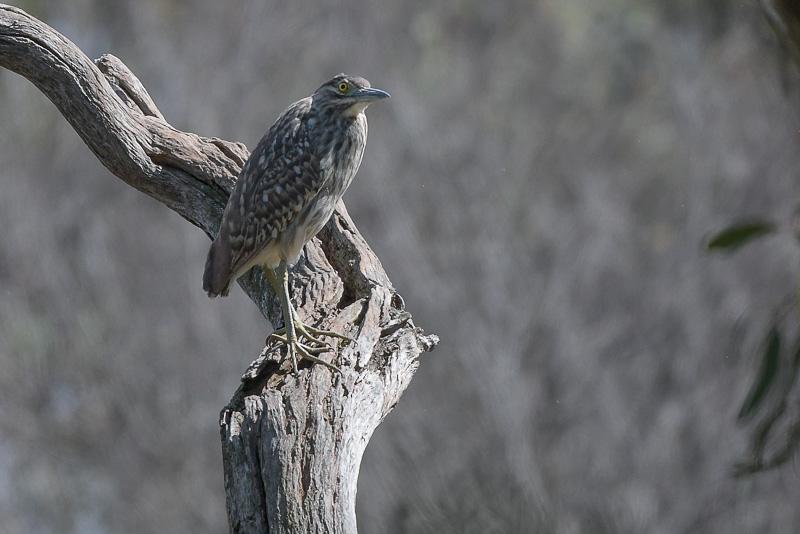
The last couple of visits we’ve seen around five or six in the tree and several of them are juveniles.
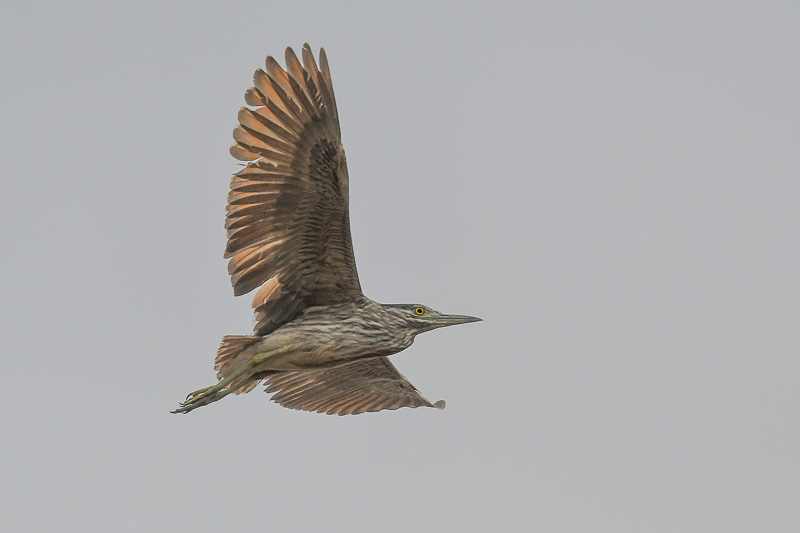
The other morning as we passed by, they seemed very nervous and with a ‘grunt’ took to wing. This suited the Sulphur-crested Cockatoos as it gave them something to chase and complain about. What we didn’t expect was that just about every other tree nearby, also ‘grunted’ and in the end we had as many as 25 Nankeen Night Herons in the air looking for a quiet place away from the Cockatoos.
We continued down along the river edge and found eight to ten had moved down to the river to sit on some of the old trees overlooking the water. Just couldn’t get close, but at least we could say they are in good numbers.
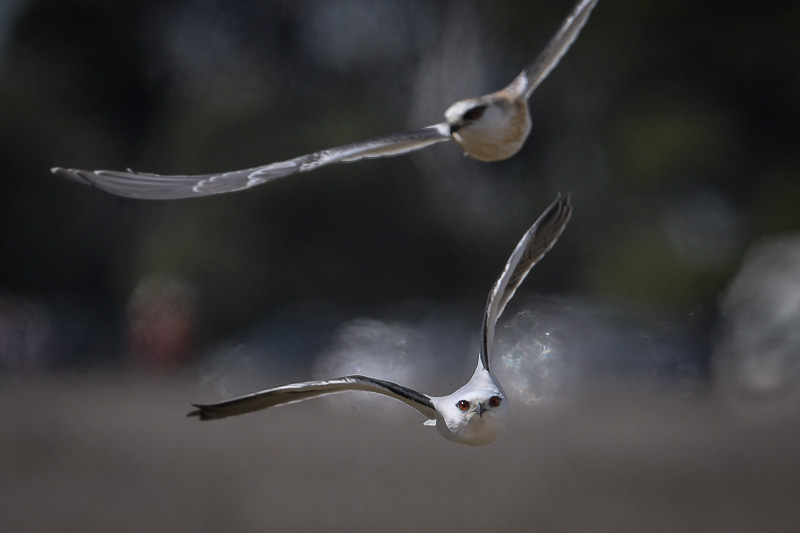
Our most recent outings have all been in the one location at Point Cook Coastal Park. At least three families of young Black-shoudered Kites have been working in the area. As best we’ve been able to count there have been nine young Kites, with at least two of their supervising male adults, one semi-resident male, who has a second clutch on the go and is busy feeding Madeline, and perhaps two or three late juveniles that have started to lose their apricot colouring and take on the rich red eye colour.
Intruiging to walk down a roadway with up to eight or more of them sitting on fence posts all calling and tail-wagging in territorial poses. While in the air around them several others are applying their skills for a feed.
But with finite amounts of mice, and so many kites a few squabbles were inevitable. And Mike was not happy about having so many extra mouths to feed when he has the new clutch growing.
As I said to someone the other day, it’s the stuff to fill memory cards on. And I’ve wondered how many feeding Kite pictures does a blog need. Still I don’t know. So here are the dramas from a few days.
Enjoy!
This one seemed to me to be an adult the way it was hunting, and I was suprised to see when I looked closely it was a juvenile.
They pull out of the headlong dive just before the ground and the feet are swung in to land on the prey-mouse.
I’ve been near them from time to time and they hit the ground with quite a distinct, “THUD”If you can’t catch a mouse, then it’s fair game to stop the next bird in their hunting efforts, which always results in a few circles of the paddock as they sort out the differences.
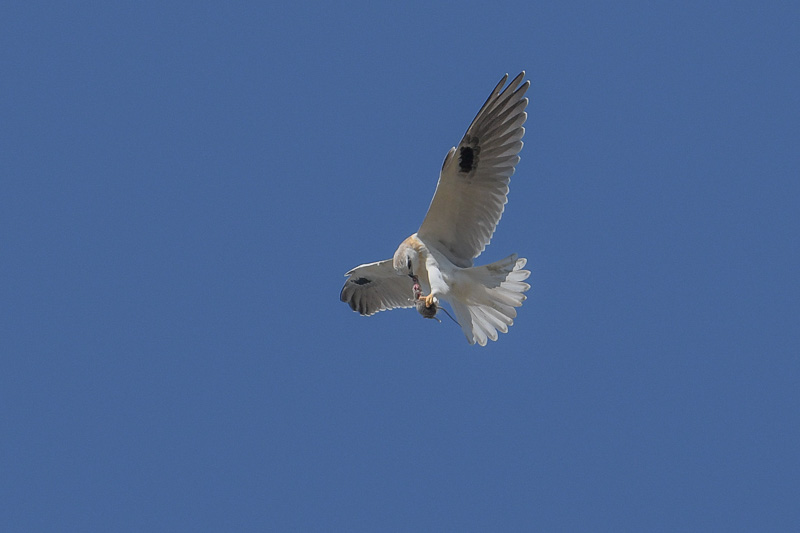
Now this I’ve never seen before. This bird is eating the mouse on the wing. It’s a bit to dangerous to land on a post to have a leisurely meal as one or other other the others will make a pass and try to relieve you of your catch. They fly quite high to do this action, and then hover-fall as they reach down and take pieces, until it can be swallowed whole. This is one of the older two or three that have lately come to the paddock. It has easily secured a meal and is keeping it quite hidden from everybody elseOld enough to defend itself, it was lining up for a fence post landingA large tail-flick is a warning to all that is prepared to claim territory. It has also dropped the wings to ‘mantle’ over the mouse.And here the tail is covering any sign of its possession.Meanwhile Mike is running off any birds that try to hunt in his area.I’m not sure where the boundary was, but the young were continually hunted over the far side of the roadway. The young were quite capable of squabbling amonst themselves for the best positions. I came to the conclusion from the way they each returned to a specific area, that the mice were in that location.Another successful strike. And now to find a place to enjoy the meal.Ths is the same bird and its easy to see that it has the mouse very tightly tucked up to keep safe from the others. It spiralled up to gain height to eat it on the wingHere, it is enjoying the fruits of its labour. As it lazily difted down in a slow descent.
No doubt by this week, the fields will be pretty bare as the young will begin to move further down the coast or inland to find their own hunting grounds.









 Birds as Poetry —— Just because I WANDER doesn't mean I'm LOST