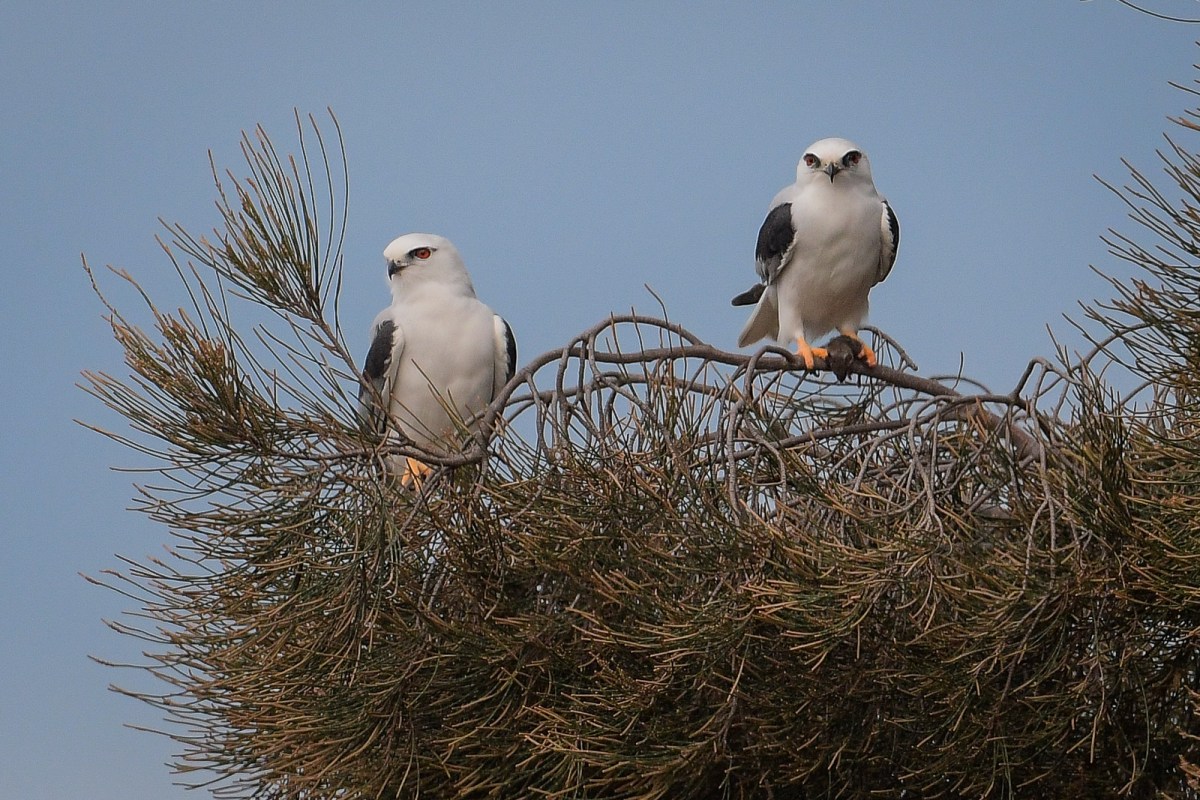
Regular followers will know that not too far from home, in a quiet roadside reserve, we have over the years been following the nesting activities of a pair of Black-shouldered Kites, named, Belle and Bronson.
If the boy scout arithmetic is close to correct, (and a lot of covid-lockdown not withstanding), it’s likely the that pair over about 4 years had as many as 10 successful clutches and two that were abandoned for various reasons.
Each clutch on average was 3 young birds, with two being just 2 young. All seemed to survive to leaving home, so its possible between them they flew at least 28 young birds to add to the population.
There is some anecdotal evidence that Belle had a least two Bronsons. Which would make her quite an old bird in Black-shoulded Kite years.
In September 2022, they again flew in sticks and mated and she settled in to the job of her 11th clutch.
But.
The weather turned dreadful not long after she had layed the eggs, and we had over a week of incessant rain and extreme high winds. We had watched the branch carrying its precious cargo being tossed about like a leaf.
After about a week, Belle disappeared. The nesting was over. We’ve seen her do this before and usually after bulking up for 2-3 weeks, she’d return.
Time, as they say went by, and no sign of return.
Bronson was still home-schooling his previous two young. They were pretty much full grown and self-sufficient, but they stayed around the home tree, and he sat with them for a couple more weeks, eventually they too left and the paddock and small treeline was bare of Kites.
All through October and November, we kept checking, but in the end it was obvious. This party was over.
We did make occassional visits, but all through till March there was no further activity.
I had been following a second pair of Kites about a kilometre down the road, so a drop in wasn’t too hard.
In early April, we heard familiar sounds of a Kite short squeaking call. All excited, perhaps the pair were back. However we only found one and it certainly wasn’t from the missing pair.
A few days later a second one was visible. This one certainly was a much younger bird and we wondered if they were a pair.
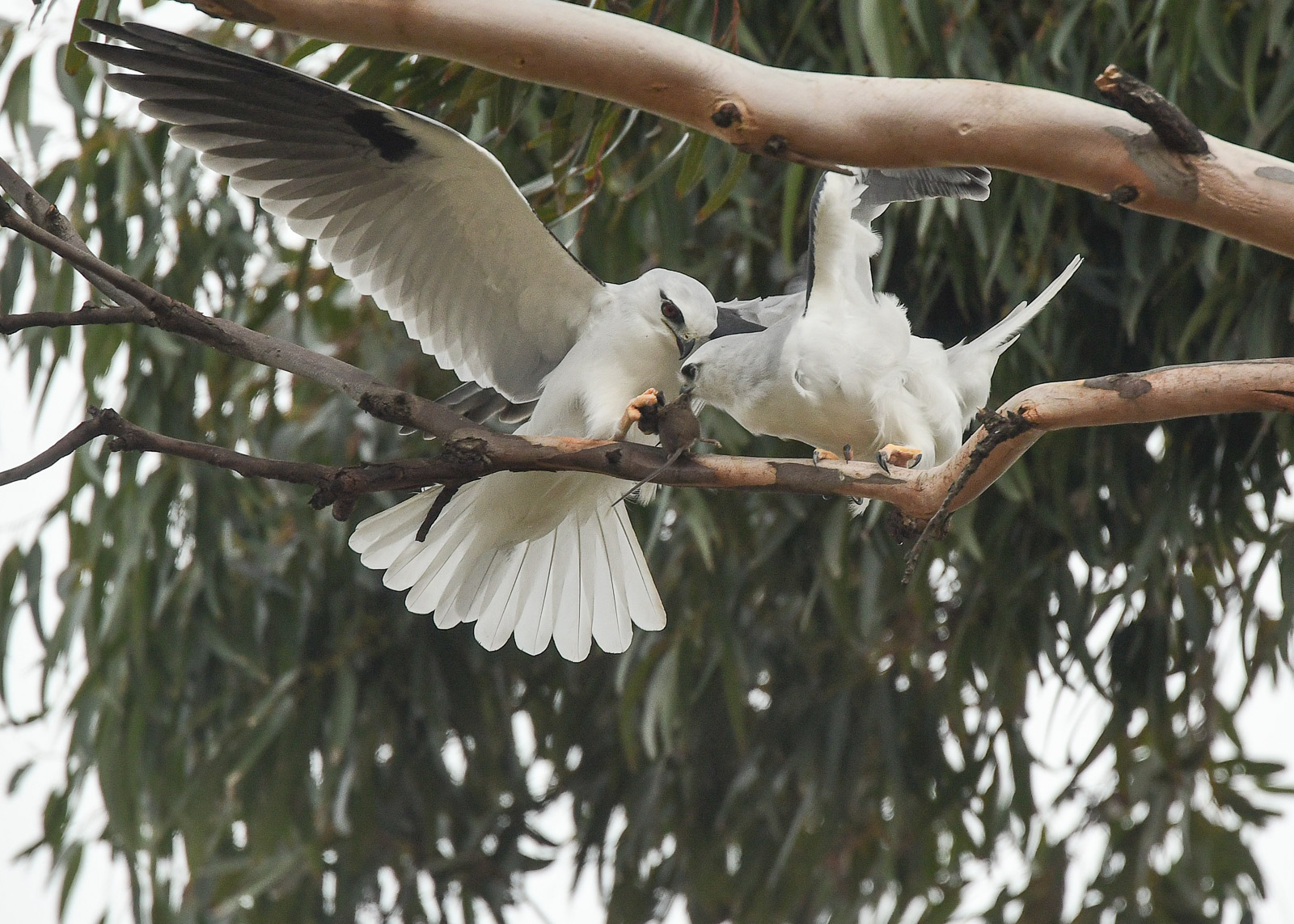
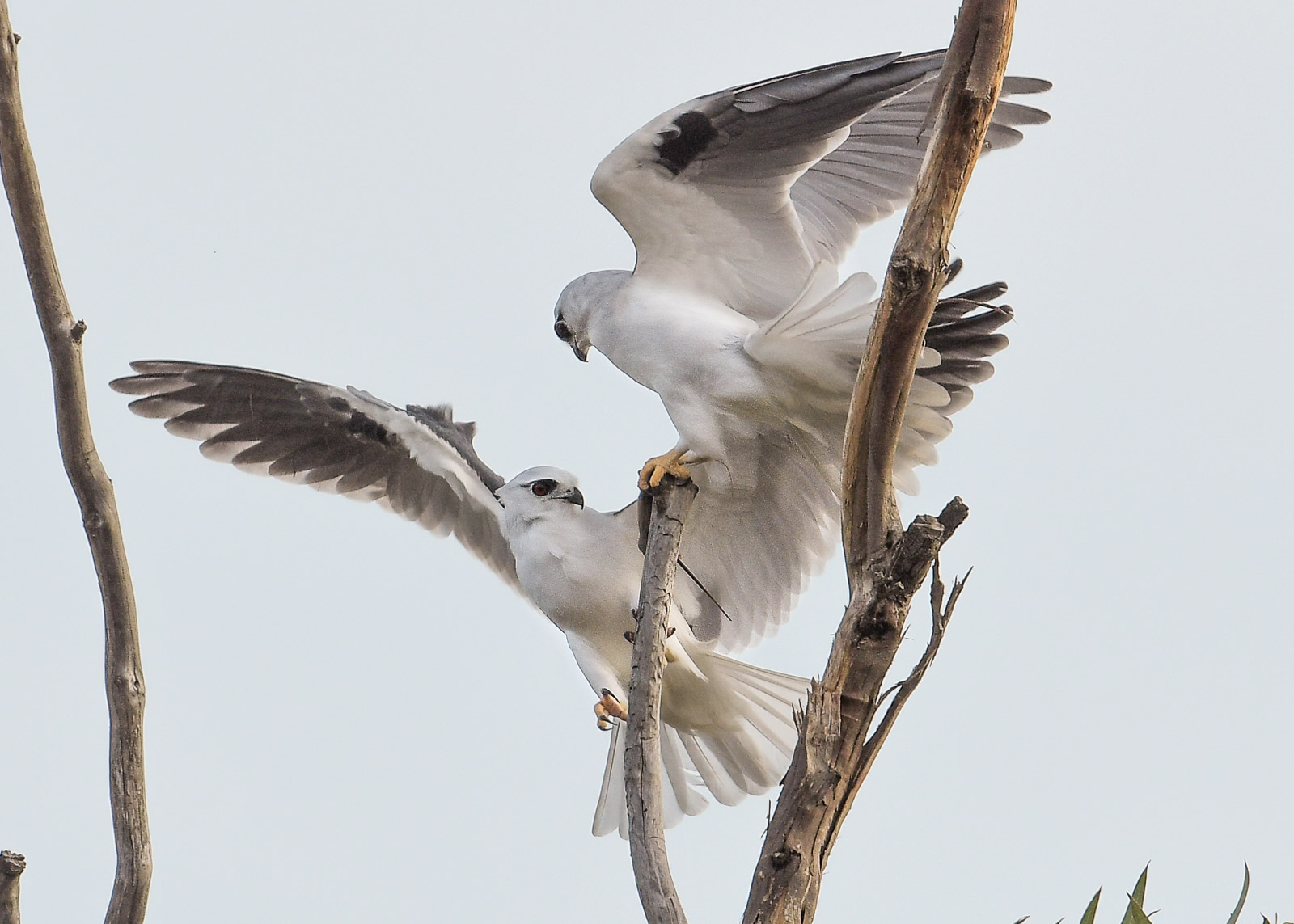
Hard to tell, initially. They certainly didn’t behave like the originals and they had some unusual habits. Including not using any of the more familiar perches and spending time at the far end of the little plantation. Also it soon became clear that they did not engage in aerial transfer of food. And to be honest, watching them try to transfer on a branch showed how clumsy either, one, or both of them were. Eventually they settled on using the large street lights over the freeway as a level table to pass the mouse across. Strange.
The upside was the work, began, a site was settled on, and settled into. Stick carrying, and mating were the order of the day. Inspite of their clumsy food transfering, the mating seemed to go quite well, thank you.
I’ve delayed writing about it, and showing some pictures as it’s been very much an on-again off-again process. We think of them as ‘new age’ birds that have a new set of rules. 🙂




Enjoy
 Birds as Poetry —— Just because I WANDER doesn't mean I'm LOST